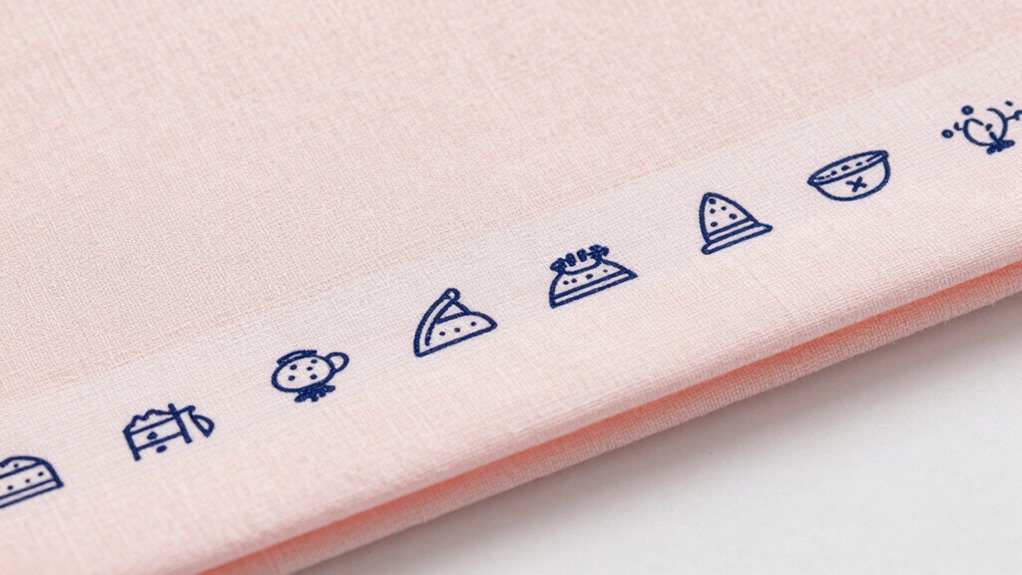

Fabric care symbols guide you to wash, dry, bleach, and clean your clothes properly without needing a chart. Look for icons like a tub for washing, circles for dry cleaning, or squares for drying, and pay attention to dots or lines that indicate temperature and cycle type. A crossed-out symbol warns you to avoid certain methods. By understanding these icons, you can protect your garments and keep them looking new—keep going to learn more about decoding each symbol effectively.
Key Takeaways
- Recognize washing symbols like a tub with a hand for delicate or hand wash only.
- Interpret dryer icons by noting circles inside squares and the number of dots for temperature.
- Identify bleaching symbols, such as plain triangles for allowed bleach or crossed triangles for restrictions.
- Understand dry cleaning icons indicating suitable solvents or if dry cleaning is not permitted.
- Follow special care symbols for handling delicate fabrics, including temperature and softener restrictions.

Lodge Essential Enamel Cast Iron Dutch Oven - Perfect for Bread Baking, Braising, Marinating & Slow Cooking - Features Moisture-Sealing Lid & Dual Handles - Kitchen Essentials - 6 Quarts - Oyster White
Quality Enameled Dutch Oven: The Lodge Essential Enamel Cast Iron Dutch Oven gives you all the benefits of...
As an affiliate, we earn on qualifying purchases.
Learn What Washing Symbols Mean Without a Chart
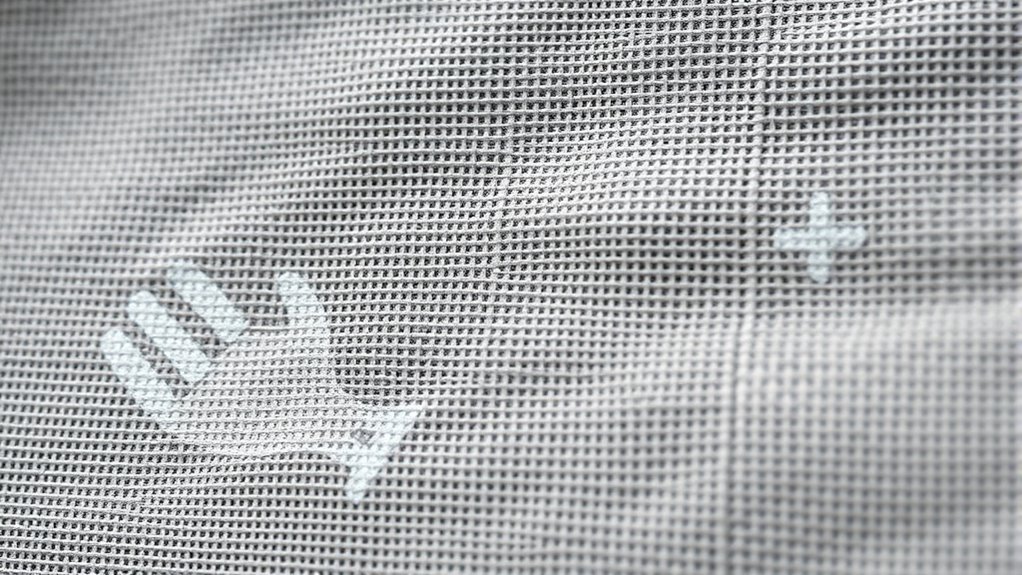
Understanding washing symbols doesn’t have to be confusing or rely on memorizing charts. When you recognize what the symbols indicate, you can better protect your clothes’ fabric texture and color preservation. For example, a tub with a hand inside signals delicate washing, helping you avoid rough cycles that damage fibers. A line beneath the tub suggests gentle or permanent press, preserving the fabric’s softness. Symbols like a triangle warn against bleaching, protecting color vibrancy. By paying attention to these simple icons, you can choose the right wash cycle without second-guessing. This awareness helps maintain the original texture of your garments and keeps colors bright longer, all without flipping through complicated guides. Clear, intuitive symbols give you control over your laundry, ensuring your clothes last. Recognizing these symbols also aligns with the principles of sustainable and secure cloud solutions, emphasizing efficiency and conservation in everyday practices.

Lodge Essential Enamel Cast Iron Dutch Oven - Perfect for Bread Baking, Braising, Marinating & Slow Cooking - Features Moisture-Sealing Lid & Dual Handles - Kitchen Essentials - 6 Quarts - Caribbean Blue
Quality Enameled Dutch Oven: The Lodge Essential Enamel Cast Iron Dutch Oven gives you all the benefits of...
As an affiliate, we earn on qualifying purchases.
Understand Dryer Symbols and How to Use Them
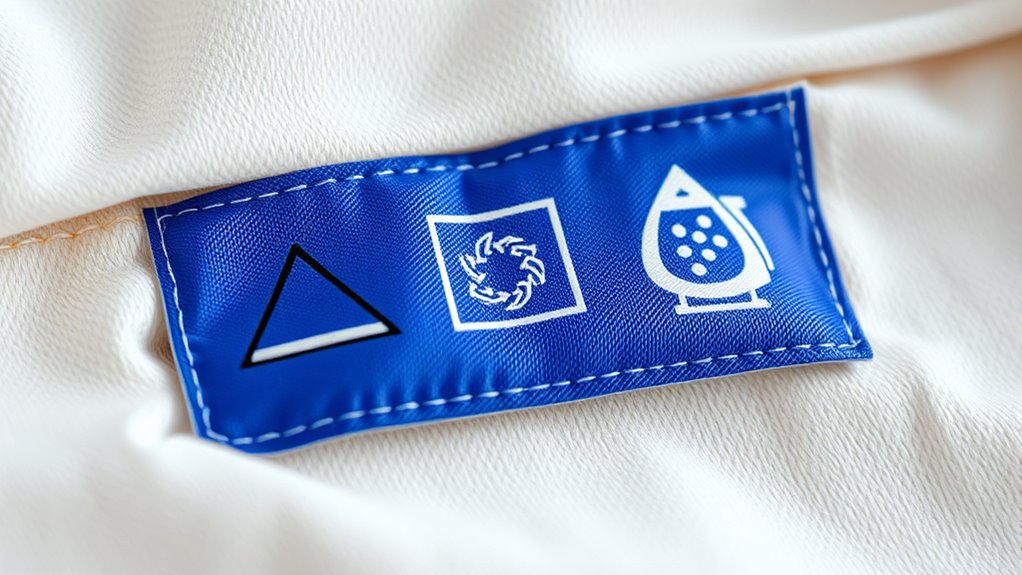
Dryer symbols guide you to properly care for your clothes after washing, helping you prevent damage and shrinkage. These symbols on garment labels show whether items should be tumble dried, air-dried, or dried on specific settings. For example, a circle inside a square indicates tumble drying, with dots specifying the temperature—one dot for low heat, two for medium, and three for high. A crossed-out dryer symbol means don’t tumble dry. Knowing these symbols helps you avoid shrinking delicate fabrics or damaging sturdy ones. Proper color accuracy in selecting drying methods ensures your clothes retain their vibrancy and quality. If your label suggests using fabric softener, follow the recommended drying method to keep your clothes soft and in good shape. By understanding these icons, you can select the right drying cycle and care for your garments without guesswork.
Mueller DuraCast 6 Quart Enameled Cast Iron Dutch Oven Pot with Lid, Sourdough Bread Baking, PFOA-Free, 500°F Oven Safe - All Cooktops incl. Induction, Braising & Slow Cooking, Emerald
BREAD BAKER'S DUTCH OVEN, 500°F OVEN-SAFE, SOURDOUGH-READY – one of the highest ratings in its class – delivering...
As an affiliate, we earn on qualifying purchases.
Decode Bleaching and Whitening Icons Simply

Bleaching and whitening icons on clothing labels tell you whether it’s safe to use bleach or whitening agents on your garments. If you see a triangle with or without lines, it indicates if bleaching is permitted or restricted. A plain triangle means you can bleach, which helps with stain removal and maintaining brightness. A triangle with a cross warns against bleach, protecting color preservation. Some icons include a blank or shaded triangle, signaling gentle or non-chlorine bleach options, ideal for delicate fabrics. Using bleach correctly ensures effective stain removal without damaging colors, keeping your clothes looking vibrant. When in doubt, avoid bleach if color preservation is a priority or use non-chlorine options to safeguard your garments’ appearance. Proper interpretation helps you balance stain removal and color care effortlessly. Incorporating knowledge about auditory processing can also aid in understanding and following care instructions more accurately.

Lodge Essential Enamel Cast Iron Dutch Oven - Perfect for Bread Baking, Braising, Marinating & Slow Cooking - Features Moisture-Sealing Lid & Dual Handles - Kitchen Essentials - 6 Quarts - Midnight Chrome
Quality Enameled Dutch Oven: The Lodge Essential Enamel Cast Iron Dutch Oven gives you all the benefits of...
As an affiliate, we earn on qualifying purchases.
Identify Dry Cleaning Symbols and Why They Matter
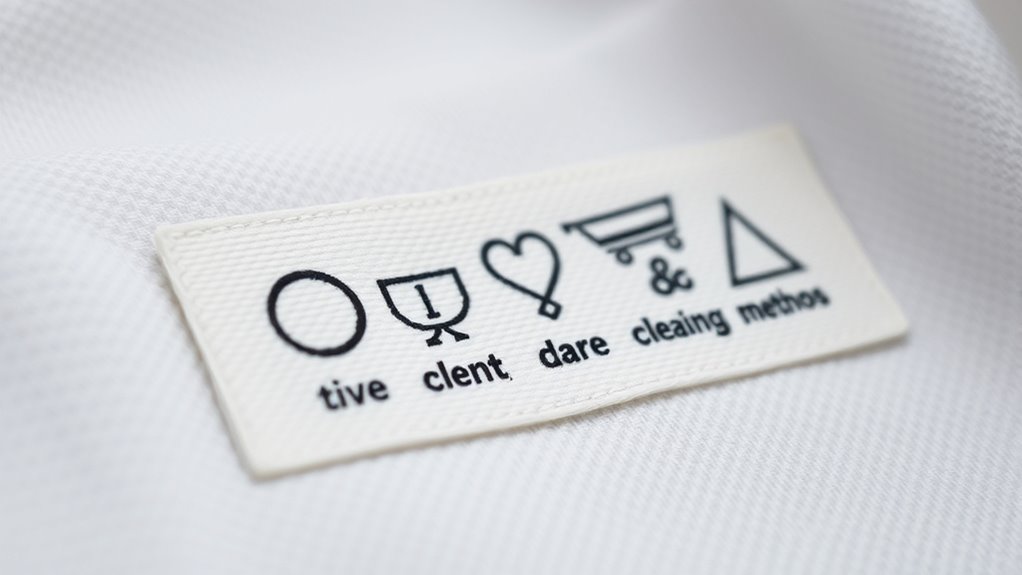
Have you ever wondered what those dry cleaning symbols on your clothing labels really mean? Recognizing these symbols helps you choose the right method for different fabric types, preventing damage. For delicate fabrics like silk or wool, a dry cleaning symbol with an “X” indicates you shouldn’t dry clean at all. Some symbols specify specific solvents, which matter for stain removal, ensuring stubborn spots are treated safely. Knowing these icons guides you in avoiding unnecessary washing or harsh chemicals that could harm the fabric or cause shrinkage. Properly identifying dry cleaning symbols saves you time and money by preventing mishandling of your clothes. Additionally, understanding these symbols ensures you comply with safety guidelines and best practices for fabric care, helping maintain your wardrobe’s quality, keeping your garments looking their best longer.
Handle Special Fabric Care Symbols With Confidence
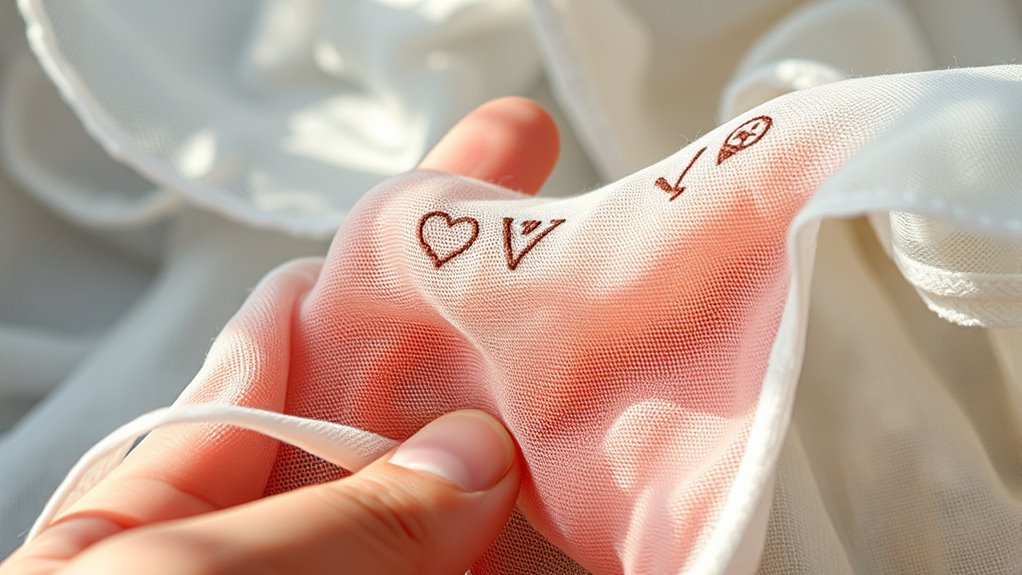
Understanding special fabric care symbols is essential for maintaining your clothes’ integrity, especially when dealing with delicate or unusual textiles. These symbols guide you on handling fabrics that need gentle treatment, such as avoiding fabric softener or specific stain removal methods. To handle them confidently:
- Check if the symbol indicates hand washing or dry cleaning only.
- Follow temperature guidelines carefully to prevent damage.
- Use fabric softener sparingly, if allowed, to keep delicate fibers soft.
- Spot stain removal techniques suited to the fabric type.
- Avoid tumble drying unless the symbol permits, to prevent shrinking or warping.
- Being aware of care symbols helps prevent accidental damage and extends the life of your garments.
Frequently Asked Questions
How Can I Remember All Fabric Care Symbols Easily?
To remember all fabric care symbols easily, use memorization techniques like associating symbols with visual cues or common actions. For example, picture a tumble dryer for the dryer symbol or a hand for hand wash. Break down symbols into groups, and practice regularly by reviewing labels on your clothes. Creating mnemonics or quick reference guides can also help reinforce your memory, making it easier to recognize symbols instantly.
Are There Common Mistakes to Avoid When Interpreting Symbols?
Avoid common misconceptions like assuming symbols are universal; they can vary by brand or region. Be mindful of misinterpretation pitfalls, such as mistaking a triangle for a dryer symbol. You might overlook subtle differences in icons that change their meaning entirely. To prevent mistakes, always double-check the context and, when unsure, consult the garment’s care instructions. Clear understanding guarantees you don’t damage fabrics or compromise their longevity.
Do Symbols Vary Between Brands or Countries?
Yes, symbols can vary between brands and countries due to differences in brand standards and country standards. You might notice slight variations in how care instructions are represented, which can cause confusion. To avoid mistakes, always check the label carefully and familiarize yourself with international standards like ISO or GINETEX. This way, you guarantee proper care regardless of where the garment comes from or the brand’s specific symbols.
Can I Trust Symbols Over My Garment’s Label Instructions?
You can generally trust care label accuracy over symbols, as these labels are regulated and designed to guarantee garment care. Symbol reliability is high because manufacturers follow standards for clarity and consistency. However, always double-check the written instructions if you’re unsure, especially if symbols seem unclear or inconsistent. Relying on both the symbols and label instructions helps protect your clothing and ensures proper care.
What Should I Do if Symbols Conflict With Each Other?
When conflicting instructions crop up, calmly consider the consequences and choose the safest option. If symbols contradict, prioritize the most cautious care method, like hand washing or air drying, to prevent damage. Don’t dismiss or disregard conflicting instructions; instead, seek expert advice or err on the side of caution. Conflicting instructions can be confusing, but careful consideration and cautious choices protect your garments and prolong their lifespan.
Conclusion
Now that you’ve cracked the code of fabric care symbols, caring for your clothes becomes a breeze—no more fumbling with confusing charts. Think of yourself as a modern-day Marie Kondo, confidently deciphering icons like a seasoned detective in a noir film. With this knowledge, you can protect your favorite garments and keep them looking fresh like a vintage poster in a 1950s diner. Embrace these symbols—they’re your secret weapon for fabric care mastery.