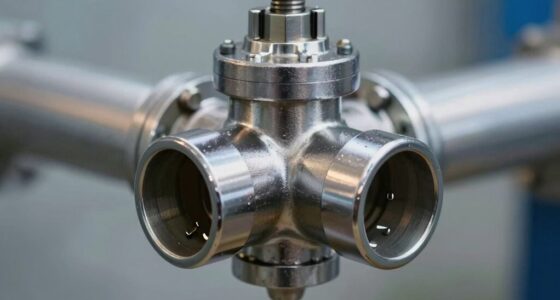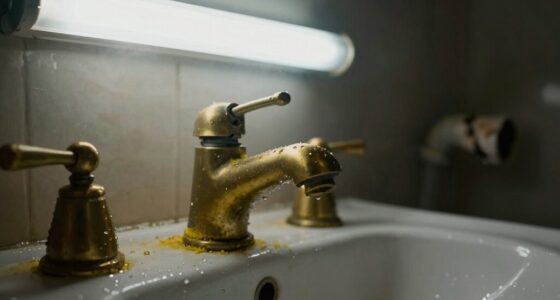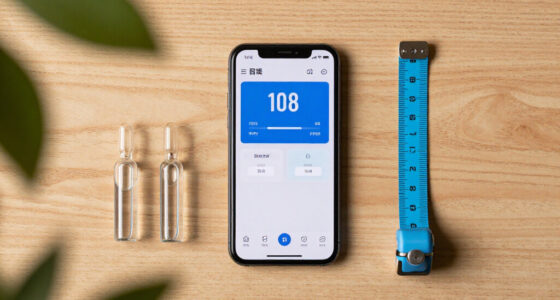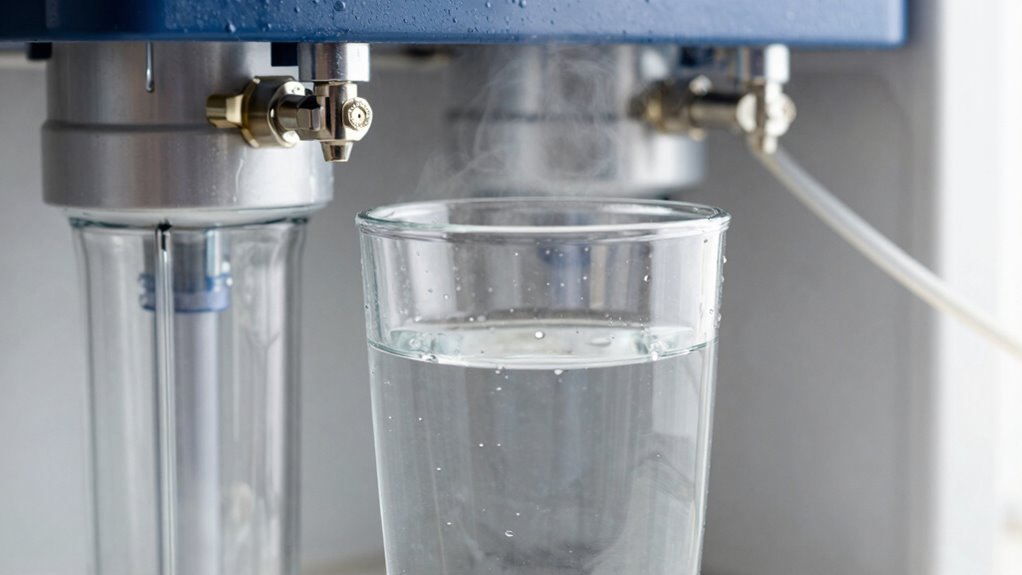

Reverse osmosis changes your water’s taste, waste, and pressure because it removes natural minerals that add flavor, often making water taste flatter or softer. It produces a lot of wastewater to flush out impurities, which impacts environmental sustainability. Additionally, the system’s flow decreases if not maintained properly, leading to lower pressure. Understanding these effects helps you optimize your system for better quality and efficiency; keep exploring to learn more about managing these changes effectively.

Prime made for students and young adults
- Fast, free delivery for dorm and study essentials
- Prime Video and Amazon Music included
- Member-only deals
Key Takeaways
- Reverse osmosis removes minerals that contribute to water’s natural flavor, affecting taste and making water softer or flatter.
- The filtration process generates wastewater (brine) to flush out impurities, increasing waste production and environmental impact.
- High contaminant levels in source water can lead to more waste and reduced system efficiency.
- Reduced water pressure can occur if the system isn’t maintained properly, affecting filtration performance.
- Proper maintenance and pre-filtration help prevent membrane fouling, ensuring consistent taste, pressure, and waste management.
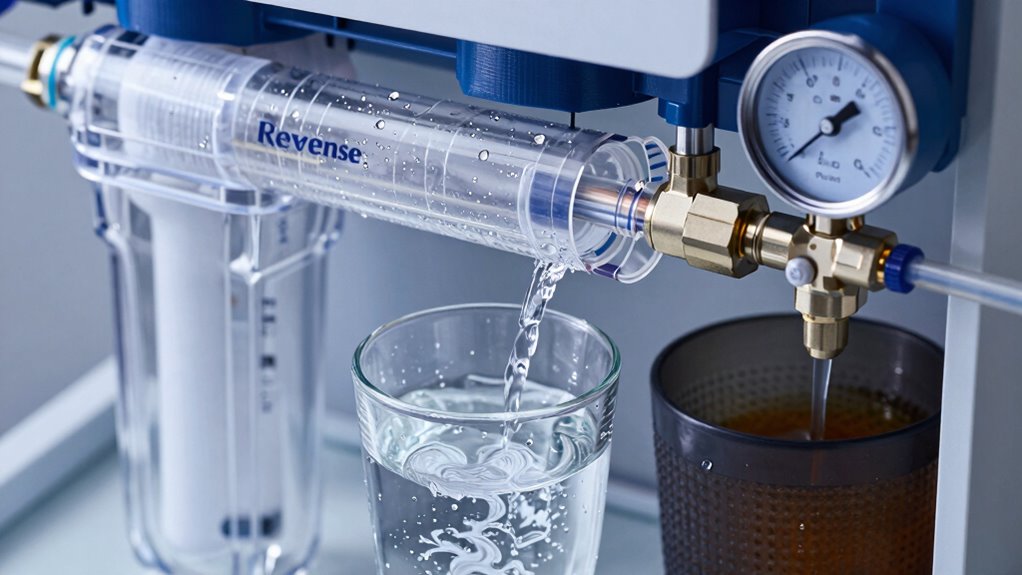
Reverse osmosis is a water purification process that removes contaminants by forcing water through a semipermeable membrane. As you use a reverse osmosis system, you might notice changes in the taste, waste production, and water pressure. These differences happen because of how the system works and what it filters out. When water passes through the membrane, it’s subjected to a high level of filtration efficiency, which means most impurities, chemicals, and microorganisms are effectively removed. However, this process also leads to the removal of minerals that naturally occur in water, such as calcium and magnesium. This mineral retention—or rather, mineral loss—can influence the taste, making it feel flatter or softer compared to tap water, which usually contains these minerals.
Because the system filters out so many particles, the purity of the water improves, but it also means that the water’s natural flavor profile changes. Some people find that after installing a reverse osmosis system, their water tastes cleaner and less metallic, but others might notice a slight dullness or a lack of mineral flavor. This is a direct result of the system’s ability to remove dissolved minerals, which are key contributors to water’s taste. To address this, many users add a mineral cartridge or remineralization filter to restore some of these essential minerals, balancing filtration benefits with better taste.
Another aspect to think about is the waste produced by reverse osmosis units. Because the process is highly effective but not 100% efficient, it results in a significant amount of wastewater, often called brine. This waste is necessary to flush away the concentrated impurities that don’t pass through the membrane. The more contaminants present in your source water, the more waste the system generates. This can make your system seem less environmentally friendly and more costly over time, as you’ll need to dispose of a fair amount of wastewater. The high filtration efficiency, while excellent for purity, contributes directly to this waste. Additionally, the water pressure from your system can decrease if it isn’t properly maintained or if the incoming water pressure is low, as the high-pressure pump forces water through the membrane but can be hindered by membrane fouling or clogging over time, leading to reduced flow rate and pressure. Regular maintenance and ensuring your system is correctly set up help maintain suitable pressure, ensuring your system continues to deliver high-quality water efficiently. It’s also worth noting that membrane fouling can be minimized by pre-filtering your water, which helps extend the lifespan of the membrane and maintain optimal performance. Proper filtration is crucial not only for reducing waste but also for preventing membrane fouling and ensuring the system functions efficiently over the long term. Moreover, understanding the importance of proper filtration can significantly improve the long-term operation of your system and reduce waste. In the end, the effects on taste, waste, and pressure are all intertwined, rooted in the core process that makes reverse osmosis so effective at purifying water.
reverse osmosis mineral cartridge
As an affiliate, we earn on qualifying purchases.
As an affiliate, we earn on qualifying purchases.
Frequently Asked Questions
How Often Should I Replace My Reverse Osmosis Filters?
You should replace your reverse osmosis filters every 6 to 12 months, depending on your water quality and usage. Regular filter maintenance is key to ensuring ideal taste and system efficiency. Follow your system’s recommended replacement schedule, and check for signs like reduced water flow or taste changes. Staying consistent with filter replacements helps prevent waste and maintains proper pressure, giving you clean, great-tasting water.
Does Reverse Osmosis Remove Beneficial Minerals From Water?
Like a gentle gardener tending to a delicate plant, reverse osmosis filters out harmful impurities, but also strips away beneficial minerals, leading to mineral depletion. This process can lower water pH, making it more acidic. While it guarantees purity, you lose essential minerals like calcium and magnesium, which are crucial for health. To balance this, consider mineral supplementation or remineralization filters to restore water’s natural vitality.
Can Reverse Osmosis Systems Remove Bacteria and Viruses?
Yes, reverse osmosis systems can remove bacteria and viruses through microbial filtration, making your water safer to drink. During water purification, the semi-permeable membrane traps these microorganisms, ensuring they don’t pass through. This process effectively reduces harmful pathogens, providing you with cleaner, healthier water. Keep in mind, some systems may include additional disinfection stages for added safety, enhancing overall water quality.
What Is the Typical Lifespan of a Reverse Osmosis Membrane?
You’ll typically get about 2 to 3 years of membrane durability and filtration lifespan from your reverse osmosis system. While some factors can shorten this, regular maintenance and using high-quality filters help prolong its life. Don’t worry—changing the membrane isn’t complicated. Keeping an eye on system performance ensures your water stays clean and tastes great, maximizing your investment in clean, fresh water.
How Does Temperature Affect the Efficiency of Reverse Osmosis?
Temperature fluctuations directly impact the efficiency of reverse osmosis systems. When water is warmer, membrane performance improves because the increased temperature enhances water flow and reduces viscosity, leading to better filtration. Conversely, colder water slows down the process, decreasing efficiency. You’ll notice that maintaining a consistent temperature helps optimize membrane performance, ensuring your system effectively removes contaminants without unnecessary waste or pressure issues.
RO water remineralization filter
As an affiliate, we earn on qualifying purchases.
As an affiliate, we earn on qualifying purchases.
Conclusion
Understanding how reverse osmosis changes taste, waste, and pressure helps you make better choices for your water. Did you know that a typical reverse osmosis system can waste up to 3 gallons of water for every gallon purified? While it improves taste and removes contaminants, being aware of its water efficiency can help you decide if it’s right for you. Ultimately, knowing these effects empowers you to optimize your water quality and usage.
reverse osmosis waste water diverter
As an affiliate, we earn on qualifying purchases.
As an affiliate, we earn on qualifying purchases.
As an affiliate, we earn on qualifying purchases.
Columbus Day / Indigenous Peoples' Day Picks
long weekend sales
As an affiliate, we earn on qualifying purchases.