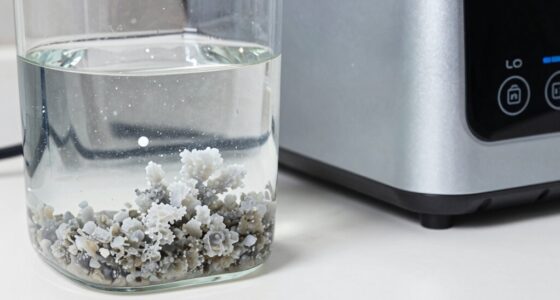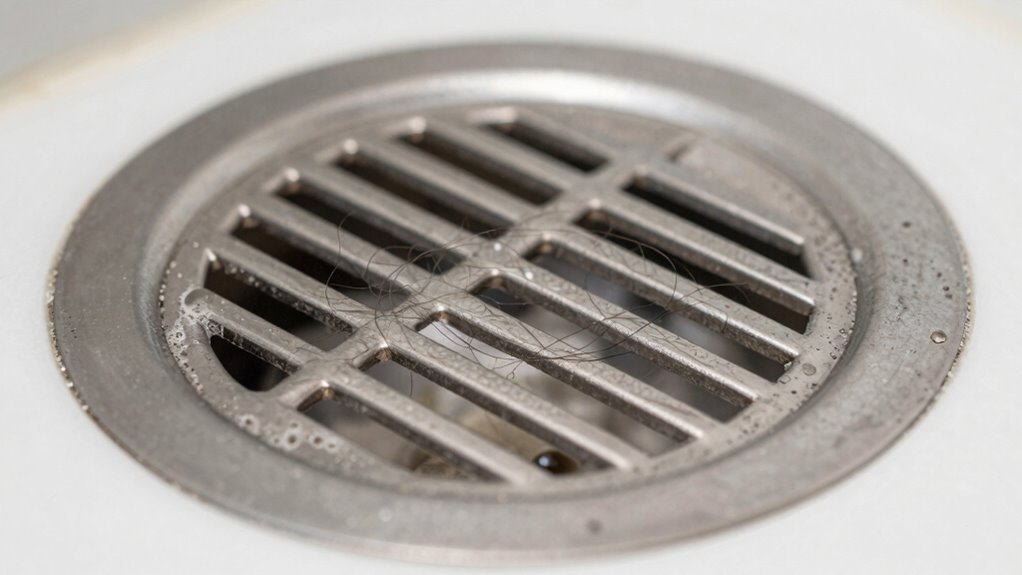

To prevent shower drain hair clogs, use drain covers or hair catchers that fit securely and empty them often to dispose of hair in the trash. Regularly flush your drain with hot water and baking soda to dissolve buildup naturally. Maintain a routine of weekly inspections and monthly deep cleanings, and avoid pouring hair down the drain. Consistent care makes a big difference—keep exploring for more simple, effective prevention strategies.
Key Takeaways
- Use drain guards or hair catchers consistently to trap hair before it enters the drain.
- Regularly remove accumulated hair and debris from drain covers and the drain area.
- Perform monthly deep cleaning with baking soda and hot water to dissolve buildup naturally.
- Avoid flushing or disposing of loose hair down the drain; dispose of it in the trash instead.
- Schedule routine inspections and maintenance to identify early signs of clogs and prevent major blockages.

zaa Shower Drain Hair Catcher, 2 Pack Premium Silicone Drain Protector & Shower Drain Cover, Shower Installation Kits for Flat Drains of Shower Room, Bathroom, Gray
【Work for Flat Drains】It measures 5.5 inches (14cm) in diameter, suitable for 5.5'' US standard floor drains of…
As an affiliate, we earn on qualifying purchases.
As an affiliate, we earn on qualifying purchases.
Why Do Hair Clogs Happen in Shower Drains?
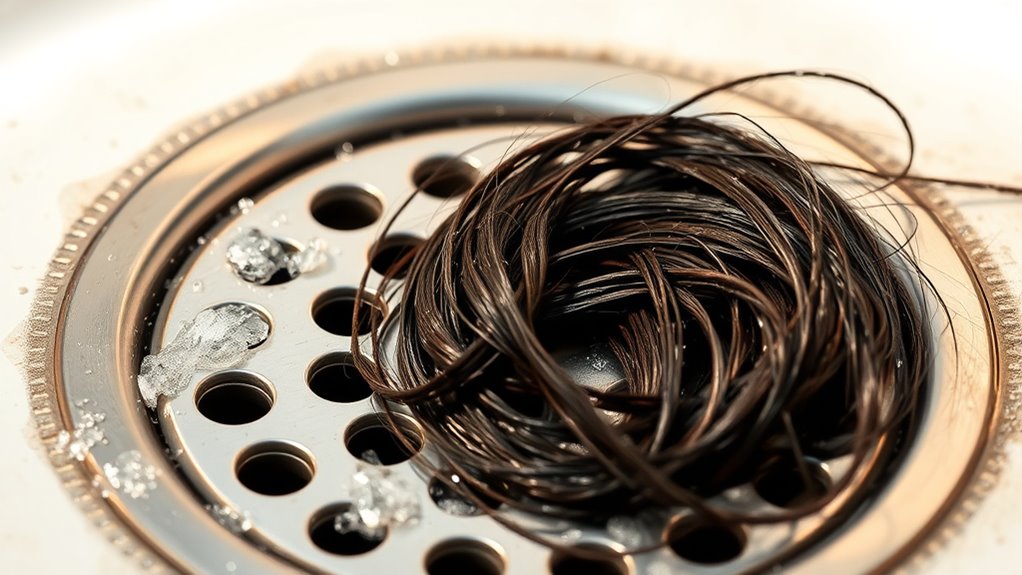
Hair clogs in shower drains happen primarily because hair naturally sheds during showers, and these strands often fall into the drain. As you wash, loose hair gets dislodged from your scalp and mixes with shower water, making its way toward the drain opening. Over time, this shed hair accumulates and tangles with soap scum, mineral deposits, and debris, creating a stubborn blockage. The constant flow of shower water can push hair deeper into the drain, where it gets caught on the sides or in the trap. If you don’t remove this buildup regularly, it can quickly turn into a significant clog that hampers water drainage. So, understanding this natural shedding process helps you see why hair buildup in your drain is inevitable without proper maintenance.
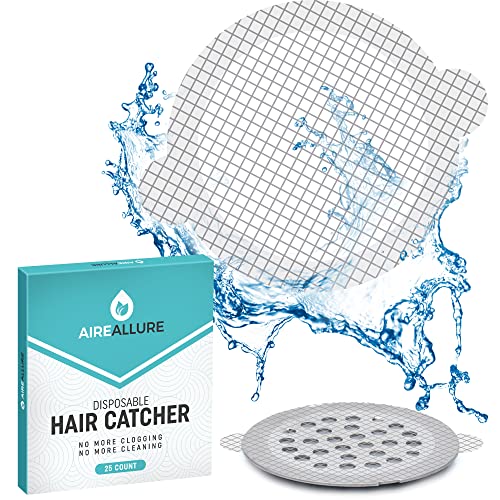
25 Pack Disposable Shower Drain Hair Catcher Mesh Stickers – Peel & Stick Drain Strainers to Prevent Clogs, Strong Waterproof Adhesive, Mess-Free Disposable Drain Covers for Shower & Bathtub
Disposable Convenience: The most sanitary and convenient way to protect your drain. No more cleaning hair or even…
As an affiliate, we earn on qualifying purchases.
As an affiliate, we earn on qualifying purchases.
How Regular Drain Maintenance Keeps Things Moving
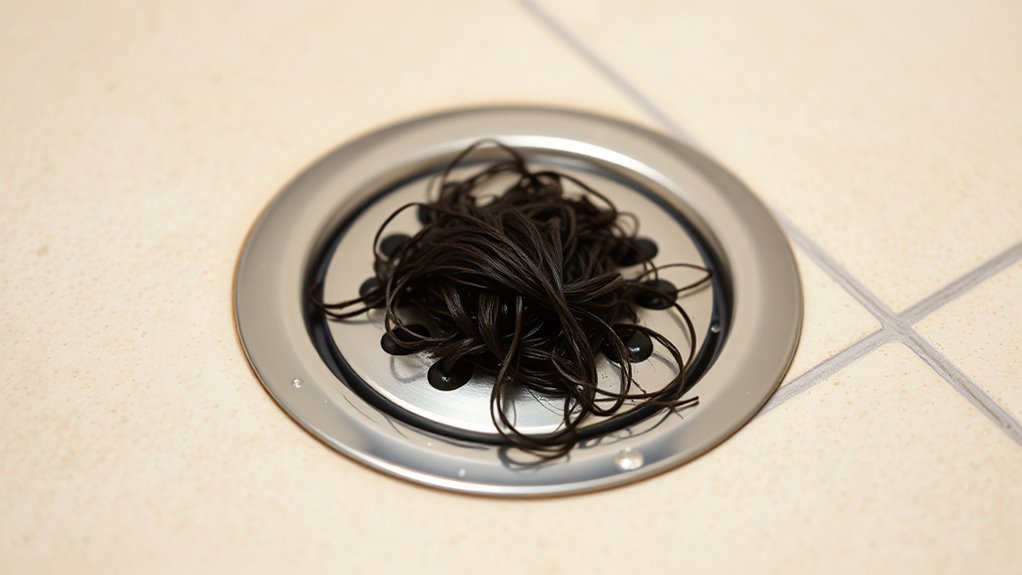
Regularly maintaining your shower drain is essential to prevent hair and debris buildup from causing stubborn clogs. Performing routine drain inspections allows you to spot potential issues early, such as minor blockages or leaks. During inspections, check for any signs of pipe sealing damage or corrosion that could lead to drainage problems. Proper pipe sealing ensures a secure fit, preventing leaks that can accelerate debris accumulation and cause backups. Keeping your drain clean and well-maintained helps things keep moving smoothly, reducing the need for costly repairs later. Regular maintenance also extends the lifespan of your plumbing system, saving you time and money. By staying proactive with drain inspection and pipe sealing, you maintain ideal flow and prevent hair clogs from becoming major headaches. Incorporating sizing and load‑planning tools can help ensure your plumbing system is appropriately configured to handle regular use and prevent overloading that might contribute to clogs.

MRS. MEYER'S CLEAN DAY Probiotic Drain Maintenance Liquid, Lavender, Freshens Disposals and Drains, 32 Fl Oz
Mrs. Meyer’s Probiotic Drain Maintenance contains micro-helpers that actively work to prevent buildups, and freshen up any drain…
As an affiliate, we earn on qualifying purchases.
As an affiliate, we earn on qualifying purchases.
How to Use Drain Guards and Hair Catchers Right
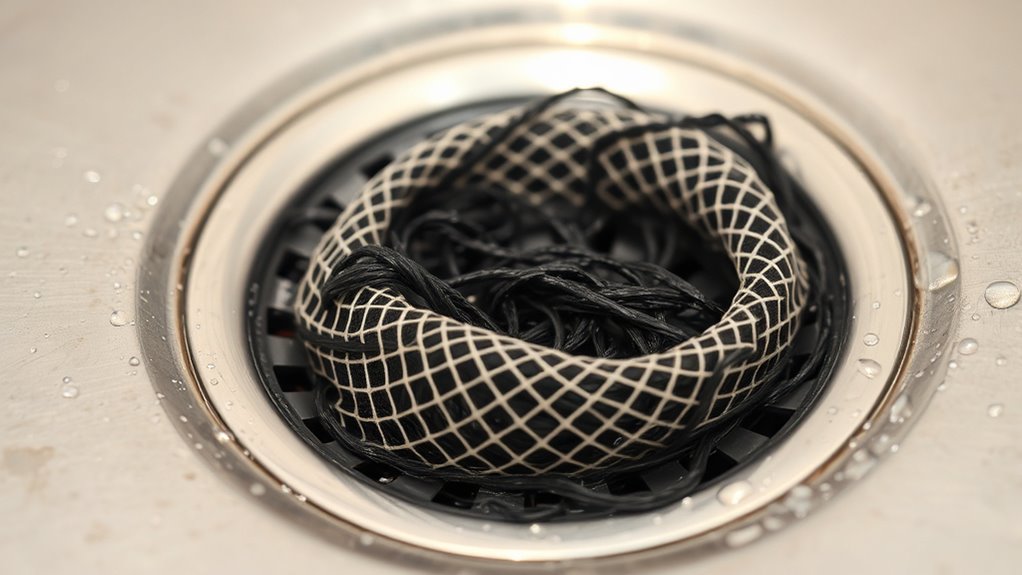
Using drain guards and hair catchers correctly is one of the most effective ways to keep hair out of your pipes and prevent clogs. Proper hair disposal begins with choosing a quality drain guard that fits securely over your drain opening. Make sure the drain guard placement allows water to flow freely while trapping hair and debris. Regularly remove the hair catcher and clear it of accumulated hair to prevent buildup. Always rinse the guard with water before reinstalling to keep it clean and effective. Avoid the temptation to force hair through or bypass the guard, as this defeats its purpose. Consistent use and proper maintenance of your drain guard will considerably reduce hair-related clogs and keep your shower drain flowing smoothly. Understanding your home’s plumbing system can help you troubleshoot and maintain your drain more effectively.

BWVV Visual Drain Clog Remover,Drain Snake Camera with HD Inspection, Aluminum Alloy Claw,Strong Magnetic Suction Head,Adjustable LED Light,Suitable for Blockage Detection Cleaning and Item Retrieval
Professional Tool:This drain cleaner with an HD camera and adjustable LED lights,and the hair drain clog remover provides…
As an affiliate, we earn on qualifying purchases.
As an affiliate, we earn on qualifying purchases.
What Are Best Practices for Hair Disposal?
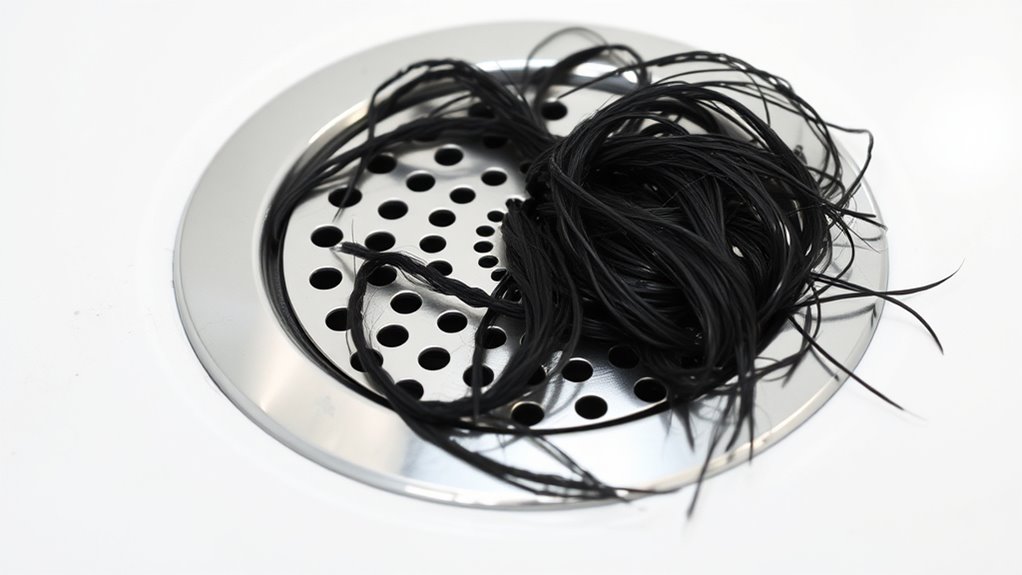
To prevent hair clogs, you should use hair catchers regularly and empty them often. Always dispose of collected hair in the trash, not down the drain or toilet. Avoid flushing excess hair, and be mindful of how much hair goes into your plumbing to keep your drain clear. Incorporating visual cues can help remind you to check and clean your hair catchers frequently.
Use Hair Catchers Regularly
Installing hair catchers in your shower drain is one of the simplest and most effective ways to prevent hair from causing clogs. Make it a habit to use them every time you shower, as this minimizes loose hair from reaching the drain. Regular use of hair catchers aligns with your shower cleaning routines, making maintenance easier. Remember to check and clean the catchers frequently to remove accumulated hair and debris, preventing buildup. Incorporate simple hair removal tips, like brushing your hair before showering or tying long hair back, to reduce shedding. Consistently using hair catchers saves you time on unclogging and keeps your drain flowing smoothly. It’s a proactive step that complements your overall drain maintenance strategy, ensuring fewer blockages and less hassle. Additionally, choosing high-quality, durable European cloud solutions can support your home’s smart maintenance systems, making drain care even more efficient.
Dispose of Hair Properly
Ever wonder what’s the best way to dispose of hair after a shower? Proper hair disposal is key to maintaining your shower drain and preventing clogs. Instead of flushing hair down the drain, gather it with tissue or a paper towel and throw it in the trash. This simple step keeps hair from accumulating in your pipes, reducing the need for frequent drain cleaning. Remember, hair disposal practices directly impact shower drain maintenance; improper disposal can lead to stubborn clogs that are tough to clear. Always check your drain area after showering to remove any loose hair, even if you use a hair catcher. Free Floating hair in the plumbing can cause significant blockages if not managed properly. By disposing of hair responsibly, you help keep your plumbing clear and your shower running smoothly.
Avoid Excess Hair Flushing
Since flushing large amounts of hair can quickly clog your drain, it is essential to dispose of hair properly instead of flushing it down the toilet or sink. Excess hair flushing can lead to costly shower drain maintenance issues. To prevent this, consider these best practices for hair disposal:
- Use a hair catcher or drain screen to catch loose strands before they go down the drain.
- Collect shed hair in a tissue or trash bin instead of flushing.
- Regularly clean your drain and remove trapped hair to maintain proper flow.
Should You Use Chemicals or Natural Methods to Clean Drains?
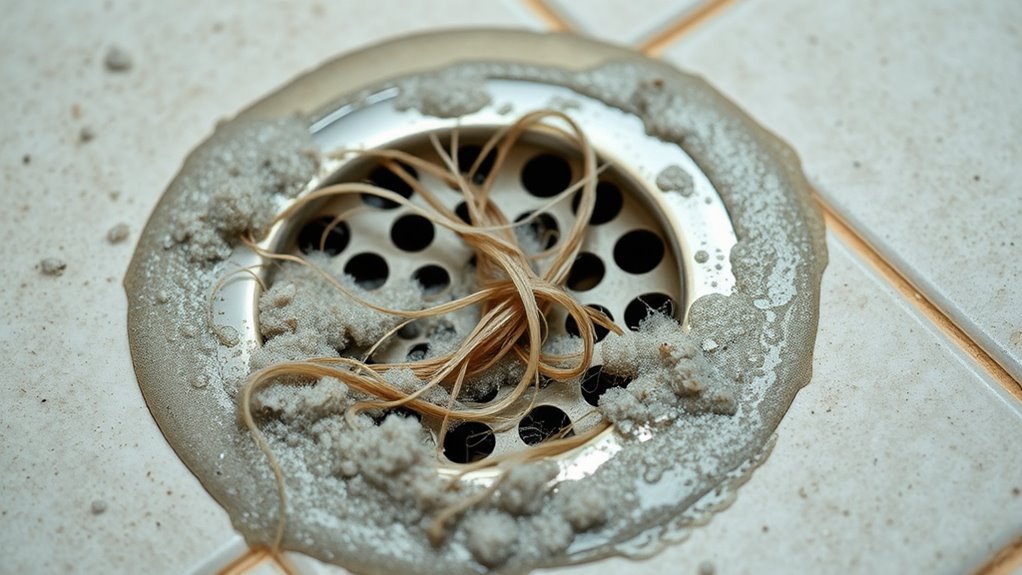
When it comes to cleaning shower drain hair clogs, you might wonder whether to rely on harsh chemicals or natural methods. The choice between chemical vs. natural drain cleaning options depends on your priorities. Chemical cleaners work quickly and effectively at breaking down buildup, but they can also damage pipes and harm the environment. Natural methods, like enzyme-based solutions or physical removal, are gentler and safer for your plumbing and the planet. While chemical options might seem more convenient, natural methods promote long-term drain health and reduce the risk of pipe damage. Consider your drain’s condition, your safety concerns, and eco-friendliness when choosing between these approaches. Often, a combination of natural maintenance and careful chemical use provides the best results for preventing hair clogs.
How Hot Water and Baking Soda Help Prevent Hair Clogs
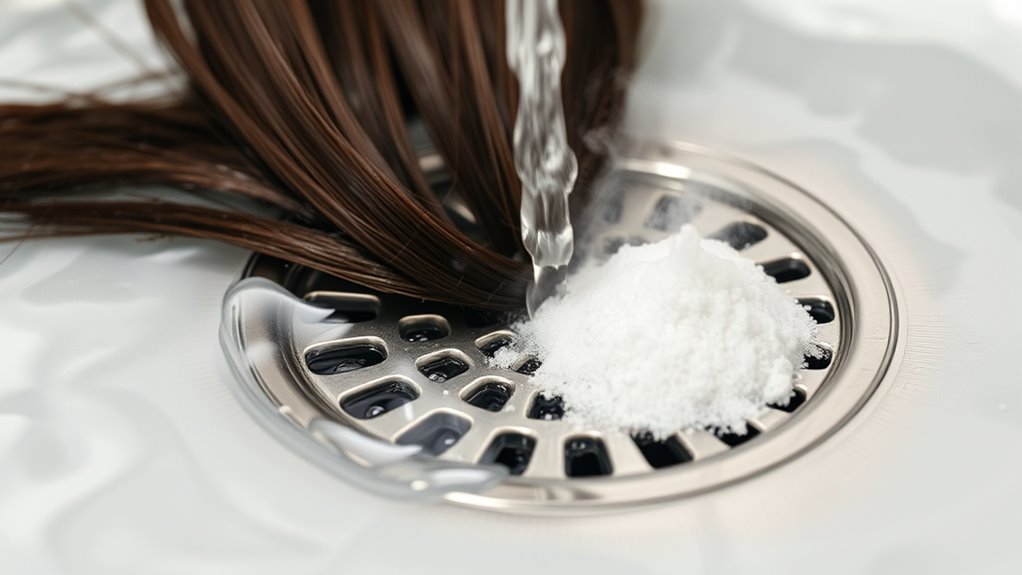
Hot water and baking soda work together as simple, effective tools to prevent hair clogs in your shower drain. These natural remedies help break down hair and soap buildup before it causes blockages. Hot water flushes debris, while baking soda’s alkaline properties loosen grime and neutralize odors. Unlike commercial solutions, this combo is safe for your pipes and eco-friendly. Regularly pouring hot water down your drain can prevent hair from settling, and adding baking soda weekly boosts this effect.
- Dissolves hair strands and soap scum naturally
- Prevents buildup without harsh chemicals
- Cost-effective and easy to use
How to Flush Your Drain for Long-Term Prevention
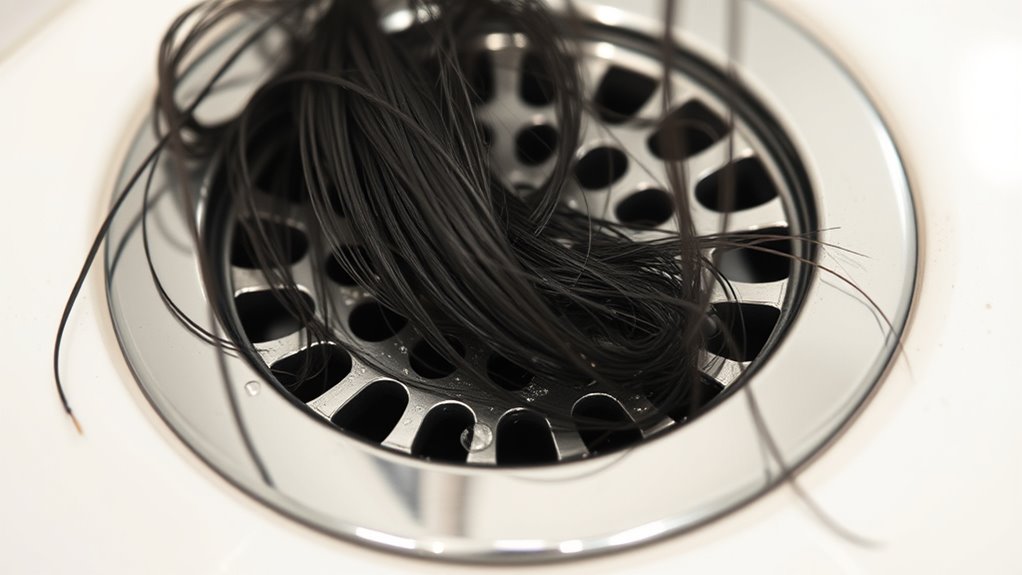
Regularly flushing your drain with a combination of hot water and baking soda is an effective way to maintain long-term prevention of hair clogs. This eco-friendly cleaning method helps break down buildup and keeps your pipes clear. For DIY drain tips, consider routine flushing every few weeks to prevent hair from accumulating. Use the table below to understand the steps better:
| Step | Description |
|---|---|
| Prepare the mixture | Boil water, add baking soda, then pour down the drain. |
| Flush with hot water | Follow with hot water to clear residue. |
| Repeat regularly | Maintain this routine monthly for best results. |
| Additional tips | Use eco-friendly cleaning products when needed. |
This simple process ensures a cleaner drain and reduces the need for harsh chemicals, helping to prevent future blockages effectively.
What Are the Early Signs of a Drain Blockage?
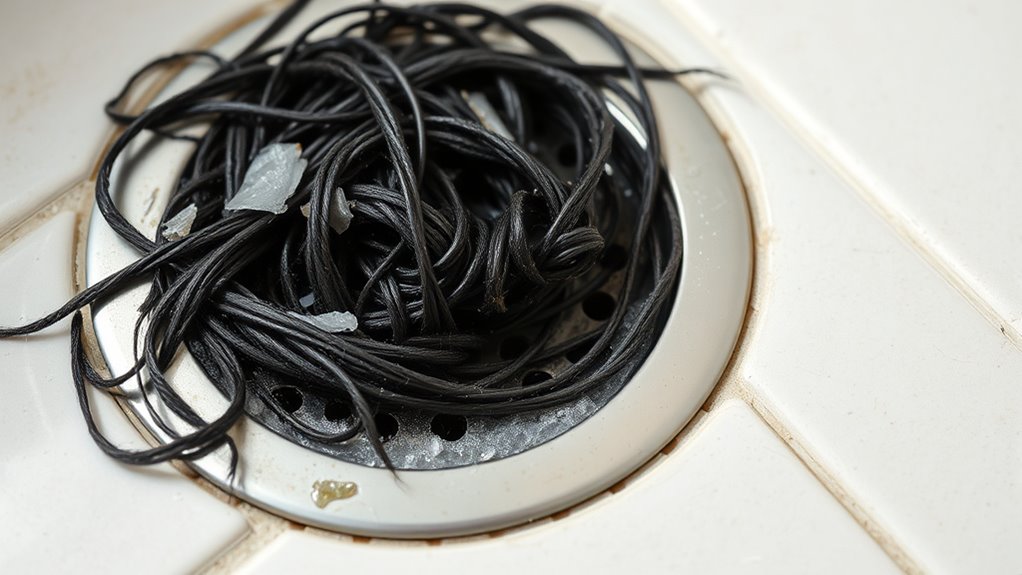
You might notice your shower drain starts to slow down, making water take longer to go away. Unpleasant odors could also begin to linger around, signaling a buildup. Additionally, gurgling noises coming from the drain are a clear sign something’s clogging the pipe. Recognizing these early signs of a drain blockage can help prevent more serious plumbing issues.
Slow Drain Flow
When a drain begins to slow, it’s often an early warning sign that a clog is forming. You might notice slower water drainage after your shower, signaling buildup. To prevent this, consider your hair removal techniques—excess hair can cling to pipes and cause blockages. Additionally, reduced shower water pressure can indicate a developing clog. Keep an eye out for these signs:
- Water pooling or taking longer to drain
- Gurgling sounds during drainage
- A noticeable drop in water flow speed
Addressing these issues early helps prevent major clogs. Regularly clearing out hair and debris, and using drain screens, can keep water flowing smoothly. Catching slow drain flow early saves you from costly repairs later. Maximize Your Truck Bed’s Potential by also maintaining proper drainage in your plumbing system.
Unpleasant Odors Emerge
As a drain begins to clog, one of the earliest signs often overlooked is the emergence of unpleasant odors. These smells happen when hair removal and debris accumulate, creating a breeding ground for bacteria and mold. If you notice a foul smell lingering even after running water, it could indicate a developing blockage. To prevent odors, regularly clean out hair and debris from your drain and consider using odor prevention methods like baking soda and vinegar. Proper hair removal before showering helps reduce the amount of hair that enters your drain, minimizing buildup and the chance of odors. Addressing odors early can save you from more serious clogs later, keeping your shower fresh and your drain functioning smoothly. Incorporating regular maintenance routines can further help in preventing these issues from escalating.
Gurgling Noises Appear
Gurgling noises often signal that a drain is starting to clog, even before a full blockage occurs. When hair shedding builds up, it can slow water flow and cause air to get trapped, resulting in those telltale sounds. You might notice your shower water draining more slowly or irregularly, accompanied by gurgles. These sounds indicate debris is accumulating and disrupting the normal flow.
- Water drains unevenly or with bubbles
- Gurgling sounds increase during and after showers
- Slow water flow persists even after clearing the drain
Pay attention to these early signs; they’re your warning that a hair-related clog is forming. Acting quickly can prevent a more severe blockage and save you from costly repairs later.
When Is It Time to Call a Plumber?
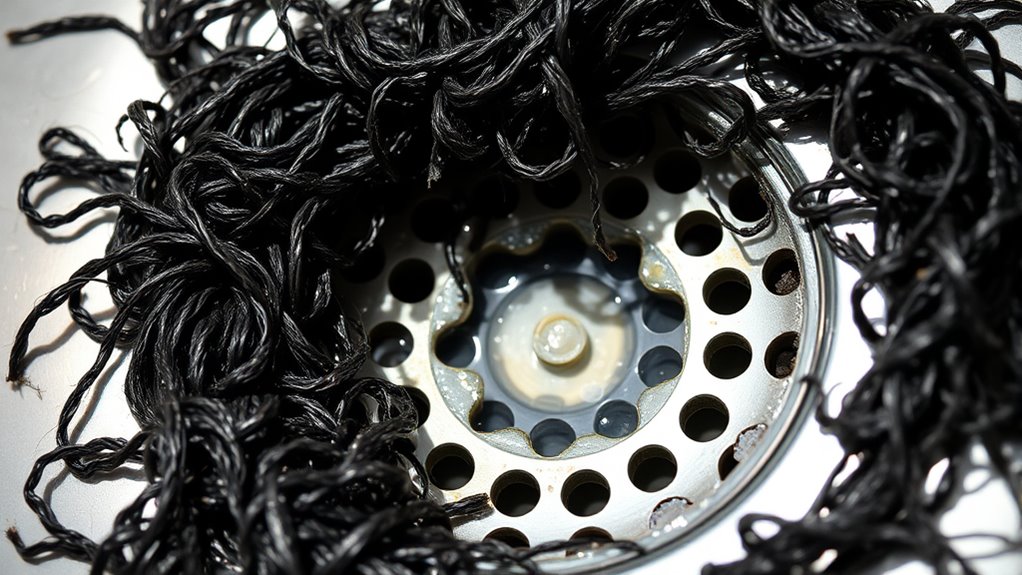
Sometimes, despite your best efforts to clear a clogged shower drain, the blockage persists or worsens over time. If plunging and drain cleaning solutions don’t improve the flow, it’s time to call a plumber. Ignoring ongoing clogs can lead to plumbing emergencies like leaks or water damage. Use drain inspection tips such as a camera scope to identify deep or hidden blockages. If you notice foul odors, gurgling sounds, or water backing up, these are signs you need professional help. A plumber can accurately diagnose the problem, prevent further damage, and save you from costly repairs later. When standard DIY methods fail, trusting a professional is your best move to restore proper drainage and avoid bigger issues.
How to Set Up a Maintenance Routine for Your Shower Drain
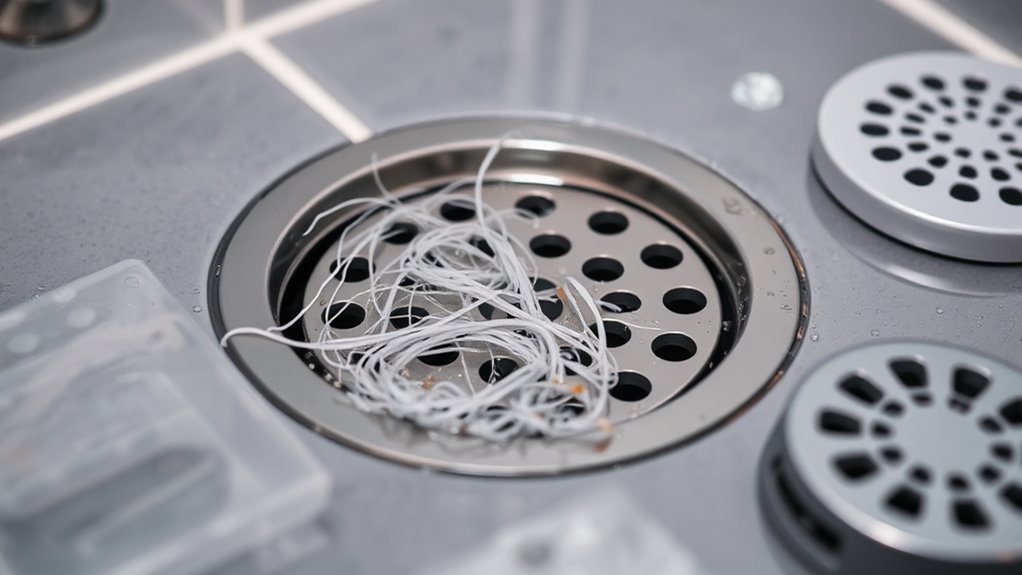
Setting up a maintenance routine helps prevent hair clogs before they start. You should create a regular cleaning schedule to remove buildup and keep water flowing smoothly. Using drain covers also catches hair and debris, making cleanup easier and reducing the chance of clogs. Regularly inspecting your drain can also help identify potential issues early, similar to how precious metal investments are monitored to prevent larger problems.
Regular Cleaning Schedule
Establishing a regular cleaning schedule is essential to prevent hair clogs from building up and causing drainage issues. By sticking to a routine, you can catch problems early and reduce the need for costly repairs. Regularly perform hair removal around the drain area to prevent loose strands from accumulating. Conduct drain inspection weekly to check for any signs of buildup or blockages. Incorporate these practices into your schedule:
- Remove visible hair and debris after each shower
- Use a drain snake or plunger for quick inspections
- Schedule deep cleans every month with a drain cleaner
This proactive approach minimizes hair buildup, keeping your drain flowing smoothly. Consistency is key—sticking to a routine helps you avoid unexpected clogs and plumbing headaches down the road.
Use Drain Covers
Using drain covers is an effective way to catch hair and debris before they cause clogs. There are various drain cover options available, from simple mesh screens to more durable rubber or silicone inserts. Choose one that fits your drain size securely and is easy to remove for cleaning. Installation tips include cleaning the drain opening first, then positioning the cover snugly over it to prevent debris from slipping underneath. Regularly check and clean the cover to maintain proper water flow and prevent buildup. If you notice the cover collecting a lot of hair or debris, clean it more often to reduce the risk of clogs. Proper use of drain covers simplifies maintenance and keeps your shower drain clear and functional.
Frequently Asked Questions
Can Certain Shampoos or Hair Products Increase Clog Risks?
Yes, certain shampoos and hair products can increase clog risks. If you use products with heavy formulas or those that leave behind lots of hair residue, they can accumulate over time, leading to product buildup in your drain. This buildup traps more hair and debris, making clogs more likely. To prevent this, opt for lightweight, clarifying shampoos and regularly clean your drain to reduce hair residue and buildup.
Do Drain Covers Reduce Hair Buildup Effectively?
Drain covers are quite effective for hair buildup prevention because they catch loose hairs before they enter the drain, reducing clog risks. By using a drain cover regularly, you prevent hair accumulation and minimize the need for harsh cleaning or professional help. Keep your drain cover clean and in good condition to maintain its effectiveness, ensuring your shower drains smoothly and stays clog-free longer.
How Often Should I Clean My Drain to Prevent Clogs?
Like tending a garden, maintaining your drain requires regular care. You should clean your drain at least once a month to prevent clogs, especially if you notice slower water flow. Incorporate routine inspections to catch hair buildup early. Using a drain cover helps, but consistent maintenance guarantees your drain stays clear. Adjust the frequency based on your hair shedding and bathroom usage to keep clogs at bay.
Are There Eco-Friendly Options for Hair Clog Prevention?
Yes, you can use eco-friendly options like biodegradable solutions and reusable filters. Biodegradable solutions break down naturally, preventing clogs without harming the environment. Reusable filters catch hair before it enters the drain and can be washed and reused, reducing waste. Incorporating these options into your routine helps prevent hair clogs while supporting sustainability. They’re effective, affordable, and environmentally responsible choices for maintaining a clear shower drain.
What Are Signs That a Clog Is Causing Water Damage?
Think of your shower drain like a dam holding back water. If you notice visual signs like persistent damp spots, peeling paint, or mold around your bathroom, it’s a red flag. These indicate water damage caused by a clog preventing proper drainage. You might also see warped flooring or a musty smell. Catching these signs early helps you prevent costly repairs and keeps your bathroom dry and healthy.
Conclusion
Think of your shower drain as a garden hose. When you regularly clear debris and use the right filters, water flows smoothly, nourishing your bathroom’s health. Skip maintenance, and it’s like letting dirt and hair clog the hose, blocking the flow. Stay vigilant, catch early signs, and keep your drain well-maintained—your shower will keep flowing freely, just like a well-tended garden springing to life with clear, invigorating water.