
If your ice cubes taste weird, it often means there’s impurities, bacteria, or chemicals in your water or equipment. Contaminants like minerals, chlorine, or organic matter can cause off-flavors, and unclean ice makers can harbor bacteria or mold. Poor storage or inconsistent freezing temperatures may also affect taste. To fix this, you need to check your water source, clean your equipment, and consider filtration. Keep these tips in mind to understand what’s causing the problem and how to solve it.
Key Takeaways
- Impurities or contaminants in water, such as chemicals or bacteria, can cause off-flavors in ice cubes.
- Poor storage conditions or unclean equipment promote microbial growth, leading to foul tastes and odors.
- High mineral content, like calcium or magnesium, can impart metallic or stale flavors to ice.
- Inadequate filtration leaves impurities that affect ice clarity and taste, indicating water quality issues.
- Absorbing odors from surrounding foods or chemicals suggests improper storage or contaminated environment.
As an affiliate, we earn on qualifying purchases.
What Causes Ice Cubes to Taste Weird?
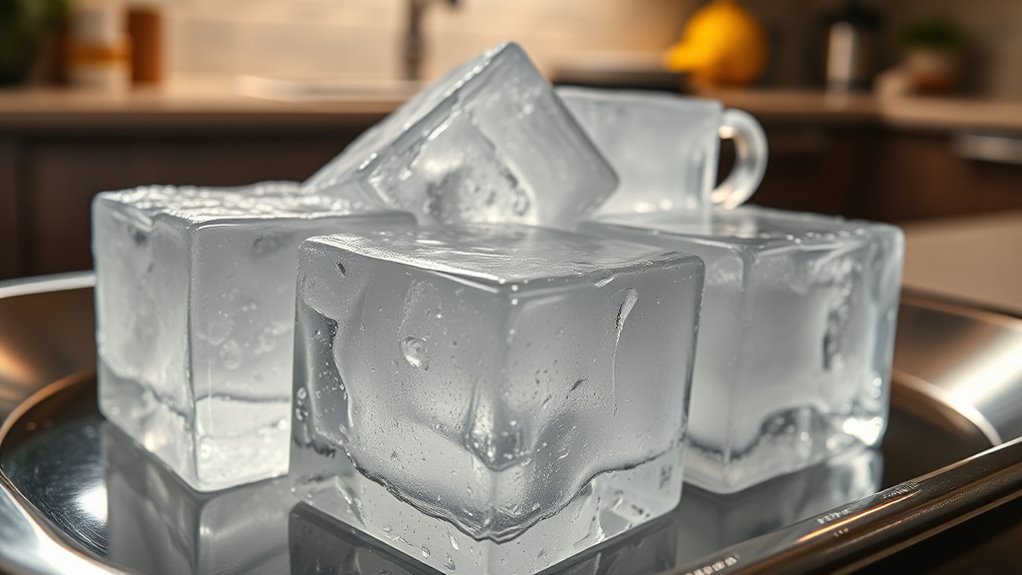
One common reason ice cubes taste weird is because of impurities or contaminants in the water used to make them. These impurities cause flavor interference, which alters the natural taste of the ice. Water contamination can come from a variety of sources, such as old pipes, dirty filters, or storage containers. When the water contains minerals, chemicals, or bacteria, these substances transfer into your ice, creating an unpleasant or unusual flavor. Even tap water that appears clear might carry trace contaminants that affect taste. Using unfiltered or poorly maintained water sources increases the likelihood of water contamination, making your ice taste off. Ensuring clean, high-quality water is essential to prevent flavor interference and enjoy pure-tasting ice. Additionally, water quality plays a crucial role in maintaining the taste and safety of your ice cubes.
water testing kit for impurities
As an affiliate, we earn on qualifying purchases.
As an affiliate, we earn on qualifying purchases.
How Impurities Affect the Flavor of Your Ice

Impurities like contaminants and minerals in your water can change how your ice tastes. When these substances are present, they often leave a bitter or strange flavor in your cubes. Knowing what’s in your water helps you understand why your ice might taste off. Using at‑home water testing kits can help you identify these impurities more precisely.
Contaminants in Water
Have you ever noticed a strange taste or smell in your ice cubes? That’s often caused by contaminants in your water, which can come from various sources like old pipes, storage tanks, or nearby pollutants. These contaminant sources introduce impurities that directly affect water quality, altering the flavor of your ice. When water contains harmful substances like chlorine, pesticides, or organic matter, it becomes a poor water quality indicator, signaling potential health risks. Such impurities can produce off-putting tastes and odors, making your ice cubes unpleasant. Regular testing or using high-quality filtration can help identify and remove these contaminants, ensuring your ice tastes clean and fresh. Recognizing water quality issues early prevents unpleasant surprises in your drinks and promotes better health. Water quality issues can also indicate broader environmental concerns that may impact your overall water safety.
Mineral Content Impact
Mineral content in your water plays a significant role in shaping the flavor of your ice cubes. Mineral deposits from sources like calcium and magnesium contribute to water hardness, which affects taste. Hard water often has a metallic or bitter flavor that becomes more noticeable when frozen. These minerals can also create a cloudy appearance in your ice, indicating high mineral content. When mineral deposits are present, they can alter the overall flavor profile, making your ice taste stale or off. If you notice a strange taste or cloudiness, it’s likely due to water hardness or mineral impurities. Using filtered or softened water can help reduce mineral deposits, resulting in clearer, better-tasting ice that doesn’t interfere with your beverages. Proper water treatment methods can effectively minimize mineral content, enhancing ice quality.
As an affiliate, we earn on qualifying purchases.
Can Bacteria Make Your Ice Taste Bad?
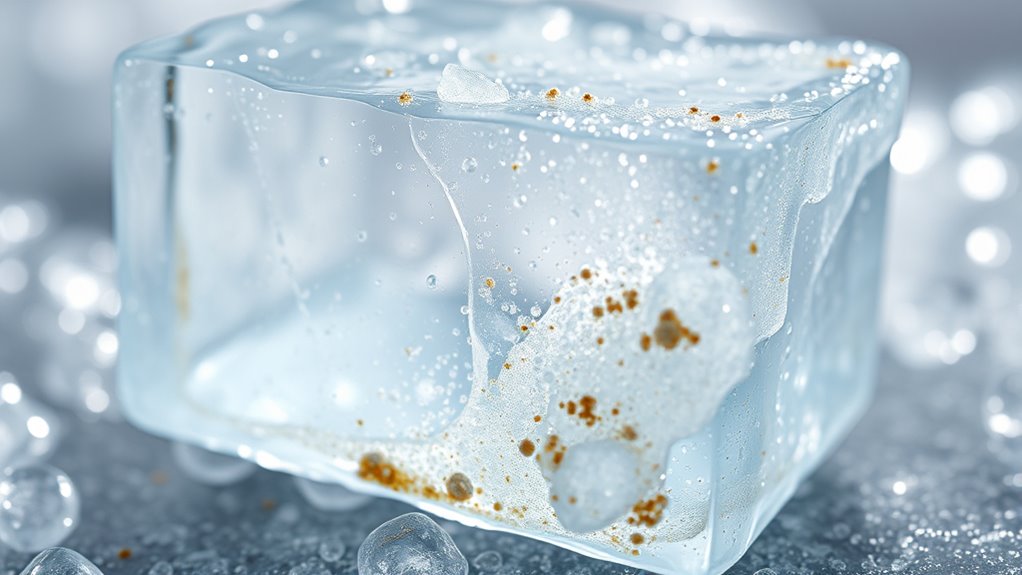
Bacteria can indeed cause your ice to taste bad, especially if the ice maker or storage container isn’t cleaned regularly. When bacteria such as coliforms or other microbes grow in moist, unclean environments, they can produce foul odors and flavors in your ice. Bacterial growth thrives in dirty ice makers, leading to contaminated cubes. Mold development can also occur if moisture remains stagnant, adding a musty or earthy taste to your ice. These microorganisms don’t just affect taste—they can pose health risks as well. Regularly cleaning your ice maker and storage containers helps prevent bacterial buildup and mold development. Ensuring proper hygiene stops these microbes from colonizing, keeping your ice fresh, clean, and safe to enjoy. Additionally, using quality ice makers and maintaining them properly can reduce the risk of contamination.
As an affiliate, we earn on qualifying purchases.
How Water Source and Filters Change Ice Flavor

Your water source and filters play a big role in how your ice tastes. Tap water’s mineral content and impurities can influence flavor, while quality filters can remove unwanted tastes and odors. Understanding these factors helps you choose the best water and filter setup for clean, tasty ice. Additionally, using sound therapy or calming music during water filtration can enhance the purity and overall sensory experience of your ice.
Tap Water Composition
The source of your tap water plays a crucial role in shaping the taste of your ice cubes, as different water supplies contain varying minerals and impurities that can affect flavor. Water’s unique properties, like hydrogen bonds and water polarity, influence how these minerals dissolve and interact. Hydrogen bonds help determine how molecules stick together, impacting taste and clarity. Water polarity causes minerals and impurities to separate or cling to surfaces, affecting the overall flavor profile. If your water has high mineral content, it can introduce metallic or earthy notes into your ice. Conversely, purified water with fewer impurities produces cleaner, crisper-tasting ice. Understanding your water’s composition helps you identify potential flavor issues and choose the right source or treatment for better-tasting ice. Additionally, maintaining proper filter maintenance can minimize unwanted mineral buildup and impurities, enhancing the clarity and flavor of your ice.
Filter Effectiveness
Filters considerably influence the taste of your ice by removing or reducing impurities and minerals from the water source. The filter’s effectiveness determines how well it improves water quality and guarantees consistent ice flavor. A high-quality filter provides better quality assurance by reducing chlorine, sediment, and odors that can cause off-tastes. Not all filters perform equally, so choosing one with proven effectiveness is vital. Here’s a comparison:
| Filter Type | Effectiveness & Quality Assurance |
|---|---|
| Activated Carbon | Removes chlorine and odors |
| Reverse Osmosis | Eliminates most impurities |
| Ion Exchange | Reduces minerals that cause taste issues |
| UV Filtration | Kills bacteria, enhances purity |
Using an effective filter enhances your ice taste and guarantees cleaner, fresher cubes. Selecting the right filter also depends on understanding water source quality and how different purification methods can impact taste and safety.
Mineral Content Levels
Mineral content in the water source plays a significant role in shaping the flavor of your ice cubes. High mineral levels, especially calcium and magnesium, contribute to water hardness, which can cause ice to taste metallic or chalky. When your water is hard, the minerals don’t just affect the taste—they also influence how the ice melts and interacts with your palate. Using appropriate filtration systems can reduce mineral content, softening the water and improving ice flavor. Conversely, untreated well water or tap water with high mineral levels may produce cloudy, off-tasting ice. Understanding your water’s hardness helps you choose suitable filters or water sources, ensuring your ice cubes taste clean and neutral. Proper mineral management prevents undesirable flavors and enhances the overall quality of your ice.
How Storage Conditions Impact Ice Taste

Storage conditions play a crucial role in determining how ice tastes, as improper storage can lead to unwanted flavors and odors. If the storage temperature isn’t consistent or is too warm, ice can absorb nearby smells, resulting in off-tastes. Keeping ice in a freezer set at the right temperature, ideally around 0°F (-18°C), helps preserve its neutral flavor. The container material also matters—plastic containers can sometimes retain odors or leach chemicals that affect taste, while stainless steel or glass containers are less likely to influence flavor. Avoid storing ice near strong-smelling foods or chemicals, as these odors can easily transfer. Proper storage guarantees your ice remains clean, fresh, and free of undesirable tastes, so you enjoy it without surprises. Additionally, using appropriate storage containers can further help maintain ice quality and prevent contamination.
How to Spot and Fix Weird-Tasting Ice at Home
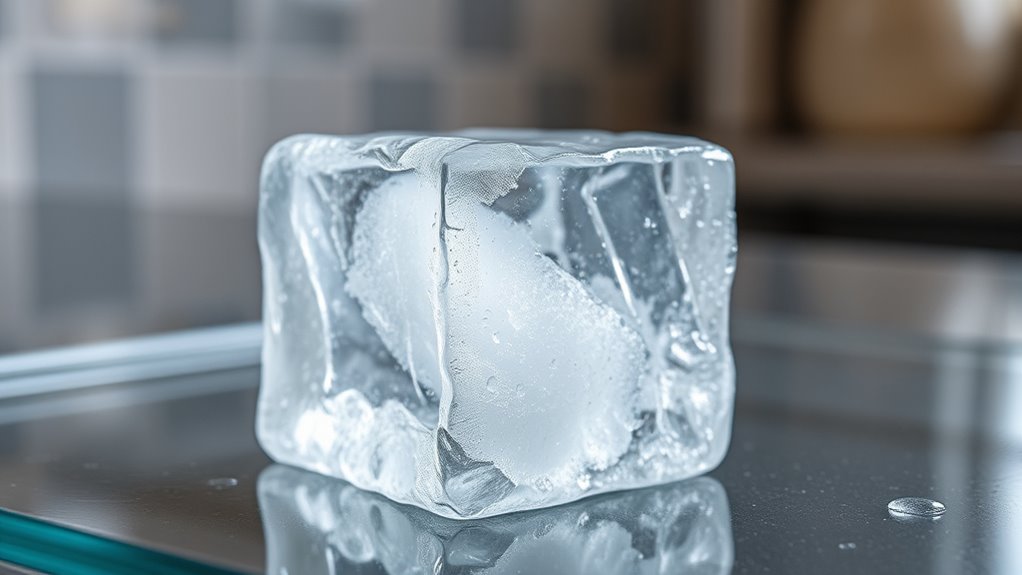
Start by checking your water source to make sure it’s clean and free of odors. Next, clean your ice maker regularly to remove any buildup or mold that could affect the taste. Addressing these simple steps can often fix weird-tasting ice quickly and effectively.
Check Water Source
If your ice cubes taste weird, the problem might be with your water source. Poor water purity or low source quality can introduce odors and flavors into your ice. To identify and fix this, consider these steps:
- Test your tap water for taste and odor issues—use a water testing kit if needed.
- Switch to filtered or bottled water to ensure better water purity.
- Check your plumbing for corrosion, which can leach metals affecting taste.
- Inspect your water source—if you use well water, have it tested regularly for contaminants.
Clean Ice Maker
A dirty ice maker can be a common culprit behind weird-tasting ice, so it’s important to keep it clean. Over time, mineral deposits, mold, and bacteria can build up, affecting ice cube clarity and flavor. Regularly cleaning your ice maker helps remove these residues, improving the clarity of your ice cubes and enhancing their taste. To clean it, turn off the machine, empty the ice bin, and run a mixture of water and vinegar through the system or follow your manufacturer’s cleaning instructions. Rinse thoroughly to prevent lingering odors or residues. Well-maintained equipment ensures your ice cubes are clear, fresh, and free from off-flavors, making your drinks taste better and ensuring that your ice isn’t a source of weird taste.
When Ice Might Be Unsafe to Eat
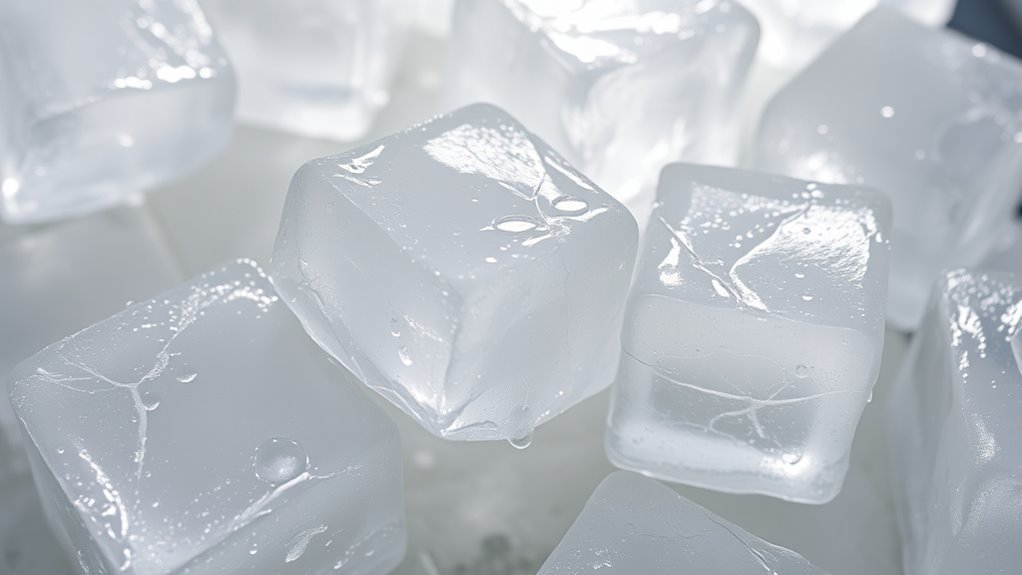
You should be cautious about eating ice when it shows signs of contamination or has been stored improperly. Poor ice purity can hide bacteria or mold, posing health risks. To stay safe, watch for these warning signs:
- Unpleasant or sour smell coming from the ice
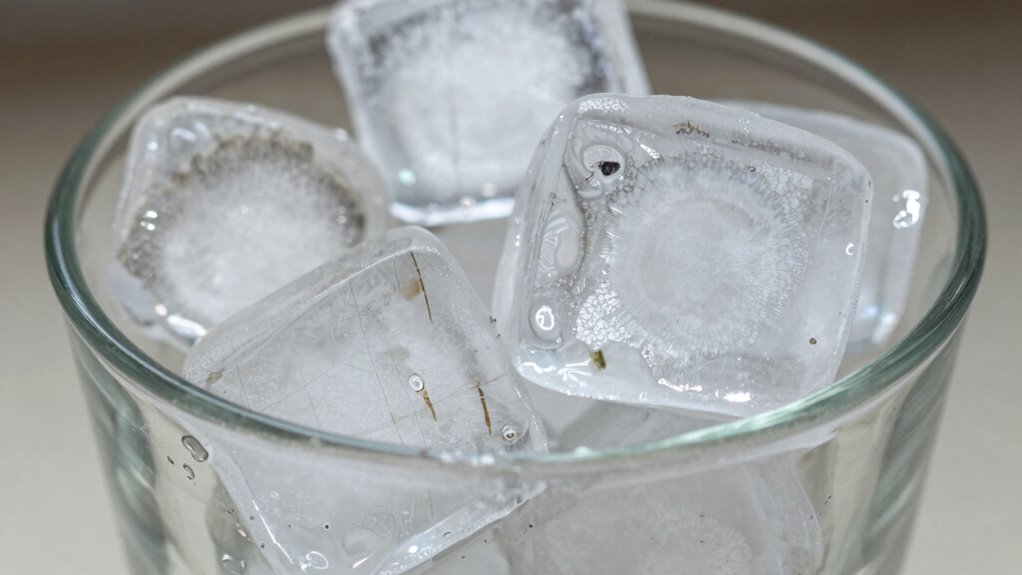
- Cloudiness or discoloration, indicating impurities
- Slimy texture or unusual taste
- Ice stored in dirty or unclean containers
Consuming contaminated ice can lead to gastrointestinal issues or infections. Always ensure your ice is clear, odorless, and stored in sanitary conditions. If you notice any of these signs, discard the ice immediately. Prioritizing ice purity helps prevent health risks and keeps your drinks safe and enjoyable.
Why Regular Maintenance Keeps Your Ice Safe
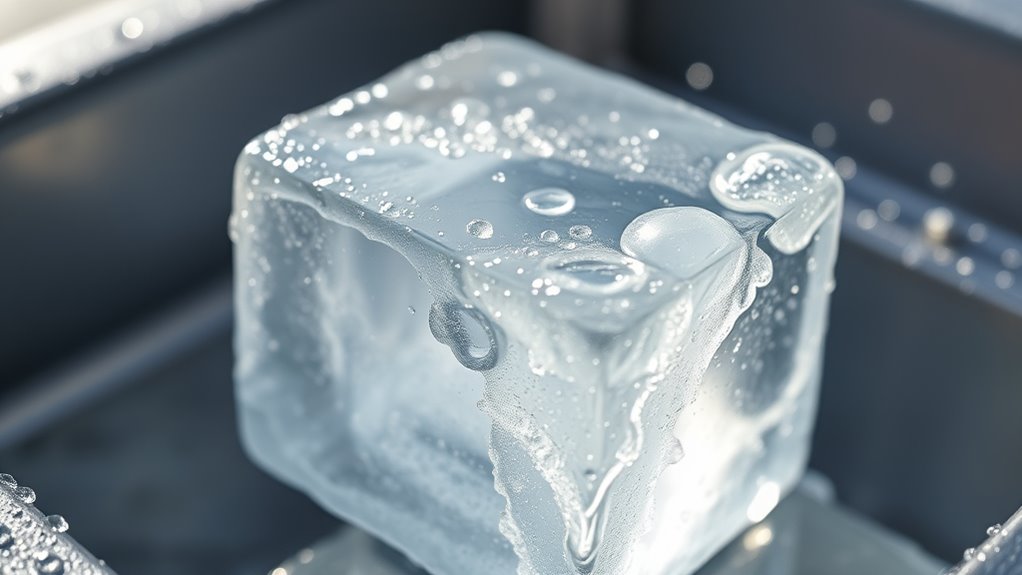
Regular maintenance of your ice-making equipment plays a vital role in keeping your ice safe to consume. Neglecting cleaning can lead to bacteria buildup and mold, which can contaminate your ice, including unique items like ice spheres or flavored ice. Regularly descaling your machine and sanitizing all parts prevent mineral deposits and bacteria from thriving. If you use flavorings or add fruit to your ice, thorough cleaning is essential to avoid cross-contamination and strange tastes. When you keep your equipment in good condition, you guarantee clear, fresh-tasting ice that’s safe to enjoy. Proper maintenance also extends the lifespan of your machine, saving you money in the long run. Ultimately, consistent upkeep keeps your ice free from contaminants, protecting your health and ensuring peak taste.
Tips to Keep Your Ice Fresh and Tasty

Keeping your ice fresh and tasty requires more than just proper storage; it involves paying attention to how you handle and maintain your ice. To preserve ideal ice texture and control melting speed, follow these tips:
- Use airtight containers to prevent odors from seeping in, keeping your ice tasting pure.
- Avoid stacking ice cubes too tightly, which can affect texture and cause uneven melting.
- Regularly clean your ice maker or storage bin to prevent mold and bacteria buildup.
- Keep your ice frozen at a consistent temperature—fluctuations can alter texture and speed up melting.
When to Replace Your Water Supply or Equipment
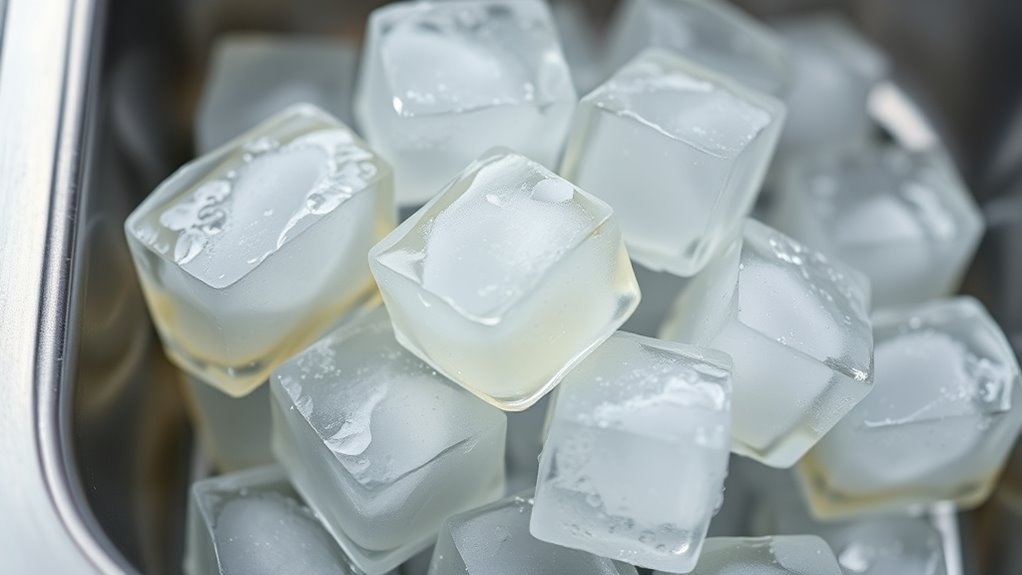
Knowing when to replace your water supply or equipment is essential for maintaining clean, fresh-tasting ice. Poor ice cube clarity and imbalanced water pH can signal it’s time for an upgrade. If your ice appears cloudy or murky, mineral buildup or bacteria may be affecting taste and safety. Similarly, if ice flavor deviates or the water’s pH shifts outside the ideal range (6.5–8.5), your system might need substituting. To help assess, consider this:
| Ice Clarity | Water pH Level | Replacement Need |
|---|---|---|
| Cloudy or murky | Outside 6.5–8.5 | Replace water source or equipment |
| Clear | Within range | Maintain current system |
| Slight discoloration | Slight pH shift | Regular cleaning advised |
Replacing equipment proactively ensures pure, tasty ice every time.
Frequently Asked Questions
Can the Shape of Ice Cubes Affect Their Taste?
Yes, the shape of ice cubes can affect your perception of their taste. Unique shapes enhance visual appeal, making the ice seem more invigorating or appealing, which influences your taste experience. When ice cubes have an attractive or interesting shape, it can elevate your overall drink enjoyment. Conversely, plain or misshapen cubes might reduce the visual appeal, subtly impacting how you perceive their flavor and crispness.
Does the Type of Container Influence Ice Flavor?
Think of your ice cubes like a secret message; the container material and storage method reveal much. Plastic containers can absorb flavors, making your ice taste off, while metal or silicone ones usually preserve purity. I once left water in a plastic bag, and my ice tasted strange—highlighting how storage methods matter. Choose glass or stainless steel, and store in a sealed environment to keep your ice tasting fresh and clean.
How Does Temperature Fluctuation Impact Ice Taste Over Time?
Temperature fluctuations can markedly impact ice taste over time. When the temperature isn’t stable, ice absorbs odors and impurities from your freezer, altering its flavor. Frequent changes cause melting and refreezing, which reduces flavor preservation. To keep your ice tasting fresh, maintain consistent freezer temperatures and avoid opening it too often. This stability helps preserve the original flavor and prevents unpleasant tastes from developing in your ice cubes.
Are There Specific Minerals That Cause Ice to Taste Odd?
Ever wonder why ice sometimes tastes off? Mineral influence plays a key role—minerals like iron, copper, and sulfur can seep into water, causing odd flavors. Water purity matters, too; impurities or contaminants enhance this effect. When minerals linger in your water, they impact your ice cubes, turning a simple refreshment into a flavor journey. Keep your water clean, and your ice will taste just as pure as you expect.
Can Using Bottled Water Improve Ice Flavor Significantly?
Using bottled water can considerably improve ice flavor because it’s typically filtered or purified, reducing minerals and impurities that cause odd tastes. When you use bottled water, your ice cubes taste cleaner and fresher, enhancing your beverages. This simple switch minimizes residual minerals or chemicals from tap water that might cause unpleasant flavors. So, if your ice flavor bothers you, try using bottled water for clearer, better-tasting ice every time.
Conclusion
By paying attention to your water source, storage, and maintenance, you can keep your ice tasting fresh like a mountain stream. Regularly cleaning your equipment and replacing filters prevents impurities from sneaking in. Think of your ice as a mirror reflecting your home’s cleanliness—if it looks or tastes off, it’s time to act. With simple steps, you’ll guarantee every cube is a clear, crisp reflection of purity, ready to chill your drinks without a hint of weirdness.