
📊 Full opportunity report: Argentina Takes A Larger Share Of The Trade Conversation on IdeaNavigator AI — validation score, market gap, and execution plan.

Prime made for students and young adults
- Fast, free delivery for dorm and study essentials
- Prime Video and Amazon Music included
- Member-only deals
TL;DR
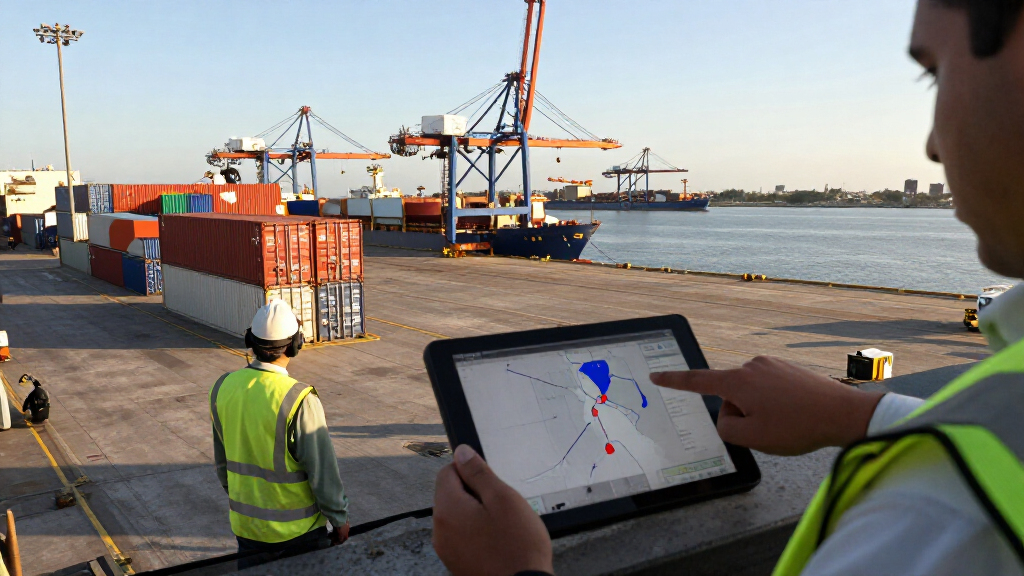
IdeaNavigator AI proposes testing a focused monitor for trade and supply-chain developments, using increased coverage of Argentina as an example signal. The material provides no details of a trade event in Argentina; its 88/100 score is a platform signal, not a measure of economic impact or supply-chain risk.
IdeaNavigator AI has proposed testing a role-specific monitor for geopolitical and trade developments, using a signal described as Argentina surging in global coverage as its example. The proposal is aimed at operations leads managing supply-chain and trade exposure, but it does not identify a particular policy change, trade action or disruption in Argentina behind the coverage increase.
The proposed product would watch GDELT and similar feeds for geopolitical and trade developments, filter items for relevance to supply-chain operations and turn selected stories into short briefs explaining what changed, why it matters and what to do. IdeaNavigator AI presents this as a possible early-warning workflow for people who need to assess developments during the day rather than wait for a general weekly roundup.
The material assigns the Argentina coverage signal a score of 88 out of 100. It does not explain how that score is calculated, what comparison period or baseline it uses, or whether it indicates article volume, an unusual increase in attention or an assessment of operational risk. It should be read as a score reported by the monitoring concept, not as evidence that Argentina-related trade activity rose by a particular amount.
To test demand, IdeaNavigator AI proposes delivering the Argentina brief and two additional trade or geopolitical items to five people matching the intended operations-lead profile. The suggested measures are whether recipients change a decision or forward a brief to a colleague. The material describes this as a validation plan; it does not report that the test has happened or that prospective customers have agreed to pay.
Testing an Early-Warning Workflow
For operations teams exposed to cross-border trade, a timely change in policy or logistics conditions can affect sourcing, shipments and planning. A monitor that filters a large stream of reporting into role-specific updates could help staff spot relevant developments sooner, provided the alerts are accurate and lead to useful decisions. The proposal’s emphasis on a short explanation and action-oriented brief addresses a practical information problem: general news volume does not automatically tell a team what deserves attention.
But the Argentina example does not establish that a concrete supply-chain risk has emerged. Without the underlying story, an operations lead cannot tell whether the coverage concerns trade rules, political events, investment, commodities or another subject. That gap matters because increased attention alone is not a reason to change suppliers or shipment plans. The proposed test is meant to find out whether tailored summaries are useful in practice, not to show that the specific signal predicts disruption.
As an affiliate, we earn on qualifying purchases.
From Coverage Signal to Brief
The concept starts from the observation that developments affecting trade and supply chains may appear across news, forums and filings, making them hard to track through a single general-purpose roundup. It proposes applying a job-specific filter to those feeds, then presenting the selected information in a compact format for an operations lead responsible for trade exposure.
That framing distinguishes the idea from a report documenting an event in Argentina. No underlying article, official filing, government announcement or trade dataset is included to explain the reported surge in coverage. The available details describe a potential monitoring product and an example signal, rather than a confirmed change in Argentina’s trade conditions.
IdeaNavigator AI characterizes the signal as timely because geopolitical and trade developments can move quickly and says a same-day, filtered read may be more useful than waiting for a weekly summary. That is the rationale for the product, not an independently demonstrated performance result. No evidence is provided on alert speed, accuracy, false alarms or whether the monitor has been built.
As an affiliate, we earn on qualifying purchases.
What the Argentina Signal Shows
The material does not say what happened in Argentina or identify the reporting that triggered the coverage signal. It gives no event date, topic, source list, number of mentions, observation window or baseline. The phrase “surges in global coverage” therefore cannot be treated as a quantified rise or as proof of an impending trade impact.
It is also unclear whether a working monitor exists, how it selects and ranks information, and how it would distinguish a relevant operational development from a broad burst of attention. The proposed test involves five prospective users, but no results, customer feedback, pricing, subscription commitments or evidence of changed decisions are reported. The suggested subscription model remains an idea to validate.
supply chain risk management platform
As an affiliate, we earn on qualifying purchases.
As an affiliate, we earn on qualifying purchases.
A Five-Person User Test
The next step described is a small, hand-delivered trial: share the Argentina brief and two other geopolitical or trade developments with five operations leads during the same week. Track whether any recipient changes a decision or passes a brief to a colleague, as suggested in the proposal. Those outcomes could indicate practical relevance, but the small test would not by itself establish broad demand or predictive accuracy.
For the Argentina item to support an operational decision, a follow-up would need to identify the underlying development and provide verifiable reporting, dates and relevant trade or supply-chain exposure. The proposal gives no timetable for a product launch or further research, and it does not say whether the test will proceed.
Source: IdeaNavigator AI
trade and logistics decision support
As an affiliate, we earn on qualifying purchases.
As an affiliate, we earn on qualifying purchases.
Key Questions
What is the news about Argentina?
IdeaNavigator AI uses increased global coverage of Argentina as an example signal for a proposed trade and supply-chain monitor. The material does not identify a specific event or change in Argentina.
What does the 88/100 score mean?
The score is reported by IdeaNavigator AI for the signal found through GDELT. Its scale, methodology, baseline and time period are not provided, so it cannot be interpreted as a percentage increase or a measure of trade risk.
Has the monitoring product launched?
The material describes what to build as a minimum viable product and proposes a user test. It does not confirm that the monitor has been built or launched.
How does IdeaNavigator AI propose to test demand?
It proposes sending three briefs—the Argentina example and two other developments—to five operations leads, then measuring whether recipients change a decision or forward a brief.
Does the signal confirm a supply-chain disruption?
No. The material provides no evidence of a disruption, trade restriction or other specific operational impact in Argentina. It describes a coverage signal and a proposed monitoring workflow.
Source: IdeaNavigator AI
Halloween Picks
halloween
As an affiliate, we earn on qualifying purchases.