📊 Full opportunity report: Replacing Traditional Gauge Checks With Smartphone-Based Solutions on IdeaNavigator AI — validation score, market gap, and execution plan.

Prime made for students and young adults
- Fast, free delivery for dorm and study essentials
- Prime Video and Amazon Music included
- Member-only deals
TL;DR
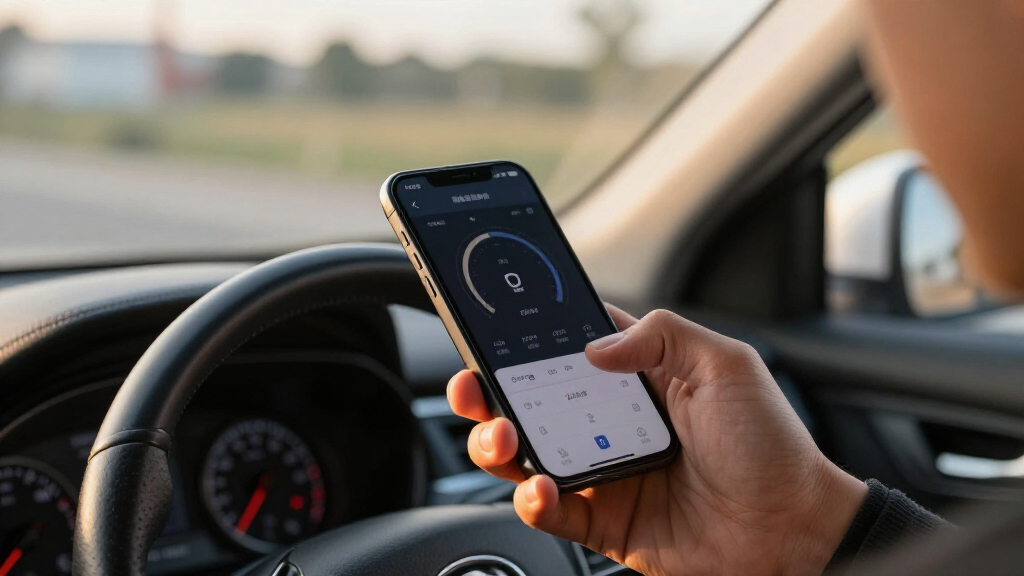
A pilot program is testing a smartphone-based solution to replace manual clipboard gauge readings in industrial facilities. This approach uses AI to read analog gauges from photos, reducing errors and enabling better maintenance tracking. The development is in early testing stages, with potential to transform legacy equipment monitoring.
A new pilot program is testing the use of smartphone photos combined with AI to replace manual clipboard gauge readings in industrial facilities. This development aims to improve measurement accuracy, reduce transcription errors, and enable better trend analysis without the need for costly sensor retrofits, marking a significant shift in maintenance workflows.
The initiative involves technicians photographing analog gauges during their routine inspections, with an app that uses vision models to read the gauge values directly from the images. These readings are automatically checked against expected ranges, logged with timestamps and location data, and flagged for anomalies in real time. The program is currently in a testing phase at three facilities, where parallel gauge readings are being compared between traditional methods and the new photo-based approach.
According to sources involved, the technology leverages recent advances in sight recognition models that reliably interpret analog dials, sight glasses, and counters from ordinary phone images. The goal is to create a minimal viable product that can be deployed quickly, with a subscription model based on the number of gauges monitored per facility. The approach offers a low-cost alternative to retrofitting legacy equipment with IoT sensors, which can be prohibitively expensive.
Early results from the pilot indicate a potential reduction in transcription errors and earlier detection of anomalies, which could lead to more proactive maintenance and fewer unexpected failures. The program’s success depends on validating the accuracy of AI readings against manual methods and demonstrating reliable trend data collection over time.
Potential Impact on Maintenance and Legacy Equipment
This development could significantly alter how industrial facilities perform routine gauge checks, especially on legacy equipment that lacks digital interfaces. By enabling technicians to use smartphones for direct readings, facilities can improve data accuracy, catch developing failures earlier, and reduce reliance on expensive sensor retrofits. If successful, this approach could streamline maintenance workflows and enhance operational reliability across various sectors.
As an affiliate, we earn on qualifying purchases.
Advances in Vision Models Enable New Data Collection Methods
Traditionally, manual gauge readings involve transcription onto paper, which is prone to errors and offers limited data utility. Retrofitting legacy equipment with IoT sensors is costly and often impractical. Recent improvements in AI vision models have made it feasible to interpret analog gauges from simple photographs reliably, opening new possibilities for data collection without hardware upgrades. This approach aligns with broader trends toward digitization and automation in industrial maintenance.
As an affiliate, we earn on qualifying purchases.
Uncertainties About Long-Term Accuracy and Adoption
It is not yet clear how the AI reading accuracy will hold up across different gauge types, lighting conditions, and wear levels. The pilot is still in early stages, and longer-term validation is needed to confirm reliability and user acceptance. Additionally, questions remain about the scalability of the solution across diverse industrial environments and the cost-benefit balance compared to traditional methods.
As an affiliate, we earn on qualifying purchases.
Next Steps in Pilot Evaluation and Broader Deployment
The ongoing pilot will compare error rates and anomaly detection effectiveness between the photo-based method and traditional clipboard readings over the next few months. If results demonstrate clear advantages, the developers plan to expand testing to additional facilities and refine the app’s features. Further validation will determine whether this approach can become a standard practice in industrial maintenance workflows.
As an affiliate, we earn on qualifying purchases.
Key Questions
How accurate are AI-based gauge readings compared to manual checks?
Early results suggest that AI can reliably interpret gauges from photos, but comprehensive validation is ongoing to confirm accuracy across different conditions and gauge types.
What are the cost implications of adopting this smartphone-based solution?
The solution is designed to be low-cost, with a subscription model based on gauge count, offering a cheaper alternative to sensor retrofits and reducing manual transcription errors.
Will this method replace all manual gauge checks?
Initially, it aims to supplement or replace clipboard rounds for legacy gauges, with broader adoption depending on validation results and user acceptance.
What challenges might arise in implementing this technology widely?
Challenges include ensuring consistent image quality, training staff, and integrating the system into existing maintenance workflows, especially in harsh industrial environments.
When could this approach become a standard practice?
If pilot results are positive, wider deployment could occur within the next year, contingent on further validation and industry adoption.
Source: IdeaNavigator AI
Fall Picks
fall essentials
As an affiliate, we earn on qualifying purchases.