📊 Full opportunity report: Basketball Stats And Highlights, Recorded On A Phone on IdeaNavigator AI — validation score, market gap, and execution plan.

Prime made for students and young adults
- Fast, free delivery for dorm and study essentials
- Prime Video and Amazon Music included
- Member-only deals
TL;DR
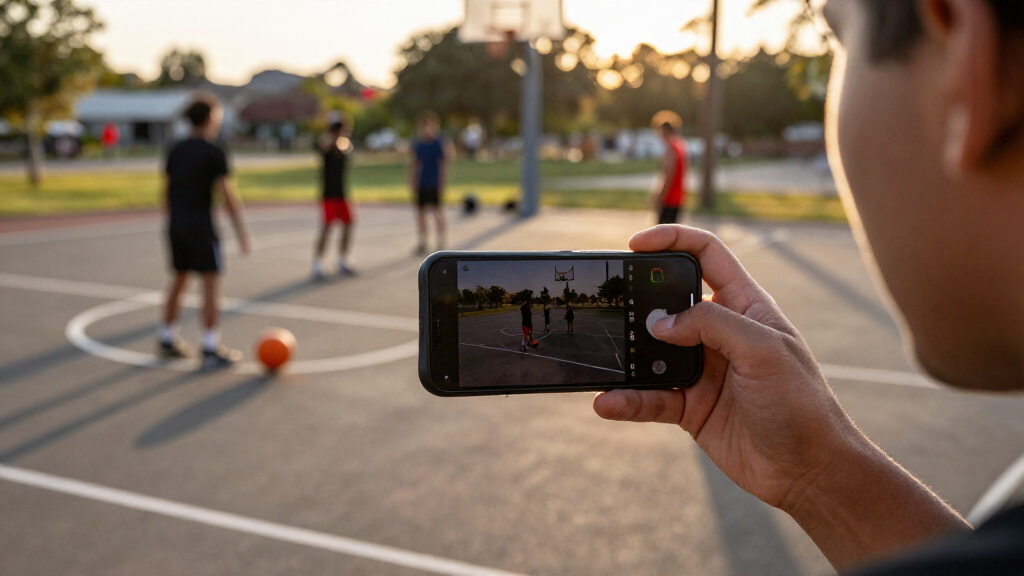
IdeaNavigator AI has outlined a product concept for turning ordinary phone footage of youth and recreational basketball into player-specific highlights, game stats and shareable season profiles. The proposal is a validation plan, not a report of a released app or proven technology; accuracy and family demand would need to be tested.
IdeaNavigator AI has proposed a product concept for converting phone-recorded youth and recreational basketball games into player highlights, game statistics and shareable season profiles. The idea targets families who want those tools without paying for a high-budget sports program, but the proposal does not establish that an app has been built or that its video analysis is accurate.
The proposed app would let a user upload game footage and select a player. It would then attempt to identify that player in the video, assemble a highlight reel with score overlays, generate a game stat line and add the results to a shareable season profile. Suggested events to detect include shots, rebounds and steals.
The problem the concept addresses is practical: parents and players may already record games on phones, but turning the footage into clips and useful statistics takes manual work. IdeaNavigator AI says that process can take hours, leaving families without material for recruiting profiles or player development. Those are the proposal’s stated pain points, not findings from a published user study.
The suggested business model is a family subscription for each season, with an additional charge for exporting individual reels. To test demand and performance, the proposal recommends processing 100 games filmed by parents, measuring satisfaction with highlight accuracy and testing subscription conversion at AAU tournaments. No results from those tests are provided.
A Lower-Cost Route to Game Film
If the proposed workflow can reliably identify a selected player and distinguish events in ordinary phone footage, it could make organized game-video tools more accessible to families outside programs with larger budgets. Players could have clips to review or share, while families would not have to manually search through full games to assemble each reel.
The practical value rests on accuracy and trust, not simply on producing a video. A mistaken player identification or incorrect event label could make a reel or stat line misleading. Families would also need a reason to pay each season, and the proposed tournament tests are intended to examine that question. Until those checks are completed, the concept is an opportunity to evaluate rather than evidence of a working alternative to established team systems.
Popular right now

Vitamix Propel Series 510 Blender, 3 Programs, Slate

Samsung 75-Inch QLED Q7F Series Smart TV (2025)

TCL 75-Inch QM6K QLED Mini LED 4K HDR Smart Google TV, 144Hz
As an affiliate, we earn on qualifying purchases.
From Phone Recording to Player Profile
The proposal focuses on a specific gap between recording a game and making its footage useful. A phone can capture a full match, but finding one player’s possessions, cutting clips and compiling statistics generally requires someone to do the work afterward. The concept aims to combine those steps in an upload-based service.
IdeaNavigator AI argues that on-device vision models can now track players and detect events in ordinary phone video, reducing reliance on multi-camera setups. That is a claim motivating the product idea; no benchmark, independent test or demonstration is included here. The distinction matters because footage quality, camera movement, crowded play and similar uniforms may affect whether automated identification works consistently.
The intended market is youth and amateur sports, with parents or players as the initial buyers. The proposal narrows the first test to basketball rather than describing a broad sports platform, and points to AAU tournaments as a place to assess whether families will subscribe.
Accuracy and Demand Still Need Testing
No product launch, working prototype or measured results are described. It is not clear how well the proposed system could follow a selected player through crowded plays, distinguish similar-looking athletes, or identify shots, rebounds and steals from variable phone footage. The proposal also does not specify how score overlays would be verified or how the app would handle missing, obstructed or low-quality video.
Commercial questions remain open as well. There are no subscription prices, conversion figures, customer interviews or evidence that families would pay per season and then separately for reel exports. The suggested 100-game test and AAU tournament trials are plans for validation, not completed research. Details on video privacy, access to footage involving minors and data retention are also not provided.
A 100-Game Pilot Would Test the Idea
The next proposed step is a pilot using 100 games filmed by parents. The team behind any implementation would need to define how highlight accuracy is judged, collect feedback from the families and players involved, and report how often the system identifies the intended player and events correctly.
IdeaNavigator AI also proposes testing season-subscription conversion at AAU tournaments. Those results could help determine whether the workflow is useful enough for families to pay for and whether the pricing model is viable. Until a pilot, product release or customer results are reported, both the technical performance and market demand remain unverified.
Source: IdeaNavigator AI
Key Questions
Is the basketball video app available now?
No release is reported. The information describes a product concept and a proposed validation plan, not an available app.
What would the proposed app do?
Users would upload game footage and select a player. The app would aim to create player highlights, score overlays, a game stat line and a season profile.
How would the idea be tested?
The proposal calls for processing 100 games recorded by parents, measuring satisfaction with highlight accuracy and testing season-subscription conversion at AAU tournaments.
Has its player tracking been proven accurate?
No accuracy results are supplied. The proposal says vision models could track players and detect events in phone footage, but that capability would need to be tested on real games.
Source: IdeaNavigator AI