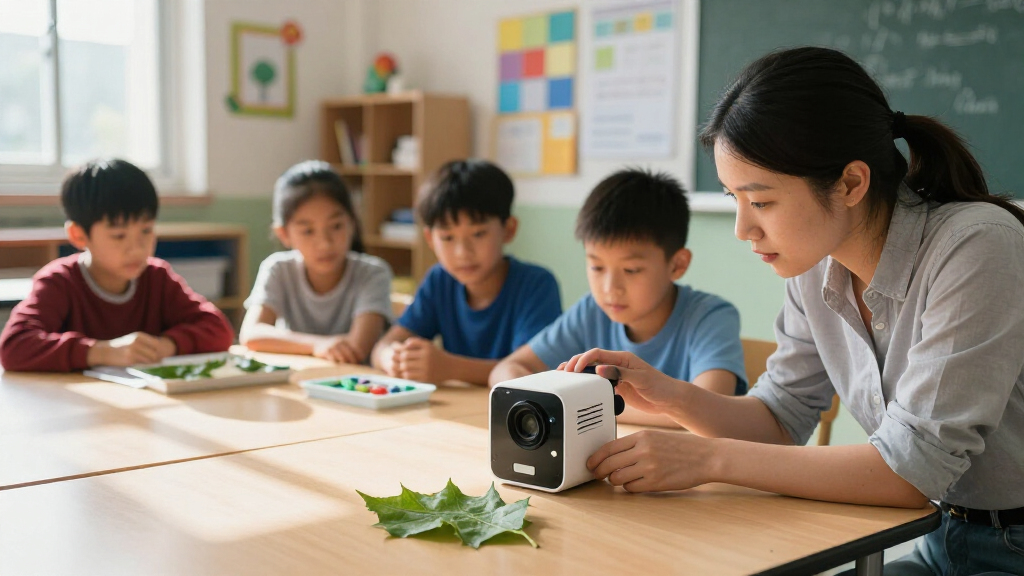

For most teachers, the IPEVO V4K 8MP is the best overall portable document camera in this roundup, combining high-resolution capture with a straightforward USB setup. The TreasLin 15MP 4K stands out for classrooms that need HDMI and USB-C connections, while the OKIOCAM S-4K offers a strong 4K-focused alternative. The main tradeoffs are image detail versus ease of setup, and extra connectivity or lighting versus a simpler, lighter teaching setup. Read on for the full breakdown of all 15 options and help matching a camera to your classroom.

Prime made for students and young adults
- Fast, free delivery for dorm and study essentials
- Prime Video and Amazon Music included
- Member-only deals
Key Takeaways
- Image resolution alone does not settle the ranking: several models claim 8MP or 4K, but teaching usefulness also depends on focus, lighting, and how easily the camera frames a page.
- The IPEVO V4K is the strongest all-around choice: it pairs 8MP capture with a simple USB-oriented setup, while the TreasLin adds more connection options for rooms with varied display equipment.
- Connection needs divide the shortlist: most picks use USB, but the TreasLin’s HDMI and USB-C make it a better fit for teachers who need more than a direct computer connection.
- Built-in microphones and lights solve specific problems, not every problem: they can reduce extra classroom gear, but buyers should still check whether the camera’s image and audio meet their room’s needs.
- Lower-resolution and manual-focus models can suit simpler lessons: options such as the AIKOR 2MP may be enough for basic demonstrations, while detailed worksheets and small print favor higher-resolution models.
| ZSEEWCAM 5MP USB Document Camera, Blue |  | Best for Flexible Manual-Focus Teaching | Sensor: 5MP CMOS | Maximum resolution: 2592 × 1944 at 15 fps | Video resolution: 1080p at 30 fps | VIEW LATEST PRICE | See Our Full Breakdown |
| INSWAN INS-3 Handheld USB Document Camera |  | Best for Mobile, Hands-On Demonstrations | Still resolution: 5MP | Capture resolution and frame rate: 2560 × 1920 at up to 30 fps | Capture size: Larger than B4; 15 × 11.22 inches | VIEW LATEST PRICE | See Our Full Breakdown |
| AIKOR 2MP USB Document Camera and Webcam with Manual Focus |  | Best Lightweight Pick for Basic Lessons | Image resolution: 2MP | Video resolution and frame rate: 1080p at up to 30 fps | Focus: Manual | VIEW LATEST PRICE | See Our Full Breakdown |
| PAKOTOO 8MP USB Document Camera with Autofocus and LED Light |  | Best for Large Worksheets and Easy Focusing | Resolution: 2448P | Connection: USB 2.0 | Maximum coverage area: 16.5 × 11.6 inches (A3) | VIEW LATEST PRICE | See Our Full Breakdown |
| OKIOCAM S-4K 8MP USB Document Camera |  | Best Premium Pick for Image Controls and Software | Sensor: 8MP Sony Exmor R CMOS | Maximum image resolution: 3264 × 2448 | Video capture resolution: UHD 2448p | VIEW LATEST PRICE | See Our Full Breakdown |
| Gawervan 1080p USB Document Camera with Built-In Microphones |  | Best for Flexible Remote Teaching | Video resolution: 1080p | Frame rate: 30 fps | Still resolution: 12 MP | VIEW LATEST PRICE | See Our Full Breakdown |
| 8MP 4K USB Document Camera for Teachers, A3 Visualiser with Dual Microphones and 3-Level LED Light |  | Best for Large Documents | Sensor resolution: 8 MP | Video resolution: Up to 2448P | Frame rate: 30 fps | VIEW LATEST PRICE | See Our Full Breakdown |
| PAKOTOO 5MP USB Document Camera and Webcam |  | Best for Adjustable Exposure | Still resolution: 5 MP | Video resolution: 1080p | Maximum video frame rate: 30 fps | VIEW LATEST PRICE | See Our Full Breakdown |
| IPEVO V4K 8MP Ultra HD USB Document Camera |  | Best for High-Resolution Still Images | Camera resolution: 8 MP | Maximum image resolution: 3264 × 2448 pixels | Frame rate: Up to 30 fps at Full HD; up to 15 fps at 3264 × 2448 | VIEW LATEST PRICE | See Our Full Breakdown |
| OKIOLABS OKIOCAM T-4K 8MP USB Document Camera |  | Best for Open Books and Presentation Tools | Sensor: 8MP Sony Exmor R CMOS | Maximum resolution: 3264 × 2448 | Frame rate: Up to 30 fps in Full HD; up to 25 fps at maximum resolution | VIEW LATEST PRICE | See Our Full Breakdown |
| TreasLin 15MP 4K Document Camera with HDMI and USB-C |  | Best for HDMI Classroom Setups | Sensor: 15 MP CMOS | Maximum video resolution: 4K at 15 fps | Other video modes: 1080p at 30 fps; 720p at 30 fps | VIEW LATEST PRICE | See Our Full Breakdown |
| THUSTAR 8MP Document Camera and Webcam with Dual Microphones |  | Best for Live Remote Lessons | Camera resolution: 8 MP | Listed video resolution: Up to 2448P; also described as 4K | Frame rate: Up to 30 fps | VIEW LATEST PRICE | See Our Full Breakdown |
| THUSTAND USB Document Camera with LED Light |  | Best for Hands-On Lighting Control | Model: PA800 | Maximum resolution: Up to 1944P | Video capture: 1080p at up to 30 fps | VIEW LATEST PRICE | See Our Full Breakdown |
| USB Document Camera with Manual Focus and Microphone |  | Best for Adjustable Camera Positioning | Image sensor: CMOS | Effective still resolution: 2 MP | Video resolution and frame rate: Up to 1080p at 30 fps | VIEW LATEST PRICE | See Our Full Breakdown |
| Kitchbai USB Document Camera and Webcam with Microphone and LED Lights |  | Best for Simple Autofocus Setup | Model: PA-800 | Maximum resolution: 2592 × 1944 | Effective still resolution: 5 MP | VIEW LATEST PRICE | See Our Full Breakdown |
| portable document cameras for teaching | Focus |
|---|---|
| ZSEEWCAM 5MP USB Document Came | Manual; macro focus to 10 cm |
| INSWAN INS-3 Handheld USB Docu | Autofocus with dual modes |
| AIKOR 2MP USB Document Camera | Manual |
| PAKOTOO 8MP USB Document Camer | One-touch autofocus |
| OKIOCAM S-4K 8MP USB Document | — |
| Gawervan 1080p USB Document Ca | Manual |
| 8MP 4K USB Document Camera for | One-touch automatic focus |
| PAKOTOO 5MP USB Document Camer | Autofocus; macro capture as close as 3.94 in |
| IPEVO V4K 8MP Ultra HD USB Doc | — |
| OKIOLABS OKIOCAM T-4K 8MP USB | Autofocus |
| TreasLin 15MP 4K Document Came | — |
| THUSTAR 8MP Document Camera an | Autofocus |
| THUSTAND USB Document Camera w | Listed as manual and autofocus |
| USB Document Camera with Manua | Manual |
| Kitchbai USB Document Camera a | Automatic |
More Details on Our Top Picks
ZSEEWCAM 5MP USB Document Camera, Blue
The ZSEEWCAM suits teachers who want a foldable camera for switching between worksheets and close-up demonstrations without stepping up to a more software-oriented setup like the INSWAN INS-3. Its 5MP sensor captures detailed stills, while 1080p video at 30 fps is better suited to smooth live instruction than its maximum-resolution mode, which runs at 15 fps. The 16.9 × 16.53-inch shooting area gives room for larger classroom materials, and the included LED and anti-glare sheet can help with uneven room lighting. The tradeoff is hands-on focusing: unlike the INSWAN’s autofocus, this model requires manual adjustment when the subject changes. Its arm folds for storage, but it should not be rotated too far because that can damage the USB cable. I’d choose it for simple computer-based teaching, not frequent focus changes.
Pros:- 5MP still capture supports detailed worksheets and diagrams.
- 1080p video at 30 fps supports smoother live demonstrations.
- Foldable adjustable arm helps with storage and classroom portability.
- LED light, anti-glare sheet, and built-in microphone support varied teaching setups.
Cons:- Manual focus takes extra adjustment when changing subjects or distance.
- Over-rotating the arm can damage the USB cable.
- Maximum-resolution capture is limited to 15 fps.
Best for: Teachers using a PC or Chromebook who want detailed document captures, a foldable arm, and manual control for occasional close-up demonstrations.
Not ideal for: Teachers who frequently move between near and far objects, need autofocus, or want a handheld camera for showing three-dimensional items around the room.
- Sensor:5MP CMOS
- Maximum resolution:2592 × 1944 at 15 fps
- Video resolution:1080p at 30 fps
- Maximum shooting area:16.9 × 16.53 inches
- Focus:Manual; macro focus to 10 cm
- Connectivity:USB 2.0; compatible with USB 3.0
- Lighting and audio:Supplemental LED light; built-in microphone
- Compatibility:PC and Chromebook
- File formats:JPEG and MP4
Our verdict“Choose the ZSEEWCAM if you want a foldable, well-equipped USB camera and are comfortable focusing it manually.”
INSWAN INS-3 Handheld USB Document Camera
The INSWAN INS-3 is the most flexible choice here for teachers who want to bring the camera to an object rather than keep every demonstration under a fixed arm. Its handheld design can show 3D materials from changing angles, while autofocus and capture up to 2560 × 1920 at 30 fps reduce the adjustments needed during a lesson. Documate adds practical classroom tools—digital zoom, annotation, recording, and OCR—so it does more than simply send an image to a computer. Compared with the fixed-arm PAKOTOO KB700, it trades a stable overhead position for mobility and broader software features. That freedom may be less appealing for teachers who mainly display flat worksheets, and compatibility takes checking: iPad use requires USB-C and iPadOS 17 or later, with requirements varying by operating system.
Pros:- Handheld design makes it easier to show objects from multiple angles.
- Autofocus supports quick changes between subjects and distances.
- Captures up to 2560 × 1920 at 30 fps.
- Documate includes zoom, annotation, recording, and OCR tools.
Cons:- Handheld use requires the teacher to hold and position the camera.
- iPad compatibility requires USB-C and iPadOS 17 or later.
- Compatibility requirements vary across operating systems.
Best for: Teachers who demonstrate 3D objects, circulate around a room, or want annotation, recording, and OCR tools alongside document capture.
Not ideal for: Teachers who need a fixed overhead camera for hands-free worksheet viewing or whose iPad lacks USB-C or runs an unsupported iPadOS version.
- Still resolution:5MP
- Capture resolution and frame rate:2560 × 1920 at up to 30 fps
- Capture size:Larger than B4; 15 × 11.22 inches
- Focus:Autofocus with dual modes
- Design:Handheld
- Lighting and audio:LED lighting; built-in microphone
- Compatible devices:Windows, Mac, iPad with USB-C, and Chromebook
- Software tools:Documate digital zoom, annotation, recording, and OCR
- File formats:MP4 video and JPEG images
Our verdict“Pick the INSWAN INS-3 if mobile demonstrations and built-in teaching tools matter more than a fixed, hands-free camera position.”
AIKOR 2MP USB Document Camera and Webcam with Manual Focus
The AIKOR keeps the setup straightforward: a 1.1-pound body, a 360-degree adjustable arm, and USB connectivity make it a practical option for teachers who move a camera between computer-based lessons. Its 1080p video runs at up to 30 fps, and the noise-reducing microphone can support voice alongside a live worksheet or demonstration. Compared with the ZSEEWCAM 5MP, this model gives up still-image resolution and the supplied anti-glare sheet, but its arm reaches 20.4 inches and rotates broadly for flexible positioning. Focus is manual, so it is not the right fit for lessons that often shift between close details and full-page views. It also requires a computer and does not support iPads or phones. I’d treat it as a light, basic teaching camera rather than a high-detail scanning tool.
Pros:- Light 1.1-pound design is easier to move between teaching spaces.
- 360-degree adjustable arm and 20.4-inch height offer flexible positioning.
- 1080p video supports live classroom demonstrations.
- Built-in noise-reducing microphone captures teacher narration.
Cons:- 2MP resolution offers less still-image detail than the 5MP ZSEEWCAM or 8MP OKIOCAM S-4K.
- Manual focus requires user adjustment.
- Does not work with iPads or mobile phones and requires a computer.
Best for: Teachers who need a lightweight USB camera for 1080p lessons on a Windows PC, Mac, or Chromebook and value flexible camera positioning.
Not ideal for: Teachers who rely on iPads or phones, need high-resolution still scans, or want autofocus during fast changes between objects.
- Image resolution:2MP
- Video resolution and frame rate:1080p at up to 30 fps
- Focus:Manual
- Arm:Up to 20.4 inches; 360-degree adjustable and rotatable
- Weight:1.1 lbs
- Connectivity:USB and USB-C
- Microphone:Built-in, noise-reducing
- Compatibility:Windows PCs, Macs, and Chromebooks
Our verdict“Choose the AIKOR for lightweight, basic computer-based teaching where flexible positioning matters more than detailed still captures.”
PAKOTOO 8MP USB Document Camera with Autofocus and LED Light
The PAKOTOO KB700 makes sense for teachers who mostly place a worksheet or textbook beneath the camera and want autofocus without giving up a broad capture area. Its 16.5 × 11.6-inch coverage reaches A3 size, while one-touch autofocus and adjustable LED brightness help simplify changes in material and classroom lighting. Compared with the ZSEEWCAM, the KB700 replaces manual focus with autofocus; compared with the software-rich OKIOCAM S-4K, it keeps the controls and connection more basic. Image inversion can correct an upside-down or reversed display, but there is no zoom or HDMI output, and it does not support iPad. Setup also requires selecting the USB camera inside the computer’s software, a small but real hurdle for teachers seeking immediate plug-and-present use. Its foldable arm favors a desk-based workflow over handheld object demonstrations.
Pros:- A3-sized coverage fits large teaching materials.
- One-touch autofocus reduces manual setup between documents.
- Three LED brightness levels and ten exposure levels allow image adjustment.
- Foldable design and image inversion support adaptable desk presentations.
Cons:- No zoom or HDMI support.
- Not compatible with iPad.
- Requires selecting the USB camera in the computer’s software.
Best for: Teachers who routinely display large worksheets or book pages from a Windows PC, Mac, or Chromebook and want one-touch autofocus.
Not ideal for: Teachers who need iPad support, HDMI connection, zoom controls, or a handheld camera for showing objects from different angles.
- Resolution:2448P
- Connection:USB 2.0
- Maximum coverage area:16.5 × 11.6 inches (A3)
- Focus:One-touch autofocus
- Lighting:LED with three brightness levels
- Exposure adjustment:10 levels
- Microphones:Dual
- Compatibility:Windows PCs, Macs, and Chromebooks
- Dimensions and weight:3.5 × 4.3 × 17.3 inches; 0.8 kg
Our verdict“Pick the PAKOTOO KB700 for hands-free, autofocus viewing of large classroom pages on a computer.”
OKIOCAM S-4K 8MP USB Document Camera
The OKIOCAM S-4K is the most feature-rich choice in this group for teachers who want image controls and lesson software, not just a camera feed. Its 8MP Sony sensor captures detailed stills, and the included software supports annotation, recording, and snapshots; focus, exposure, zoom, and image-flip controls give teachers more ways to tailor what students see. It is far lighter and shorter than the PAKOTOO KB700, which favors a compact setup over the PAKOTOO’s A3 coverage. The OKIOCAM can show letter-size materials in landscape orientation, but its 58-degree field of view is narrower than a large-page workflow may call for. Frame rate also depends on resolution: Full HD reaches 30 fps, while maximum-resolution capture is limited to 15 fps. iOS compatibility broadens its reach, though connection details may depend on the device and setup.
Pros:- 8MP Sony Exmor R sensor captures detailed images.
- Focus, exposure, zoom, and image-flip controls support tailored classroom views.
- Software includes annotation, recording, and snapshots.
- Lightweight 269 g design works with computers, Chromebooks, iOS, and interactive displays.
Cons:- Maximum-resolution capture runs at up to 15 fps; 30 fps is available in Full HD.
- 58-degree field of view may not suit teachers who need broad page coverage.
- Optional carrying pouch is not included.
Best for: Teachers who want detailed captures, software tools for annotation and recording, and a compact camera compatible with multiple classroom platforms.
Not ideal for: Teachers who need frequent high-resolution video at 30 fps, broad A3 coverage, or a carrying pouch included with the camera.
- Sensor:8MP Sony Exmor R CMOS
- Maximum image resolution:3264 × 2448
- Video capture resolution:UHD 2448p
- Frame rate:Up to 30 fps in Full HD; up to 15 fps at maximum resolution
- Connectivity:USB 2.0
- Field of view:58 degrees
- Weight and dimensions:269 g; 1.61 × 3.15 × 7.32 inches
- Compatibility:Chromebooks, interactive whiteboards, Mac, Windows, and iOS
- File formats:MP4 video and JPEG images
Our verdict“Choose the OKIOCAM S-4K if image controls and teaching software matter more than maximum-resolution frame rate or A3 coverage.”
Gawervan 1080p USB Document Camera with Built-In Microphones
The Gawervan suits teachers who want one foldable camera for showing worksheets and appearing on video calls. Its 1080p, 30 fps video is a practical fit for live lessons, while the dual built-in microphones can simplify a desk setup by reducing the need for a separate mic. It also works as a webcam and visualizer, giving it more classroom uses than a document-only model. Compared with the PAKOTOO 5MP, the Gawervan lists still-image resolution but does not specify an A3 capture area or adjustable LED lighting, so it is less clearly suited to large pages or unevenly lit desks. Its manual focus keeps focus control in the teacher’s hands, but requires adjustment when switching between a page and an object. The foldable 0.53 kg design travels easily; it is not water resistant.
Pros:- Foldable design and 0.53 kg weight make it easier to carry between teaching spaces.
- 1080p video at 30 fps supports clear, fluid live demonstrations.
- Dual built-in microphones and webcam functionality help reduce desk equipment.
- Compatible with Windows, Mac, and Chromebook.
Cons:- Manual focus requires adjustment when changing the subject or distance.
- No stated adjustable lighting or maximum document coverage area.
- Not water resistant.
Best for: Teachers who move between classrooms or teach remotely and want a compact camera that can also serve as a webcam.
Not ideal for: Teachers who frequently switch between close-up objects and pages, or need hands-off autofocus and built-in adjustable lighting.
- Video resolution:1080p
- Frame rate:30 fps
- Still resolution:12 MP
- Focus:Manual
- Microphones:Dual built-in
- Compatibility:Windows, Mac, Chromebook
- Weight:0.53 kg
- Warranty:2 years
Our verdict“Choose the Gawervan for portable lessons and webcam use, but pick an autofocus model if you need faster subject changes.”
8MP 4K USB Document Camera for Teachers, A3 Visualiser with Dual Microphones and 3-Level LED Light
This foldable visualizer is a strong fit for lessons built around posters, maps, or other materials that outgrow a standard page. Its A3 coverage area gives teachers room to show larger work without repeatedly repositioning the sheet, and one-touch autofocus makes it quicker to move from a worksheet to a classroom object than with the manual-focus Gawervan. Three brightness levels help compensate for changing room light, while dual microphones support spoken demonstrations. The listed 2448P video resolution is higher than the Gawervan’s 1080p, though both stream at 30 fps. This model’s USB-C connection and compatibility with Windows, macOS, and Chrome OS suit common teaching computers. The tradeoff is a long, multi-joint form that may take more desk space when set up, and the 1/30-second maximum shutter speed may limit capture of fast movement. It is not water resistant.
Pros:- A3 coverage area accommodates larger teaching materials.
- One-touch autofocus speeds up changes between documents and objects.
- Three adjustable brightness levels help with uneven classroom lighting.
- Dual microphones and USB-C plug-and-play connectivity support a streamlined setup.
Cons:- Long multi-joint design may occupy more desk space than compact foldable alternatives.
- Maximum shutter speed of 1/30 second is a limitation for fast-moving demonstrations.
- Not water resistant.
Best for: Teachers who regularly display A3 materials, student artwork, or larger classroom resources and want autofocus with adjustable light.
Not ideal for: Teachers who need a compact, quick-to-pack camera or frequently record fast-moving demonstrations.
- Sensor resolution:8 MP
- Video resolution:Up to 2448P
- Frame rate:30 fps
- Maximum coverage area:A3
- Focus:One-touch automatic focus
- Lighting:3 adjustable brightness levels
- Microphones:Dual built-in
- Connectivity:USB-C
Our verdict“Pick this model when A3 coverage and autofocus matter more than a small desk footprint.”
PAKOTOO 5MP USB Document Camera and Webcam
The PAKOTOO 5MP is a useful match for teachers who show different kinds of material and want basic image controls without moving to a more specialized setup. It supports A3-sized documents, autofocus, and macro capture as close as 3.94 inches, so it can handle both broad pages and small objects. Its five exposure levels offer more adjustment than the three brightness settings on the 8MP A3 Visualiser, which may help when paper appears too bright or dim on screen. Three LED fill-light levels add another way to adapt a desk demonstration. It also doubles as a webcam and records 1080p video at up to 30 fps. The compromise is setup: unlike the plug-and-play 8MP Visualiser, this camera requires selecting USB Camera in the computer’s system. That extra step may interrupt a quick lesson changeover.
Pros:- A3 support and close-focus macro capture suit varied classroom materials.
- Autofocus helps keep demonstrations clear when changing subjects.
- Five exposure settings and three LED levels offer useful image adjustments.
- Works as a document camera and webcam across Windows, Mac, and Chromebook.
Cons:- Requires selecting USB Camera in system settings rather than providing a fully plug-and-play workflow.
- 5MP still resolution is lower than the 8MP options in this roundup.
Best for: Teachers who demonstrate both large pages and small objects and are comfortable selecting the camera source in their computer settings.
Not ideal for: Teachers who need instant plug-and-play setup or prioritize higher-resolution still capture over exposure controls.
- Still resolution:5 MP
- Video resolution:1080p
- Maximum video frame rate:30 fps
- Maximum document size:A3
- Focus:Autofocus; macro capture as close as 3.94 in
- Lighting:3-level LED fill light
- Exposure adjustment:5 levels
- Weight:420 g
Our verdict“Choose the PAKOTOO if exposure control and close-up demonstrations matter more than the quickest setup.”
IPEVO V4K 8MP Ultra HD USB Document Camera
The IPEVO V4K gives teachers a strong still-image option for showing diagrams, text, and fine details. Its 8MP sensor captures images up to 3264 × 2448, while Full HD streaming reaches 30 fps for smoother live lessons. Fast focusing and a multi-jointed stand make it easier to move between a page and an object than the Gawervan, which relies on manual focus. The stand’s flexibility is helpful for repositioning, though its stated 13.46 × 10.04-inch shooting area is smaller than the A3 coverage offered by the 8MP Visualiser and PAKOTOO. The frame rate also drops to 15 fps when capturing at maximum resolution, so high-detail recording is less fluid than Full HD streaming. I’d favor it for still captures and routine demonstrations, provided the teaching computer can meet its performance demands.
Pros:- 8MP sensor captures detailed still images up to 3264 × 2448.
- Full HD streaming supports up to 30 fps for live teaching.
- Fast focusing helps when switching between pages and objects.
- Multi-jointed stand and USB compatibility support flexible classroom setups.
Cons:- Frame rate falls to 15 fps at the highest image resolution.
- 13.46 × 10.04-inch shooting area is smaller than the A3 models in this group.
- Lag-free streaming calls for a relatively capable computer.
Best for: Teachers who save detailed still images of worksheets, diagrams, or student work and have a capable computer for streaming.
Not ideal for: Teachers who need A3 coverage, consistently smooth video at maximum resolution, or a camera for lower-powered computers.
- Camera resolution:8 MP
- Maximum image resolution:3264 × 2448 pixels
- Frame rate:Up to 30 fps at Full HD; up to 15 fps at 3264 × 2448
- Maximum shooting area:13.46 × 10.04 inches
- Sensor:Sony CMOS
- Connectivity:USB
- Compatible devices:Mac, PC, Chromebook
- File formats:MP4 video; JPEG still images
Our verdict“Choose the IPEVO V4K for detailed still capture and Full HD teaching, not for A3 materials or maximum-resolution motion video.”
OKIOLABS OKIOCAM T-4K 8MP USB Document Camera
The OKIOCAM T-4K stands out for teachers who need to show more than a single sheet at a time. Its 13.86 × 18.11-inch viewing area accommodates ledger-size materials and open books, giving it a clear coverage advantage over the IPEVO V4K’s smaller stated shooting area. The 8MP Sony sensor captures up to 3264 × 2448, and autofocus helps keep page turns and close demonstrations manageable. At Full HD, it streams at up to 30 fps; maximum-resolution video reaches 25 fps, a smaller drop than the IPEVO’s 15 fps at its highest resolution. Presentation software adds annotation, recording, and snapshots, which can support guided problem-solving without separate tools. The tradeoffs are a lack of built-in flash and no water resistance. Its broad compatibility is useful, though teachers should check that their preferred device supports the intended setup.
Pros:- Large viewing area accommodates ledger-size sheets and open books.
- 8MP Sony sensor captures images up to 3264 × 2448.
- Autofocus and Full HD streaming up to 30 fps suit live demonstrations.
- Software supports annotation, recording, and snapshots.
Cons:- No built-in flash for illuminating dim work areas.
- Not water resistant.
- Maximum-resolution frame rate is 25 fps rather than 30 fps.
Best for: Teachers who regularly teach from open books or ledger-size pages and want annotation and recording tools alongside the camera.
Not ideal for: Teachers who need built-in lighting or a compact setup focused mainly on standard single-page documents.
- Sensor:8MP Sony Exmor R CMOS
- Maximum resolution:3264 × 2448
- Frame rate:Up to 30 fps in Full HD; up to 25 fps at maximum resolution
- Maximum viewing area:13.86 × 18.11 inches
- Focus:Autofocus
- Digital zoom:6×
- Compatibility:Windows, Mac, iOS, Chrome, Chromebook, PC, interactive displays
- File formats:JPEG still images; MP4 video
Our verdict“Pick the OKIOCAM T-4K for large teaching materials and built-in presentation tools, but plan on separate lighting when needed.”
TreasLin 15MP 4K Document Camera with HDMI and USB-C
For teaching from a room projector or display, the TreasLin stands apart from the USB-only options here: its HDMI output can connect directly to compatible screens, while USB supports computer-based lessons and video calls. Its A3 coverage gives teachers room to show large worksheets, maps, and open books without constant repositioning. The 4K mode captures fine detail, though its 15 fps limit makes motion look less fluid than the THUSTAR 8MP camera’s 30 fps video. I’d favor the TreasLin when direct display connection and large-page coverage matter more than smooth movement. The LED light and TF card slot add useful flexibility, but Mac users should plan for a USB-C adapter, and the camera’s multiple connection options may be unnecessary for a teacher who only presents through a laptop.
Pros:- HDMI output supports direct connection to compatible displays and projectors.
- A3 coverage accommodates large classroom materials.
- 4K capture can preserve fine printed detail.
- LED light and TF card slot support varied presentation and image-storage needs.
Cons:- 4K video is limited to 15 fps, so movement appears less fluid than at 30 fps.
- Mac USB-C connection requires an adapter.
- HDMI and card-storage features may be unnecessary for teachers using only a computer.
Best for: Teachers who need to show A3 materials directly on an HDMI-equipped classroom display or projector, as well as connect to a computer.
Not ideal for: Teachers who demonstrate frequent movement in 4K or want a straightforward Mac USB-C connection without an adapter.
- Sensor:15 MP CMOS
- Maximum video resolution:4K at 15 fps
- Other video modes:1080p at 30 fps; 720p at 30 fps
- Maximum coverage:A3 (16.5 × 11.7 in)
- Connectivity:USB, USB-C (adapter required for Mac), HDMI
- Compatible operating systems:Windows, Mac OS, Chrome OS, Linux
- Storage:TF card slot
- Lighting:LED light
Our verdict“Choose the TreasLin for A3 teaching materials and direct HDMI display output, but favor a 30 fps model if smooth motion matters more than 4K detail.”
THUSTAR 8MP Document Camera and Webcam with Dual Microphones
The THUSTAR is a strong fit for teachers who want one USB device to show class materials and capture their voice during remote lessons. Its dual noise-reducing microphones avoid relying solely on a laptop mic, while autofocus, image reversal, and three LED brightness levels help adapt the view to different pages and room lighting. It covers A3-size materials, matching the TreasLin for page area, but its listed 30 fps operation is better suited to moving demonstrations than TreasLin’s 4K-at-15-fps mode. The tradeoff is uncertainty around its resolution: the product data describes it as both 2448P and 4K, so I wouldn’t choose it on a promised 4K workflow. It connects by USB and supports Windows, macOS, and ChromeOS, but offers no HDMI output for direct projector connection.
Pros:- Dual built-in noise-reducing microphones support spoken lessons.
- A3 coverage accommodates large documents and teaching materials.
- Autofocus and three LED brightness levels help with changing subjects and room light.
- Foldable, multi-angle design allows flexible positioning.
Cons:- Video resolution is described inconsistently as 2448P and 4K.
- USB-only connectivity does not provide direct HDMI projector output.
- No Linux compatibility is listed.
Best for: Teachers delivering live online lessons who want an A3 visualizer with built-in microphones and adjustable lighting.
Not ideal for: Teachers who need HDMI output, Linux compatibility, or a clearly specified 4K video mode.
- Camera resolution:8 MP
- Listed video resolution:Up to 2448P; also described as 4K
- Frame rate:Up to 30 fps
- Maximum coverage:A3 size
- Focus:Autofocus
- Lighting:14 LED ring-light beads; 3 brightness levels
- Microphones:Dual built-in noise-reducing microphones
- Connectivity and compatibility:USB; Windows, macOS, ChromeOS
Our verdict“Pick the THUSTAR for remote teaching that benefits from built-in microphones and A3 coverage, but not if you need HDMI or dependable 4K specifications.”
THUSTAND USB Document Camera with LED Light
Teachers who frequently move between glossy pages, handwritten work, and dimmer classroom corners may value the THUSTAND’s adjustable LED lighting and exposure more than a higher headline resolution. Its three LED brightness levels and five fill-light levels give several ways to make a document easier to see; image mirroring and inversion also help adapt the view for demonstrations. Unlike the Kitchbai’s automatic focus, this model is listed with manual focus, so a teacher may need to adjust it when changing distance or subject. The focus data also labels it both manual and autofocus, which makes operation less clear than the THUSTAND 8MP model’s listed autofocus. Video capture is 1080p at up to 30 fps, making this a practical, adjustable USB camera rather than a high-resolution showcase pick.
Pros:- Three LED brightness levels and five fill-light levels allow lighting adjustments.
- Image mirroring and inversion support different demonstration setups.
- Works as a document camera, visualizer, and webcam.
- Listed compatibility includes Windows, Mac, and Chromebook.
Cons:- Manual focus can require adjustment when the subject or distance changes.
- Focus is described inconsistently as both manual and autofocus.
- Video capture is limited to 1080p.
Best for: Teachers who present varied paper and physical materials and want several lighting and image-orientation controls.
Not ideal for: Teachers who need reliable autofocus between changing subjects or want more than 1080p video capture.
- Model:PA800
- Maximum resolution:Up to 1944P
- Video capture:1080p at up to 30 fps
- Focus:Listed as manual and autofocus
- Lighting:3-level LED brightness and 5-level fill light
- Functions:Document camera, visualizer, and webcam
- Compatibility:Windows 7/8/10/11, Mac OS 10.12 or higher, Chromebook 38.00 or higher
- Warranty:2 years
Our verdict“Choose the THUSTAND when adjustable lighting and image controls matter more than automatic focus or higher-resolution video.”
USB Document Camera with Manual Focus and Microphone
This foldable camera’s clearest teaching advantage is its 360-degree rotating head, which helps a teacher aim the view at a page, object, or themselves without shifting the whole setup. The 20.4-inch camera height gives added positioning flexibility, while manual focus lets the presenter set the image for a particular subject. That control comes with extra work: unlike the Kitchbai’s autofocus, it may require refocusing when switching between a worksheet and a nearer object. Video tops out at 1080p and 30 fps, with a built-in noise-reducing microphone for lessons and calls. It connects to Windows PCs, Macs, and Chromebooks over USB or USB-C, but the stated exclusion of iPads and mobile phones makes it less flexible for teachers who present from tablets.
Pros:- 360-degree camera-head rotation supports varied teaching angles.
- Foldable design and 20.4-inch height offer flexible positioning.
- Built-in noise-reducing microphone supports spoken instruction.
- USB and USB-C connectivity works with Windows PCs, Macs, and Chromebooks.
Cons:- Manual focus may need adjustment when changing subjects.
- Not compatible with iPads or mobile phones.
- Video capture is limited to 1080p.
Best for: Teachers who want a foldable camera with a rotating head for switching between document views and webcam framing on a computer.
Not ideal for: Teachers who present from an iPad or phone, or who prefer autofocus when changing between near and distant materials.
- Image sensor:CMOS
- Effective still resolution:2 MP
- Video resolution and frame rate:Up to 1080p at 30 fps
- Camera height:20.4 inches
- Rotation:360 degrees
- Focus:Manual
- Microphone:Built-in noise-reducing microphone
- Connectivity and compatibility:USB and USB-C; Windows PCs, Macs, and Chromebooks; not compatible with iPads or mobile phones
Our verdict“Pick this model for flexible camera positioning and computer-based teaching, but skip it if you need tablet or phone support or hands-off autofocus.”
Kitchbai USB Document Camera and Webcam with Microphone and LED Lights
The Kitchbai’s automatic focus makes it the more convenient choice over the manual-focus USB camera in this group: when a teacher shifts from a worksheet to another object, the camera can adjust without a separate focus step. Its foldable hose structure also helps position the view for desk demonstrations, and the five-level fill light plus three brightness settings offer useful control when classroom lighting is uneven. Video capture is 1080p, while the stated 2592 × 1944 maximum resolution and 5 MP still resolution provide more detail for still images than the 2 MP USB camera listed here. The tradeoff is that it connects by USB and requires a computer; the supplied data does not list microphone specifications beyond the product title, so I would not choose it primarily for audio features.
Pros:- Autofocus reduces manual adjustment when changing teaching materials.
- Foldable hose structure allows flexible positioning.
- Five-level fill light and three brightness settings help adapt to room conditions.
- Supports document-camera, webcam, and visual-presenter use.
Cons:- USB connection requires a computer to operate.
- Video capture is limited to 1080p.
- Microphone performance is not detailed in the supplied specifications.
Best for: Teachers who want a foldable USB visualizer with autofocus and adjustable lighting for computer-based lessons.
Not ideal for: Teachers who need HDMI output, a camera that works without a computer, or clearly specified microphone performance.
- Model:PA-800
- Maximum resolution:2592 × 1944
- Effective still resolution:5 MP
- Video capture:1080p
- Focus:Automatic
- Lighting:5-level fill light; 3 brightness levels
- Connectivity and compatibility:USB; Windows PCs, Macs, Chromebooks
- Warranty:2 years
Our verdict“Choose the Kitchbai for autofocus and flexible lighting in a computer-based setup, but look elsewhere for HDMI or a clearly documented audio solution.”
How We Picked
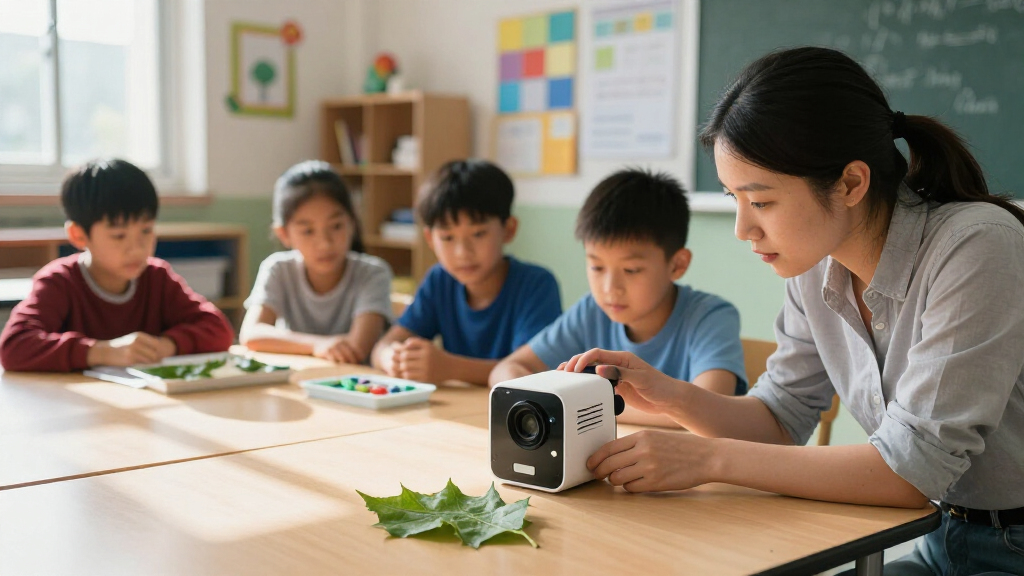
I compared these 15 portable document cameras for teaching around classroom tasks: showing worksheets, books, handwritten work, and small objects to students through a computer or display. I weighed stated resolution alongside focus method, lighting, microphone inclusion, connection options, and the practical ease of placing and framing material. A higher megapixel figure mattered most when paired with features that can help produce a usable classroom image; it did not automatically outrank ease of use or connection flexibility.
The order reflects overall classroom usefulness first, then narrower strengths such as expanded connectivity, lighting, or a simpler feature set. Models with limited specifications or a more specialized design rank lower because they fit fewer teaching setups, not because every classroom needs the same equipment. Product names and specifications are taken from the supplied product list; buyers should confirm device compatibility and included accessories before choosing.
Factors to Consider When Choosing Portable Document Cameras For Teaching
Choosing a teaching camera is less about chasing the largest number on the box and more about matching the device to your lesson format, room, and computer setup. I would decide these points before comparing small feature differences.
Match resolution to what students need to see
Resolution matters most when lessons involve small print, fine diagrams, or detailed student work. For a large, clearly printed page, a 2MP camera may show enough; tiny annotations can look less legible, especially after the classroom display or video meeting compresses the image. An 8MP or 4K label can offer more image detail, but it cannot compensate for poor focus, shadows, or a page that fills too little of the frame. Ask what students need to read from the back of the room, not just what resolution sounds impressive. If you teach mostly online, check how the camera works with your conferencing software and display resolution as well.
Choose focus controls for the pace of your lessons
Autofocus can help when you move between a workbook, a three-dimensional object, and writing on paper during one lesson. Manual focus gives you direct control, which can be useful for a fixed overhead view, but it may slow a quick demonstration if you regularly change distance or material. Neither approach is automatically better: autofocus behavior and manual adjustment methods vary, and the product list does not establish how each model handles every scene. Think through a typical lesson and count how often the camera must refocus. If you frequently switch objects, prioritize a setup that keeps image changes simple rather than choosing on resolution alone.
Plan for your room’s light and audio
Built-in LED lighting can help when a camera casts a shadow over a page or the classroom has uneven illumination. It is less useful if the light reflects off glossy worksheets or creates glare on laminated materials, so check its position and adjustability before relying on it. A built-in microphone may simplify a remote lesson, but it does not guarantee clear speech across a noisy or spacious classroom. Consider whether you already use a headset or room microphone; adding another audio device may be unnecessary. For shared teaching spaces, test the full setup with the materials and lighting you actually use.
Check connections against your teaching setup
A USB camera is a straightforward fit when you teach from a laptop and display the image through classroom software. HDMI can be useful when you want a direct connection to a monitor or projector, while USB-C may fit newer computers and reduce adapter needs. Do not assume a connector alone guarantees compatibility: check the exact computer, operating system, classroom display, and any required software or adapters. A model with more ports may be a better long-term fit for rooms shared across devices, but it can add complexity if you only need a simple laptop connection. Confirm what cables are included before planning a lesson around a particular hookup.
Treat portability as a whole-kit question
A camera described as portable still needs to fit your routine: carrying it between rooms, setting it on a desk, and packing its cable and any adapters. A compact camera can be easier to store, while a larger document area or wider arm may make full-page framing simpler. Check how much desk space the camera needs and whether its structure can hold the viewing position you use for books or objects. For teachers moving classrooms, setup time and cable management may matter more than a small difference in image resolution. Include the computer connection and storage case in your portability decision, not just the camera body.
Pay for capabilities you will use repeatedly
Extra resolution, multiple connection types, lighting, and microphones can each be worthwhile when they solve a recurring classroom problem. They are less compelling if your lessons use one device, a well-lit desk, and an existing microphone. A common mistake is paying for several features without checking whether they work with school-managed computers or the room’s display equipment. On the other hand, a basic camera can become frustrating if it cannot show the detail your students need or connect to the equipment you have. Make a short list of must-haves and choose the least complicated model that meets them.
Frequently Asked Questions
Is an 8MP or 4K document camera worth choosing over a 2MP model for teaching?
It depends on the material students need to see. Higher-resolution models such as the IPEVO V4K, OKIOCAM S-4K, and TreasLin 15MP 4K are more suited to lessons with small print, fine diagrams, or detailed writing. A 2MP option such as the AIKOR may be sufficient for larger text and simple demonstrations. The camera also needs good focus, framing, and light; resolution cannot fix a shadowed or poorly composed page. Match image detail to your lessons and display rather than buying by the number alone.
Should I choose HDMI, USB-C, or a USB document camera?
Start with the computer and display you will use in class. A USB model is a practical match for teachers who show the camera through a laptop, while HDMI can help when connecting directly to a compatible screen or projector. USB-C may suit newer computers, but connector shape does not confirm software or device compatibility. The TreasLin lists HDMI and USB-C, which gives it more connection flexibility than USB-only choices in this roundup. Check the school’s equipment and any adapter requirements before you buy.
Do I need a document camera with a built-in microphone?
A built-in microphone can make a remote lesson setup simpler if you do not already have a separate audio device. It may be less useful in a busy classroom, where room noise or distance can make a headset or dedicated microphone a better fit. Several models in this lineup list built-in or dual microphones, including the Gawervan and THUSTAR options, but the product descriptions alone do not establish how well they capture speech in your room. Consider your usual teaching format and whether your computer already provides suitable audio. For hybrid lessons, test audio placement along with camera framing.
When is manual focus a better choice than autofocus?
Manual focus can suit lessons where the camera stays in one position and you want direct control over a fixed page or object. Autofocus is generally more convenient when you switch frequently between materials at different distances, though the exact behavior depends on the model. The AIKOR and another listed camera explicitly identify manual focus, while the PAKOTOO 8MP model lists autofocus. If your lessons involve frequent changes, prioritize quick reframing and focus adjustment; for a steady overhead view, manual control may be adequate. Check the focus method in the product details rather than assuming every camera handles it the same way.
Will a document camera work with my school’s computer and video platform?
Compatibility depends on the camera’s connection, the computer’s operating system, and the teaching software or display workflow. Before buying, check whether the camera is recognized by your school-managed device and whether its required software is permitted. USB connection is common across many picks here, but it does not guarantee support on every computer. If the classroom uses a projector or monitor without a computer in the signal path, a model with HDMI may be a better match if the display supports it. Confirm cable needs and test the setup before relying on it for a live lesson.
Conclusion
For a balanced classroom setup, I recommend the IPEVO V4K 8MP as the best overall pick because it combines detailed capture with a straightforward USB approach. The PAKOTOO 5MP is the best value-style choice for teachers who want a simpler camera and do not need the highest resolution listed here; the TreasLin 15MP 4K is my premium pick for buyers who will use its HDMI and USB-C connections. Beginners should start with a basic USB model that matches their computer and lesson routine, such as the Gawervan 1080p if built-in microphones are useful. For specific needs, choose the PAKOTOO 8MP with autofocus and LED light for lessons that benefit from focus and lighting assistance, or the INSWAN INS-3 handheld if its handheld form suits your workflow. The best choice is the one that fits your classroom’s display, materials, and teaching style without adding features you will not use.
Fall Picks
fall essentials
As an affiliate, we earn on qualifying purchases.