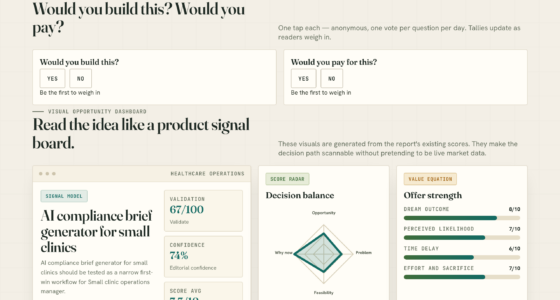
📊 Full opportunity report: Why TRT Patients May Want To Track Labs And Symptoms on IdeaNavigator AI — validation score, market gap, and execution plan.

Prime made for students and young adults
- Fast, free delivery for dorm and study essentials
- Prime Video and Amazon Music included
- Member-only deals
TL;DR
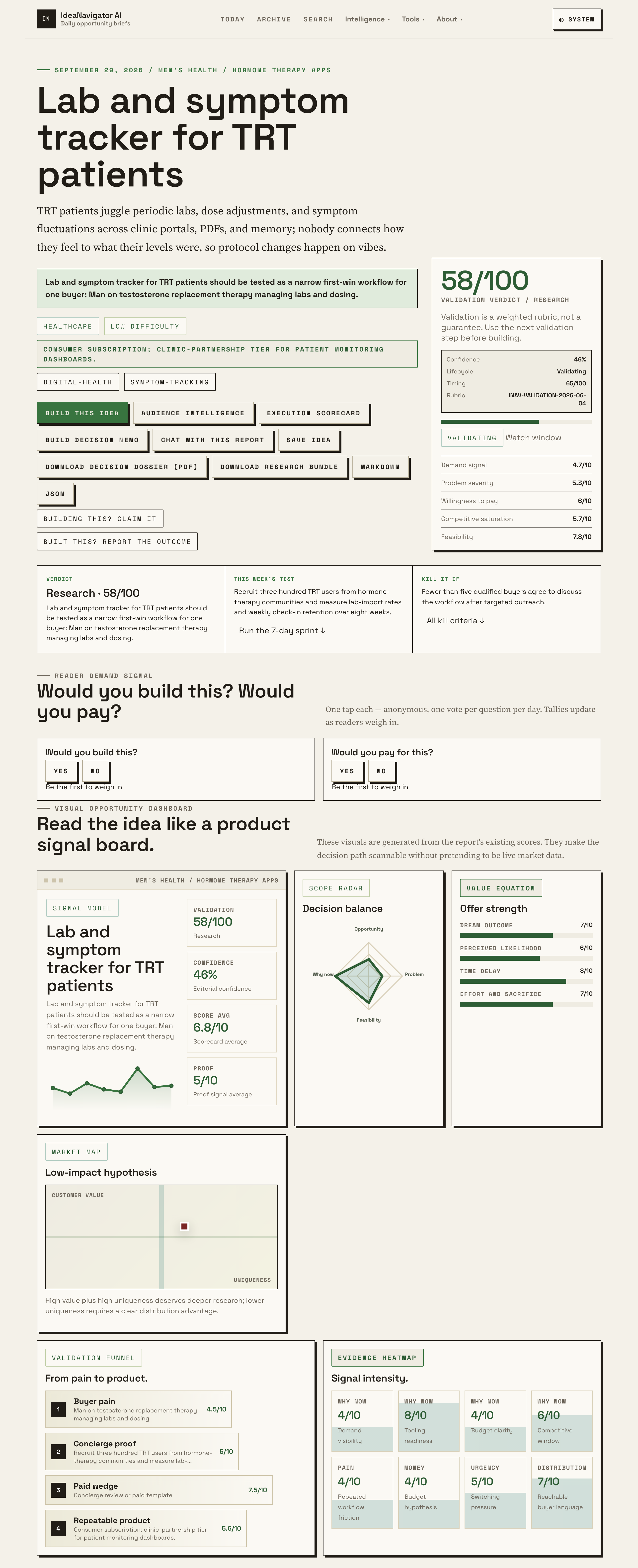
IdeaNavigator AI has outlined a proposed tracker for men using testosterone replacement therapy, combining imported lab results, dose changes and daily symptom check-ins. The proposal describes a possible product and an eight-week user test; it does not establish that the app exists, that demand has been measured or that TRT care is broadly changing.
IdeaNavigator AI’s proposal describes testing a digital tracker for men on testosterone replacement therapy (TRT), bringing lab results, dose changes and reported symptoms into one timeline. The proposal outlines an early product concept and a possible way to assess it; it provides no evidence that the app has been built or that patients have tested it.
According to IdeaNavigator AI’s proposal, the product would let users import laboratory PDFs, chart hormone panel results over time and record dose changes alongside daily symptom check-ins. The proposal also says it would prepare trend summaries for clinic visits and flag results that move outside target ranges. It does not specify which laboratory values or target ranges the app would use, who would set them, or how clinicians would review any alert.
IdeaNavigator AI frames the intended user as a man managing TRT labs and dosing. It describes the problem as patients having records spread across clinic portals, PDFs and personal memory, which could make it harder to see how symptoms and test results relate over time. That is the proposal’s account of a user problem, not a finding from a reported patient study.
For validation, IdeaNavigator AI suggests recruiting 300 TRT users through hormone-therapy communities and tracking lab-import rates and weekly check-in retention for eight weeks. These are proposed test parameters, not completed recruitment or measured engagement. The proposal also identifies a consumer subscription and a clinic partnership tier as possible revenue models; it reports no prices, agreements or customer commitments.
A Test of Fragmented TRT Records
If patients do keep records in separate places, a shared timeline could help them bring a clearer account of dose changes, lab results and symptoms to appointments. That could make follow-up conversations more organized. The proposal does not show that combining these records improves treatment decisions or patient outcomes, so those effects would need to be evaluated rather than assumed.
The idea also places patient tracking alongside clinician care, a distinction that matters for a product handling health information. A trend summary or out-of-range flag could prompt a patient to contact a clinic, but it cannot by itself establish what a result means or whether a dose should change. The proposal leaves clinical oversight and the handling of alerts open.
The suggested retention measures would answer a narrower early question: whether users import results and continue checking in during the trial. Those measures could indicate whether the workflow is usable, but they would not establish clinical benefit, long-term use or willingness to pay. The proposal therefore presents an opportunity to test, not a demonstrated solution.
From Idea to Patient Trial
TRT monitoring can involve periodic laboratory testing and dose management, while patients may receive care through different providers or digital services. IdeaNavigator AI frames that combination as a record-keeping problem. Its proposal says telehealth clinics and TRT prescriptions have surged, but supplies no dates, counts, comparison period or independent evidence for that claim. The scale and pace of any increase cannot be established from the proposal.
IdeaNavigator AI describes an early MVP concept: import documents, place results and dose changes on a timeline, collect symptom reports and produce visit summaries. The outline does not describe integrations with clinic systems, supported lab providers, privacy safeguards, medical review or the process for correcting extracted PDF data. Each of those details could affect whether patients and clinics can use it reliably.
The distinction between a product hypothesis and a tested service is central here. IdeaNavigator AI reports no launch, clinic deployment, user outcome or commercial arrangement. The only concrete next step it describes is a proposed eight-week validation effort with a target of 300 participants.
Clinical Rules Remain Unspecified
IdeaNavigator AI reports no trial results, and its proposal does not say whether recruitment has begun. The proposed eight-week period is a validation plan, not a schedule with a stated start date. The proposal also provides no information about participant recruitment, expected completion rates or success criteria beyond import activity and weekly check-ins.
The proposal does not identify the laboratory measures to include, define the target ranges behind its alerts or explain whether ranges would vary by patient and clinic. It also does not say how symptom entries would be interpreted, how changes in dose would be verified, or whether clinicians would see the resulting summaries. Without those details, the app’s clinical role and the risk of misleading or incomplete records remain unknown.
IdeaNavigator AI’s market-growth claim is unquantified: the proposal gives no prescription data, clinic counts, market estimate or comparison baseline. Its revenue options are possible business models, not evidence of demand or payer interest. The outline also does not address privacy, data retention, security or access controls.
Measure Use Before Expansion
IdeaNavigator AI’s proposed next step is to recruit 300 TRT users and observe lab imports and weekly symptom check-ins for eight weeks. The proposal gives no recruitment date, study protocol or results. Until those details are available, the test should be read as a plan rather than an active or completed study.
For a meaningful assessment, future reporting would need to say how many people enrolled and finished, how often they imported labs and checked in, and whether users found the summaries useful during clinic visits. It would also need to explain how laboratory data are checked, how alerts are set and what clinicians are expected to do with them. Those results could help distinguish a convenient record-keeping tool from a service with demonstrated clinical value.
Any move toward clinic partnerships or paid subscriptions would require evidence beyond short-term engagement, including clarity about privacy, clinical oversight and the product’s limits. IdeaNavigator AI reports no launch or partnership at this stage.
Source: IdeaNavigator AI
Key Questions
Has the TRT lab and symptom tracker launched?
No launch is reported. The proposal outlines a possible product and a validation plan, without saying the app has been built or released.
What would the proposed app track?
It would combine imported lab PDFs, hormone panel results, dose changes and daily symptom check-ins, then prepare trend summaries and flag results outside target ranges. The proposal does not define those ranges.
Have 300 patients tested the idea?
No completed test or participant results are reported. Recruiting 300 users for an eight-week assessment is a suggested validation plan.
Would the app recommend TRT dose changes?
The proposal describes tracking and alerts but does not say the app would recommend dose changes. It also does not explain how clinicians would review its summaries or alerts.
Source: IdeaNavigator AI
Fall Picks
fall essentials
As an affiliate, we earn on qualifying purchases.