
To prevent temperature swings, you need to maintain proper water pressure and guarantee your valves are well-calibrated. High or low pressure can cause fluctuating water flow, making it hard to control temperature. Using a thermostatic valve helps blend hot and cold water precisely, providing stable comfort. Regularly check and maintain your valves, and consider upgrading if needed. If you want to discover more ways to keep your shower temperature steady, keep exploring these key tips.

Prime made for students and young adults
- Fast, free delivery for dorm and study essentials
- Prime Video and Amazon Music included
- Member-only deals
Key Takeaways
- Maintain consistent water pressure to ensure stable flow and prevent temperature fluctuations.
- Use properly calibrated thermostatic valves for precise hot and cold water mixing.
- Regularly inspect and service valves to ensure responsiveness and accurate temperature control.
- Upgrade plumbing to reduce pipe length and blockages that decrease water pressure.
- Monitor system pressure and adjust pressure regulators to keep within optimal ranges.

Have you ever wondered why some shower systems feel just right while others leave you feeling uncomfortable? The secret often lies in how well the system maintains a consistent temperature, which depends heavily on water pressure and valve calibration. When these elements are properly balanced, your shower remains comfortable and steady, avoiding those sudden temperature swings that can disrupt your relaxation.
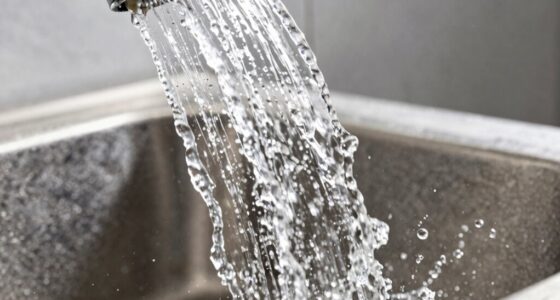
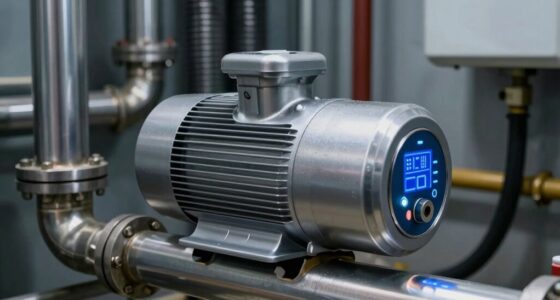
Water pressure plays a vital role in the shower experience. If the pressure is too high, it can cause the water temperature to fluctuate because the system struggles to regulate flow effectively. Conversely, if the pressure is too low, you might notice uneven water delivery, making it difficult to maintain a consistent temperature. Ensuring your home’s water pressure is within the recommended range helps the system work smoothly, providing a stable flow that supports effective temperature control. Proper water pressure is essential for optimal shower performance and comfort.
Maintaining proper water pressure ensures stable flow and consistent, comfortable shower temperatures.
Valve calibration is equally important. Your shower’s mixing valve is responsible for blending hot and cold water to your preferred temperature. When properly calibrated, it responds precisely to your adjustments, maintaining that temperature throughout your shower. If the valve is miscalibrated or worn out, it may not respond accurately, leading to sudden changes in temperature as you shower. Regularly checking and adjusting the valve ensures it remains responsive and calibrated correctly, preventing those frustrating swings. Additionally, valve calibration can deteriorate over time due to wear, emphasizing the importance of routine maintenance. Upgrading to modern thermostatic valves can further improve temperature stability and overall shower comfort.
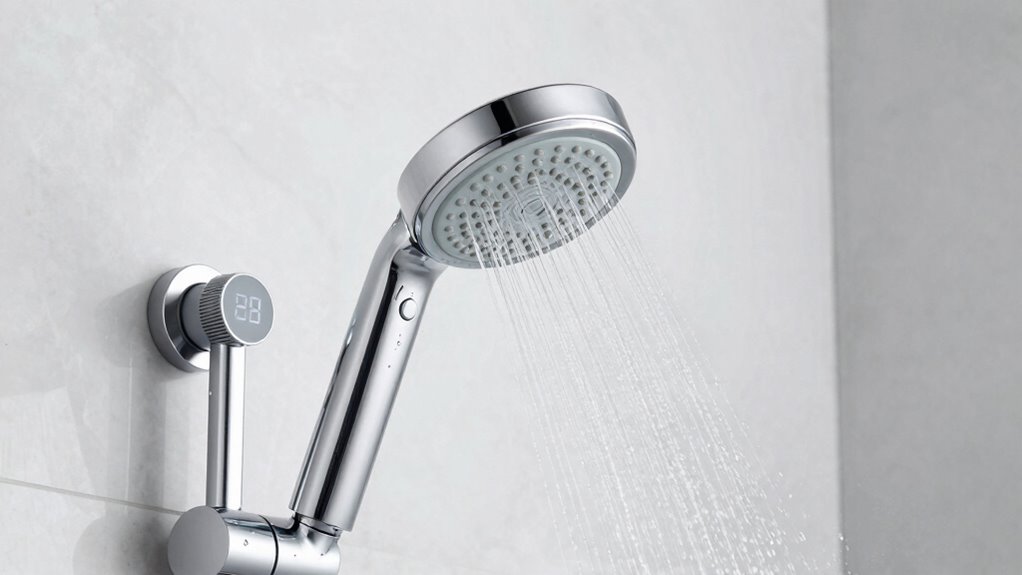
In addition, modern shower systems often feature thermostatic valves, which automatically adjust water flow to keep the temperature constant. These systems rely on accurate valve calibration and stable water pressure to function effectively. When both are properly maintained, you benefit from a steady, comfortable shower experience without needing to constantly tweak the controls. Proper system maintenance can help prevent issues that compromise performance.
It’s also worth noting that the plumbing setup can influence water pressure and valve calibration. Long pipe runs or outdated plumbing can reduce pressure and cause uneven flow, making it harder for your shower system to maintain balance. Upgrading or properly insulating your pipes can help improve overall water pressure, supporting better temperature regulation. Understanding the plumbing setup in your home can help identify potential issues that affect your shower’s performance.
As an affiliate, we earn on qualifying purchases.
Frequently Asked Questions
Can a Shower System Balance Be Installed DIY?
Yes, you can attempt a DIY installation of a shower system balance, but it requires careful planning. Follow troubleshooting tips like turning off water supply first, and make sure you understand the valve setup. Gather the right tools and instructions, and take your time. If you encounter issues or feel unsure, don’t hesitate to consult a professional. Proper installation helps prevent temperature swings and ensures a comfortable shower experience.
How Often Should I Service My Shower Balance System?
You should service your shower balance system at least once a year to guarantee ideal water temperature and proper functioning. Regular shower maintenance helps prevent sediment buildup and detects any issues early. If you notice temperature swings or inconsistent water flow, it’s time for a check-up sooner. Routine servicing keeps your shower system balanced, maintains steady water temperature, and prolongs its lifespan.
Are There Eco-Friendly Options for Shower System Balancing?
You can choose eco-friendly shower system balancing options that make a difference. Look for models made with eco-friendly materials and designed with energy efficiency in mind, reducing your water and energy consumption. These options give you peace of mind, knowing you’re helping the environment while enjoying consistent water temperature. Investing in energy-efficient designs not only conserves resources but also saves you money on utility bills. Your choice can truly make a positive impact.
Will a Balance System Increase My Water Pressure?
A balance system can improve your water flow and help regulate pressure, but it might not necessarily increase your overall water pressure. Instead, it guarantees consistent temperature and flow by preventing pressure fluctuations. If your water pressure is low, a balance system can optimize what you have, but for a significant boost, you might need additional pressure-boosting solutions. Overall, it makes your shower experience more comfortable and reliable.
What Are the Signs of a Malfunctioning Shower Balance?
You’ll notice signs of a malfunctioning shower balance through frequent temperature fluctuations and pressure irregularities. If your water suddenly turns too hot or cold during showers or if the pressure feels inconsistent, it indicates issues with the balance mechanism. These symptoms suggest that the system isn’t properly regulating water flow and temperature, so addressing it promptly can restore comfort and prevent further damage.
As an affiliate, we earn on qualifying purchases.
Conclusion
Now that you understand the importance of balancing your shower system, imagine it as a delicate dance where water and pressure move in perfect harmony. When you fine-tune this balance, you’ll enjoy a steady, soothing cascade, free from sudden temperature swings—like a gentle rain that never surprises you. With a little effort, your shower becomes a sanctuary of comfort, turning every splash into a calming embrace. Embrace the harmony, and let your shower sing in perfect tune.
As an affiliate, we earn on qualifying purchases.
As an affiliate, we earn on qualifying purchases.
Halloween Picks
halloween
As an affiliate, we earn on qualifying purchases.