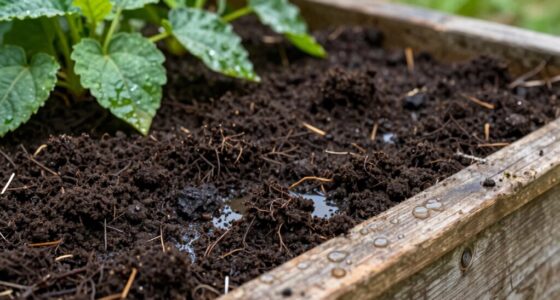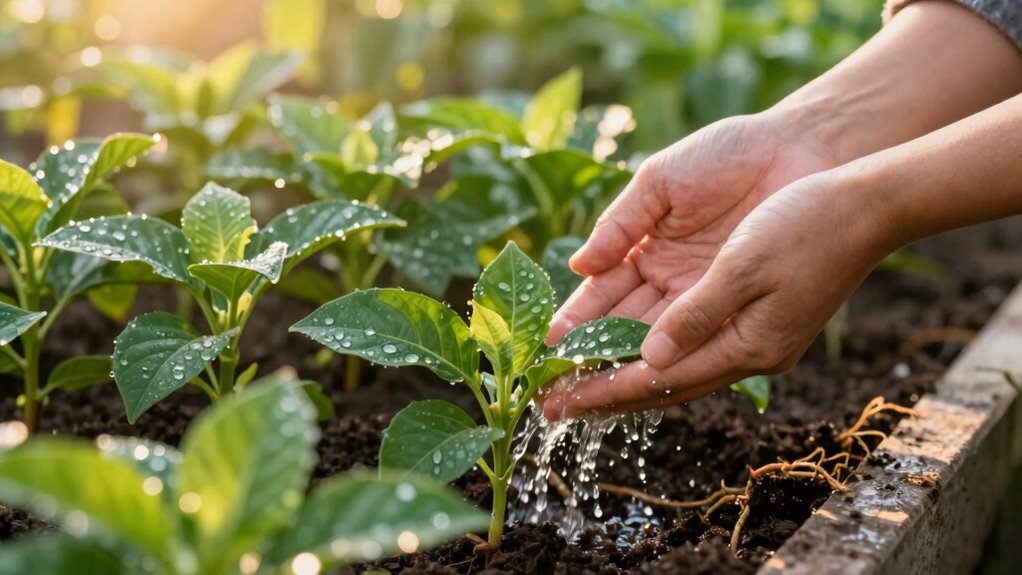
Watering early in the morning helps your roots grow deeper by providing consistent moisture before the heat of the day causes evaporation. This timing allows the water to soak into the soil thoroughly, encouraging roots to extend downward in search of moisture. Regular morning watering also reduces the risk of fungal problems that can occur with evening dampness. Keep this habit in mind, and you’ll notice healthier, more resilient plants—there’s more to discover if you keep going.
Key Takeaways
- Water early in the morning to allow roots to absorb moisture before heat causes evaporation.
- Water when soil is dry to encourage roots to grow deeper in search of moisture.
- Avoid late evening watering to prevent prolonged dampness that can hinder root growth.
- Deep, infrequent watering promotes downward root growth rather than shallow surface roots.
- Consistently monitoring soil moisture helps adjust watering timing for optimal root development.
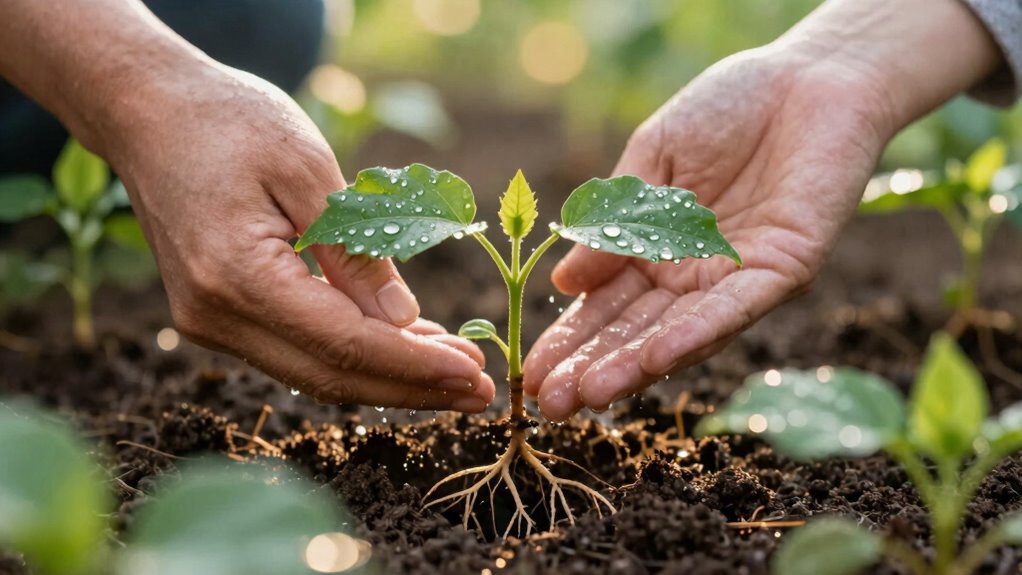
Establishing the right watering timing habit is essential for healthy plant growth and water conservation. When you pay close attention to soil moisture levels, you give your plants the perfect environment to thrive. Overwatering can drown roots and promote disease, while underwatering stresses plants and hampers development. The key lies in understanding your plants’ needs and adjusting your watering frequency accordingly. Instead of sticking to a rigid schedule, monitor soil moisture regularly. Use your finger, a moisture meter, or observe plant signs to determine when watering is truly necessary. This approach ensures you’re providing just enough water to keep the soil consistently moist but not waterlogged.
By focusing on soil moisture, you help your plants develop deeper roots. Shallow watering encourages roots to stay near the surface, making them more vulnerable to drought and temperature fluctuations. Conversely, when you wait until the soil slightly dries out between waterings, roots are encouraged to grow downward in search of moisture. This deep-root growth makes plants more resilient and better equipped to access nutrients from lower soil layers. Adjusting your watering frequency based on soil moisture, rather than a fixed timetable, promotes this healthy root development. Proper watering timing also reduces water waste and helps maintain optimal indoor air quality by preventing excess humidity that can lead to mold or fungal growth. Timing your watering sessions strategically also contributes to better water absorption. Early morning is ideal because it gives your plants a chance to absorb moisture before the heat of the day causes evaporation. Late evening watering, while sometimes tempting, can lead to prolonged dampness that fosters fungal issues. By watering when the soil is dry but before the heat intensifies, you ensure that water penetrates deeply into the soil, encouraging roots to grow downward rather than outward in search of moisture. This habit strengthens your plants’ root systems, making them more drought-tolerant and vigorous. Regularly checking soil moisture levels helps you avoid overwatering and supports healthy plant development over time. Additionally, understanding the role of soil moisture levels can guide you in creating an optimal watering routine tailored to different plant types and environmental conditions. Moreover, adjusting your watering habits based on climatic conditions ensures your plants stay healthy regardless of seasonal changes. Incorporating weather patterns and local climate data can further refine your watering schedule, making it more effective and sustainable.
As an affiliate, we earn on qualifying purchases.
Frequently Asked Questions
How Does Watering Timing Affect Soil Moisture Retention?
Watering timing directly impacts soil moisture retention, as watering too often can lead to water runoff and soil saturation, while infrequent watering allows moisture to seep deeper. Proper timing promotes good soil aeration, preventing compaction, and guarantees roots access enough water. When you water at ideal times, you enhance plant nutrient absorption and help roots grow deeper, creating a healthier, more resilient garden environment.
Can Watering Early or Late Cause Root Rot?
Yes, watering too early or too late can cause root rot by disrupting root health and water absorption. If you water late in the day, excess moisture stays around overnight, creating a damp environment that promotes rot. Watering early in the morning allows roots to absorb moisture efficiently and dry out during the day, preventing rot. Proper timing ensures healthy roots and ideal water absorption, avoiding the risk of root decay.
What Signs Indicate Overwatering or Underwatering?
Think of your plant like a patient in need of the right care. Overwatering signs include yellowing leaves, mold, or a soggy soil smell, while underwatering causes wilting, dry leaves, and slow growth. These issues can hinder plant nutrition and make pests more likely. Regularly check soil moisture, and adjust watering habits to keep roots healthy and strong, preventing stress and promoting vibrant growth.
How Does Watering Frequency Impact Root Depth?
Watering frequency directly impacts root growth and water absorption. If you water too often, roots stay shallow because they don’t need to search for moisture, weakening the plant. Conversely, infrequent watering encourages roots to grow deeper to access water, strengthening the plant’s foundation. Adjust your watering schedule to promote deep root growth, ensuring your plants develop resilient, healthy roots that can efficiently absorb water even during dry periods.
Is There an Ideal Season for Deep Watering?
The ideal season for deep watering is early spring or fall when plants are actively growing or preparing for dormancy. During these times, you should make seasonal adjustments to watering schedules to promote drought resilience and encourage roots to grow deeper. Deep watering during these seasons helps plants develop strong roots, making them more resilient to drought conditions and ensuring healthy growth throughout the year.
As an affiliate, we earn on qualifying purchases.
Conclusion
By mastering the watering timing habit, you encourage your roots to grow deeper and stronger. Did you know that plants watered deeply once a week develop roots that extend up to 12 inches, compared to just 4 inches with shallow watering? This simple change boosts drought resistance and overall health. So, next time you water, remember: deep, infrequent watering isn’t just good for your plants—it’s essential for their growth and resilience.
As an affiliate, we earn on qualifying purchases.
As an affiliate, we earn on qualifying purchases.