TL;DR

Prime made for students and young adults
- Fast, free delivery for dorm and study essentials
- Prime Video and Amazon Music included
- Member-only deals
The United Nations has issued a warning that global warming is on track to surpass the critical 1.5°C limit set by climate agreements. This development underscores the urgency of climate action but remains based on trend signals, with specific future trajectories still uncertain.
The United Nations has officially stated that global warming is likely to surpass the 1.5-degree Celsius threshold within the next few years, based on current emission trends and climate data. This warning highlights the increasing difficulty of meeting global climate targets and underscores the urgency for enhanced mitigation strategies. The statement is based on trend signals rather than definitive projections, but it signals a significant shift in the climate outlook that policymakers and communities worldwide must heed.
The UN’s climate analysis indicates that, unless rapid and substantial emission reductions are achieved, global temperatures are on a trajectory that will exceed the 1.5°C limit, which is a key target established by the Paris Agreement. The assessment draws on recent climate models, observed temperature data, and emission trend analyses, all pointing toward a high probability of crossing this threshold in the coming years.
Officials from the UN’s climate agency emphasized that the current pace of global emissions remains too high to stay within the 1.5°C limit. Despite some countries’ commitments to reduce emissions, global efforts are still insufficient, and the gap between commitments and actual reductions remains wide. The UN report warns that exceeding 1.5°C would lead to more frequent and severe climate impacts, including intensified heatwaves, rising sea levels, and increased extreme weather events.
It is important to note that these projections are based on current trends and climate models, which carry inherent uncertainties. The actual timing of crossing the 1.5°C threshold could vary depending on future policy actions, technological developments, and natural climate variability. The UN stresses that immediate, large-scale action is necessary to alter these trajectories, but it is not yet clear whether global efforts will accelerate sufficiently to prevent surpassing the limit.
Implications of Exceeding the 1.5°C Climate Threshold
This warning from the UN emphasizes the critical importance of immediate climate action. Surpassing the 1.5°C limit is linked to increased risks of severe weather events, ecosystem damage, and threats to human health and livelihoods. It underscores the need for urgent emission reductions and adaptation measures to mitigate future impacts and inform international climate policies.
As an affiliate, we earn on qualifying purchases.
Recent Climate Trends and Global Emission Trajectories
Over the past decade, global temperatures have been rising steadily, with recent years ranking among the hottest on record. Despite international commitments under the Paris Agreement, global greenhouse gas emissions have remained high, driven largely by fossil fuel consumption and deforestation. Climate models have long indicated that if emissions continue at current levels, the 1.5°C threshold could be crossed around the early 2030s. The latest UN assessment confirms that these trends are still valid, though the exact timing remains subject to uncertainties in future emissions and climate responses.
Search interest in climate change topics has increased recently, reflecting growing concern over these warnings and the visibility of climate impacts worldwide. The recent UN statement has contributed to this heightened attention, although the underlying trend signals have been evident for years. Experts note that while these signals are strong, they are not definitive predictions, and future emissions reductions could change the trajectory.
As an affiliate, we earn on qualifying purchases.
Uncertainties in Timing and Policy Impact
The timing of crossing the 1.5°C threshold depends on future emission levels, policy measures, and natural climate variability. While current trends suggest an imminent crossing, accelerated mitigation efforts could still influence this outcome. The projections are based on current data and models, which include inherent uncertainties related to climate sensitivity and future actions.
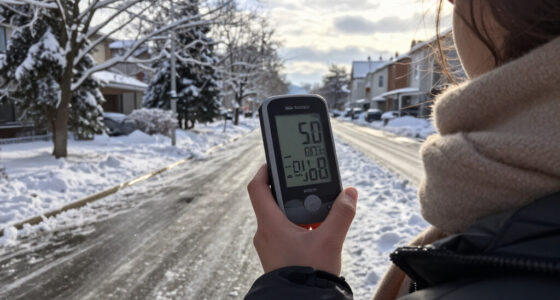
carbon footprint calculator device
As an affiliate, we earn on qualifying purchases.
As an affiliate, we earn on qualifying purchases.
Next Steps for Climate Policy and Action
In response to this warning, international negotiations are expected to intensify, with countries urged to strengthen commitments under the Paris Agreement. Policymakers are encouraged to implement rapid emission reductions, promote renewable energy, and develop adaptation strategies. Updated assessments and guidance from the UN and climate organizations will support these efforts, with ongoing monitoring of emissions and temperature data essential for tracking progress and adjusting strategies.
As an affiliate, we earn on qualifying purchases.
Key Questions
What does surpassing 1.5°C mean for the planet?
Exceeding 1.5°C is linked to increased risks of severe weather, rising sea levels, and ecosystem disruptions, which threaten human health, food security, and biodiversity.
How certain is the UN about crossing the 1.5°C threshold?
The UN indicates that current trends strongly suggest crossing the threshold soon, but the exact timing depends on future emissions and policy actions, which involve uncertainties.
Can global efforts still prevent exceeding 1.5°C?
Yes, immediate and substantial emission reductions could change the trajectory and help keep warming below or near 1.5°C. However, current efforts are insufficient to date.
What are the consequences of crossing 1.5°C?
Crossing this limit could lead to irreversible impacts, including more intense heatwaves, flooding, droughts, and ecosystem loss, with significant socio-economic consequences worldwide.
Source: hn
Halloween Picks
halloween
As an affiliate, we earn on qualifying purchases.