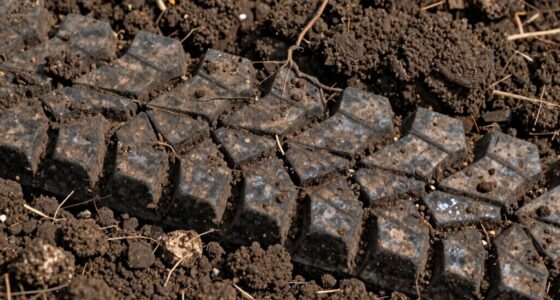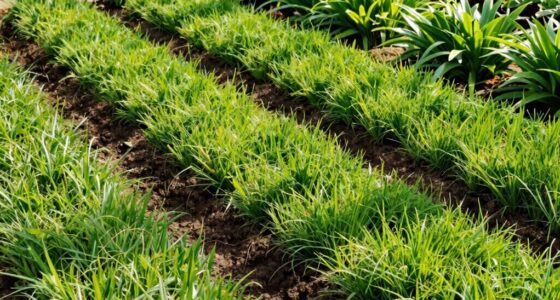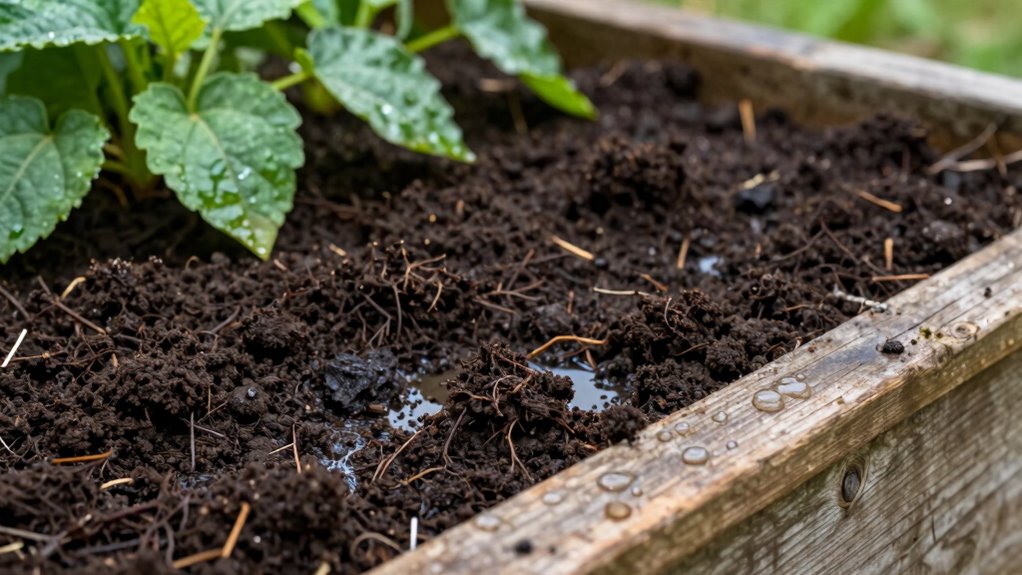

Poor drainage in your raised beds can drown roots and lead to plant diseases like root rot. If the soil stays soggy, roots can’t get oxygen, making plants weak or dying. To fix this, use well-draining mixes, add gravel or perlite, and ensure proper bed construction. Staying on top of drainage issues keeps your garden healthy. Keep going to discover how to prevent and fix drainage problems for thriving plants.

Get school and study supplies delivered free — and shop member deals
- Fast, free delivery on millions of items
- Access to Prime Big Deal Days deals on October 6–7
- Prime Video, Amazon Music and more included
Key Takeaways
- Using heavy clay soil in raised beds can cause poor drainage and waterlogging, drowning roots.
- Failing to incorporate coarse materials like gravel or perlite reduces drainage efficiency.
- Overfilling beds with organic matter without proper aeration traps excess moisture around roots.
- Installing inadequate or blocked drainage layers prevents water from escaping, leading to root rot.
- Incorrect bed elevation or placement on flat, low-lying areas increases the risk of standing water.
As an affiliate, we earn on qualifying purchases.
Why Proper Drainage Matters for Raised Beds
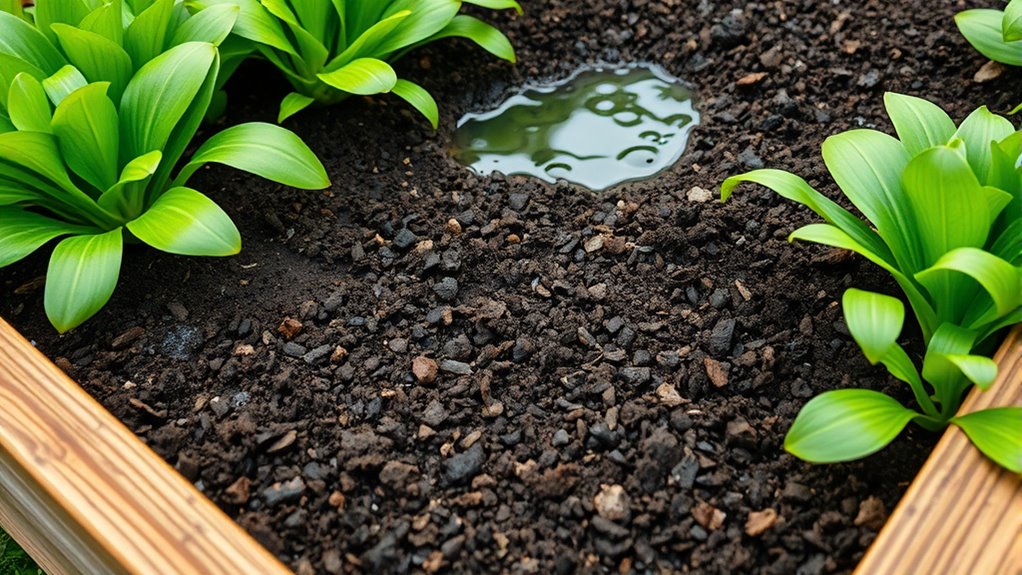
Proper drainage is essential for the success of your raised beds because excess water can quickly lead to root rot and other plant diseases. When drainage is poor, water lingers around the roots, depriving them of oxygen and risking damage to plant root health. This is why ventilation considerations are crucial in designing and maintaining your raised beds to promote healthy airflow. This makes it harder for your plants to absorb nutrients and thrive. To maintain ideal plant root health, you need to manage your watering frequency carefully—watering just enough to keep the soil moist without oversaturating it. Consistent, well-timed watering prevents water from pooling and ensures roots stay healthy. Good drainage helps you avoid overwatering and creates the perfect environment for strong, vigorous plants. Ultimately, it’s a key factor in establishing thriving, resilient raised beds.
well-draining soil mix for raised beds
As an affiliate, we earn on qualifying purchases.
As an affiliate, we earn on qualifying purchases.
Common Problems Caused by Poor Drainage
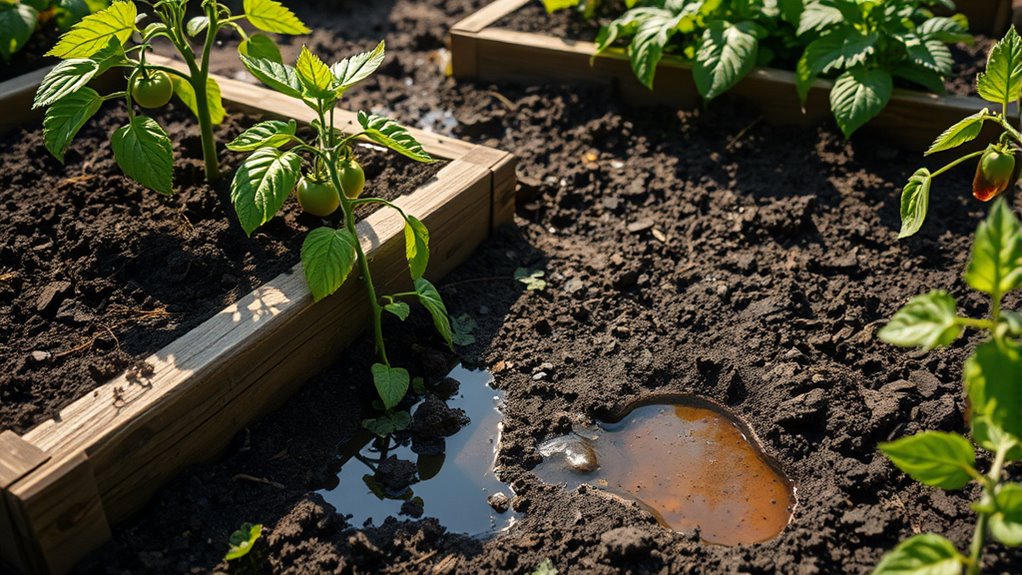
When drainage is poor in your raised beds, your plants are at risk of developing serious health issues. Excess water stagnates around roots, creating a damp environment that fosters plant disease. One of the most common problems is root rot, which occurs when roots are constantly waterlogged and deprived of oxygen. Root rot weakens plants, causing wilting, yellowing leaves, and stunted growth. Additionally, the persistent moisture encourages fungal infections and bacterial diseases, further compromising plant health. Poor drainage can also lead to nutrient leaching, leaving plants deficient in essential elements. If you notice wilting despite adequate watering or blackened, decayed roots during inspection, poor drainage is likely the culprit. Regular monitoring and Auditory Processing Test Components can help identify underlying issues affecting plant health. Addressing drainage issues is vital to prevent these problems and ensure healthy, thriving plants.
As an affiliate, we earn on qualifying purchases.
How to Tell if Your Raised Bed Isn’t Draining Well
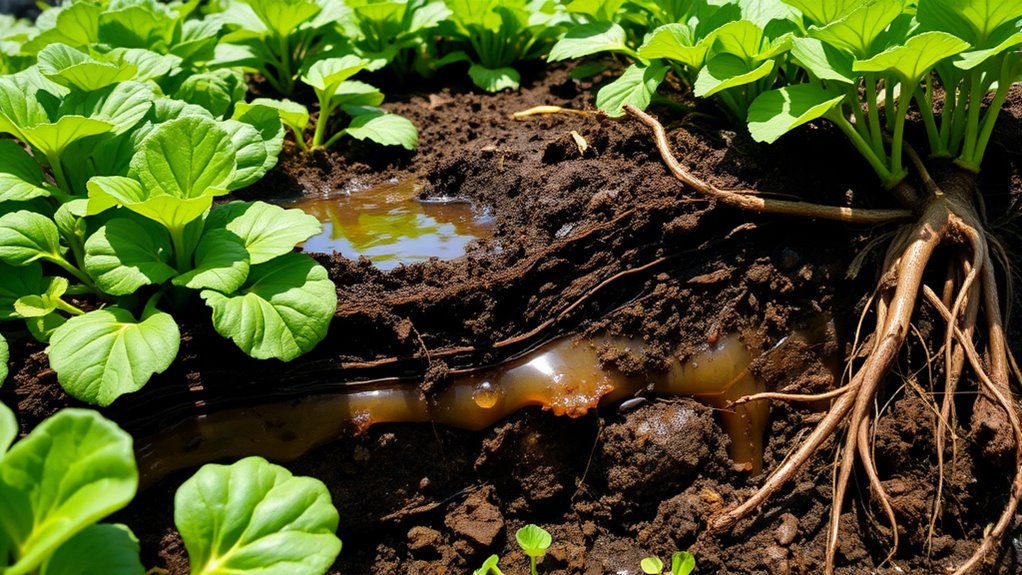
If your plants are wilting despite regular watering, it could be a sign that your raised bed isn’t draining well. Signs include consistently soggy soil, slow-draining spots, or roots that appear waterlogged. Soil compaction can exacerbate poor drainage, trapping water and suffocating roots. Additionally, your watering habits matter: overwatering or irregular watering can make drainage issues worse. To assess, check the soil’s moisture level by digging a small hole and feeling the soil. If it’s excessively wet or stays soggy for days, drainage problems are likely. Proper soil preparation and ensuring adequate drainage layers can help prevent these issues. Use this table to identify drainage issues:
| Symptom | Possible Cause |
|---|---|
| Waterlogged soil | Soil compaction |
| Plants wilting despite watering | Poor drainage or watering habits |
| Slow drainage | Inadequate drainage layers |
| Mold or fungus growth | Excess moisture |
| Roots rotting | Excessive water retention |
As an affiliate, we earn on qualifying purchases.
How Soil Composition Affects Drainage in Raised Beds
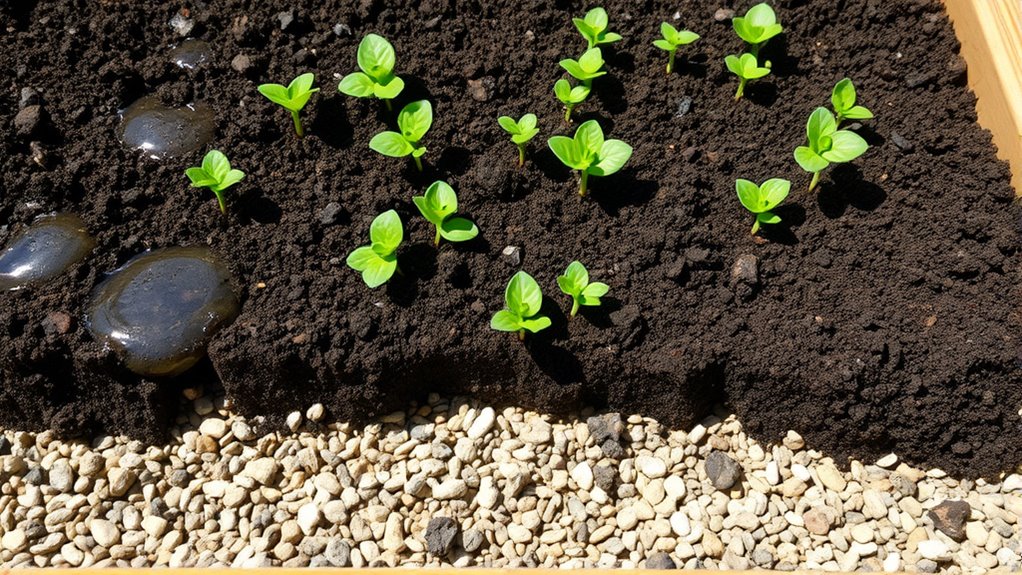
Have you ever wondered how the type of soil in your raised bed influences its drainage? Soil texture plays a essential role—sandy soils drain quickly, while clay soils tend to hold water longer. The balance of organic matter also impacts drainage; rich organic matter improves soil structure, making it easier for excess water to flow through. When your soil contains too much clay or compacts easily, water can stagnate around roots, leading to root rot. Conversely, overly sandy soil may drain too fast, depriving plants of consistent moisture. Achieving a balanced soil composition with the right mixture of soil texture and organic matter ensures proper drainage, providing roots with enough moisture while preventing waterlogging. Proper soil composition is critical for maintaining healthy plant roots and preventing issues like overwatering. This balance is indispensable for healthy plant growth in raised beds.
How to Prepare Your Bed to Improve Drainage
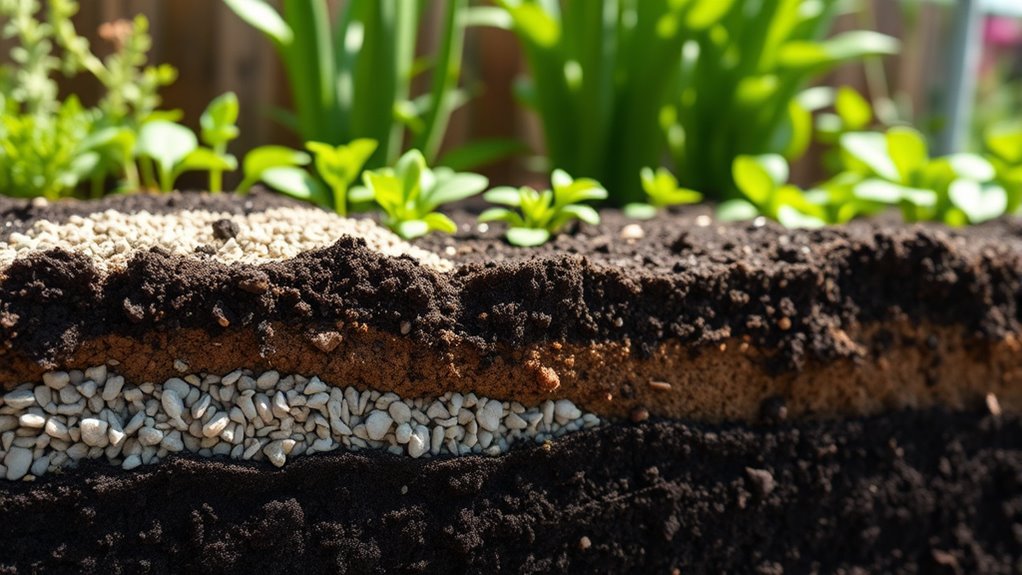
To improve drainage, start by choosing the right soil mix that balances nutrients and water flow. Add drainage layers like gravel or broken pottery at the bottom of your bed to prevent water from pooling. Proper preparation guarantees your plants won’t suffer from excess moisture and will thrive in their new raised bed. Additionally, understanding hydraulic principles can help optimize water movement and prevent oversaturation.
Choose Proper Soil Mix
Choosing the right soil mix is essential for guaranteeing proper drainage in your raised bed. To improve water flow and prevent root rot, select a well-draining blend that includes soil amendments and organic matter. This ensures nutrients are available while avoiding waterlogged soil.
Here are three key ideas to contemplate:
- Use a mix of compost, peat moss, or coconut coir to boost organic matter.
- Incorporate coarse sand or perlite to enhance drainage.
- Avoid heavy clay soils that retain too much water.
Incorporate Drainage Layers
Before filling your raised bed with soil, it’s important to incorporate drainage layers that prevent water from pooling around plant roots. This step improves water drainage and reduces root rot risks. Start by adding a layer of coarse materials like gravel or broken pottery at the bottom. Above that, add a layer of compost layering to enhance soil fertility and aid water retention where needed. This setup allows excess water to drain freely while maintaining moisture where plants need it. Proper drainage layers ensure roots don’t sit in stagnant water, promoting healthy growth. Additionally, selecting the right soil mixture can further improve drainage and plant health. Here’s a quick overview:
| Layer Type | Purpose |
|---|---|
| Gravel or broken pottery | Creates space for excess water to drain |
| Compost layering | Improves fertility and balances water retention |
Best Base Materials for Drainage in Raised Beds
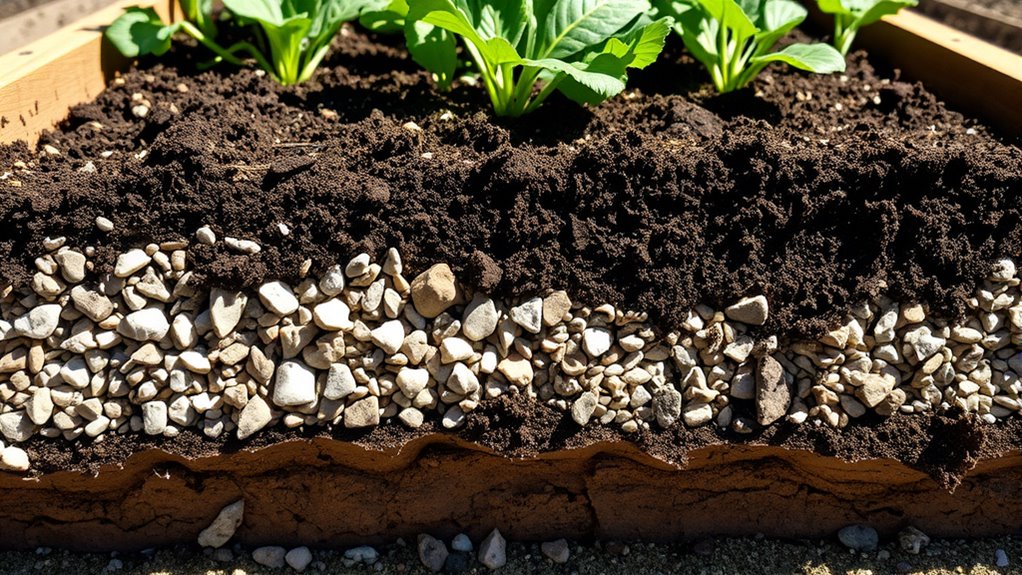
When selecting the best base materials for drainage in raised beds, it is vital to prioritize materials that promote healthy water flow and prevent waterlogging. Good choices create a stable foundation and guarantee excess water drains efficiently. Using coarse gravel or crushed stone allows water to pass quickly while providing stability. Broken pottery or terracotta shards also work well, helping with drainage without compacting. Additionally, coarse sand can improve drainage but should be used carefully to avoid compacting. These materials help you maintain proper soil moisture levels, supporting healthy root growth. When planning your planting schedules, keep in mind that a well-drained bed minimizes root rot. Employing appropriate drainage materials simplifies garden tools work and keeps your raised beds healthier and more productive.
Building Raised Beds for Better Water Flow
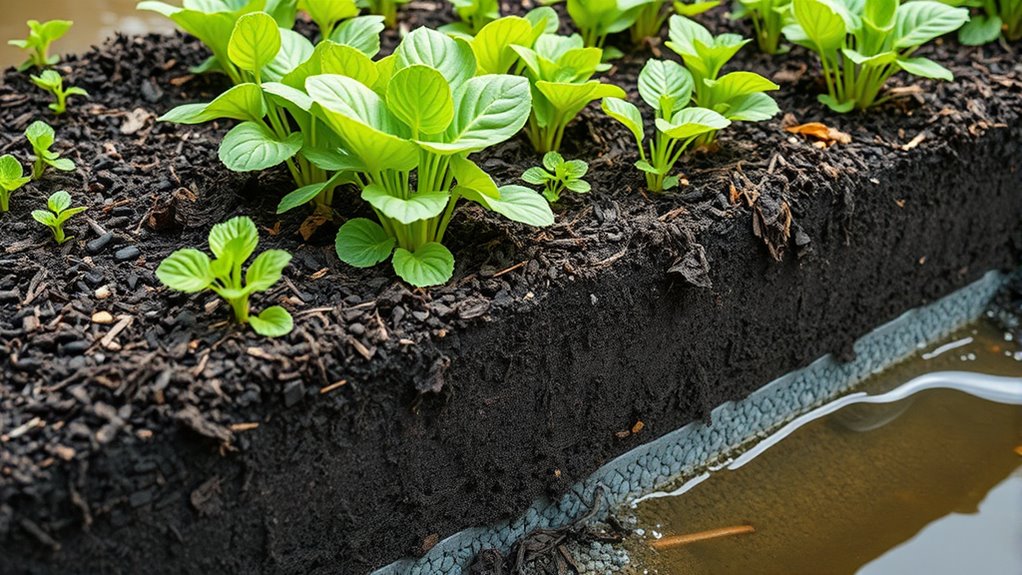
Building raised beds with better water flow starts with careful construction that encourages efficient drainage. Properly designed beds improve soil aeration, allowing roots to access oxygen and reducing water retention issues. To achieve this, choose materials that promote drainage and avoid compacting the soil. Use a layer of gravel or coarse material at the bottom for ideal water escape. Incorporate a mix of soil and compost that balances moisture retention and aeration. Here’s a quick comparison:
| Feature | Benefits |
|---|---|
| Gravel Base | Prevents water pooling, boosts drainage |
| Loamy Soil | Maintains moisture without waterlogging |
A well-designed drainage system can significantly improve plant health by preventing waterlogging, ensuring roots stay healthy and active.
Easy Drainage Fixes for Existing Raised Beds

If your raised beds are experiencing poor drainage despite careful construction, there are simple fixes you can try to improve water flow. First, add a layer of coarse compost application to the top of the soil to enhance drainage and aeration. Second, reduce planting density; overcrowding can trap excess moisture, so give your plants room to breathe. Third, consider installing drainage pipes or creating small channels within the bed to redirect excess water away from roots. These steps help prevent waterlogging and promote healthy root growth. Additionally, understanding soil structure can guide you in selecting the best drainage solutions. These fixes are quick, affordable, and effective for stabilizing drainage in existing raised beds.
Tips to Maintain Good Drainage Over Time
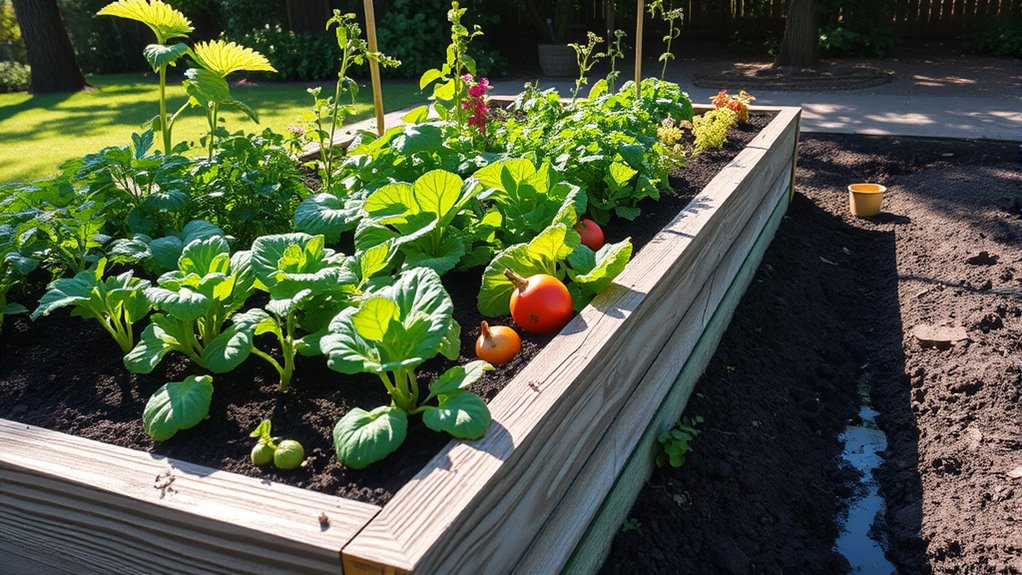
To keep your raised beds draining well, you should regularly check how water moves through the soil. If it’s pooling or too slow, amend the soil with organic matter to improve flow. Using proper mulching techniques also helps maintain consistent drainage and prevents soil compaction over time. Incorporating soil aeration techniques can also enhance water movement and root health in your raised beds.
Regularly Check Drainage Levels
Regularly checking the drainage levels of your raised beds is essential to prevent water from pooling and damaging your plants. Consistently assess how well your soil drains and retains water by performing soil testing. This helps you identify if your soil has excessive water retention or drains too quickly. Here are some tips to maintain good drainage over time:
- Use a trowel or probe to observe moisture levels after watering or rainfall.
- Add amendments like compost or sand if drainage seems poor.
- Elevate or adjust bed height if water tends to pool at the base.
Regular checks ensure your soil remains balanced, promoting healthy root growth and preventing root rot caused by waterlogged soil.
Amend Soil as Needed
When you notice that your raised beds are draining poorly or too quickly, amending the soil can help restore proper water balance. Start by conducting soil testing to identify deficiencies or imbalances. If drainage is too rapid, it often indicates a lack of organic matter, which helps retain moisture and improve soil structure. Incorporate compost, aged manure, or other organic matter to enhance water retention and aeration. Conversely, if drainage is too slow, adding coarse materials like sand or perlite can improve drainage. Regularly testing your soil ensures you know exactly what amendments are needed. Over time, adjusting the organic matter content keeps your soil healthy, preventing issues like root rot or drought stress. Proper soil amendments maintain ideal drainage, supporting strong, healthy plant roots.
Use Proper Mulching Techniques
Using proper mulching techniques is essential for maintaining good drainage in your raised beds over time. Proper mulch depth guarantees roots don’t become waterlogged, while organic mulching enriches soil health. To optimize drainage, follow these tips:
- Keep mulch at a depth of 2-3 inches to prevent excess moisture retention.
- Use organic mulching materials like straw, wood chips, or compost to improve soil structure.
- Replenish mulch regularly to maintain consistent coverage and prevent compaction.
Avoid piling mulch too thick, which can trap water and lead to root rot. Organic mulching also encourages beneficial microorganisms, aiding drainage. By applying these techniques, you ensure your raised beds stay well-drained, healthy, and productive over time.
Troubleshooting Persistent Drainage Problems
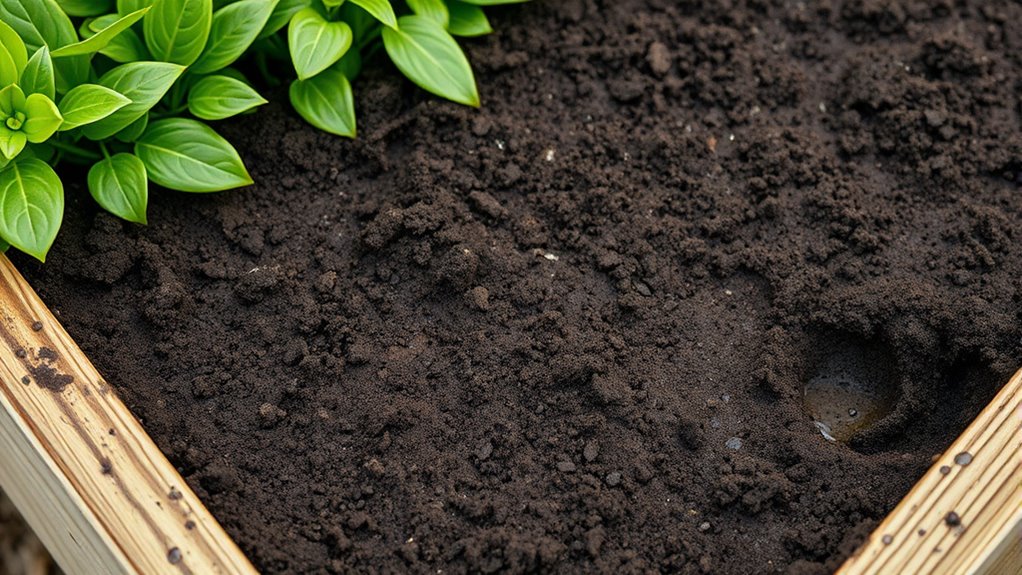
Are persistent drainage issues turning your raised beds into soggy messes? First, check your soil mix—adding compost tea can improve structure and water retention. If drainage remains poor, consider aerating the soil with a garden fork or mixing in coarse materials like gravel or sand to increase porosity. Overwatering can also drown roots, so adjust watering habits accordingly. Using proper pest control techniques ensures roots aren’t damaged by pests that can compromise drainage. If drainage problems persist, evaluate the bed’s location—placing it on a slope or elevating it can help excess water drain away. Remember, consistent troubleshooting and soil adjustments are key to preventing waterlogging and promoting healthy plant growth.
Frequently Asked Questions
Can Overwatering Affect Drainage in Raised Beds?
Yes, overwatering can negatively impact drainage in raised beds. When you water too often, the soil becomes overly saturated, leading to poor aeration and soil compaction. This prevents excess water from draining properly, which can drown roots and cause root rot. To avoid this, adjust your watering habits, ensuring you don’t overwater, and use well-draining soil to maintain healthy root systems and proper drainage.
What Plants Are Most Sensitive to Poor Drainage?
You’ll find that plants like carrots, celery, and lettuce are most sensitive to poor drainage because their plant root health suffers when soil composition retains too much water. When drainage is inadequate, roots can rot, leading to stunted growth or death. To prevent this, guarantee your soil has proper aeration and drainage properties, avoiding overly compacted or clay-heavy soil that traps moisture and harms delicate roots.
How Does Climate Influence Drainage Needs?
Climate plays a big role in your drainage needs—hot, humid areas demand better drainage, while cooler, drier climates can get away with less. Think of soil composition and drainage materials as your garden’s climate caterers. You’ll need sandy soils and gravel in wetter regions, but clay-heavy soil might be fine elsewhere. Adjust your raised bed design accordingly; otherwise, you risk drowning roots in your overly enthusiastic watering efforts.
Are There Specific Drainage Systems for Large Raised Beds?
Yes, for large raised beds, you should use specialized drainage systems. Start by addressing subsoil compaction with aeration or breaking up the soil. Incorporate drainage materials like gravel or coarse sand at the bottom to promote water flow. Installing a layer of landscape fabric helps prevent soil mixing with drainage materials. These steps make certain excess water drains efficiently, preventing root drowning and promoting healthy plant growth.
How Often Should I Check Drainage Performance?
You should check your drainage performance at least once a month, especially during the growing season. Consistently monitor how quickly water drains after watering or rain, and adjust your watering frequency if you notice standing water or soggy soil. Proper drainage is vital for healthy roots, so stay vigilant, and make adjustments as needed. Regular drainage monitoring ensures your plants stay healthy and prevent root rot.
Conclusion
Good drainage keeps your plants thriving, while poor drainage risks root rot and decay. Think of it like a garden’s lifeline—without it, roots drown in excess water. You can build better beds or fix existing ones, but neglecting drainage turns your garden into a swamp. So, prioritize water flow; your plants will thank you, and your garden will flourish. After all, healthy roots need good drainage to truly grow.
Halloween Picks
halloween
As an affiliate, we earn on qualifying purchases.