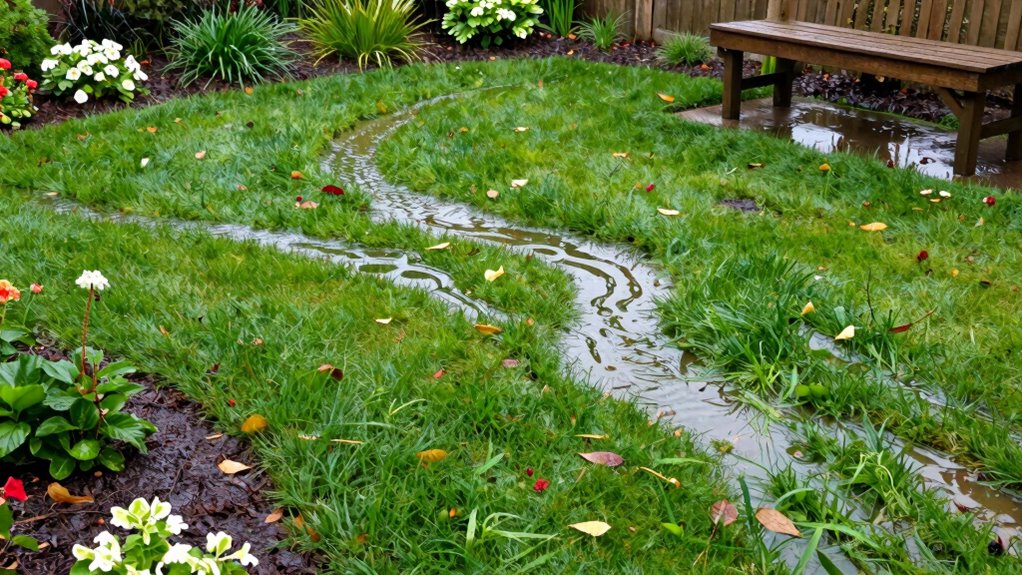
After rain, observe how water pools or flows across your yard to identify drainage issues. Note where water accumulates, runs off, or pond in low spots. Check soil’s permeability by digging small holes and watching how quickly they drain—clay soils hold water, while sandy soils drain fast. Use this information to plan solutions like grading, creating rain gardens, or adding organic matter. Keep exploring these techniques to improve your yard’s water management.

Prime made for students and young adults
- Fast, free delivery for dorm and study essentials
- Prime Video and Amazon Music included
- Member-only deals
Key Takeaways
- Observe how water moves across your yard during and after rain to identify pooling and runoff patterns.
- Note areas where water accumulates or drains slowly to locate drainage issues and soil characteristics.
- Conduct simple soil tests, like digging holes, to assess permeability and understand water absorption rates.
- Identify natural or existing drainage paths, such as slopes or low spots, to plan effective water management.
- Use observations to implement solutions like grading, rain gardens, or diversion to improve water flow and prevent erosion.

Are you tired of soggy lawns and water pooling in your yard after heavy rains? Understanding how water flows across your property is essential to fixing drainage issues and creating a healthier outdoor space. One of the first steps is to observe how rainwater moves and accumulates during storms. Pay attention to where water pools or runs off, as these spots reveal much about your yard’s drainage patterns and soil characteristics.
A key factor influencing water flow is soil permeability, which determines how quickly water can seep into the ground. If your soil has low permeability, like clay, water tends to linger on the surface, causing puddles and erosion. Conversely, high-permeability soils, such as sandy or loamy soils, allow water to drain more rapidly, reducing surface pooling. To assess your soil’s permeability, conduct simple tests—dig small holes in different areas and observe how quickly water drains into them. This insight will guide your next steps in managing water flow effectively.
Another essential aspect is rainwater harvesting, a sustainable way to manage excess water. By collecting rainwater from your roof or other surfaces, you can divert it away from problem areas and reduce runoff that may cause erosion or flooding. Installing rain barrels or larger collection systems helps you control water flow, especially during heavy rains. This approach also conserves water and reduces your reliance on municipal systems, making your yard more eco-friendly.
Once you understand the flow patterns, you can plan drainage solutions accordingly. For instance, if water tends to collect in low spots, consider creating a rain garden or installing French drains to channel water away. Grading your yard to direct runoff toward designated drainage areas prevents water from pooling in unwanted spots. If your soil has low permeability and water tends to sit on the surface, aerating the soil or adding organic matter can improve its ability to absorb water. These modifications help maintain a balanced flow, preventing erosion and promoting healthier plant growth.
Additionally, landscaping techniques like contouring or installing swales can help slow down and direct water flow, reducing the risk of damage. Regularly inspecting your yard after storms and noting where water accumulates provides valuable data to refine your drainage strategy. By combining knowledge of soil permeability with rainwater harvesting techniques, you can effectively manage water flow, protect your lawn, and create a resilient outdoor space. Understanding and reading your yard’s water flow isn’t just about fixing problems—it’s about creating a sustainable, well-drained landscape that stands up to heavy rains. Drainage management is a crucial element in maintaining a healthy and functional outdoor environment.
As an affiliate, we earn on qualifying purchases.
Frequently Asked Questions
How Often Should Yard Drainage Systems Be Inspected?
You should inspect your yard drainage system at least twice a year, preferably in spring and fall, to guarantee proper drainage and prevent issues. Regular inspection helps catch blockages or damage early, reducing costly repairs. Incorporate drainage maintenance into your routine to keep the system functioning effectively after heavy rain or storms. This proactive approach minimizes flooding risks and keeps your yard dry and healthy year-round.
Can Plants Help Improve Yard Drainage Naturally?
Plants can definitely help improve your yard drainage naturally. They act as plant barriers, slowing runoff and absorbing excess water, which reduces pooling. Additionally, their roots promote soil aeration, creating channels that help water drain more efficiently. By choosing the right plants, like native grasses or deep-rooted perennials, you enhance soil structure and encourage better water flow, making your yard less prone to flooding after heavy rain.
What DIY Tools Are Best for Measuring Water Flow?
You should use water flow indicators and flow measurement devices like a flow meter or a simple float test to measure water flow. These tools help you gauge how quickly water moves through your yard, revealing drainage issues. For DIY options, a basic flow meter or even a stopwatch with a container can work. Just place the device in the water, observe, and record the flow rate to understand drainage patterns.
How Long Does It Take to See Drainage Improvements?
You’ll start noticing drainage improvements within a few days to a week if you use effective stormwater management and proper grading techniques. Initially, water flow should slow down and runoff reduce. Keep an eye on your yard after rain, and if improvements seem slow, adjust grading to direct water away from problem areas. Consistent maintenance and monitoring help guarantee your drainage system functions efficiently over time.
Are There Eco-Friendly Options for Enhancing Yard Drainage?
Think of your yard as a sponge, soaking up rain instead of flooding. Eco-friendly options like installing a rain garden or permeable pavement let water seep naturally into the ground, reducing runoff and erosion. These solutions work with nature, not against it, making your yard more sustainable. By choosing these options, you help protect the environment while improving drainage—it’s a win-win for your property and the planet.
As an affiliate, we earn on qualifying purchases.
Conclusion
Now that you know how to read water flow after rain, you’re like a skilled navigator guiding your yard through a stormy sea. By understanding the water’s dance—where it pools and drains—you can prevent floods and protect your home. Think of your yard as a living map, where every puddle and trickle tells a story. With this knowledge, you’re ready to tame the rain’s chaos and keep your yard flowing smoothly like a gentle stream.
As an affiliate, we earn on qualifying purchases.
As an affiliate, we earn on qualifying purchases.
Fall Picks
fall essentials
As an affiliate, we earn on qualifying purchases.