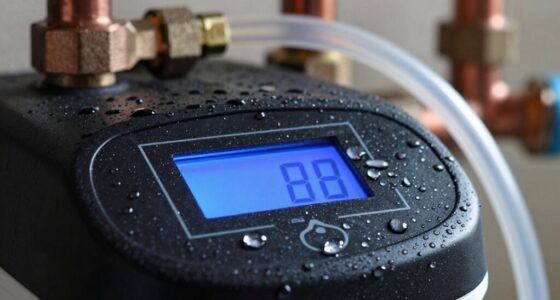
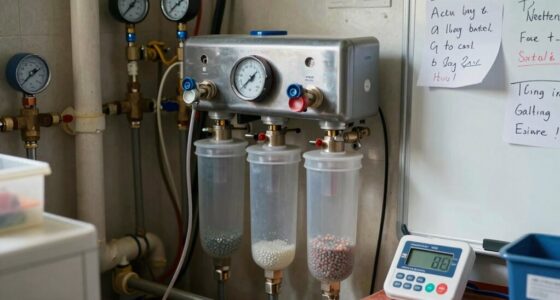
Recirculation pumps provide the convenience of instant hot water but can cause heat loss if pipes aren’t well insulated or if the pump runs constantly. Running them continuously wastes energy and increases utility bills, but smart models with timers and sensors can balance comfort and efficiency. To get the most out of a recirculation system, you need to contemplate insulation, maintenance, and smart controls. Keep exploring to find ways to maximize benefits while minimizing heat loss.
Key Takeaways
- Continuous recirculation offers instant hot water but increases heat loss in uninsulated pipes.
- Using smart controls and timers reduces unnecessary pump operation, balancing convenience and heat retention.
- Proper insulation minimizes heat loss, allowing frequent pump use without significant energy waste.
- Variable speed pumps adapt flow to demand, decreasing heat loss while maintaining comfort.
- Regular maintenance ensures efficient operation, optimizing convenience and minimizing energy costs.
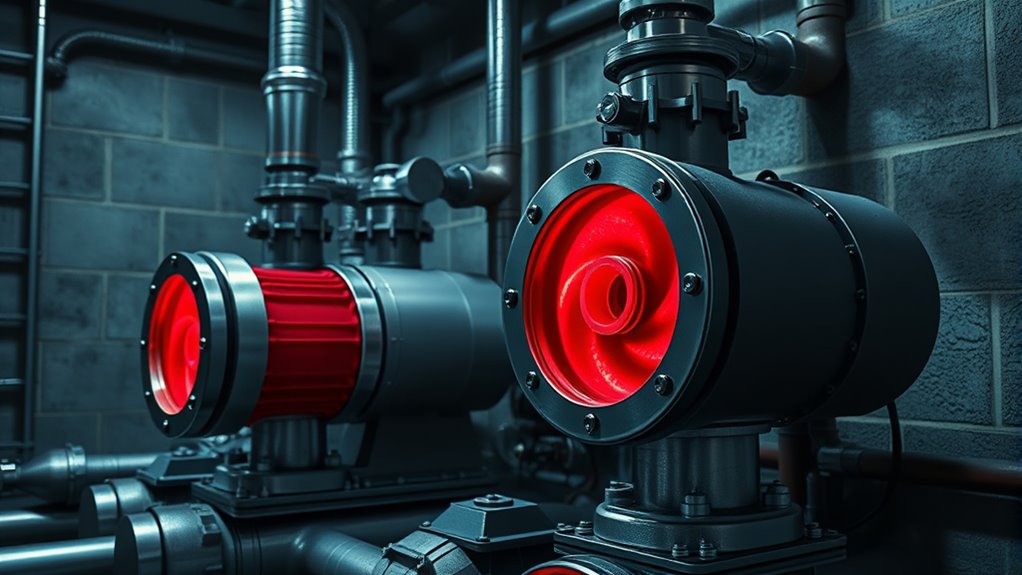
Recirculation pumps are essential components in heating and cooling systems, ensuring that water or other fluids continuously circulate through pipes. They provide the convenience of instant hot water and consistent temperature regulation, but they also introduce a tradeoff: heat loss versus energy efficiency. When you decide to install a recirculation pump, you’re balancing the immediate comfort against ongoing operational costs. One of the primary considerations is energy efficiency. While these pumps save you time and water, they can also consume significant energy if left running constantly. Modern models are designed to be more efficient, often incorporating timers, sensors, or smart controls that activate only when hot water is needed. This targeted operation helps you reduce unnecessary energy consumption, lowering your utility bills and minimizing environmental impact over time.
Recirculation pumps enhance comfort but require smart controls to balance energy use and efficiency.
However, the convenience of having hot water readily available comes with increased maintenance costs. Pumps require regular maintenance to operate efficiently and avoid breakdowns. Over time, wear and tear can cause issues like leaks, motor failures, or impeller damage, which can lead to costly repairs if neglected. Choosing a pump with a durable design and quality components can mitigate these expenses, but you still need to factor in routine checks and occasional servicing. Proper maintenance not only extends the lifespan of your pump but also ensures it runs at peak efficiency, saving you money in the long run.
Another aspect to consider is heat loss. When water continuously circulates through pipes, especially in uninsulated or poorly insulated systems, heat escapes into the surrounding environment. This heat loss can counteract the energy savings you gain from efficient operation, as your system needs to work harder to maintain desired temperatures. Insulating your pipes and installing pumps with variable speed controls can help reduce heat loss, but doing so adds to initial setup costs. Weighing these expenses against the benefits of increased comfort and reduced water waste is essential for making an informed decision.
Additionally, smart‑home integration can enhance the efficiency of your recirculation system by allowing remote control and scheduling, further optimizing energy use. Ultimately, your choice hinges on understanding how to optimize the benefits of recirculation pumps while managing their drawbacks. By selecting energy-efficient models, implementing smart controls, and maintaining your system regularly, you can enjoy the convenience of instant hot water without overly inflating your energy bills or maintenance costs. Balancing these factors allows you to create a heating and cooling solution that aligns with your comfort needs and budget constraints, ensuring you get the most value out of your investment.
recirculation pump with smart controls
As an affiliate, we earn on qualifying purchases.
As an affiliate, we earn on qualifying purchases.
Frequently Asked Questions
How Do Recirculation Pumps Affect Overall Energy Bills?
Recirculation pumps increase your energy consumption because they run continuously or on a timer, which can raise your energy bills. However, if used wisely, they can lead to cost savings by reducing water waste and lowering hot water heater usage. To balance these effects, consider installing a timer or sensor, ensuring you enjoy convenience without considerably impacting your overall energy bills.
What Maintenance Is Required for Recirculation Pumps?
You should regularly check your recirculation pump for proper operation and perform pump lubrication as needed to prevent wear. Confirm system compatibility by verifying that the pump matches your plumbing setup and manufacturer’s specifications. Keep an eye on for leaks or unusual noises, and schedule annual inspections to maintain efficiency. Proper maintenance extends your pump’s lifespan, saves energy, and prevents costly repairs down the line.
Can Recirculation Pumps Be Installed in Existing Systems Easily?
Installing recirculation pumps in existing systems is like fitting a new piece into a puzzle—you can do it, but expect some installation challenges. You’ll need to account for retrofit considerations, such as space, plumbing adjustments, and electrical wiring. While the process may require careful planning and minor modifications, it’s generally feasible with proper expertise. Just be prepared to navigate these hurdles to guarantee a smooth upgrade and peak performance.
Are There Eco-Friendly Recirculation Pump Options Available?
Yes, eco-friendly recirculation pumps are available today. You can find models with solar compatibility that reduce energy consumption and lower your carbon footprint. Many of these pumps also feature low noise operation, making them suitable for quiet environments. By choosing an eco-friendly pump, you not only save energy but also support sustainable practices, all while enjoying efficient hot water recirculation without excessive heat loss.
How Long Is the Typical Lifespan of a Recirculation Pump?
A typical recirculation pump lasts about 5 to 10 years, depending on pump durability and lifespan factors. You can extend its life by choosing high-quality models, performing regular maintenance, and monitoring for issues like noise or leaks. Environmental conditions, usage frequency, and proper installation also influence how long your pump remains efficient. Staying proactive helps you get the most out of your investment and avoid early replacements.
hot water recirculation pump timer
As an affiliate, we earn on qualifying purchases.
As an affiliate, we earn on qualifying purchases.
Conclusion
You weigh the convenience of recirculation pumps against the heat they lose. Imagine turning on your tap, instant hot water flowing—yet behind the scenes, warmth escapes like breath in cold air. It’s a delicate dance between comfort and efficiency, where every moment of convenience comes with a whisper of heat loss. By choosing wisely, you can enjoy the best of both worlds—warm water at your fingertips, without letting precious heat slip away unnoticed.
pipe insulation for hot water systems
As an affiliate, we earn on qualifying purchases.
As an affiliate, we earn on qualifying purchases.
variable speed recirculation pump
As an affiliate, we earn on qualifying purchases.
As an affiliate, we earn on qualifying purchases.