To reduce mouse fatigue, keep your hand in a neutral, relaxed position with your wrist straight and your fingers gently resting on the mouse buttons. Avoid bending your wrist upwards or sideways, and make sure your mouse is close enough to prevent reaching or stretching. Support your wrist with an ergonomic pad if needed, and maintain a relaxed posture overall. If you stay consistent with these tips, you’ll prevent strain and improve comfort—if you want to learn more, keep exploring.

Get school and study supplies delivered free — and shop member deals
- Fast, free delivery on millions of items
- Access to Prime Big Deal Days deals on October 6–7
- Prime Video, Amazon Music and more included
Key Takeaways
- Keep your wrist in a neutral, relaxed position to minimize strain during mouse use.
- Position the mouse close to your body to avoid reaching and awkward angles.
- Maintain a gentle, relaxed grip on the mouse buttons to reduce finger tension.
- Support your wrist with a padded rest to prevent bending and fatigue.
- Practice frequent breaks and hand stretches to sustain ergonomic hand positioning.
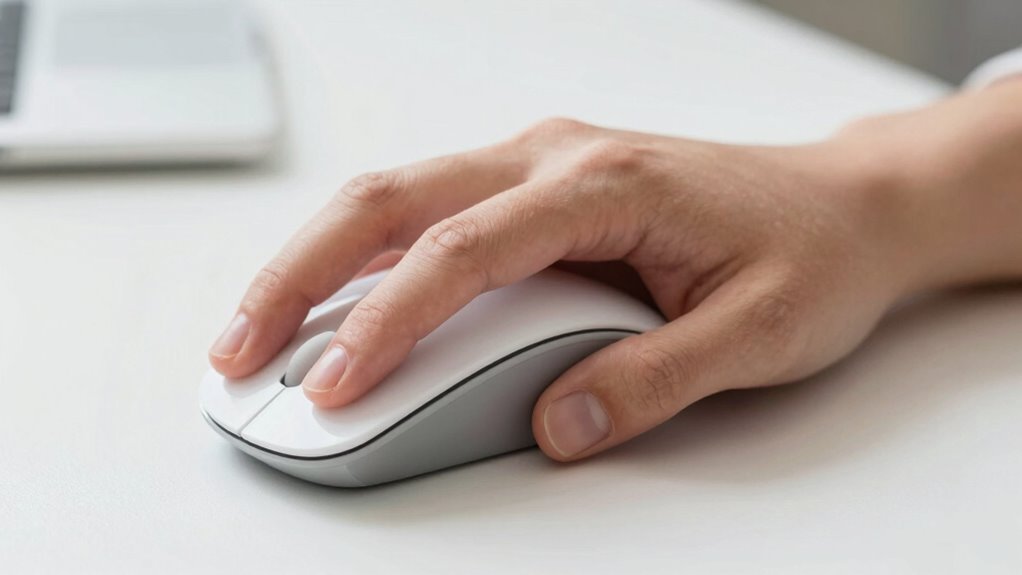
Have you ever wondered why certain hand positions are essential in sports or daily activities? It’s because the way you position your hand directly impacts comfort, efficiency, and injury prevention. When working at a computer, maintaining an ergonomic wrist and proper hand alignment isn’t just about comfort—it’s about protecting yourself from strain and fatigue. The hand position rule emphasizes keeping your wrist in a neutral, relaxed position and aligning your hand directly with your forearm. This minimizes unnecessary stress on your tendons, muscles, and nerves, reducing the chances of repetitive strain injuries like carpal tunnel syndrome. Incorporating biodiversity principles can also remind us of the importance of maintaining balance and harmony in our environment, including our workspaces. To achieve this, you should start by adjusting your mouse and keyboard setup so that your hand naturally falls into a comfortable, neutral position. Your wrist shouldn’t be bent up, down, or to the side; it should stay straight and supported. Proper ergonomic setup can significantly improve your comfort and reduce fatigue during long work sessions. Hand alignment is equally important—your hand should be in a position where your fingers rest gently on the mouse buttons or keyboard keys without excessive stretching or bending. Keep your fingers relaxed, avoiding the habit of gripping tightly, which can increase fatigue. Additionally, proper workstation arrangement can help promote better hand positioning by reducing unnecessary movements. A balanced posture and workspace are essential for reducing discomfort, especially during extended periods of computer use. Maintaining awareness of your ergonomic principles helps in preventing long-term issues and promotes overall well-being. Your entire arm plays a role here. Sit with your shoulders relaxed and elbows close to your body, so your hand doesn’t have to stretch or twist unnaturally to reach your mouse or keyboard. Position your mouse so it’s close enough to avoid reaching, which forces your arm and wrist into awkward angles. When your hand is properly aligned, you’ll notice less tension and fatigue after long periods of use. It’s a small adjustment, but one that makes a big difference in comfort and longevity of your work sessions. Practicing proper hand positioning isn’t just about avoiding pain; it’s about creating a sustainable work habit. Pay attention to how your hand and wrist feel throughout the day. If you notice discomfort or fatigue, reassess your setup. Incorporating regular breaks and stretch your hands and wrists to keep muscles loose and circulation flowing. Keeping your hand in a neutral, aligned position is a simple but effective rule that can dramatically reduce mouse fatigue and protect your health over time. Small, consistent adjustments lead to significant improvements, making your workday more comfortable and injury-free.
ergonomic mouse pad with wrist support
As an affiliate, we earn on qualifying purchases.
As an affiliate, we earn on qualifying purchases.
Frequently Asked Questions
How Long Does It Take to See Benefits From the Hand Position Rule?
You can start noticing benefits from adjusting your hand position and improving your typing posture within a few days. Using ergonomic accessories like wrist rests and ergonomic mice encourages better alignment and reduces strain. Consistently maintaining these ergonomic habits helps prevent discomfort and fatigue over time. Typically, you’ll feel a noticeable difference in comfort and reduced tension after just a week, but long-term benefits develop as your new posture becomes second nature.
Can This Rule Prevent All Types of Mouse-Related Injuries?
Sure, this rule won’t prevent all mouse-related injuries, but it’s a good start. By maintaining proper hand position, you’ll improve wrist flexibility and grip strength, which helps reduce strain. Still, don’t forget that other factors like posture and taking breaks matter too. So, while it’s a helpful tool, expecting it to prevent every injury is like hoping one magic trick will solve all your health issues.
Does Hand Position Vary for Different Types of Mice?
Yes, your hand position varies for different types of mice, especially ergonomic mice. When using an ergonomic mouse, you should maintain a natural hand posture, keeping your wrist straight and fingers relaxed. For traditional mice, you might need to adjust your grip and hand position to avoid strain. Always choose a mouse that fits your hand size and shape, and adjust your hand posture to reduce fatigue and prevent injury.
Are There Specific Exercises to Complement This Hand Position Rule?
Ever wonder how to keep your hands comfortable during long hours? Yes, there are specific exercises to complement this hand position rule. Incorporate hand stretching routines and use ergonomic accessories to prevent strain. Regularly stretch your fingers, wrists, and forearms to boost circulation and flexibility. These exercises, combined with ergonomic tools, help reduce fatigue and discomfort, ensuring you stay comfortable and productive throughout your workday.
Is This Rule Suitable for Users With Pre-Existing Wrist Conditions?
If you have pre-existing wrist conditions, this hand position rule may still help reduce wrist strain, but you should be cautious. Ergonomic design is key, so make certain your mouse and workstation support your wrist comfortably. Consult a healthcare professional to tailor your setup, and consider additional ergonomic tools like wrist rests. Prioritizing proper alignment can help minimize discomfort while still benefiting from the hand position rule.
ergonomic wrist rest for computer mouse
As an affiliate, we earn on qualifying purchases.
As an affiliate, we earn on qualifying purchases.
Conclusion
By applying the hand position rule, you’re giving your muscles a gentle breeze instead of a relentless storm, easing mouse fatigue before it takes hold. Think of your hands as delicate dancers, gliding effortlessly over the surface, not strained performers struggling to keep up. When you adopt this simple yet powerful rule, you’re steering clear of discomfort, keeping your workflow smooth and your energy high. Your hands will thank you, dancing gracefully through every click and scroll.
As an affiliate, we earn on qualifying purchases.
ergonomic keyboard and mouse set
As an affiliate, we earn on qualifying purchases.
As an affiliate, we earn on qualifying purchases.
Halloween Picks
halloween
As an affiliate, we earn on qualifying purchases.