
To undo your desk hunch, try the simple shoulder and chest opener stretch. Stand or sit upright, then lift your arms overhead while keeping your shoulders relaxed and back straight. Gently reach upward, feeling the stretch across your chest and shoulders, which helps counteract slouching and realigns your spine. Be mindful of your form and avoid overstretching. If you keep practicing, you’ll discover more easy ways to improve your posture throughout the day.
Open a free Amazon Business account
Business pricing, bulk buying and tax-exempt orders.
As an affiliate, we earn on qualifying purchases.
Key Takeaways
- The overhead shoulder stretch loosens chest and shoulder muscles, counteracting the forward hunch from desk work.
- It promotes proper spinal alignment, reducing upper back and neck strain caused by poor posture.
- Focus on gentle, controlled arm lifts while maintaining an upright, relaxed posture to maximize benefits.
- Incorporate this stretch regularly during breaks to reinforce good posture and prevent long-term hunching.
- Combine with shoulder blade squeezes and ergonomic adjustments for comprehensive desk hunch correction.
ergonomic posture correction chair
As an affiliate, we earn on qualifying purchases.
As an affiliate, we earn on qualifying purchases.
What Causes Desk Hunch and Postural Strain

Prolonged sitting at a desk often leads to hunching and postural strain because your muscles and joints are constantly under stress. When you use ergonomic furniture, it helps support proper sitting posture, but poor habits can still cause issues. Slouching forward or leaning into your workspace puts extra pressure on your neck, shoulders, and back. Over time, this misalignment weakens muscles and tightens others, creating chronic discomfort. Your desk setup, chair height, and lack of movement contribute to the problem. Without regular breaks or mindful posture, you’ll develop a hunched appearance and experience persistent strain. Recognizing these causes emphasizes the importance of maintaining good sitting habits and investing in ergonomic furniture to reduce postural stress. Incorporating proper ergonomic practices can significantly help prevent these issues.
shoulder and chest opener stretch device
As an affiliate, we earn on qualifying purchases.
As an affiliate, we earn on qualifying purchases.
Why This Stretch Can Improve Your Posture

This stretch targets key muscles that become tight from hunching over your desk, helping to realign your posture. By regularly practicing it, you’ll notice improvements in posture awareness and overall comfort. Here’s why it works:
- It loosens the chest and shoulder muscles, counteracting hunching caused by poor ergonomic accessories.
- It encourages proper spinal alignment, reducing strain on your neck and upper back.
- It promotes blood flow, reducing muscle tension and fatigue.
- It reinforces good posture habits, making you more mindful of how you sit and move throughout the day.
- Incorporating simple stretches like this can support calmer, more functional homes by reducing physical discomfort that might lead to stress or distraction.
Incorporating this stretch into your routine supports better posture, making ergonomic adjustments more effective and helping you avoid long-term strain.
As an affiliate, we earn on qualifying purchases.
How to Do the Stretch Correctly
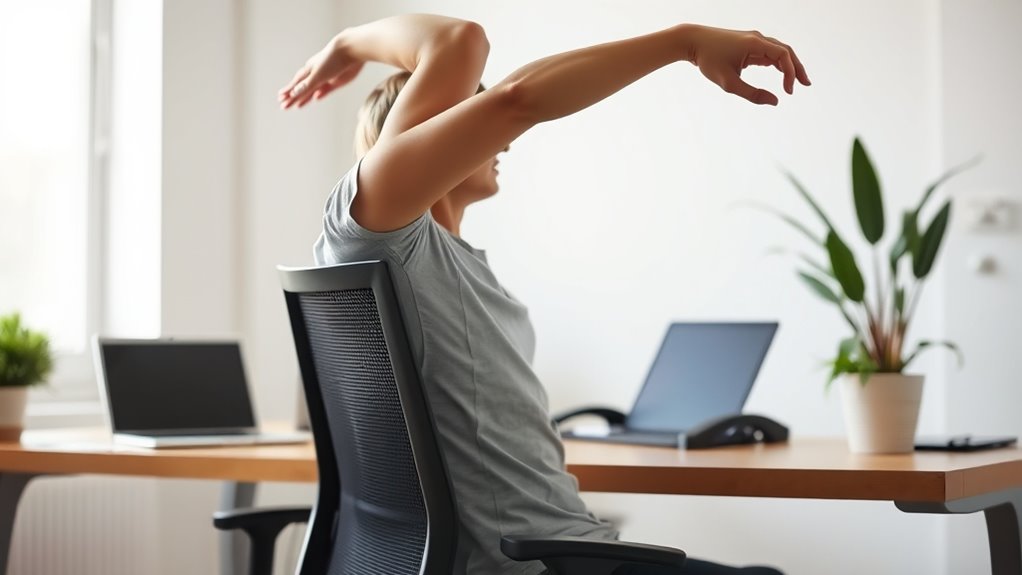
To do the stretch correctly, start by standing or sitting upright with your shoulders relaxed. Make certain your ergonomic furniture supports proper alignment, keeping your back straight and shoulders down. Focus on posture awareness—be conscious of how your head, neck, and shoulders are positioned. Gently lift your arms overhead, reaching upward without straining, and slowly stretch your upper back and shoulders. Avoid arching your back excessively or hunching forward. Keep your movements controlled and steady, maintaining a comfortable stretch. Breathe deeply throughout to increase relaxation. This mindful approach helps maximize the stretch’s benefits, ensuring you undo desk hunch effectively. Remember, proper technique is key to preventing strain and promoting better posture with consistency. Paying attention to posture awareness can help you maintain proper alignment and prevent discomfort over time.
posture support ergonomic accessories
As an affiliate, we earn on qualifying purchases.
As an affiliate, we earn on qualifying purchases.
Tips to Fit the Stretch Into Your Daily Routine

Incorporating the stretch into your daily routine is easier when you assign it to a specific time or activity. To improve desk ergonomics and combat poor sitting habits, consider these tips:
- Set a reminder to do the stretch every hour, perhaps during a quick break.
- Pair the stretch with routine activities like checking emails or after meetings.
- Keep your workspace organized to make the stretch easier to perform without clutter.
- Use visual cues, like sticky notes, to remind yourself to stretch regularly.
- Incorporate ergonomic practices to further enhance your posture and reduce discomfort.
Making it a habit helps you stay consistent. Small, intentional pauses during your workday can undo desk hunch and promote better posture, reducing discomfort and boosting productivity.
Common Mistakes to Avoid When Stretching

Avoid overstretching, as pushing too hard can cause injury or muscle strain. Make sure you’re using correct technique, because improper form reduces effectiveness and risks harm. Being mindful of these mistakes helps you stretch safely and get the best results. For example, understanding proper stretching techniques can significantly improve flexibility without injury.
Overstretching Risks
While stretching can improve flexibility and reduce tension, overdoing it can lead to injuries or muscle strains. To avoid overstretching risks, focus on safe practices. Here are four key tips:
- Limit stretches to a gentle range of motion, avoiding pain or discomfort.
- Incorporate posture correction and ergonomic tips to support proper alignment during stretching.
- Warm up your muscles beforehand to prepare them for movement.
- Don’t hold stretches for too long; 15-30 seconds is usually enough to prevent overstretching.
- Being aware of muscle health can help you tailor your stretching routine to prevent injury.
Incorrect Technique Use
One common mistake when stretching is using improper technique, which can reduce effectiveness or cause injury. For example, pulling too hard or bouncing can strain muscles. When working at a desk, avoid neglecting your ergonomic chair’s lumbar support, which helps maintain proper posture. Use the correct form to target the right muscles. Here’s a quick guide:
| Mistake | Correct Approach | Tip |
|---|---|---|
| Overstretching | Gentle, controlled movements | Always stay within comfort zone |
| Ignoring lumbar support | Maintain lumbar support during stretches | Sit back fully in your chair |
| Bouncing during stretches | Hold stretches steadily, no bouncing | Prevents muscle strain |
Proper technique guarantees your stretches are safe and effective, especially when avoiding common pitfalls with ergonomic chairs.
Other Exercises to Support Better Posture

In addition to stretches, incorporating exercises like chest opener stretches and shoulder blade squeezes can markedly improve your posture. These moves target key areas that tend to tighten from sitting at a desk all day. Adding them to your routine helps counteract hunching and keeps your shoulders aligned. Incorporating natural movements into your day can further support better posture and overall well-being.
Chest Opener Stretches
Chest opener stretches are a simple yet effective way to counteract the slouch caused by prolonged sitting at your desk. They help expand your chest, improve posture, and reduce tension. Here are some key tips:
- Focus on breathing exercises to deepen the stretch and relax your chest muscles.
- Maintain an ergonomic tip by keeping your shoulders back and down during the stretch.
- Use a doorway or wall to support your arms, ensuring proper alignment.
- Hold each stretch for 20-30 seconds, repeating 2-3 times to maximize benefits.
- Incorporate trusted resources to ensure your posture corrections are effective and safe.
Incorporating these stretches into your routine can undo desk hunches. They promote better posture and complement ergonomic tips, helping you stay comfortable and aligned throughout the day.
Shoulder Blade Squeezes
To support better posture and counteract the effects of prolonged sitting, shoulder blade squeezes are an effective exercise you can do throughout the day. They promote proper spine alignment by strengthening the upper back muscles responsible for maintaining good posture. To perform, sit or stand with your arms at your sides, then squeeze your shoulder blades together as if pinching a pencil between them. Hold for a few seconds, focusing on muscle activation in your upper back. This movement helps counteract rounded shoulders and hunching, encouraging your spine to stay aligned. Regularly doing shoulder blade squeezes trains your muscles to support upright posture naturally, reducing tension and fatigue. Incorporating this simple exercise into your routine can help address postural imbalances and prevent desk hunch.
When to See a Professional for Postural Problems

If you notice persistent pain, stiffness, or worsening posture despite improving your workspace with ergonomic furniture and practicing posture awareness, it’s time to see a professional. Ignoring these signs can lead to chronic issues. Consider consulting a specialist if:
- Pain worsens or becomes constant
- You experience numbness or tingling
- Posture doesn’t improve after adjustments
- You notice limited mobility or discomfort during daily activities
- Your postural alignment remains poor despite efforts
A healthcare provider can assess underlying issues and recommend targeted treatments. They might suggest physical therapy, specific exercises, or ergonomic modifications beyond your current setup. Addressing problems early can prevent long-term damage. Remember, professional guidance ensures you’re taking the right steps to correct your posture effectively and avoid future discomfort.
Frequently Asked Questions
How Long Should I Hold This Stretch for Optimal Results?
You should hold this stretch for about 20 to 30 seconds for ideal timing. Keep your muscles gently stretched without feeling pain, and repeat the stretch 2-3 times throughout your day. This duration helps improve flexibility and relieves tension effectively. Remember, consistency matters more than long holds, so incorporate this stretch into your routine regularly for the best results in undoing desk hunch.
Can This Stretch Help With Chronic Back Pain?
Wondering if this stretch can alleviate your chronic back pain? It can assist with posture correction by loosening tight muscles and reducing tension. Combined with ergonomic tips, it encourages better alignment and relieves discomfort. Remember, consistency is key—do it daily for best results. However, if pain persists, consult a healthcare professional. This stretch supports your back health, but personalized advice ensures you’re addressing your specific needs effectively.
Is This Stretch Suitable for Pregnant Individuals?
This stretch isn’t suitable for pregnant individuals due to pregnancy safety concerns. During pregnancy, you should avoid stretches that put pressure on your abdomen or involve deep bending. Instead, look for gentle stretch modifications designed for pregnancy, like seated or supported stretches, and always consult your healthcare provider before trying new exercises. Prioritizing safety guarantees you stay comfortable and healthy throughout your pregnancy.
Are There Any Contraindications for This Stretch?
Oh, the joys of stretching—like a free-for-all where safety sometimes takes a backseat. You should know that stretch safety is key; some stretches have contraindications, especially if you have certain injuries or health issues. Always check contraindication awareness before diving in. If you’re unsure, consult a healthcare professional. Otherwise, you might just stretch yourself into more trouble than relief. Safety first, then stretch!
How Often Should I Perform This Stretch Daily?
You should perform this stretch 2-3 times daily for effective posture correction. Incorporate ergonomic tips like maintaining a neutral spine and adjusting your workspace to support proper alignment. Regular stretching helps counteract desk hunch and promotes better posture. Remember, consistency is key—take short breaks every hour to stretch and reset your posture. This simple routine can make a noticeable difference in reducing discomfort and improving overall ergonomics.
Conclusion
Did you know that over 60% of office workers experience daily postural issues? By incorporating this simple stretch into your routine, you can effectively counteract desk hunch and reduce strain. Consistency is key—just a few minutes each day can make a noticeable difference in your posture and overall comfort. Take action now to prevent long-term problems, and don’t hesitate to seek professional help if discomfort persists. Better posture starts with small, intentional steps.
NFL season / tailgating Picks
team gear
As an affiliate, we earn on qualifying purchases.