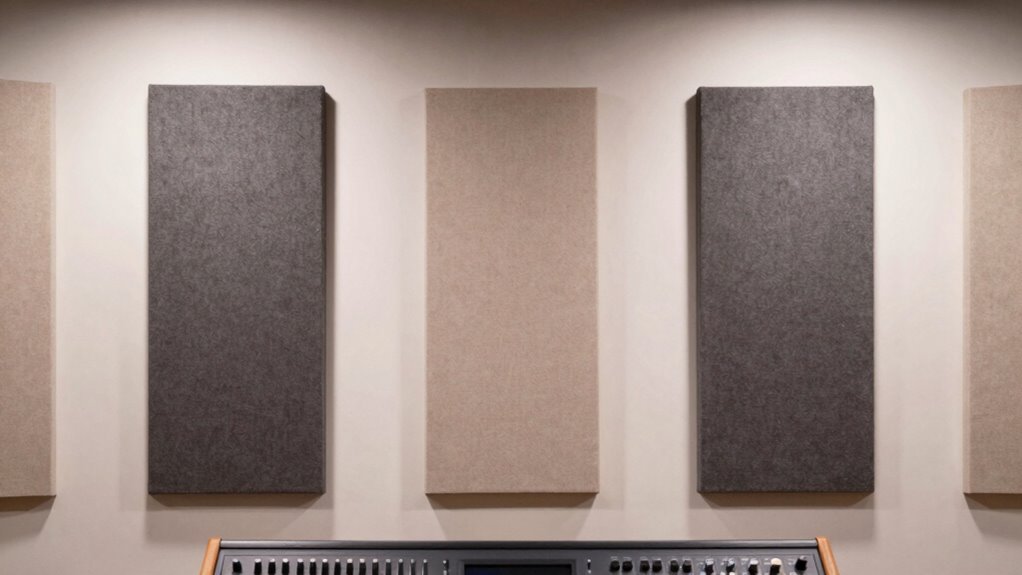

The most common mistake with acoustic panels is placing them randomly or thinking covering all walls is best. Instead, focus on strategic placement at key reflection points, like mid-wall and corners, especially near sound sources and listening areas. Ignoring these areas limits their effectiveness and can even worsen sound issues. Correctly positioning panels makes a huge difference, so if you want to optimize your space, there’s more to discover about avoiding typical placement errors.
Open a free Amazon Business account
Business pricing, bulk buying and tax-exempt orders.
As an affiliate, we earn on qualifying purchases.
Key Takeaways
- Randomly placing panels without targeting primary reflection points reduces their effectiveness.
- Overusing panels on all walls can be inefficient; focus on key sound reflection areas instead.
- Ignoring corner and bass trap placement allows bass buildup and muddled acoustics.
- Failing to consider room size, ceiling height, and listener locations leads to poor acoustic treatment.
- Treating only one surface or area neglects the need for multi-directional sound absorption for balanced acoustics.
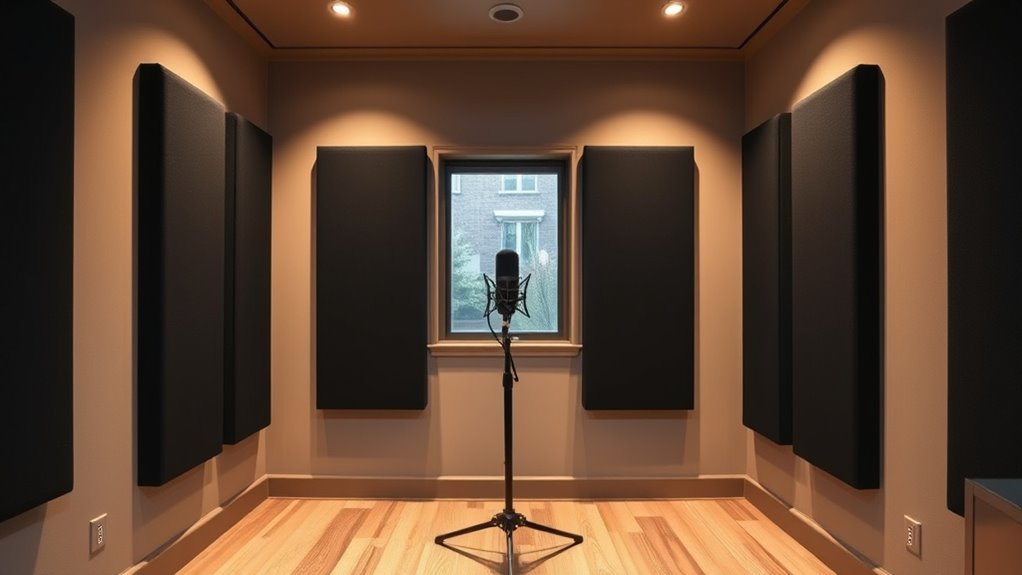
Acoustic panels are essential tools for improving sound quality in any space. If you’re trying to create a more comfortable environment, whether for work, relaxation, or entertainment, understanding where to place your acoustic panels makes all the difference. One common mistake people make is placing panels randomly or in areas that don’t target the main sources of sound reflection. Instead, you should focus on strategic placement to maximize their effectiveness, especially when it comes to soundproofing techniques and echo reduction.
When you think about soundproofing, it’s tempting to cover every wall or fill the room with panels. But that approach can be inefficient and costly. Instead, identify the primary surfaces that cause sound to bounce around—such as walls opposite each other or large, flat surfaces. Placing acoustic panels directly on these surfaces helps absorb sound waves before they reflect, reducing echo and improving clarity. This targeted approach also helps keep your space quieter without over-cluttering or overspending on unnecessary panels.
You might also assume that placing panels high up on the walls is enough, but that’s an error. Sound waves travel in all directions, and echo reduction depends on covering key reflection points. For example, placing panels at ear level or where sound naturally hits can considerably improve sound quality. In rooms with high ceilings or open layouts, consider adding panels overhead or on multiple surfaces. This multi-directional placement ensures sound waves are absorbed from all angles, reducing reverberation and creating a more balanced acoustic environment.
Another common mistake is ignoring the importance of room corners. Corners tend to trap sound, creating bass buildup and muddy acoustics. Installing bass traps or corner panels can help address this issue directly, providing additional soundproofing and echo reduction. These are especially useful in home theaters, music studios, or conference rooms where clear audio is essential. Don’t think of acoustic panels as an afterthought; instead, view them as integral components of your sound treatment plan. Proper placement means fewer echoes, less noise bleed, and a more professional sound quality overall.
Furthermore, understanding room dimensions and listener locations can greatly enhance your acoustic treatment strategy. Room size and furniture placement influence how sound waves travel and reflect, making tailored panel positioning even more crucial. Remember that effective acoustic treatment isn’t just about covering walls. You can also strategically place panels on ceilings or even behind furniture to further diffuse sound waves. With careful planning and understanding of sound reflection patterns, you’ll avoid the room placement mistakes most make. This guarantees your investment in acoustic panels delivers maximum benefits—greater echo reduction, improved speech intelligibility, and a more comfortable, acoustically optimized space.
acoustic panels for reflection points
As an affiliate, we earn on qualifying purchases.
As an affiliate, we earn on qualifying purchases.
Frequently Asked Questions
How Do I Determine the Best Placement for My Specific Room Shape?
To find the most suitable panel placement for your room shape, start by identifying the primary sound reflections. Place panels where sound bounces directly, such as walls opposite speakers or near corners. For irregular shapes, experiment with positioning panels at reflection points identified through listening or using a mirror. Remember, ideal panel placement reduces echo and improves sound clarity, tailored specifically to your room’s unique shape.
Can Acoustic Panels Be Painted or Customized to Match Decor?
Think of acoustic panels as blank canvases, ready for your creative touch. Yes, you can paint or customize them to match your decor, transforming them into decorative options that blend seamlessly with your style. Use heat-resistant or specialty paints to avoid damage. With some effort, you turn functional soundproofing into a stylish statement, making your space both beautiful and acoustically optimized.
What Are the Signs That My Current Panel Placement Is Ineffective?
If your panel effectiveness seems low and room acoustics still sound uneven or echoey, your current placement might be ineffective. You’ll notice persistent sound issues like muddled speech or excessive reverberation despite having panels up. Properly placed panels should markedly improve sound clarity and reduce echo. If you don’t see these improvements, consider repositioning them—ideally at reflection points—to optimize room acoustics and ensure your panels work as intended.
How Do I Balance Aesthetic Appeal With Optimal Acoustic Performance?
You can balance aesthetic appeal with ideal acoustic performance by choosing decorative panel options that complement your space’s style. With acoustic panel customization, you can select colors, textures, and designs that blend seamlessly into your decor. Think of your room as a canvas—integrate functional acoustic elements that enhance the look while improving sound quality. This way, you enjoy both beauty and performance without sacrificing either.
Are There Any Tools or Apps to Help Plan Panel Placement Accurately?
Yes, you can use panel placement tools and acoustic calculators to plan accurately. These tools help you visualize ideal panel locations based on your room’s dimensions and sound behavior. Simply input your room data, and the acoustic calculator suggests where to place panels for best results. Many apps are user-friendly, allowing you to balance aesthetics with performance, ensuring you get the most effective soundproofing without sacrificing style.
As an affiliate, we earn on qualifying purchases.
Conclusion
Don’t let poor placement ruin your sound experience. It’s a common mistake to place acoustic panels where they won’t do their job, but with a little planning, you can transform your room’s acoustics. Even if you think it’s too complicated, start small—move panels around and listen. You’ll be surprised how much better your space sounds. Remember, the right placement makes all the difference, so take a moment to optimize and enjoy crystal-clear audio.
As an affiliate, we earn on qualifying purchases.
professional acoustic treatment panels
As an affiliate, we earn on qualifying purchases.
As an affiliate, we earn on qualifying purchases.
NFL season / tailgating Picks
team gear
As an affiliate, we earn on qualifying purchases.