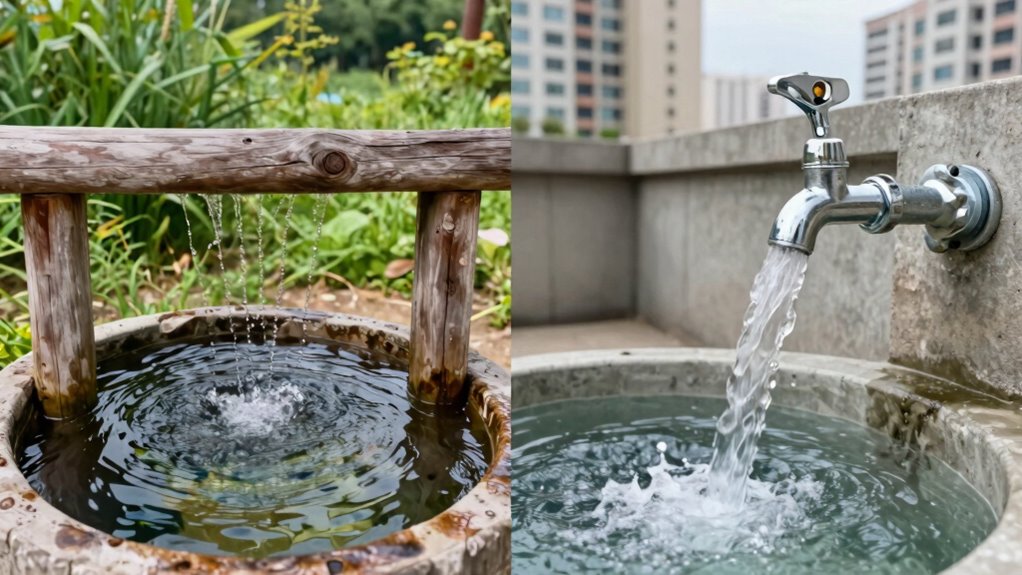

Deciding between well water and city water means understanding their origins, treatment needs, and potential risks. Well water comes from underground sources and may contain minerals or contaminants, requiring additional purification. City water is treated and regulated but might contain chlorine or chemicals affecting taste. Both carry health and environmental considerations. To guarantee safety and quality, it’s important to know how each is tested and maintained. Keep exploring to discover more about these water choices.
Key Takeaways
- Well water is naturally filtered underground, often requiring additional treatment; city water is surface water treated with chemicals like chlorine.
- City water is regulated by government standards with regular testing, while well water safety depends on individual testing and maintenance.
- Common contaminants include bacteria and heavy metals, posing health risks like gastrointestinal illness or neurological damage.
- Well water tends to have a mineral-rich taste, whereas city water’s flavor can be affected by disinfectants like chlorine.
- Well water usually involves higher maintenance costs and environmental impact, while city water relies on infrastructure and treatment processes.
Where Does Your Water Come From?

Have you ever wondered where your water actually comes from? Well sources vary depending on whether you use well water or city water, but understanding your water origin helps you appreciate its journey. If you rely on a well, your water comes directly from underground aquifers, which are natural reservoirs of groundwater. These sources are accessed through drilling into the earth, tapping into underground water tables. On the other hand, city water generally originates from surface water sources like rivers, lakes, or reservoirs managed by municipal systems. Both well sources and water origin play vital roles in determining water quality, treatment needs, and potential contaminants. Knowing where your water comes from gives you a clearer picture of what’s in your supply and how it’s managed. Water source impacts not only the quality but also the treatment processes required to ensure safe drinking water.
How Are Water Safety Standards Made?
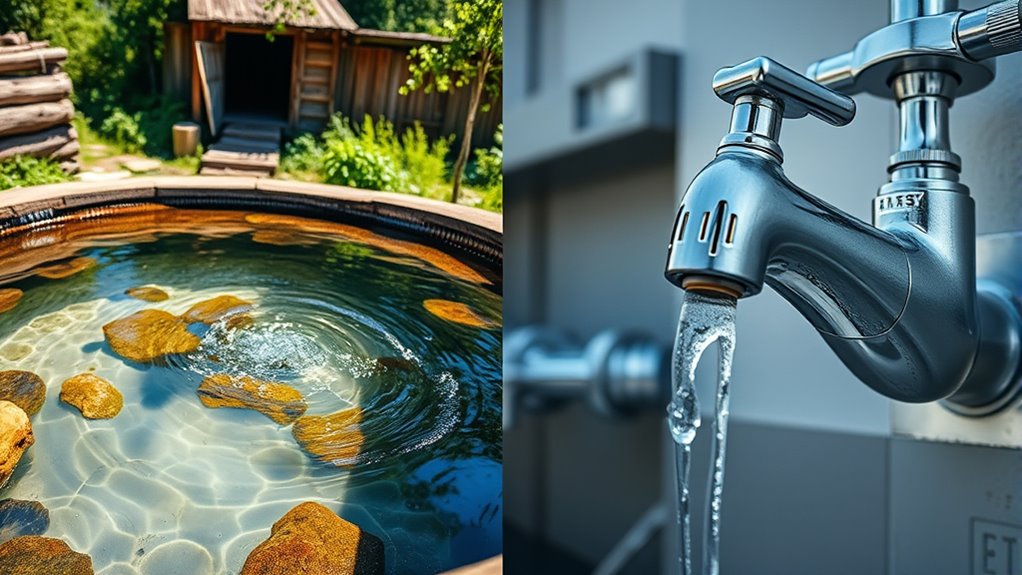
You might wonder how water safety standards are decided, and it all starts with regulatory agencies like the EPA and state agencies. They conduct testing and monitor water quality regularly to guarantee it’s safe for consumption. Based on their findings, acceptable limits are set to protect your health.
Regulatory Agencies Involved
Regulatory agencies play a essential role in establishing and enforcing water safety standards to protect public health. They oversee water quality, guarantee compliance, and address issues like water pollution. These agencies provide legal oversight, setting limits on contaminants and requiring regular reporting. Here’s a quick look at key agencies involved:
| Agency | Main Focus | Jurisdiction |
|---|---|---|
| EPA (Environmental Protection Agency) | Drinking water safety, pollution control | U.S. federal government |
| State Agencies | Local water standards, enforcement | State level |
| Local Departments | Monitoring, public health | Municipal level |
Together, they ensure water safety standards are met, safeguarding both city and well water supplies. Water safety standards are continuously refined based on new scientific research and technological advancements.
Testing and Monitoring Processes
To establish water safety standards, agencies rely on rigorous testing and continuous monitoring processes. These steps ensure water quality remains safe and testing accuracy stays high. First, water samples are collected regularly from various sources. Second, labs analyze these samples for contaminants, ensuring testing methods meet strict standards. Third, agencies review the results to identify any water quality issues promptly. This process helps catch potential health risks early and maintains public trust. Continuous monitoring allows authorities to track changes over time, detecting emerging problems quickly. By prioritizing thorough testing and precise analysis, agencies create reliable standards that protect both well and city water supplies. Additionally, advancements in testing technology help improve the detection of contaminants, further enhancing water safety.water quality standards This process guarantees the water you rely on remains safe and compliant with health regulations.
Setting Acceptable Limits
After rigorous testing and monitoring processes confirm water quality, agencies set specific limits for various contaminants to guarantee safety. These safety standards make certain your water remains healthy and safe to use. To determine acceptable limits, experts analyze scientific data, health risks, and technological feasibility. They consider factors like toxicity, exposure, and environmental impact. European cloud innovation influences many of these standards by emphasizing sustainable and secure practices. The table below shows how these limits are applied:
| Contaminant | Maximum Level Allowed | Health Concern |
|---|---|---|
| Lead | 15 ppb | Brain and nerve damage |
| Arsenic | 10 ppb | Cancer risk |
| Nitrates | 10 mg/L | Methemoglobinemia |
| Microorganisms | None detected | Disease prevention |
| Chlorine | 4 mg/L | Taste and safety |
These standards protect your water quality and make certain safety for everyone.
Why Does Water Taste Different?
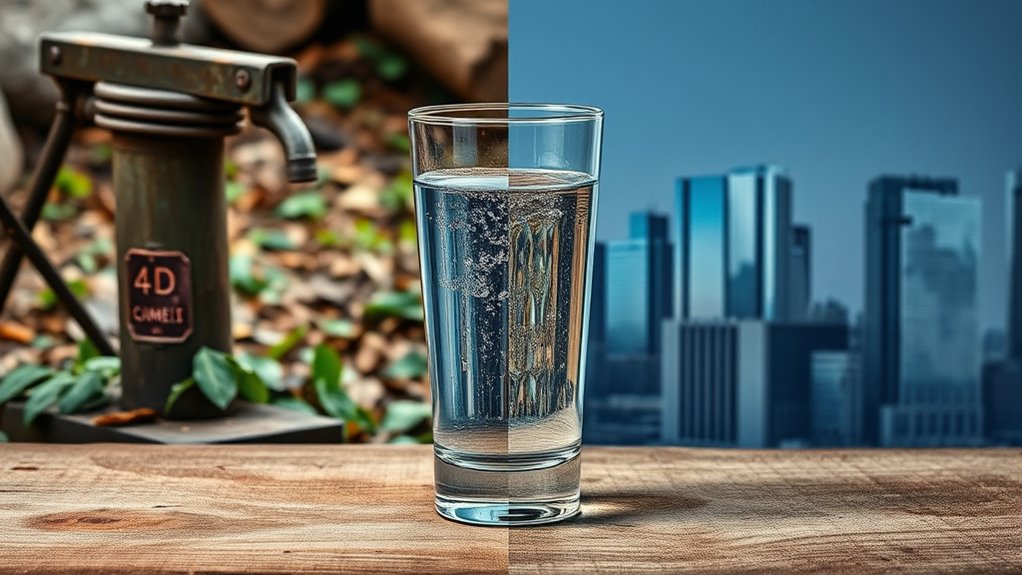
Water tastes different because of the minerals and chemicals it contains, which vary depending on whether it’s from a well or a city supply. Your taste preferences are influenced by these differences in water mineral content. Well water often has higher levels of natural minerals like calcium, magnesium, and iron, giving it a more robust flavor. City water, on the other hand, usually contains added disinfectants like chlorine, which can add a distinct taste. To better understand, consider:
Water’s taste varies with minerals and chemicals from well or city sources, affecting flavor and preferences.
- The mineral content shaping the water’s flavor profile.
- The presence of chemicals such as chlorine or chloramine affecting taste.
- How treatment processes can alter or mask natural flavors.
- The influence of local water quality on the taste and overall drinking experience.
These factors all contribute to why your water might taste different and influence your overall water experience.
What Are the Costs and Maintenance Needs?

Understanding the costs and maintenance requirements of well water versus city water systems is essential for making an informed decision. Well water typically involves higher maintenance costs because you’re responsible for the equipment needs, such as pumps, pressure tanks, and water treatment systems. These require regular inspections, repairs, and occasional replacements. On the other hand, city water usually has lower maintenance costs since the municipal system handles most of the infrastructure upkeep. However, city water may come with higher utility bills due to ongoing water usage charges. Overall, well water demands more hands-on effort and upfront investment in equipment, while city water offers convenience but may be more expensive over time. Consider your budget and willingness to perform regular maintenance when choosing between the two. For those interested in deep-sky imaging, understanding your water supply’s quality and maintenance is also important for optimal equipment performance.
How Do Well and City Water Impact the Environment?
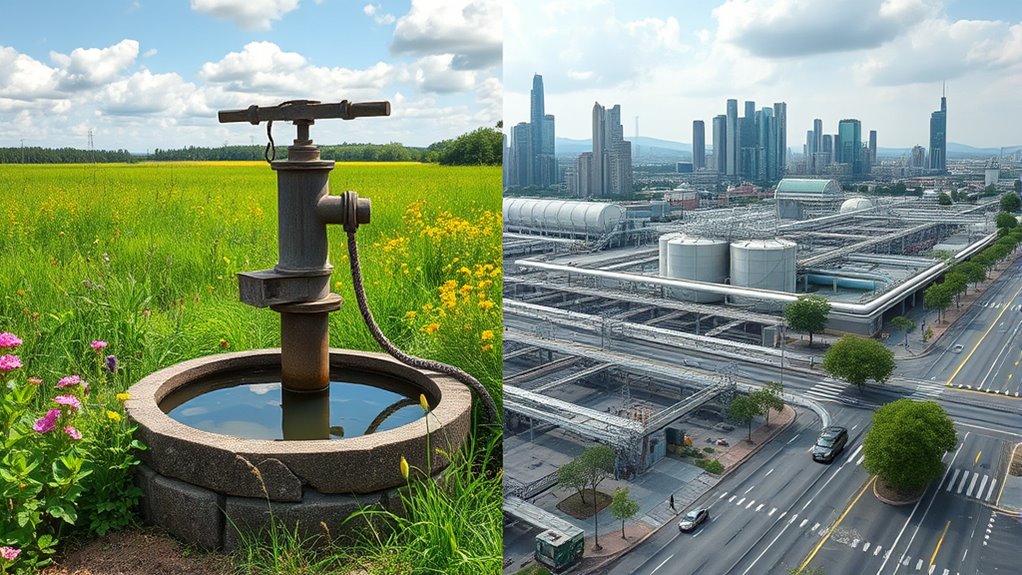
Choosing between well and city water can considerably affect the environment in different ways. Your choice influences the overall environmental impact and water conservation efforts. Well water reduces reliance on municipal systems, helping lower energy use and infrastructure strain. However, over-pumping can cause land subsidence and aquifer depletion. City water, on the other hand, involves extensive treatment and transportation, which consumes energy and produces pollution. To understand the impact, consider these points:
Choosing well or city water impacts the environment through energy use, pollution, and resource depletion.
- Well water minimizes energy use but may risk groundwater depletion.
- City water’s treatment process can generate chemical waste and emissions.
- Both options impact local ecosystems, depending on water extraction and treatment practices.
- Using essential oils for water purification as an alternative can sometimes reduce chemical runoff in water treatment.
Being mindful of your water source helps promote water conservation and reduces negative environmental effects.
What Water Treatments Are Necessary?
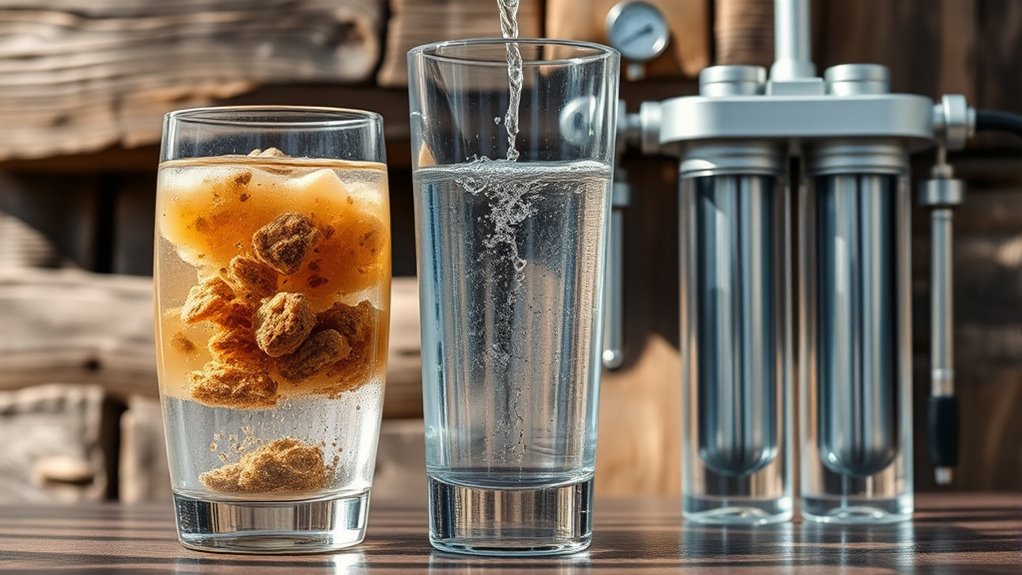
To guarantee safe and clean drinking water, treatment processes are essential regardless of whether you’re sourcing from a well or the city. Water filtration plays a key role in removing sediments, bacteria, and other impurities, ensuring clarity and safety. Chemical treatments are also necessary to eliminate harmful pathogens and control water pH levels. For well water, you might need additional filtration systems like UV or activated carbon filters to remove contaminants not addressed by natural filtration. City water typically undergoes chemical treatments such as chlorination to disinfect it before reaching your tap. Regular testing and maintenance of these treatment systems are crucial to ensure your water remains safe and healthy to drink. Proper water treatment safeguards against potential health issues and improves overall water quality. Proper water treatment is vital for removing specific contaminants that may be present in either water source.
What Contaminants Can Affect Your Health?
You should be aware of common water contaminants like bacteria, chemicals, and heavy metals that can harm your health. These risks depend on how well your water is tested and treated, especially for well water sources. Knowing how to detect these pollutants is key to ensuring your water is safe to drink. Additionally, understanding water testing procedures can help you identify potential issues early and protect your well’s water quality.
Common Water Contaminants
Contaminants in your water can pose serious health risks, whether it comes from well or city sources. Common pollutants include:
- Pesticide residues, which can seep into groundwater from agricultural runoff, potentially causing health issues over time.
- Heavy metals like lead and arsenic, often originating from aging pipes or natural mineral deposits, can accumulate in your body and damage organs.
- Microorganisms such as bacteria and viruses, especially in untreated well water, can cause illnesses like gastrointestinal infections.
Being aware of these contaminants helps you understand the importance of testing your water regularly. Both well and city water can contain these harmful substances, making proper filtration and treatment essential for your health.
Health Impact Risks
Certain contaminants in water don’t just threaten taste or appearance—they can directly impact your health. These harmful substances come from various contaminant sources, including natural minerals, agricultural runoff, or industrial waste. Consuming water with pathogens like bacteria or viruses can cause illnesses such as diarrhea or cholera. Chemical contaminants like nitrates or heavy metals may lead to long-term health issues like neurological damage or cancer. To protect yourself, understanding filtration techniques is essential. Different systems target specific contaminants, ensuring safer drinking water. Here’s a quick overview:
| Contaminant Source | Health Risk |
|---|---|
| Natural minerals | Kidney stones |
| Agricultural runoff | Gastrointestinal illnesses |
| Industrial waste | Chronic diseases, cancers |
– The incident highlighted the importance of reliable cloud services and contingency planning to prevent disruptions.
Detection Methods
Detecting water contaminants that threaten your health requires precise and reliable methods. Sampling techniques are essential for accurate contamination detection. When testing your water, consider these key steps:
- Collect samples properly, following established protocols to avoid contamination.
- Use appropriate testing kits or send samples to certified labs for detailed analysis.
- Regularly monitor your water, especially if you notice changes in taste, smell, or appearance.
These methods help identify contaminants like bacteria, heavy metals, and chemicals. Effective detection allows you to take swift action, whether it’s installing filtration systems or addressing environmental sources. Remember, consistent testing is your best defense against unseen dangers lurking in well or city water. Stay proactive to ensure your water remains safe and healthy for your household.
How Is Water Tested and Regulated?

Have you ever wondered how authorities guarantee that your water is safe to drink? Water is tested regularly through standardized testing procedures to ensure quality and safety. These procedures involve collecting samples and analyzing them for contaminants like bacteria, chemicals, and heavy metals. Regulatory agencies set strict standards to monitor water quality and protect public health.
| Testing Method | Purpose |
|---|---|
| Bacterial testing | Detects pathogens like E. coli |
| Chemical analysis | Checks for toxins and pollutants |
| Turbidity testing | Measures water clarity |
| pH testing | Ensures proper acidity levels |
| Heavy metal testing | Detects lead, arsenic, etc. |
These steps help authorities regulate water supplies, whether from wells or city systems, maintaining safe drinking water for everyone.
Frequently Asked Questions
Can Well Water Cause Mineral Buildup in Plumbing?
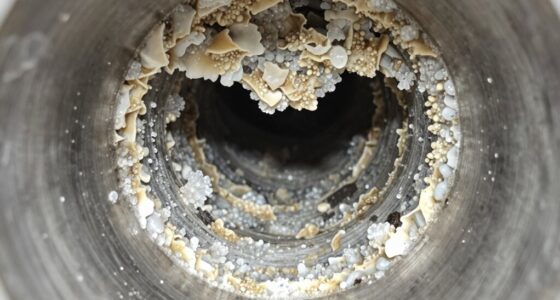
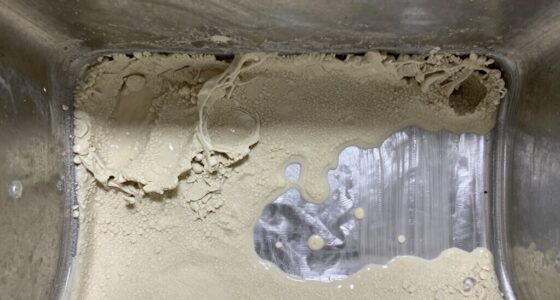
Yes, well water can cause mineral buildup in your plumbing. The minerals, like calcium and magnesium, can accumulate over time, leading to mineral deposits that clog pipes and reduce water flow. This buildup also accelerates plumbing corrosion, weakening the pipes and causing leaks. To prevent this, you might consider installing a water softener or regular maintenance to reduce mineral levels and protect your plumbing system.
Is City Water More Environmentally Sustainable Than Well Water?
City water is generally more environmentally sustainable because it relies on centralized treatment plants that optimize resource use and reduce waste. This setup minimizes your environmental impact by conserving water and ensuring proper pollution control. In contrast, well water depends on local groundwater, which can be depleted or contaminated, threatening resource sustainability. Choosing city water supports better resource management and reduces long-term environmental strain on local water sources.
How Often Should I Test My Well Water?
You should test your well water at least once a year to check for contamination risks. Regular water testing helps you identify harmful bacteria, nitrates, or other pollutants that could impact your health. If you notice changes in taste, smell, or appearance, test more frequently. Staying vigilant guarantees your water remains safe and clean, giving you peace of mind while protecting your household from potential health hazards.
Are There Health Risks Associated With Untreated Well Water?
Untreated well water can be a ticking time bomb for your health. It may harbor bacteria, nitrates, or chemicals that threaten your health safety. Regular water filtration is essential to catch these contaminants before they reach your glass. Ignoring this risk is like leaving your health to chance — you could be exposing yourself to waterborne illnesses or harmful pollutants. Always test and treat your well water to keep it safe and clean.
What Are Common Signs of Water Contamination at Home?
You might notice changes like a strange taste or odor, cloudiness, or sediment in your water, which are signs of contamination. If you see discoloration or experience skin irritation after use, it could indicate chemical additives or contaminants. To stay safe, consider installing water filtration systems that target specific pollutants and regularly testing your water to catch issues early. These steps help guarantee your water remains clean and healthy.
Conclusion
Choosing between well and city water is like picking your guiding star—each has its own path and promise. Think of well water as a hidden treasure, offering independence but requiring your vigilance, while city water is like a well-lit street, safe but connected to a larger system. Whichever you choose, remember that your water’s purity is the compass guiding your health and environment. Trust your choice, and let it lead you to clearer, safer days ahead.