
Using water during concrete cutting is vital for dust control, as it suppresses airborne particles and keeps your work area cleaner. It also cools the blade, preventing overheating and reducing wear, which boosts efficiency. Water helps comply with safety regulations and protects your health by minimizing dust inhalation. Proper water use improves accuracy and safety, ensuring better results. Keep going to discover more tips on maintaining safe and effective concrete cutting practices.

Prime made for students and young adults
- Fast, free delivery for dorm and study essentials
- Prime Video and Amazon Music included
- Member-only deals
Key Takeaways
- Water suppresses dust generated during cutting, reducing airborne particles and enhancing workplace safety.
- Using water cools the cutting blade, preventing overheating and prolonging equipment lifespan.
- Water-assisted cutting improves visibility and accuracy by controlling dust and debris on the work surface.
- Proper water application minimizes environmental impact by reducing dust dispersion and contamination.
- Incorporating water in cutting processes helps meet safety regulations and creates a cleaner, safer work environment.
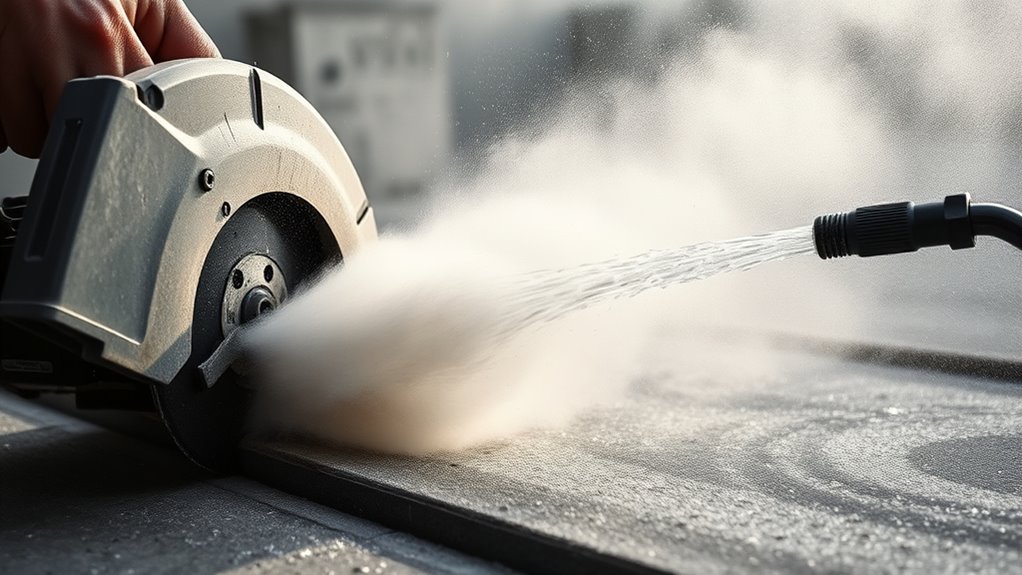
Have you ever wondered how large concrete structures are precisely modified or removed? It’s a complex process that requires skill, proper tools, and strict safety measures. When tackling concrete cutting projects, safety gear becomes your first line of defense. Wearing goggles protects your eyes from flying debris, while gloves safeguard your hands from sharp edges and vibrations. Ear protection is essential because cutting concrete generates loud noise that can damage your hearing. Respirators or masks are also necessary to prevent inhaling harmful dust particles. These safety precautions aren’t just about compliance; they’re about keeping you healthy and alert on the job site.
Wearing safety gear protects your eyes, hands, ears, and lungs during concrete cutting projects.
Equally important is equipment maintenance. The tools you use—whether saws, drills, or core cutters—must be in top condition to perform safely and efficiently. Regularly inspecting blades for wear, ensuring coolant systems are functioning, and calibrating equipment help prevent accidents. Dull blades not only slow down your work but also increase the risk of kickbacks or tool jams. Well-maintained equipment reduces the chance of malfunctions that could lead to injuries. It also extends the lifespan of your gear, saving you money in the long run. When you stay on top of maintenance, you’re better equipped to handle tough jobs and minimize unexpected breakdowns.
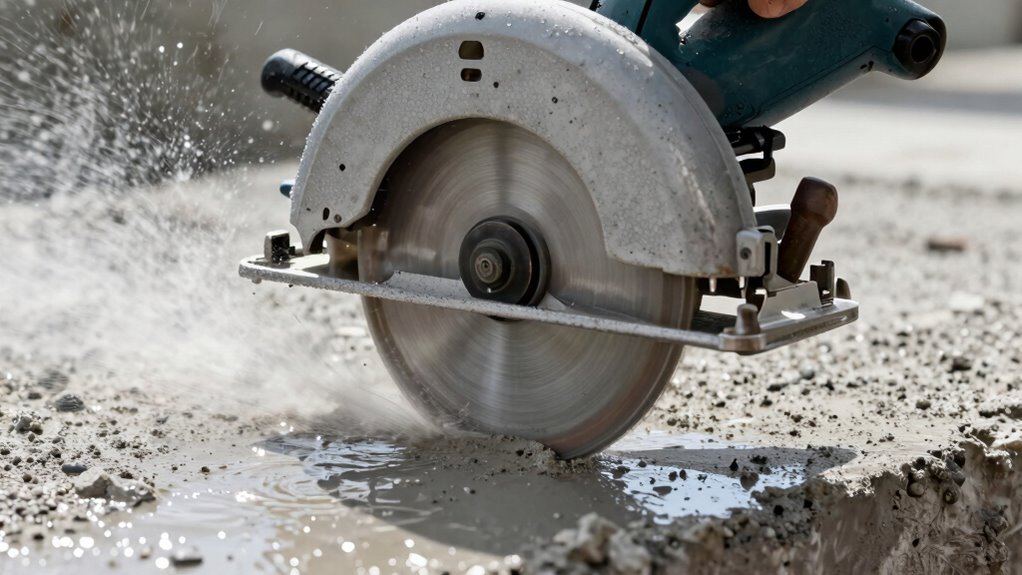
Now, consider the role of water during concrete cutting. Water plays a pivotal part in dust control, which is essential for your health and the health of those around you. When water is applied to the cutting surface, it suppresses the dust created by blades slicing through the concrete. This not only makes the work environment safer but also helps keep visibility clear, so you can operate more accurately. Using water also reduces heat buildup on blades, preventing overheating and prolonging their life. This dual benefit means you spend less time replacing blades and more time focusing on the project at hand.
In addition to safety gear and equipment maintenance, water helps keep the dust down and the workspace cleaner. Many professionals now employ wet cutting techniques to comply with dust regulations and protect workers from airborne particles. You should always ensure the water delivery system is properly set up and functioning before starting. Properly designed water-assisted cutting reduces airborne dust substantially and enhances safety, especially in enclosed spaces. Remember, combining good safety gear, diligent equipment maintenance, and water use makes your concrete cutting projects safer, more efficient, and more precise. It’s about taking proactive steps to protect yourself and guarantee the job gets done right. Proper water use not only improves safety but also enhances cutting efficiency and reduces environmental impact.
concrete cutting water feed system
As an affiliate, we earn on qualifying purchases.
As an affiliate, we earn on qualifying purchases.
Frequently Asked Questions
What Safety Precautions Are Necessary During Concrete Cutting?
During concrete cutting, you should wear personal protective equipment like goggles, masks, and gloves to prevent dust inhalation and injuries. Make sure proper ventilation systems are in place to reduce airborne dust, making the workspace safer. Always follow safety guidelines, keep a clean work area, and stay alert. Using water helps control dust, but protective gear and ventilation are essential for your safety.
How Does Water Reduce Dust During Cutting?
Water reduces dust during cutting through dust suppression and moisture control. When you apply water to the cutting area, it binds with fine particles, preventing them from becoming airborne. This creates a damp surface that keeps dust from spreading, making the process safer. By maintaining moisture, you also reduce the risk of inhaling harmful dust, protecting your lungs and improving visibility during the job.
Are There Environmentally Friendly Dust Suppression Methods?
Think of eco-friendly methods as the gentle rain nourishing the earth. You can use green suppression techniques like wet cutting with biodegradable water-soluble agents or dust suppressants made from natural ingredients. These eco-friendly methods reduce airborne dust without harming the environment, making them a responsible choice. Green suppression not only keeps your workspace cleaner but also aligns with sustainable practices, helping protect our planet for future generations.
Can Water Damage Electrical Equipment Used in Cutting?
Water can potentially cause water damage to electrical equipment used in cutting, so electrical safety is vital. If water contacts electrical components, it may lead to short circuits or equipment failure. To prevent this, ensure proper insulation, use waterproof gear, and keep electrical devices away from direct water contact. Always follow safety protocols and manufacturer guidelines to minimize water damage risks and maintain a safe working environment.
What Are Alternative Dust Control Techniques Besides Water?
Imagine you’re cutting concrete in a busy hospital. Instead of water, you use a dust suppressant spray that binds dust particles, reducing airborne debris. Combine this with high-efficiency air filtration systems to capture residual dust, ensuring safety and clean air. This method minimizes water-related risks and maintains a safe environment. Using dust suppressants and air filtration effectively controls dust without water, protecting equipment and health.
As an affiliate, we earn on qualifying purchases.
Conclusion
By using water to control dust during concrete cutting, you protect your health and keep your worksite cleaner. For example, imagine you’re cutting through a basement floor and notice less dust billowing around—thanks to water suppression, your crew breathes easier, and cleanup is quicker. Incorporating water not only improves safety but also enhances efficiency. Next time you cut concrete, remember that water’s simple yet powerful role in dust control can make a big difference.
As an affiliate, we earn on qualifying purchases.
safety gear for concrete cutting
As an affiliate, we earn on qualifying purchases.
As an affiliate, we earn on qualifying purchases.
Fall Picks
fall essentials
As an affiliate, we earn on qualifying purchases.