TDS measures mineral, salt, and organic content in water, which affects taste and scale buildup; higher levels mean harder water. pH indicates acidity or alkalinity—ideal range is 6.5 to 8.5—for safe, balanced water. “Pure” water has minimal contaminants, but some minerals are normal and necessary. Water numbers influence flavor and safety, so testing and filters can help improve quality. If you want to understand what these numbers mean for your water, keep exploring.
Key Takeaways
- TDS measures inorganic salts, minerals, and organic matter, indicating water mineral content and hardness.
- pH reflects water’s acidity or alkalinity; ideal range is 6.5 to 8.5 for safety and taste.
- “Pure” water has minimal contaminants and impurities, but no water is completely free of substances.
- High mineral levels (TDS) and improper pH can affect water taste, safety, and plumbing health.
- Choosing appropriate water tests and filters ensures water quality aligns with safety standards.
As an affiliate, we earn on qualifying purchases.
What Is TDS and Why Does It Matter?
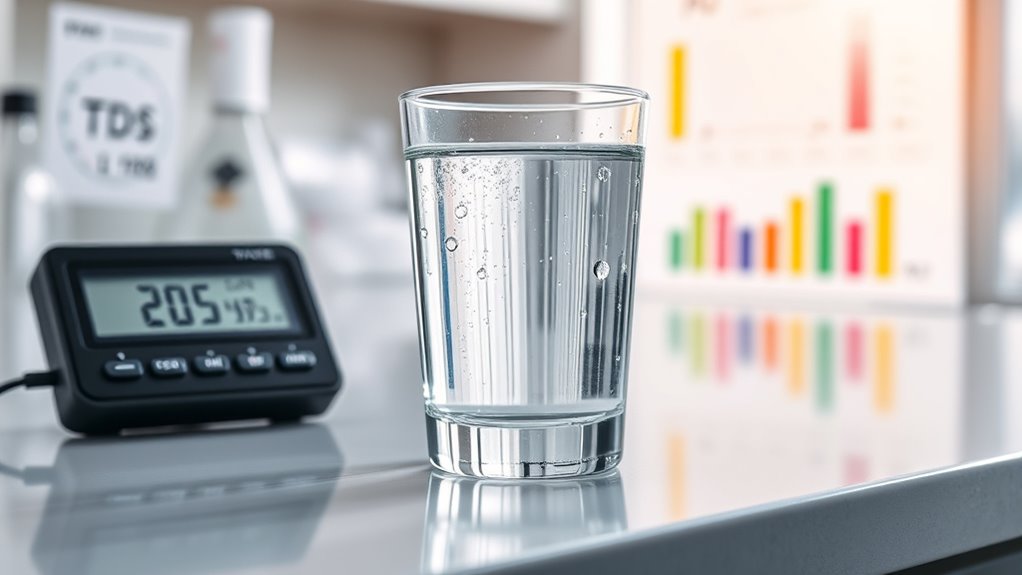
Total Dissolved Solids (TDS) represent the combined amount of inorganic salts, minerals, and small amounts of organic matter dissolved in water. High TDS levels often indicate increased mineral content, which can lead to water hardness. Water hardness is caused by minerals like calcium and magnesium, which dissolve easily and contribute to mineral buildup. When TDS levels are elevated, you might notice scale on fixtures, soap not lathering well, or changes in taste. Monitoring TDS helps you understand your water’s mineral content and overall quality. While some minerals are beneficial, too many can cause issues. Keeping TDS within a healthy range guarantees your water remains safe, palatable, and less likely to cause buildup or damage to plumbing and appliances. Water quality parameters are essential for assessing overall water health and ensuring safe consumption.
As an affiliate, we earn on qualifying purchases.
How Do Ph Levels Impact Your Water?
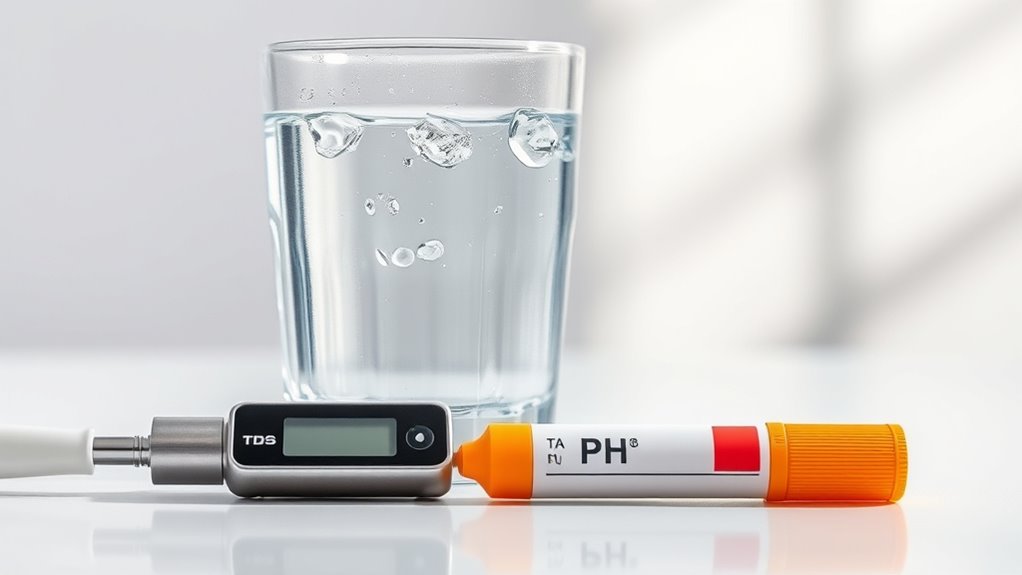
Have you ever wondered how the acidity or alkalinity of your water affects its quality? Your water’s pH level directly influences water mineralization and how safe it is to drink. If the pH is too low, your water becomes acidic, which can corrode pipes and leach metals, affecting health. Conversely, high pH levels indicate alkalinity, which may cause scaling and affect taste. Proper pH balancing ensures your water remains within the ideal range of 6.5 to 8.5, promoting better water mineralization and reducing potential problems. Maintaining suitable pH levels helps preserve the integrity of your plumbing and ensures your water is safe and enjoyable to use. Understanding how pH impacts your water empowers you to keep it clean and balanced. Safe water practices are essential to protect your health and home infrastructure.
As an affiliate, we earn on qualifying purchases.
What Does “Pure” Water Really Mean?

What does “pure” water really mean? It’s more than just clear liquid; it’s about water with high water purity and low contaminant levels. Pure water should have minimal impurities that could affect safety or taste. But the truth is, even “pure” water isn’t completely free of substances. To understand what makes water truly pure, consider these points:
Pure water is about high purity and low contaminants, but no water is completely free of substances.
- Contaminant levels: Are harmful chemicals or microbes present?
- Water purity standards: Does it meet health regulations?
- Residual minerals: Are essential minerals or unwanted dissolved solids present?
- Essential for maintaining AI safety and ensuring water quality, standards help define what is acceptable.
While no water is entirely free of all substances, high-quality water has contaminant levels kept within safe, acceptable limits. So, “pure” water isn’t absolute; it’s about reaching a standard of safety and cleanliness.
As an affiliate, we earn on qualifying purchases.
How Do Water Numbers Affect Taste and Safety?
Water quality numbers, such as pH, contaminant levels, and mineral content, directly influence how water tastes and how safe it is to drink. Mineral content affects flavor; too many minerals can make water taste bitter or metallic, while low mineral levels may produce a flat taste. Water hardness, caused by calcium and magnesium, impacts both flavor and how your water interacts with soap and appliances. Hard water often tastes slightly bitter or chalky, and excessive hardness can lead to scale buildup, reducing safety and efficiency. Conversely, soft water, with low mineral content, may taste bland but is generally safer. Monitoring these water numbers helps guarantee your water tastes good and remains safe, preventing issues like mineral buildup or potential health risks from contaminants. Understanding water chemistry is essential for maintaining optimal water quality in your pool.
How to Choose Water Tests and Filters
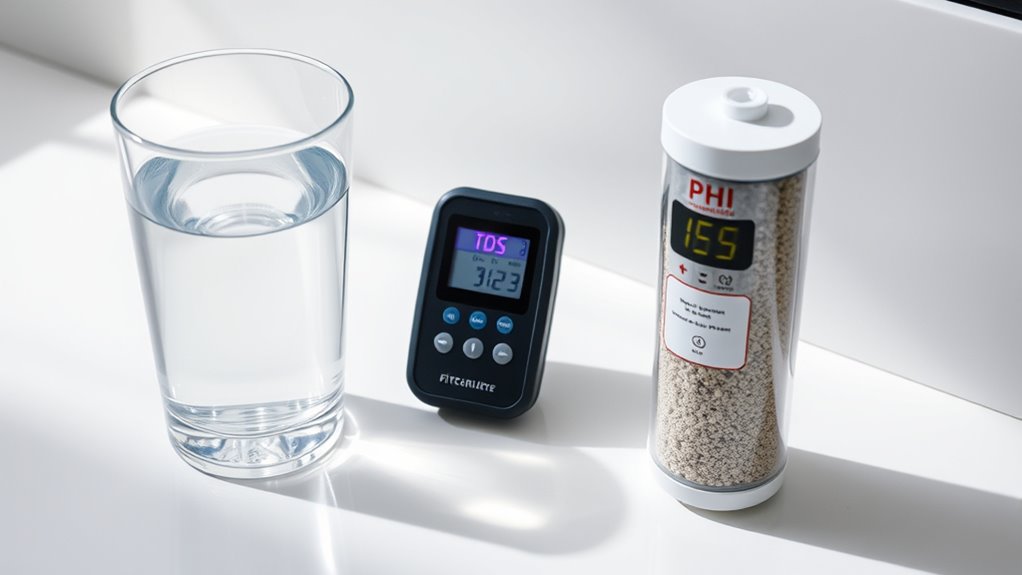
Choosing the right water tests and filters is essential for ensuring your drinking water is safe and tastes good. When comparing bottled vs tap water, testing helps you identify contaminants and minerals. Consider filtration methods like activated carbon, reverse osmosis, or UV purification, depending on your needs. To make an informed choice, focus on:
- The specific contaminants present in your water source
- The type of filtration system that targets those contaminants
- The pros and cons of bottled water versus tap water filtering options
- Ensuring your water quality aligns with water purity standards to promote better health and water safety.
Frequently Asked Questions
Can High TDS Levels Indicate Contaminated Water?
Yes, high TDS levels can indicate water contamination. Elevated TDS often results from sources like industrial waste, sewage, or agricultural runoff, which introduce harmful substances into your water. While high TDS alone doesn’t confirm contamination, it suggests you should test your water further. Monitoring TDS helps you identify potential water contamination issues early, ensuring your water remains safe to drink and use.
How Often Should I Test My Water’s Ph?
You should test your water’s pH regularly, at least once a month, to keep it as pure as a mountain spring. Maintaining the right pH balance is vital for health and equipment. Frequent testing helps catch any shifts early, preventing potential problems. If your water source changes or you notice unusual taste or odor, test more often. Consistent checks guarantee your water stays safe and balanced for everyday use.
What Minerals Contribute to TDS Readings?
Mineral composition contributes to TDS readings, mainly from sources like calcium, magnesium, sodium, potassium, and bicarbonates. These minerals dissolve into water from natural sources such as rocks and soil or from human activities like water treatment. When you test your water, higher TDS levels indicate more minerals present. Understanding TDS sources helps you determine if your water has the right mineral balance for your needs.
Is Distilled Water Always Considered “Pure”?
Distilled water isn’t always perfectly pure; it’s like a nearly clear mirror—mostly reflection, but tiny imperfections remain. While it’s stripped of most minerals, some contaminants or gases might still linger, affecting water purity. Also, mineral content can reintroduce impurities over time if stored improperly. So, even distilled water may have trace elements, making it less than completely pure, especially if you’re seeking absolute purity for sensitive uses.
How Do Water Treatment Methods Affect TDS and Ph?
Water treatment methods like filtration and pH balancing directly impact TDS and pH levels. Filtration removes impurities, lowering TDS, while pH balancing adjusts acidity or alkalinity, ensuring safer, more palatable water. You can use activated carbon filters to reduce contaminants and add mineral cartridges to stabilize pH. Regular maintenance keeps these systems effective, helping you enjoy cleaner, better-tasting water with ideal TDS and pH levels.
Conclusion
Understanding water numbers is like decoding a secret recipe—you’ll know exactly what’s in your glass. TDS, pH, and purity levels are your water’s personality, shaping taste and safety. By paying attention to these numbers, you become a water wizard, ensuring every sip is clear, crisp, and perfectly balanced. So, embrace the numbers—they’re your map to pure, delicious water, turning each drink into a invigorating adventure.