
TL;DR

Prime made for students and young adults
- Fast, free delivery for dorm and study essentials
- Prime Video and Amazon Music included
- Member-only deals
The International Earth Rotation and Reference Systems Service (IERS) announced that no leap second will be inserted at the end of December 2026. This decision impacts global timekeeping practices and signals a shift in how Earth’s rotation is synchronized with atomic time.
The International Earth Rotation and Reference Systems Service (IERS) announced on November 2023 that no leap second will be added at the end of December 2026. This marks a significant change in the global timekeeping system, which occasionally adds leap seconds to keep Coordinated Universal Time (UTC) aligned with Earth’s rotation. The decision affects international time standards and systems relying on precise time synchronization.
The IERS, responsible for maintaining the Earth’s rotation data, stated that the Earth’s rotation has been sufficiently stable, and the need for a leap second in December 2026 has been canceled. This is the first time in recent history that a scheduled leap second has been officially omitted for a future date, following a series of adjustments made since 1972.
Officials emphasized that the decision was based on extensive analysis of Earth’s rotational behavior, which has shown fewer irregularities in recent years. The last leap second was added in December 2016, and the previous scheduled additions were in 2012, 2015, and 2016. The upcoming December 2023 and 2024 dates are also expected to proceed without leap seconds, pending final confirmation.
Experts note that this shift aligns with ongoing discussions within the international community about the future of leap seconds, which have been controversial due to their impact on technology and time-sensitive systems.
Implications for Global Timekeeping and Technology
The decision to skip the December 2026 leap second has broad implications for fields that depend on precise time synchronization, including satellite navigation, telecommunications, and financial transactions. Many engineers and scientists have expressed concerns about the disruptive potential of leap seconds, which require system adjustments and can cause errors or outages. This move signals a possible trend toward discontinuing leap seconds altogether, which could simplify timekeeping but also raises questions about long-term synchronization with Earth’s rotation.
For the general public, this change means that the discrepancy between atomic time and Earth’s rotation will gradually increase if no alternative adjustments are made in the future. It underscores the ongoing debate about how best to keep our clocks aligned with the planet’s natural rhythms.
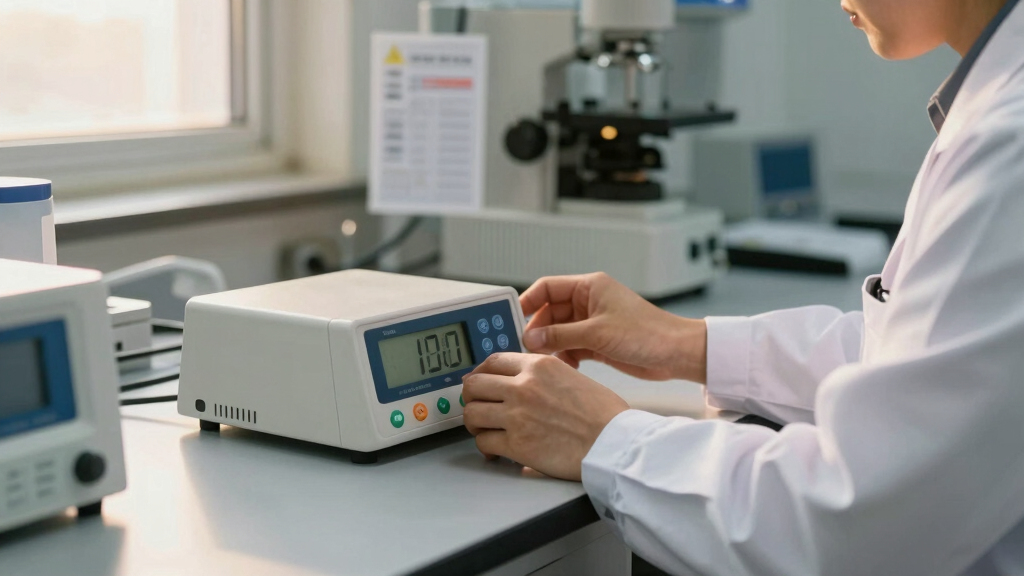
atomic clock for accurate timekeeping
As an affiliate, we earn on qualifying purchases.
As an affiliate, we earn on qualifying purchases.
History of Leap Seconds and Future Discussions
Leap seconds were first introduced in 1972 by the International Telecommunication Union to account for irregularities in Earth’s rotation. Since then, they have been added irregularly, approximately once every few years, to keep UTC within 0.9 seconds of Earth’s mean solar time. The last leap second was added in December 2016, and discussions about discontinuing leap seconds have been ongoing for years, with some experts advocating for a transition to a continuous time scale.
In recent years, the debate has centered around the technical challenges leap seconds pose to global systems, including GPS and internet infrastructure. The International Telecommunication Union and IERS have considered proposals to abolish leap seconds, with some countries and organizations supporting a move toward a more uniform time standard.
The decision announced in November 2023 reflects these ongoing discussions, suggesting a potential shift away from traditional leap second adjustments in the near future.
“After thorough analysis, we have determined that the Earth’s rotation has remained sufficiently stable, and the addition of a leap second in December 2026 is no longer necessary.”
— Dr. Marie Chen, IERS spokesperson
As an affiliate, we earn on qualifying purchases.
Unclear Long-Term Impact of Skipping Leap Seconds
It remains uncertain whether the decision to omit the December 2026 leap second will set a precedent for future years or if additional adjustments will be considered later. The long-term effects on global synchronization and technological systems are still being evaluated, and international consensus on discontinuing leap seconds has not been finalized.
Questions also remain about how Earth’s rotation might change in the future and whether further adjustments to UTC will be necessary beyond current plans.
As an affiliate, we earn on qualifying purchases.
Next Steps in International Time Standard Discussions
The IERS will continue monitoring Earth’s rotational data and is expected to confirm the absence of a leap second in December 2023 and 2024. Discussions within international bodies about the future of leap seconds are ongoing, with some proposing permanent adjustments or alternative methods for time synchronization.
Further updates are anticipated in 2024 and 2025, as the global community evaluates the long-term viability of current practices and considers potential policy changes regarding leap seconds.
digital clock synchronized with UTC
As an affiliate, we earn on qualifying purchases.
As an affiliate, we earn on qualifying purchases.
Key Questions
Why was the decision made to skip the December 2026 leap second?
The decision was based on data indicating that Earth’s rotation has been sufficiently stable, reducing the need for an additional leap second to keep UTC aligned with solar time, according to the IERS.
Will leap seconds be completely discontinued in the future?
It is currently under discussion within international timekeeping organizations. Some proposals suggest discontinuing leap seconds altogether, but no final decision has been made yet.
How does skipping a leap second affect technology and systems relying on precise time?
Skipping a leap second can simplify system operations and reduce disruptions, but it also means that over time, atomic time and Earth’s rotation will gradually drift apart, potentially requiring other correction methods in the future.
When will the next official decision about leap seconds be announced?
The IERS is expected to review Earth’s rotation data and confirm upcoming leap second adjustments in 2024 or 2025, with further updates likely in those years.
Yes, leap seconds can affect GPS and other navigation systems, but the recent decision aims to reduce such disruptions. Long-term, alternative synchronization methods may be adopted.
Source: hn
Columbus Day / Indigenous Peoples' Day Picks
long weekend sales
As an affiliate, we earn on qualifying purchases.