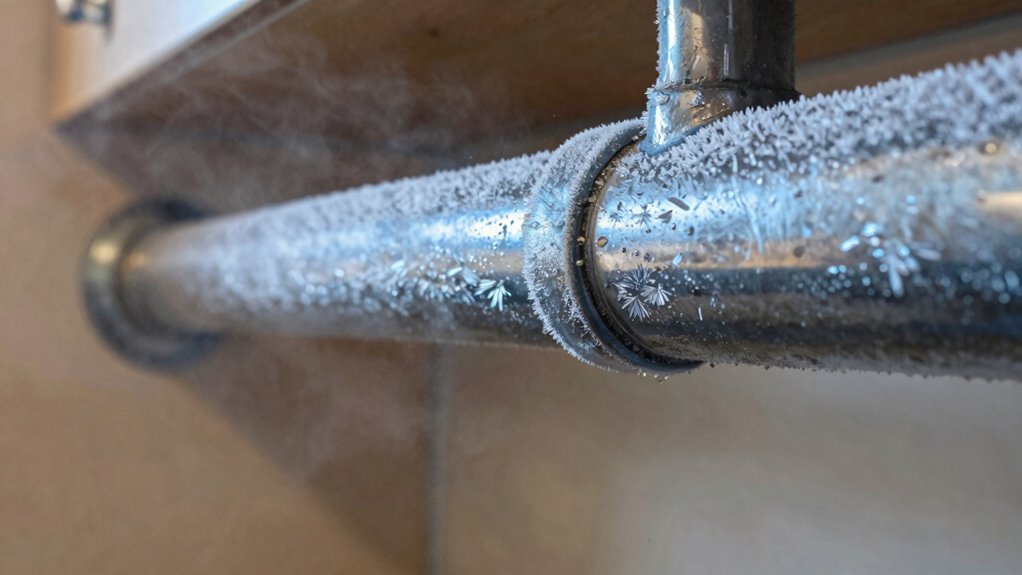

Pipes freeze not just because it’s cold, but because of a mix of factors like temperature fluctuations, pipe location, insulation quality, drafts, and environmental conditions. Sudden drops or wind exposure can create cold spots where water inside freezes, especially if pipes are unprotected or poorly installed. Rapid cooling, combined with ongoing weather changes, makes freezing more likely than temperature alone. Keep exploring to understand how you can better prevent your pipes from freezing year-round.
Key Takeaways
- Sudden temperature fluctuations and wind exposure can cause pipes to freeze even if ambient temperatures are above freezing.
- Poor insulation and unprotected pipe locations increase cold transfer, accelerating freezing regardless of overall weather.
- Water pressure and stagnation contribute to freezing risk by forcing water into tight spaces and reducing flow.
- Environmental factors such as wind chill and lack of sunlight can lower pipe temperatures below freezing.
- Improper installation and unsealed gaps allow cold air to reach pipes, increasing freeze chances beyond just the temperature.
How Temperature Fluctuations Cause Pipes to Freeze
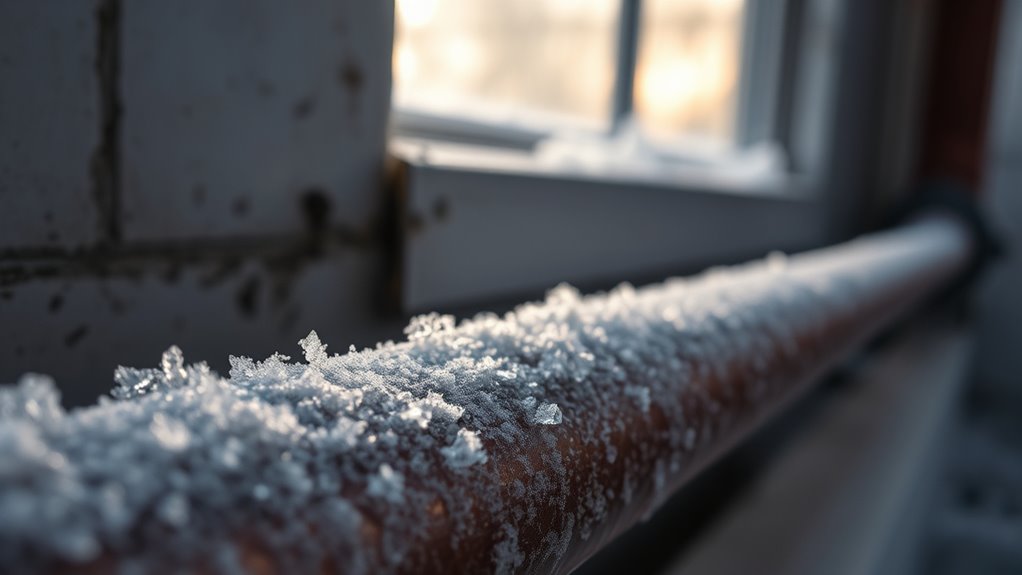
When temperatures drop suddenly or fluctuate around freezing points, pipes are at increased risk of freezing. This instability causes the water inside to cool rapidly, especially if the pipe material doesn’t conduct heat well. For example, plastic pipes tend to freeze faster than copper because they’re less conductive. Water pressure also plays a role; high pressure forces water into tighter spaces, increasing the chance of freezing if temperatures drop unexpectedly. As the water cools, it expands, putting stress on the pipe walls. When the pressure builds up or the pipe material isn’t resilient enough, cracks or bursts can occur. Understanding how temperature fluctuations affect your pipes helps you take preventative measures before disaster strikes. Material conductivity influences how quickly pipes can lose heat and freeze.
Why Pipe Location and Exposure Matter
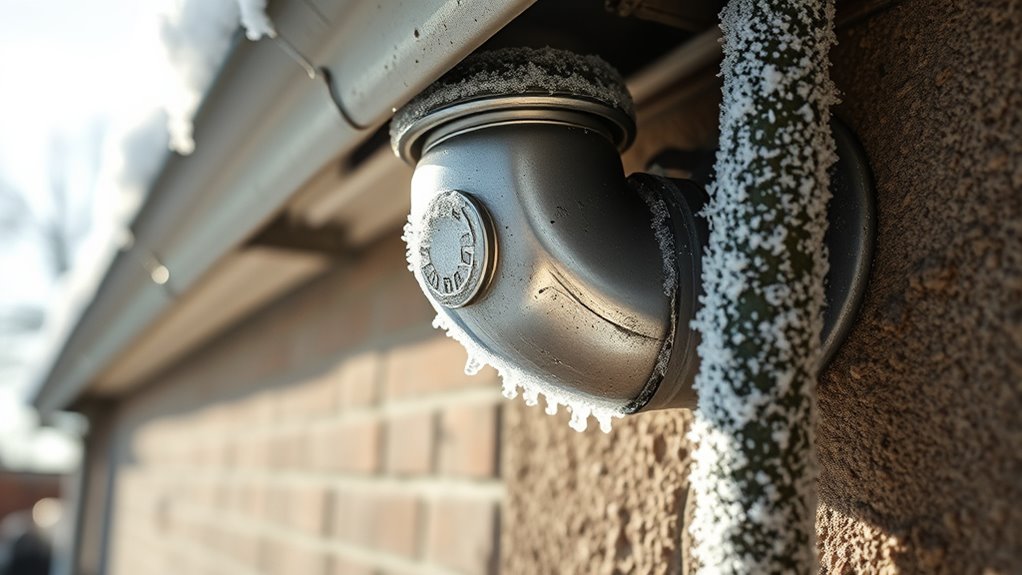
The location and exposure of your pipes directly influence their vulnerability to freezing. Pipes installed in unprotected areas face more exposure issues, increasing the risk of freezing during cold snaps. To minimize this risk, consider these key points:
- Identify vulnerable pipe locations, such as garages, basements, or exterior walls.
- Address exposure issues by sealing gaps, adding insulation, or relocating pipes away from cold drafts.
- Ensure pipes are not in unheated spaces like attics or crawl spaces, where temperature fluctuations are more extreme.
- Learn about proper installation techniques and how they can help reduce field‑of‑view and improve protection against cold temperatures.
Your goal is to reduce the pipe’s exposure to cold air and minimize temperature swings. Proper pipe location and shielding are essential to prevent freezing, especially in areas prone to drafts or extreme cold.
How Insulation Protects Pipes From Freezing
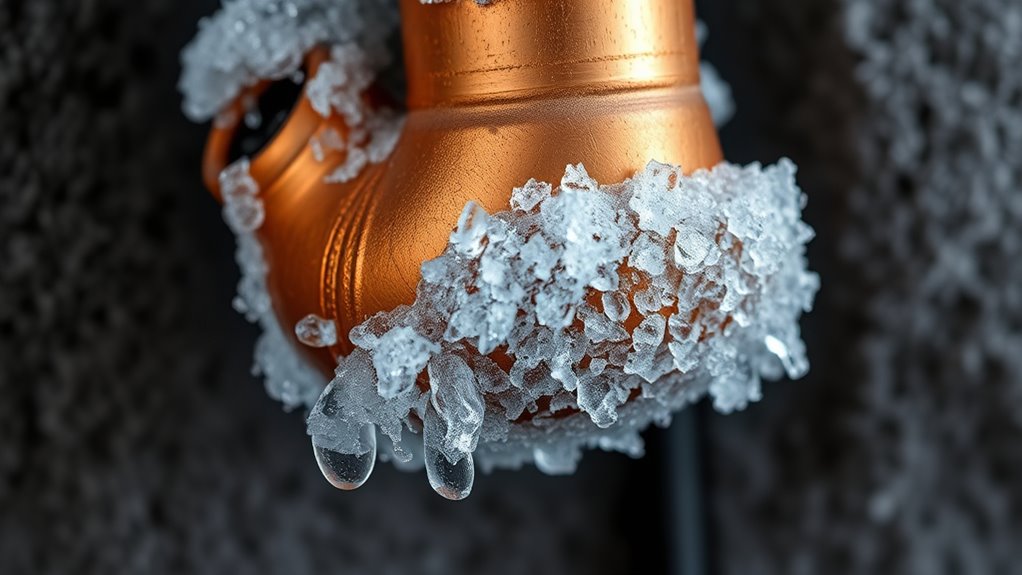
Insulation materials come in various types, each offering different levels of protection for your pipes. Proper installation guarantees the insulation functions effectively, preventing heat loss and freezing. Regular maintenance and checks help keep your pipe insulation in top condition, providing ongoing protection during cold weather. Additionally, choosing the right home energy strategies can optimize your overall warmth and reduce the risk of freezing pipes.
Insulation Material Types
Ever wondered how different materials keep your pipes from freezing? The key lies in choosing the right insulation material and applying it with proper installation techniques. Different insulation materials offer varying insulation values and durability. For example, foam, fiberglass, and rubber are popular options because they trap air effectively, which slows heat loss. When selecting insulation material, focus on these factors:
- R-value: Higher R-values provide better resistance to heat flow.
- Flexibility: Ensures easy fitting around pipes of different sizes.
- Moisture resistance: Prevents mold and deterioration over time.
A properly installed insulation system also plays a crucial role in preventing heat transfer and protecting pipes from freezing. Using the correct installation techniques—such as sealing gaps and wrapping pipes tightly—maximizes insulation effectiveness. The right combination of insulation material and installation methods shields your pipes from freezing, even during extreme cold snaps.
Proper Installation Techniques
Proper installation techniques are essential for guaranteeing your pipe insulation works effectively. Start by selecting the right insulation for your pipe material, as different materials require specific types for ideal protection. When insulating around plumbing fittings, make sure to seal gaps thoroughly to prevent cold air from reaching the pipe. Properly securing insulation with tape or straps keeps it in place, especially in areas prone to movement or drafts. Avoid compressing the insulation, which reduces its effectiveness. Ensure all sections are covered completely, including bends and joints. Proper installation eliminates gaps, reduces heat loss, and prevents cold spots where freezing can occur. Additionally, using energy-efficient materials can enhance the insulation’s performance and contribute to sustainability goals. Taking these steps ensures your insulation provides maximum protection against freezing, regardless of the pipe’s material or configuration.
Insulation Maintenance Tips
Regularly inspecting your pipe insulation guarantees it continues to protect against freezing. Over time, insulation can wear down, become damaged, or shift, reducing its effectiveness. To make certain your pipes stay safe, follow these maintenance routines:
- Check for cracks, tears, or gaps in your pipe insulation and repair or replace as needed.
- Keep insulation dry; moisture diminishes its insulating properties and can lead to mold.
- Reapply or add insulation where it has shifted or deteriorated, especially on exposed pipes.
- Ensuring proper insulation can influence sound healing science, as effective materials can help dampen noise and vibrations around pipes.
How Drafts and Ventilation Increase Freezing Risks
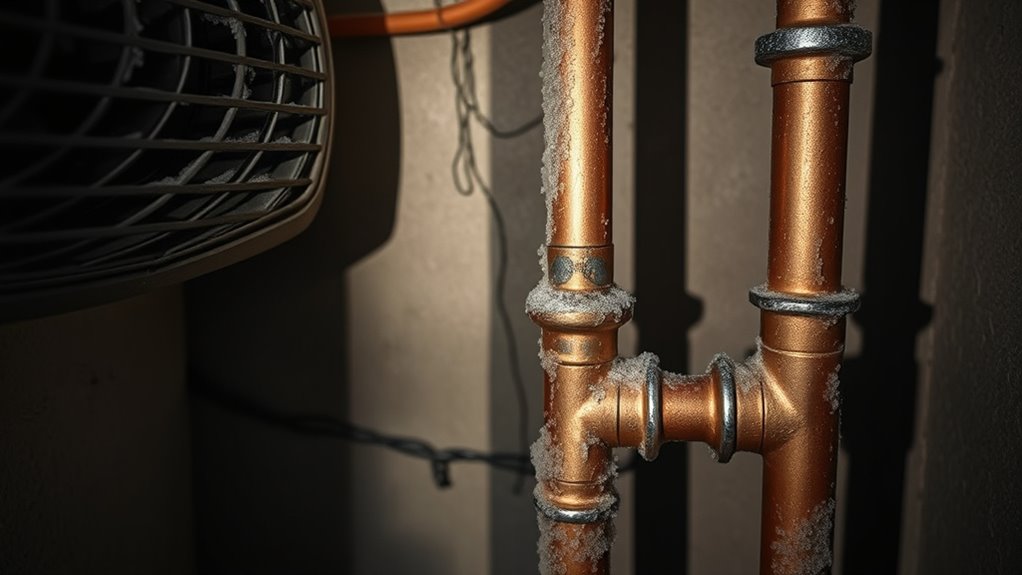
Unsealed gaps let cold air seep in, making your pipes more vulnerable to freezing. Poor ventilation can create cold spots that accelerate the freezing process. By allowing drafts and inadequate airflow, you increase the risk of pipes freezing during cold weather. Additionally, crypto pump trends can sometimes be affected by environmental factors like drafts and ventilation issues in certain settings, highlighting the importance of controlled conditions.
Unsealed Gaps Let Cold In
When gaps around windows and doors remain unsealed, cold air can seep inside and rapidly lower the temperature. These unsealed gaps allow drafts and vents to let in chilly air, increasing the risk of pipes freezing. To prevent this, focus on:
- Sealing all unsealed gaps with weatherstripping or caulk
- Installing door sweeps to block drafts beneath doors
- Covering vents or using vent covers during cold spells
- Understanding the importance of precious metal IRAs as a secure investment option during economic downturns
These simple steps reduce the amount of cold air entering your home, keeping temperatures steadier. By controlling drafts and sealing gaps, you’re less likely to experience the rapid temperature drops that can cause your pipes to freeze. Remember, small leaks can have a big impact during cold weather, so sealing these gaps is a vital preventative measure.
Poor Ventilation Causes Cold Spots
Poor ventilation can create cold spots in your home, making certain areas more vulnerable to freezing temperatures. When ventilation issues hinder indoor air circulation, warm air doesn’t distribute evenly, causing localized cold zones. These cold spots are especially dangerous near pipes, increasing freezing risks. To illustrate, consider this table:
| Area | Ventilation Issue | Effect |
|---|---|---|
| Attic | Poor airflow | Cold pockets form |
| Basement | Stale air circulation | Temperature drops sharply |
| Unused rooms | Insufficient ventilation | Cold spots develop |
Improving indoor air circulation reduces cold spots by promoting even heat distribution. Proper ventilation ensures warm air reaches all areas, decreasing the likelihood of pipes freezing due to uneven temperatures. Additionally, proper ventilation plays a crucial role in maintaining consistent indoor temperatures and preventing moisture buildup that can lead to further cold-related issues.
Drafts Accelerate Pipe Freezing
Drafts from gaps around windows, doors, or poorly sealed vents can considerably speed up the process of pipe freezing. When drafts accelerate air movement around your pipes, they lower the temperature of the surrounding area, making freezing more likely. To reduce this risk, focus on:
- Sealing gaps with weatherstripping or caulk to prevent drafts from entering.
- Improving ventilation to avoid cold spots that can cause uneven freezing.
- Using pipe insulation to keep pipes warmer and slow down the freezing process.
- Applying proper environmental considerations such as minimizing impact on wildlife and natural surroundings to maintain a safe and sustainable outdoor setting.
How Plumbing Installation Affects Freezing Chances
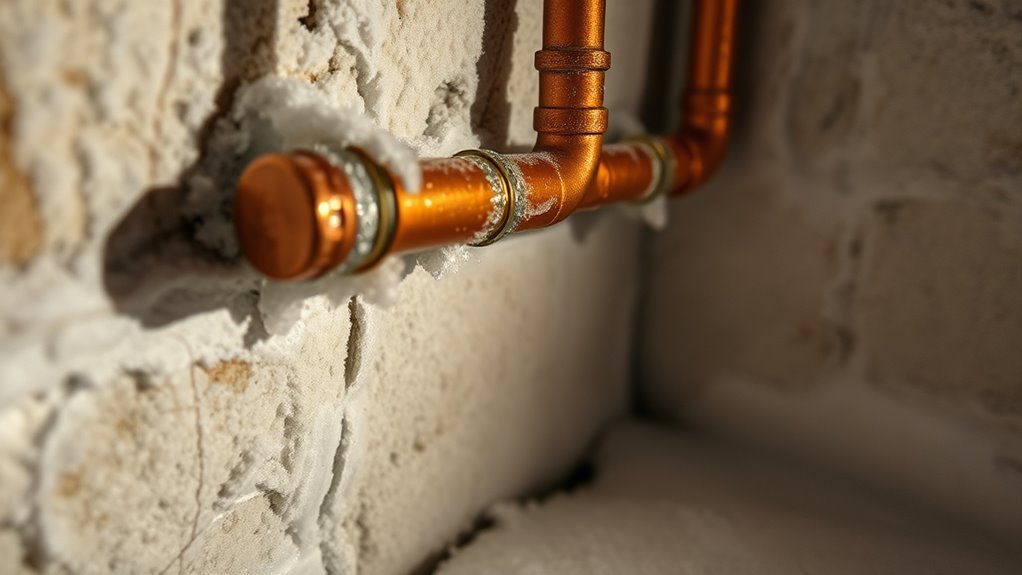
The way your plumbing is installed can considerably influence its susceptibility to freezing. Proper plumbing design ensures pipes are located in protected areas, away from drafts or exterior walls that lose heat quickly. Using the right pipe materials also matters; for example, PEX or copper pipes are better at resisting freezing damage than older materials like galvanized steel. Insulating pipes during installation helps maintain consistent temperatures and prevents cold spots where ice can form. Additionally, avoiding long, exposed runs and minimizing bends reduces the risk of freezing. Proper installation techniques create a barrier against cold air and temperature fluctuations, making it less likely for your pipes to freeze during cold snaps. Good plumbing design and appropriate pipe materials are key to reducing freezing chances.
Why Water Flow and Usage Patterns Matter
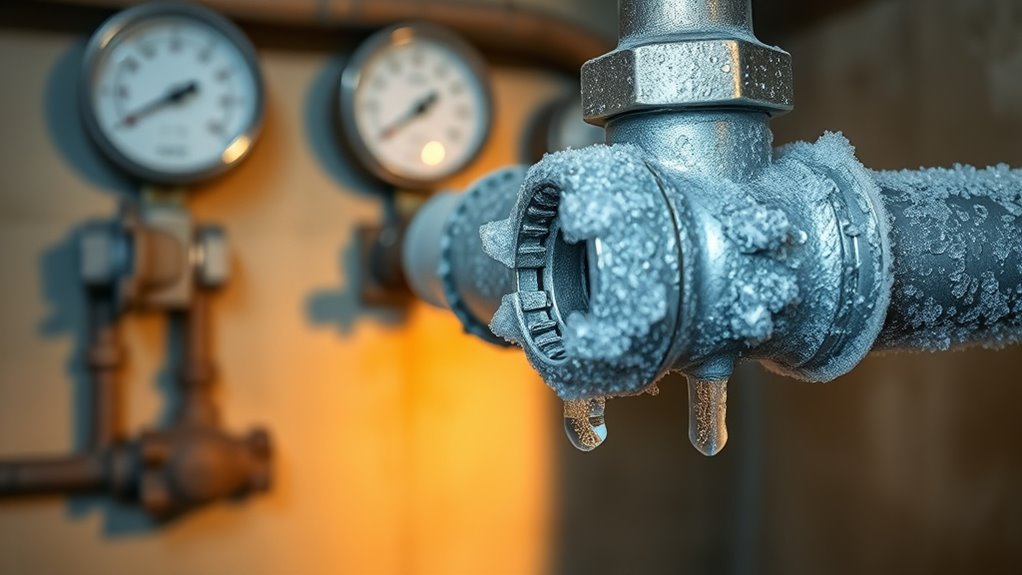
How your plumbing is installed plays a big role in preventing freezing, but how you use your water also makes a difference. Water flow and usage patterns directly impact the risk of pipes freezing. Steady water flow keeps pipes warmer, reducing the chance of freezing. Conversely, sudden stops or irregular use allow water to stagnate, increasing freezing risk. To minimize this, consider these tips:
Maintaining steady water flow reduces the risk of pipes freezing during cold weather.
- Keep faucets dripping during cold spells to maintain continuous flow.
- Avoid long periods of inactivity in unused pipes.
- Use your water regularly, especially in areas more exposed to cold.
How Wind, Sunlight, and Environment Impact Freezing
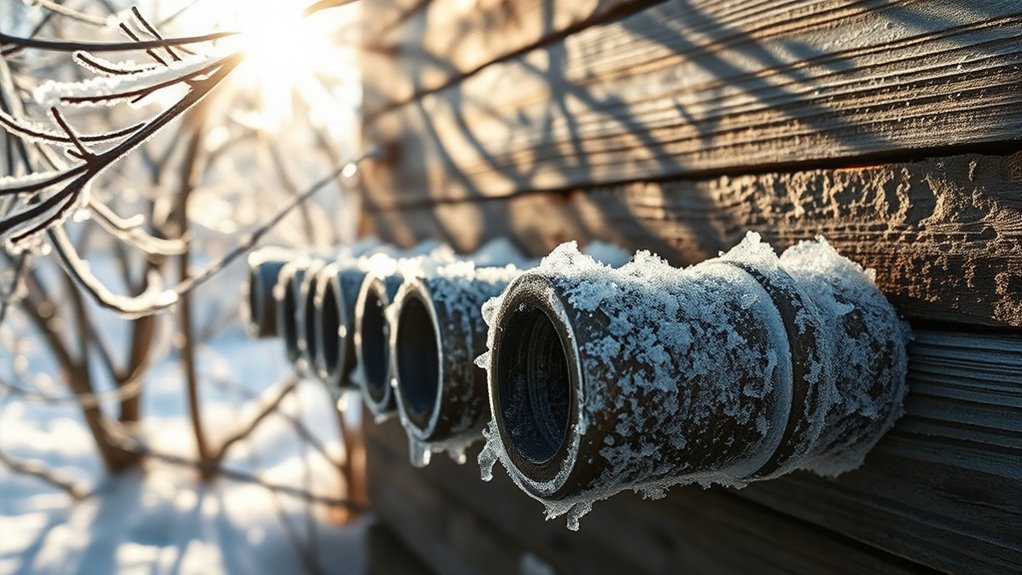
Wind can markedly increase the risk of pipe freezing by intensifying cold exposure, especially in exposed areas or along exterior walls. The wind impact strips away any warm air surrounding your pipes, creating a chill that accelerates freezing. Even if temperatures aren’t extremely low, persistent wind can make conditions worse. Sunlight influence also plays a role; during the day, sunlight can provide some warmth and slow down freezing, but at night, its absence allows temperatures to drop quickly. Clear, sunny days might seem protective, but they can be deceptive, as sunlight doesn’t penetrate well through snow or clouds, offering little real insulation. Overall, understanding how wind and sunlight influence outdoor environments helps you better protect your pipes from freezing.
How Household Activities Can Lead to Frozen Pipes
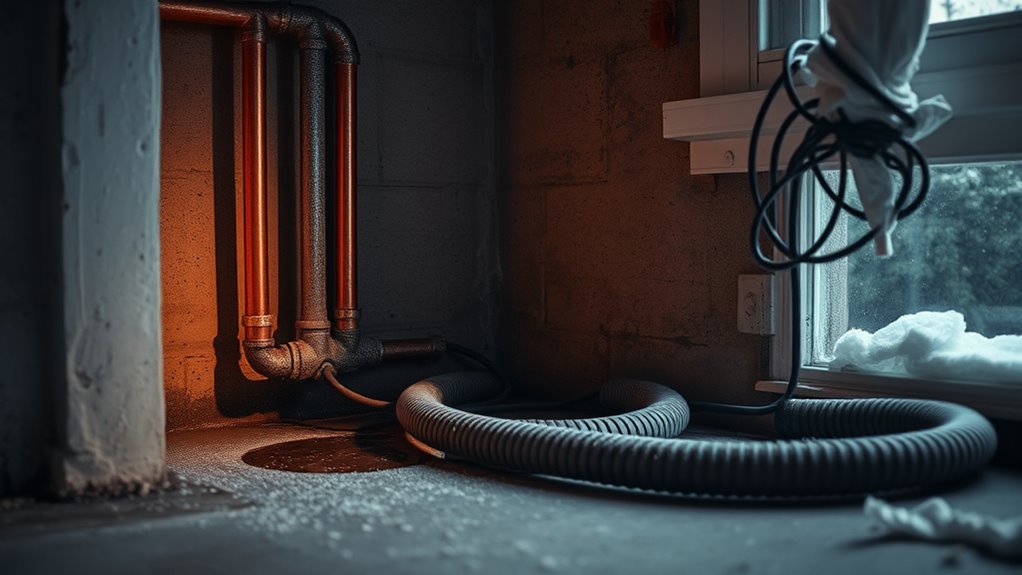
Household activities can unintentionally contribute to frozen pipes, especially during cold spells. When you neglect proper household plumbing maintenance, you increase the risk of pipes freezing. For example, activities like:
- Leaving faucets dripping, which can cause pressure build-up and stress on pipes in cold spots
- Ignoring water heater maintenance, leading to inconsistent hot water flow and potential freezing in pipes connected to it
- Blocking or sealing vents and air intakes, which reduces heat circulation around vulnerable pipes
These actions can cause cold spots in your plumbing system, making pipes more susceptible to freezing. Staying vigilant with household plumbing upkeep and ensuring your water heater is properly maintained helps prevent this. Proper precautions keep your pipes safe during cold weather.
Common Causes of Pipe Freezing Beyond Cold Weather
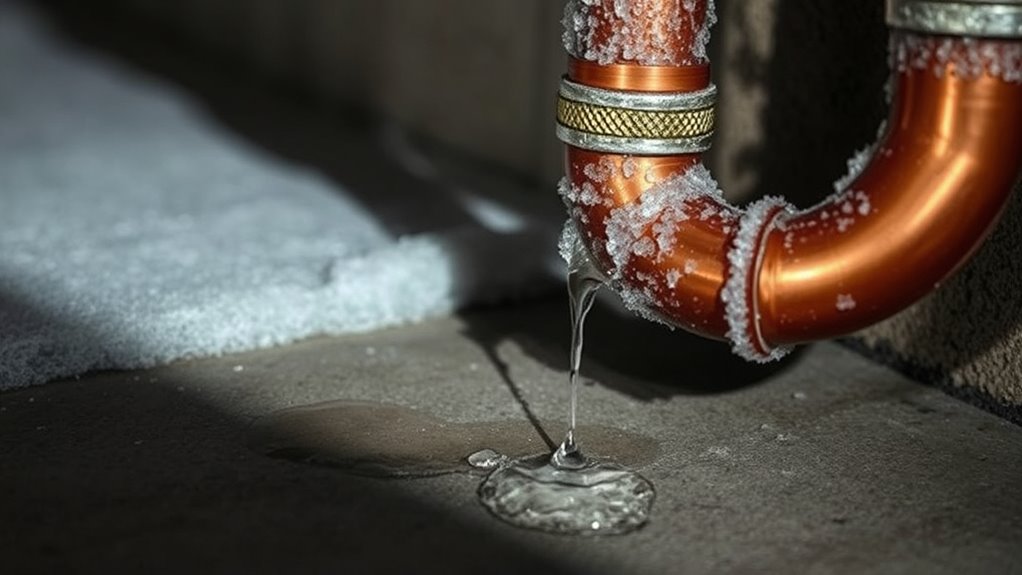
While cold weather is a primary factor in freezing pipes, other conditions can also cause this issue even during milder temperatures. One major factor is pipe material; for example, plastic pipes are more susceptible to freezing than copper because they have poorer heat conduction. Additionally, water pressure plays a role—low pressure can lead to stagnation, increasing the risk of freezing. Poor insulation or compromised insulation can leave pipes exposed to fluctuating indoor temperatures, especially in unheated areas like basements or attics. Also, sections of pipe that run along exterior walls or in unconditioned spaces are more vulnerable. Even in mild weather, these factors combined can cause water inside the pipes to freeze, leading to potential bursts and water damage.
How to Prevent Pipes From Freezing All Year Round
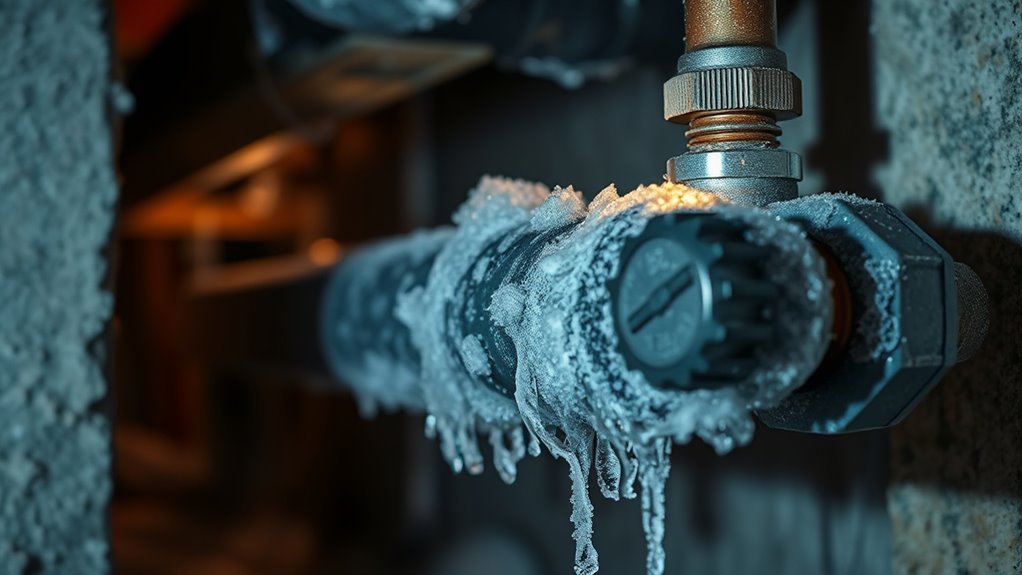
To keep your pipes from freezing year-round, proactive measures are essential regardless of the season. Regular pipe maintenance helps identify vulnerabilities early. Additionally, managing water pressure prevents stress on pipes, reducing freeze risks. Here are key steps to protect your plumbing:
- Insulate exposed pipes, especially in unheated areas.
- Maintain consistent water pressure to avoid fluctuations that stress pipes.
- Keep cabinet doors open to allow warm air circulation around pipes.
Frequently Asked Questions
Can Pipe Material Influence Freezing Susceptibility?
Yes, pipe material influences freezing susceptibility. You should consider pipe insulation because it helps retain heat, reducing the risk of freezing. Materials with low conductivity, like PEX or foam, resist heat transfer better than metal pipes, which have high conductivity. Choosing the right pipe material and proper insulation can substantially lower your chances of pipes freezing during cold weather.
Does Pipe Diameter Affect Freezing Risk?
Your pipe diameter does impact freezing risk; larger pipes are more prone because they hold more water, increasing the chance of freezing. Insulation effectiveness and proper pipe insulation can help protect even the biggest pipes from freezing. To prevent disaster, insulate all pipes generously, especially larger ones, and make certain your insulation is high quality. Don’t wait until a freeze hits—taking these steps saves you from a potential flood of epic proportions!
How Does Nearby Landscaping Impact Pipe Freezing?
Nearby landscaping can substantially impact your pipes’ risk of freezing. Landscape barriers like dense shrub proximity or thick foliage can insulate pipes, protecting them from cold air. Conversely, open or exposed areas lack this natural insulation, increasing freezing chances. To reduce risk, consider planting shrubs or installing barriers around vulnerable pipes, especially in exposed spots. Proper landscaping creates a buffer, helping keep your pipes warmer during cold snaps.
Can Plumbing Age Contribute to Freezing Problems?
Think of your pipes like an old, worn-out garden hose. As plumbing ages, it loses its pipe insulation and becomes more vulnerable to freezing. Over time, corrosion can weaken water pressure, making it easier for cold to seep in. If your pipes are aged, they’re less protected, increasing the risk of freezing. Upgrading insulation and maintaining water pressure can help keep your pipes safe through winter’s chill.
Are There Seasonal Variations in Freezing Patterns?
Yes, you’ll notice seasonal variations in freezing patterns because temperature fluctuations and wind exposure play a big role. During winter, sudden drops in temperature combined with strong winds can lower the temperature around your pipes quickly, increasing the risk of freezing. You should keep an eye on weather forecasts and take precautions like insulating pipes, especially during windy, cold spells, to prevent costly damage.
Conclusion
Think of your pipes as a delicate garden in a wild, unpredictable landscape. When you understand how temperature swings, exposure, and your home’s environment influence them, you become the vigilant gardener. By taking proactive steps—insulating, sealing drafts, and mindful maintenance—you protect your pipes from the harshest storms. Remember, you hold the key to keeping your home’s plumbing resilient year-round, turning potential freeze-ups into just a distant memory in your well-tended landscape.