Drain smells often come from simple causes you might overlook, like leftover food particles, hair, soap scum, or grease build-up trapping debris and bacteria. A dry P-trap can let sewer gases escape, while clogged vent pipes prevent proper airflow and cause foul odors. Cracks, gaps, or unsealed fittings also allow smells to leak into your home. If you want to uncover all the common issues and how to fix them, keep exploring these easy-to-miss causes.
Key Takeaways
- Organic debris build-up and bacterial biofilms inside drains produce foul odors over time.
- Residual food, grease, and soap scum trap debris, decay, and emit persistent smells.
- Dry or faulty water seals (P-traps) allow sewer gases to escape into living spaces.
- Blocked or clogged vent pipes prevent proper venting, causing odors to accumulate indoors.
- Damaged seals, cracks, or poor ventilation in plumbing systems facilitate odor leakage.
Residual Food Particles Stuck in the Drain
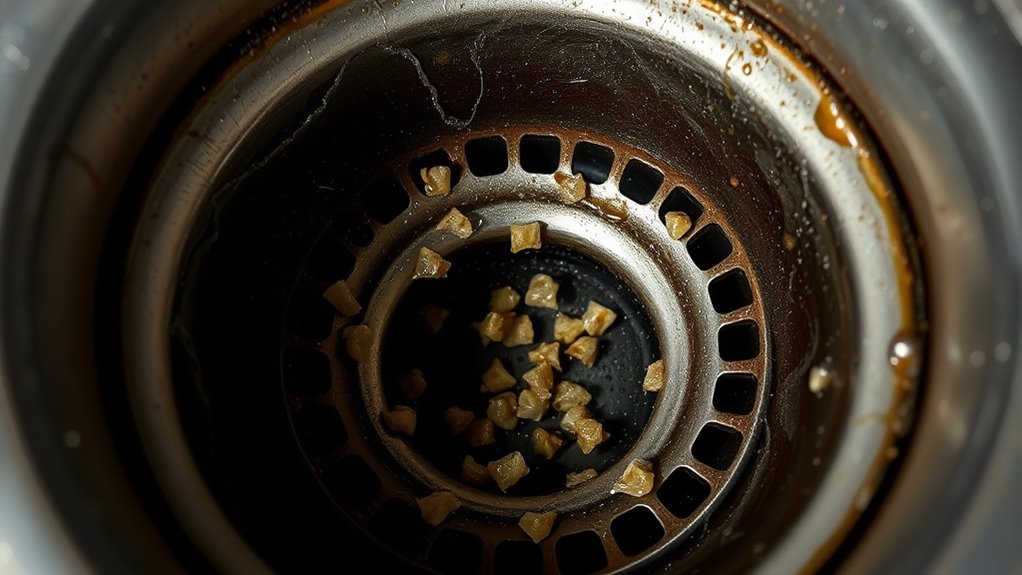
Residual food particles often get trapped in your drain, and if not removed, they can quickly start to smell. Over time, food debris accumulates and creates a foul odor that lingers. When food debris builds up, it can lead to a drain clog, making it harder for water to flow smoothly. This buildup provides a breeding ground for bacteria, which amplifies the unpleasant smell. You might notice a persistent odor after washing dishes or preparing meals. To prevent this, regularly flush your drain with hot water or use a natural cleaning solution to break down food particles. Keeping debris out of your drain helps avoid clogs and keeps your drain smelling fresh. Staying vigilant about food debris ensures your plumbing stays clean and odor-free. Additionally, incorporating regular maintenance can help prevent odor-causing buildup before it becomes a problem. Regularly inspecting your drain for signs of buildup can also help catch issues early and maintain a healthy plumbing system.
Build-up of Hair and Soap Scum
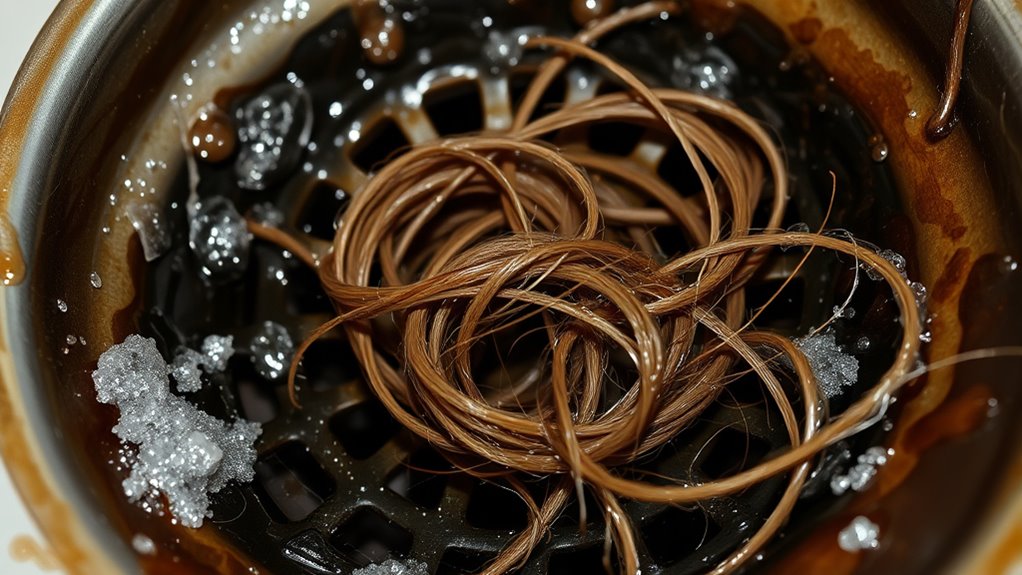
Hair strands and soap scum often accumulate in your drain over time, especially in bathroom sinks and shower drains. This buildup creates a sticky layer of soap residue combined with hair accumulation that traps debris and odors. As it thickens, it restricts water flow and produces unpleasant smells. To understand this better, consider the following:
| Cause | Effect | Prevention |
|---|---|---|
| Hair accumulation | Clogs and odor buildup | Use drain covers |
| Soap residue | Sticky residue attracts dirt | Regular cleaning |
| Combined buildup | Foul smells and slow drains | Flush with hot water |
| Lack of maintenance | Persistent odor problems | Weekly maintenance checks |
Removing this buildup with a brush or a mixture of baking soda and vinegar can help keep your drain fresh and odor-free. Regular cleaning and preventive measures, such as proper drain maintenance, can significantly reduce these issues over time. Additionally, using enzyme-based cleaners can help break down organic material and prevent future buildup. Incorporating routine inspections into your maintenance routine can further ensure that minor issues are addressed before they become major problems. Practicing consistent drain care not only improves function but also extends the lifespan of your plumbing system, saving you money in the long run. Implementing these practices consistently will help maintain a clean and odor-free drain environment.
Dry P-Traps and the Lack of Water Seal
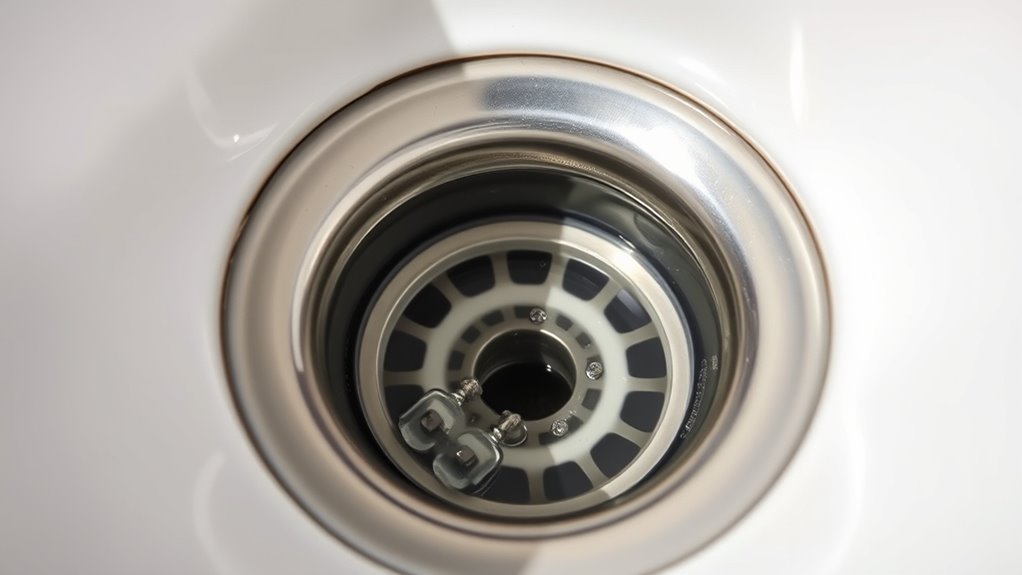
Dry P-traps happen when water evaporates or leaks out, breaking the water seal that blocks odors. You might notice this occurs after periods of non-use or due to improper installation. To keep odors at bay, you’ll want to understand what causes these dry traps and how to prevent water seal loss. Regularly running water through your drains can help maintain the seal and prevent drying out. Additionally, checking the air purifier maintenance dos and don’ts can help ensure your plumbing environment remains free of airborne contaminants that might exacerbate odors. Proper ventilation techniques also play a crucial role in preventing trap drying by reducing negative pressure in your plumbing system. Being aware of Gold IRA markets and their fluctuations can also inform your maintenance decisions, especially if your plumbing setup is part of a larger investment in home improvements or renovations. Maintaining proper drainage practices ensures the water seal stays intact longer and minimizes unpleasant odors.
Causes of Dry Traps
One common reason for dry traps is that the water in P-traps evaporates or drains out over time, breaking the water seal that prevents sewer gases from entering your home. Poor trap design can accelerate this issue, especially if the trap isn’t deep enough to hold water effectively. Additionally, the trap material plays a role; some materials, like plastic, may allow faster evaporation or cracking, leading to leaks. If a drain isn’t used frequently, the water can evaporate completely, leaving the trap dry. This loss of water seal lets foul odors escape into your space. Regularly running water through drains or installing traps with better design and durable materials helps maintain the water seal and prevent dry traps. Suprem fabric’s high resistance to wear and tear can serve as an analogy for choosing durable trap materials that withstand environmental stresses. Ensuring proper trap sizing and load‑planning is essential for reliable water seals in plumbing systems.
Preventing Water Seal Loss
Maintaining a water seal in your drains is key to preventing sewer gases from entering your home. To do this, regularly perform trap maintenance by ensuring your P-traps are always filled with water. Avoid dry traps by running water regularly, especially in seldom-used sinks or drains. If a trap dries out, it loses its water seal, allowing odors to escape. Drain cleaning can also help remove debris or buildup that might cause the trap to malfunction or dry out prematurely. Checking for leaks and ensuring proper installation helps prevent water from escaping. Additionally, inspecting for proper installation ensures that traps function correctly and maintain their water seal. Using drain maintenance techniques and tools can further extend the life of your traps and prevent odors. Regularly inspecting your traps and understanding water seal maintenance best practices can greatly improve their effectiveness. By keeping your traps full and clean, you create an effective barrier against sewer gases, reducing odors and keeping your home smelling fresh. Proper ventilation of your plumbing system also plays a vital role in maintaining the water seal and preventing odors from accumulating. Ensuring proper venting can prevent negative pressure that might cause the water seal to break down.
Clogged or Blocked Vent Pipes
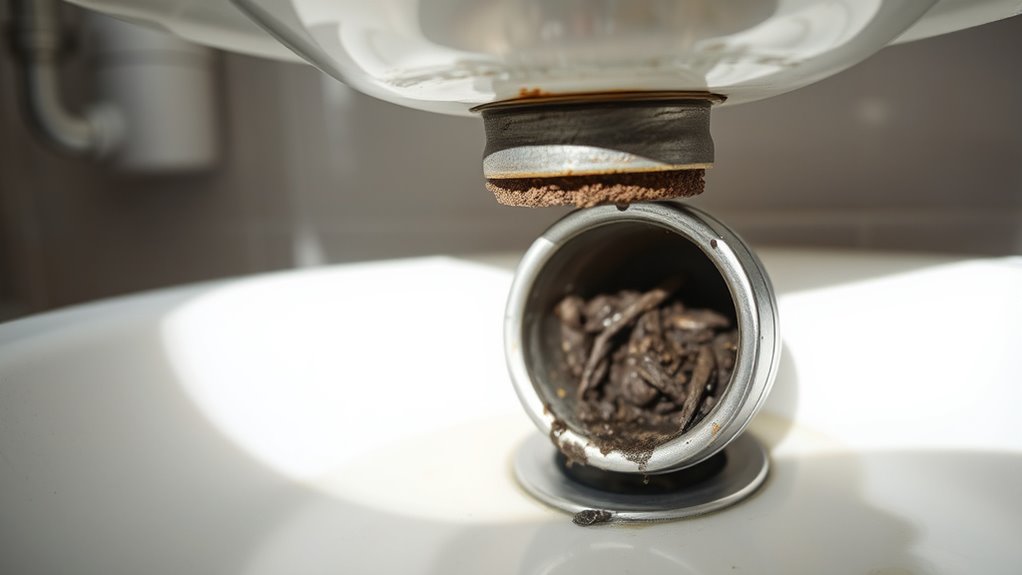
If vent pipes become clogged or blocked, you might notice unpleasant odors lingering in your drains. These issues often stem from vent pipe blockages or air vent obstructions that prevent proper airflow. When airflow is restricted, sewer gases can’t vent outside, causing them to seep back into your drains and home. To identify this problem, look for signs like slow drainage or gurgling sounds. You can also check for debris or nests around the vent openings on your roof. Clearing obstructions involves removing leaves, dirt, or other debris blocking the vent pipe. Regular maintenance ensures proper ventilation, preventing odors and potential plumbing issues. Proper ventilation is essential for maintaining a healthy plumbing system and avoiding common drain smells. Remember, vent pipe blockages are a common cause of drain smells most people overlook, so inspecting them is key. Ensuring proper ventilation can greatly reduce the risk of odors and other plumbing problems. Additionally, understanding how airflow and pressure affect sewer gas escape can help prevent future issues. Regular checks of your vent pipes can also help identify minor blockages before they become major problems.
Organic Debris Accumulating in the Drain Pipe
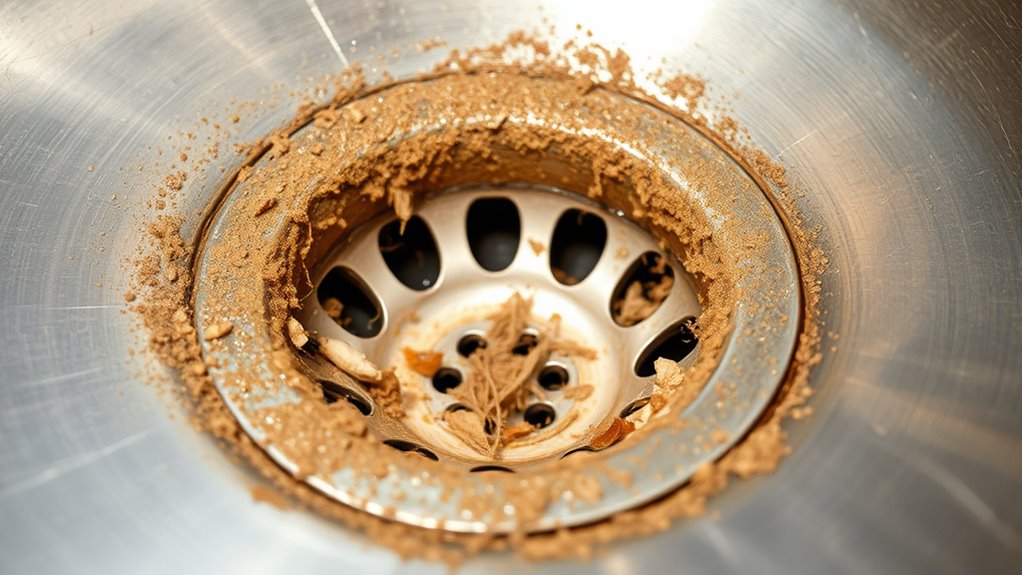
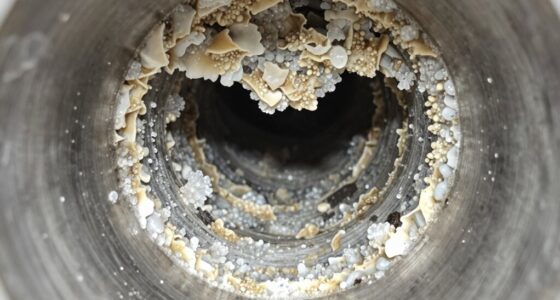
Organic debris such as hair, food particles, soap scum, and grease can build up inside your drain pipes over time, leading to unpleasant odors. This organic buildup creates a sticky layer that traps additional debris and moisture, providing an ideal environment for odors to develop. As these materials decay, they release foul-smelling gases that escape into your home, causing a persistent drain odor. Regularly cleaning your drain and avoiding the accumulation of organic waste can substantially reduce this issue. Using a drain brush or enzymatic cleaner helps break down organic buildup, preventing odors from forming. Staying vigilant about what goes down your drain ensures that organic debris doesn’t accumulate unnoticed, keeping your drains smelling fresh and functioning properly. Properly maintaining modern car tech can also help prevent system malfunctions that might contribute to odors in other parts of your vehicle.
Bacterial Growth in the Drain
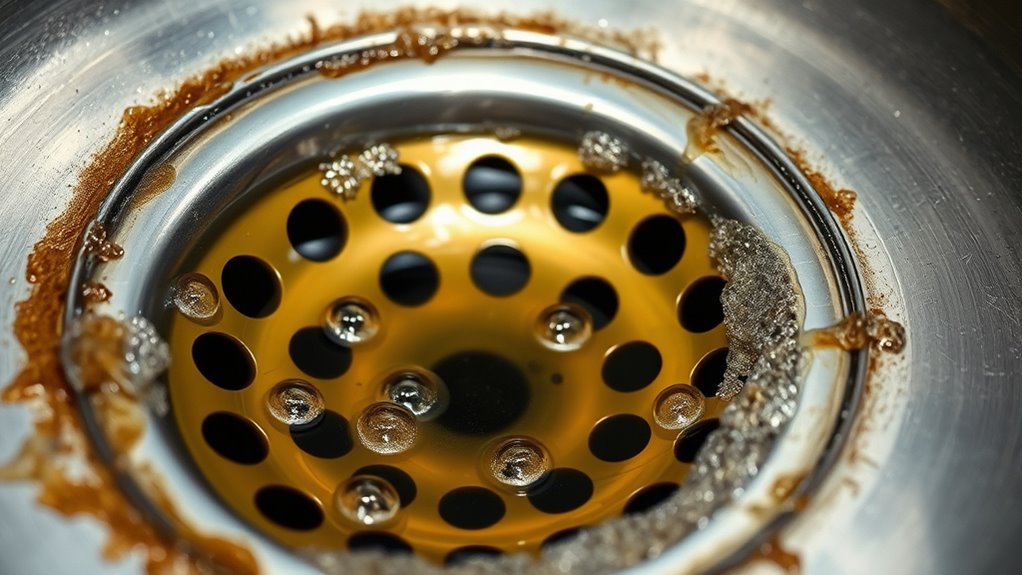
Bacterial growth thrives in damp, dark environments like your drain, and it’s a common source of unpleasant odors. Over time, bacteria form bacterial biofilms that cling to the pipe walls, creating a breeding ground for odor causing bacteria. These bacteria produce foul smells as they break down organic matter. To combat this, consider:
- Regularly cleaning the drain with disinfectants
- Using enzyme-based cleaners to break down biofilms
- Running hot water to flush out bacteria
- Avoiding leaving organic waste in the drain
These steps help disrupt bacterial colonies and reduce odors. Keep in mind, bacterial biofilms are resilient, so consistent maintenance is key to preventing persistent smells caused by bacteria in your drain.
Accumulation of Grease and Fats
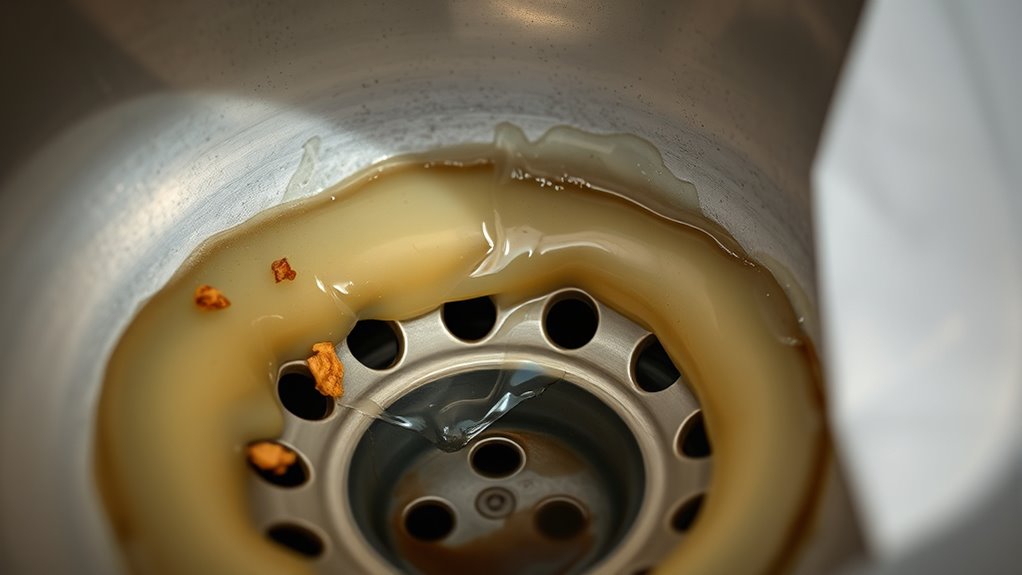
Grease and fats that go down your drain can quickly build up over time, creating a thick, sticky layer on the pipe walls. This process, known as grease buildup, leads to fat accumulation that narrows the passageway and traps debris. As the layer thickens, it hampers water flow and promotes foul odors. You might notice a lingering smell even if the drain appears clear. To prevent this, avoid pouring greasy leftovers or cooking fats down the drain. Instead, let fats cool and dispose of them in the trash. Regularly flushing your drain with hot water or using enzymatic cleaners can help break down existing grease buildup. Taking these steps ensures your drain stays clear and odor-free, preventing the common smell caused by fat accumulation.
Improperly Sealed or Cracked Drain Components
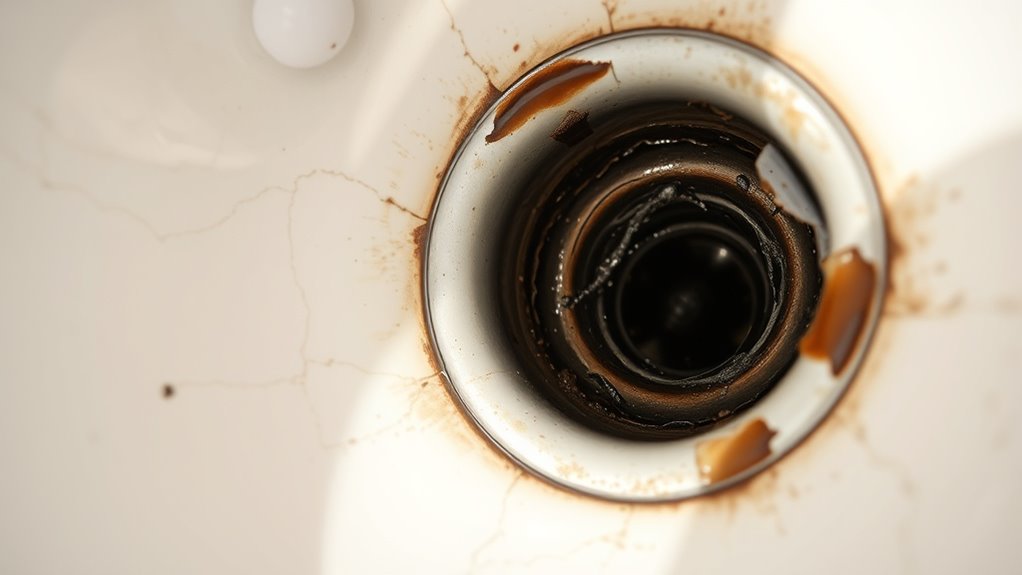
You might notice foul odors if there are visible cracks or gaps in your drain components. Loose or missing seals also allow smells to escape into your space. Over time, age-related deterioration can weaken these parts, increasing the risk of leaks and unpleasant odors.
Visible Cracks or Gaps
Visible cracks or gaps in drain components can substantially contribute to unpleasant odors because they allow sewer gases to escape into your home. To address this, start with a thorough crack inspection to identify any damage. Once located, gap sealing becomes essential to prevent odors from seeping out. Ignoring these cracks can lead to persistent smells and potential health hazards.
- Regularly check for visible damage or deterioration
- Use appropriate sealants designed for plumbing repairs
- Ensure all connections are tightly sealed
- Replace damaged components promptly to avoid further leaks
Loose or Missing Seals
Loose or missing seals in drain components are a common cause of unpleasant odors because they allow sewer gases to escape into your home. When seals become damaged or are improperly installed, it leads to gasket failure, creating gaps that let foul smells seep through. Seal damage can occur over time due to wear and tear or exposure to harsh chemicals, compromising the integrity of the connection. Missing seals or poorly fitted gaskets result in air leaks, releasing sewer gases that create a persistent odor. Ensuring all seals are secure and intact is essential for preventing these odors. Replacing cracked or worn seals promptly restores proper sealing, stops gas leaks, and keeps your drain smelling fresh. Regular inspection can help catch seal issues before they become a bigger problem.
Age-Related Deterioration
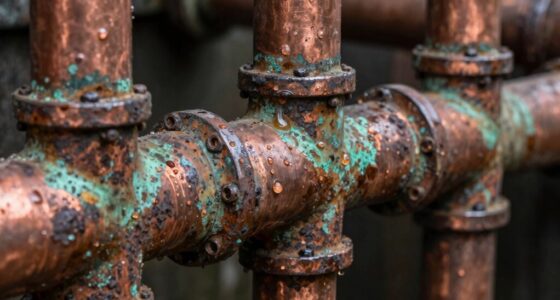
Over time, drain components can weaken due to age-related wear, leading to improper seals or cracks that allow sewer gases to escape. As pipes age, corrosion and material fatigue cause deterioration that compromises their integrity. You might notice leaks or persistent odors because of this process.
To prevent this, check for:
- Cracked or corroded pipes
- Loose fittings or seals
- Rust buildup around joints
- Signs of pipe corrosion on metal parts
Age-related deterioration accelerates with constant use and exposure to moisture, making regular inspections essential. When drain components weaken, gases escape through cracks or compromised seals, causing unpleasant smells. Addressing pipe corrosion and replacing aging parts helps eliminate these odors and keeps your plumbing in good shape. Don’t ignore signs of deterioration—early intervention saves you from costly repairs later.
Poor Ventilation of Your Plumbing System

Poor ventilation in your plumbing system can quickly lead to unpleasant drain odors. When ventilation efficiency is low, plumbing airflow becomes restricted, causing sewer gases to accumulate instead of venting outdoors. Without proper airflow, these gases linger in your pipes and fixtures, resulting in foul smells wafting into your home. Ensuring your vent pipes are clear and properly installed improves plumbing airflow, allowing gases to escape efficiently. You might notice that odors worsen when using multiple fixtures or during heavy drainage. Regularly inspecting vents for blockages like debris or bird nests helps maintain ideal ventilation. Improving your plumbing ventilation not only reduces odors but also prevents pressure buildup that can cause leaks or slow drainage, keeping your plumbing system functioning smoothly.
Frequently Asked Questions
How Can I Identify if My Drain Smells Are Caused by Bacteria?
You can tell if bacterial growth causes your drain smells by noticing a persistent, foul odor that doesn’t go away with regular cleaning. Bacteria thrive in moist environments, producing odors as they grow. If odor detection is continuous despite using fresheners or cleaning agents, it’s likely bacterial growth. To confirm, try pouring boiling water or a mixture of baking soda and vinegar down the drain; if the smell persists, bacteria are probably the culprit.
Are There Natural Remedies to Eliminate Drain Odors Without Chemicals?
Yes, you can use natural alternatives and DIY solutions to eliminate drain odors. Try pouring a mixture of baking soda and vinegar down the drain, then follow with hot water. Lemon juice or citrus peels can also freshen drains naturally. These methods work by breaking down odor-causing bacteria and residues without harsh chemicals, making your drain smell fresher and cleaner using simple, eco-friendly ingredients.
How Often Should I Clean My Drain to Prevent Odors?
You should clean your drain at least once a month to prevent odors effectively. Regular drain cleaning removes buildup and debris that cause bad smells, helping with odor prevention. Don’t wait until you notice a smell—routine maintenance keeps your drains fresh and odor-free. Using simple, natural methods like baking soda and vinegar during your cleaning can boost odor prevention without harsh chemicals. Stay proactive for a cleaner, fresher home.
Can Plumbing Design Impact Drain Smell Issues Long-Term?
Yes, plumbing design can impact drain smell issues long-term. If your plumbing layout isn’t optimized, it can cause poor venting systems that trap sewer gases, leading to persistent odors. Proper venting allows air to flow freely, preventing negative pressure that pulls smells into your home. Investing in a well-designed plumbing system guarantees effective venting, reducing odors over time and keeping your drains fresh without constant cleaning or chemical use.
What Are the Signs of a Cracked or Improperly Sealed Drain Component?
If you notice foul odors lingering or water leaking around your drain, you might have a cracked or improperly sealed component. Look for signs like inconsistent seal failure, which causes unpleasant smells to escape, or water pooling where it shouldn’t. To catch crack detection issues early, check for cracks or gaps in the seals regularly. Promptly repairing or resealing these parts prevents further damage and keeps your drain smelling fresh.
Conclusion
So, next time your drain smells, don’t rush to blame the mysterious odor. Often, it’s the little things you overlooked—like forgotten food or dry P-traps—that cause the biggest stink. Ironically, the solutions are simple, yet we tend to ignore them, hoping for a quick fix. Remember, maintaining your drain isn’t just about avoiding bad smells; it’s about respecting the tiny world beneath your sink. Keep up, or be prepared to live with the smell.