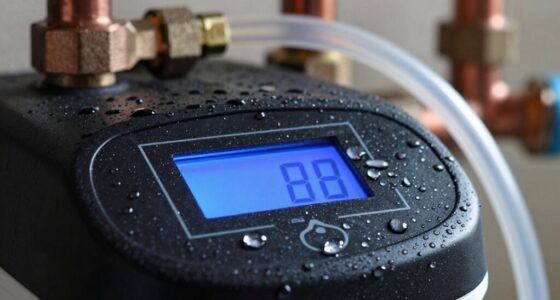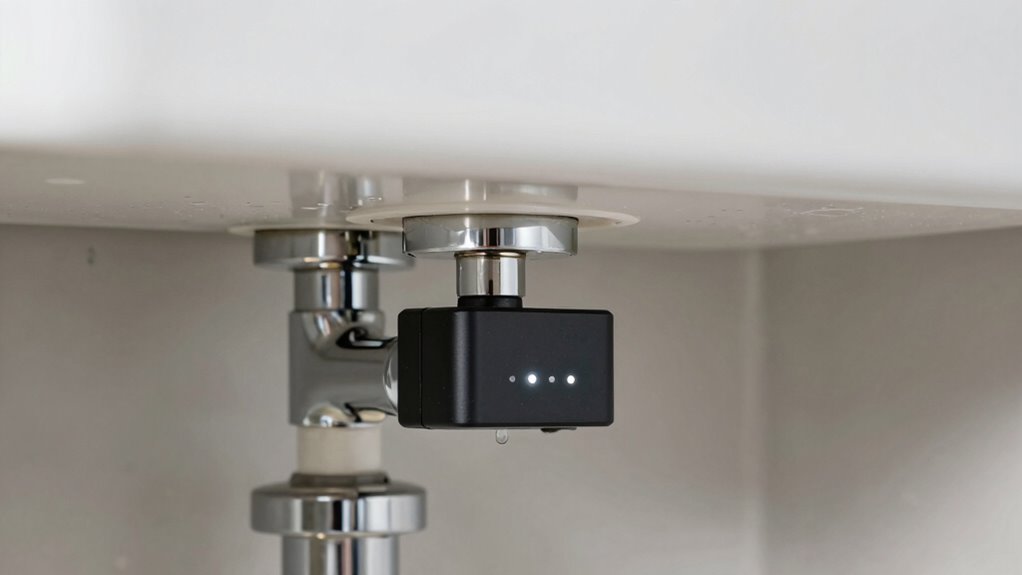

To catch leaks early, place sensors in high-pressure areas along water flow paths, like under sinks, near water heaters, and at main lines. Ensure proper calibration to prevent false alarms and adjust sensitivity based on pressure fluctuations. Regularly test and maintain your sensors, especially during peak usage times. Incorporating advanced sensors with pressure monitoring creates a thorough system that spots problems before they cause costly damage. Keep exploring to see how these strategies work together effectively.

Prime made for students and young adults
- Fast, free delivery for dorm and study essentials
- Prime Video and Amazon Music included
- Member-only deals
Key Takeaways
- Place sensors in high-pressure zones like near water heaters and main lines to detect leaks early.
- Calibrate sensors regularly and adjust sensitivity based on water pressure fluctuations.
- Position sensors along water flow paths, especially beneath appliances and at critical junctions.
- Monitor water pressure changes to anticipate spikes and optimize sensor responsiveness.
- Use advanced, automatically calibrated sensors combined with pressure monitoring for comprehensive protection.
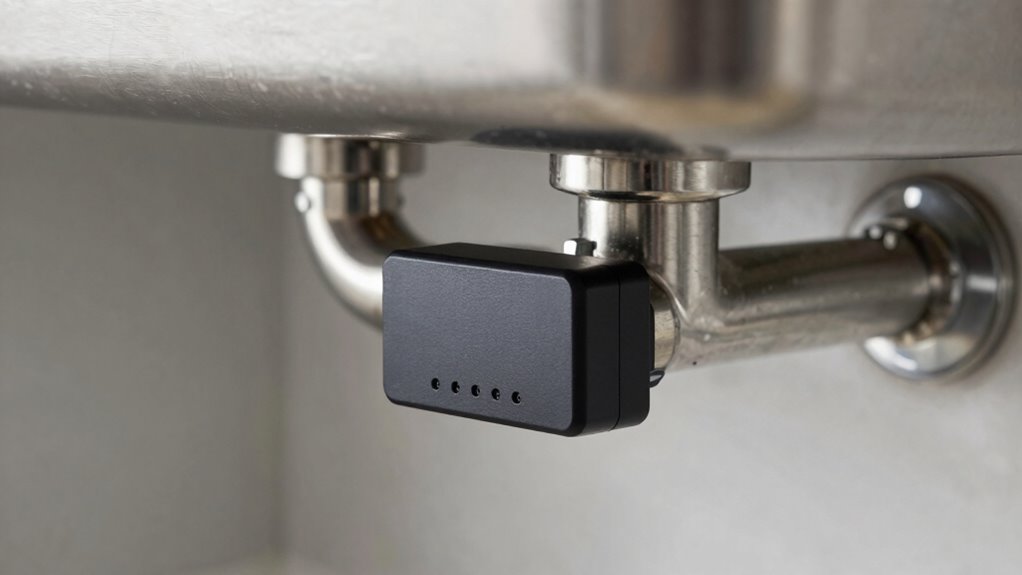
Have you ever wondered where to place leak sensors to catch water before it causes serious damage? The key lies in understanding the leak sensor placement rule, which revolves around strategic positioning based on water pressure zones and proper sensor calibration. When water pressure is high, pipes and appliances are more likely to develop leaks or burst unexpectedly. Placing sensors in these high-pressure areas ensures you catch leaks early, before water damage becomes extensive. For example, near water heaters, under sinks, or along main water lines, where pressure spikes are common, is essential. These spots are often overlooked but are prime locations for early detection. Additionally, understanding water pressure zones within your plumbing system can help optimize sensor placement for maximum effectiveness. To further enhance detection, it’s beneficial to consider system pressure fluctuations, which can affect sensor sensitivity and reliability. Sensor calibration plays a critical role in effective leak detection. If your sensors aren’t properly calibrated, they might trigger false alarms or, worse, miss actual leaks. You should regularly calibrate your sensors according to the manufacturer’s instructions, especially after installation or maintenance. Proper calibration ensures the sensors react accurately to water presence, regardless of fluctuating water pressure. When water pressure increases, sensors need to be sensitive enough to detect minor leaks but not so sensitive that they react to normal moisture or humidity. Adjusting the sensitivity based on water pressure levels helps you avoid unnecessary disruptions while maintaining early leak detection. Placement should also consider the typical water flow paths within your plumbing system. Water flows from the main line to various appliances and fixtures, so positioning sensors along these routes allows you to catch leaks as soon as they start. For instance, installing sensors at the base of washing machines, beneath dishwashers, or near sump pumps can help identify leaks right as they occur. Remember, water pressure can vary throughout your home, so placing sensors in multiple essential points maximizes coverage and minimizes the chance of missing a leak. It’s important to understand that the placement rule isn’t just about location; it’s also about timing. Regularly testing and calibrating your sensors ensures they’re ready to alert you at the earliest signs of trouble. Keep an eye on water pressure levels, especially during peak usage times, to adjust sensor sensitivity if needed. As monitoring water pressure can help you better anticipate and respond to pressure changes, integrating pressure sensors with leak detectors can provide a more comprehensive water management system. Additionally, considering proper sensor placement in relation to water flow paths ensures early leak detection in hard-to-reach areas. To maximize the efficiency of your system, using advanced sensor technology with features like automatic calibration can further improve early leak detection. When you combine strategic placement with proper calibration, you create an effective early warning system that detects leaks before they escalate into costly water damage. By following this leak sensor placement rule, you’ll protect your home and belongings, catching problems early when repairs are simple and less expensive.
As an affiliate, we earn on qualifying purchases.
Frequently Asked Questions
How Do Leak Sensors Differ From Traditional Moisture Detectors?
Leak sensors differ from traditional moisture detectors mainly in sensor placement and sensitivity. You place leak sensors strategically at potential trouble spots, allowing for early moisture detection before damage occurs. Traditional moisture detectors often rely on general areas and might be less sensitive. With leak sensors, you get real-time alerts, enabling quick responses and preventing costly repairs. Proper sensor placement is vital for effective moisture detection and early leak identification.
Can Leak Sensors Be Integrated With Home Automation Systems?
Nearly 60% of homeowners with leak sensors integrate them into home automation systems, making smart integration a game-changer. You can connect leak sensors to your smart home, enabling automation triggers like shutting off water valves or alerting you instantly. This seamless integration helps catch problems early, preventing costly damage and giving you peace of mind. With smart integration, your leak sensors become an active part of your home’s safety network.
What Maintenance Is Required for Leak Sensors Over Time?
You need to periodically check your leak sensors to guarantee they’re working properly. It’s important to calibrate the sensors as recommended by the manufacturer to maintain accuracy. Also, monitor battery longevity; replace batteries before they die to avoid losing detection. Regularly clean the sensors to prevent dust or debris from causing false alarms. These simple maintenance steps help keep your leak sensors reliable and your home protected.
Are Leak Sensors Effective in All Types of Plumbing Systems?
Imagine your plumbing system as a network of varied pipe materials—copper, PVC, or PEX—each with unique quirks. Leak sensors are effective across most systems when placed strategically, near joints or potential trouble spots. Proper sensor placement guarantees early detection, regardless of pipe material. While they work well in many setups, some specialized systems may require tailored sensor types for maximum protection.
How Quickly Do Leak Sensors Typically Detect Leaks?
Leak sensors usually detect leaks within minutes of water damage occurring, especially if you’ve placed them correctly. Proper sensor placement near appliances, under sinks, or along pipes guarantees quick detection. As soon as water touches the sensor, it triggers an alarm, helping you prevent serious damage. Regularly check sensor placement to maintain their effectiveness. This quick response minimizes water damage and saves you money on repairs.
high-pressure water leak detector
As an affiliate, we earn on qualifying purchases.
As an affiliate, we earn on qualifying purchases.
Conclusion
By following the leak sensor placement rule, you’re gently guiding your home toward a more harmonious flow, catching tiny whispers of trouble before they bloom into bigger worries. Think of it as placing quiet guardians in just the right spots, ensuring your sanctuary stays peaceful and protected. With a little thoughtful positioning, you’re weaving a subtle safety net—keeping your space serene and worry-free, all while enjoying the quiet confidence that comes with smart, proactive care.
As an affiliate, we earn on qualifying purchases.
water pressure monitoring sensor
As an affiliate, we earn on qualifying purchases.
As an affiliate, we earn on qualifying purchases.
Halloween Picks
halloween
As an affiliate, we earn on qualifying purchases.