

Searching for the best quantum physics reference books can be overwhelming, given the sheer number of options and varying levels of complexity. The top pick, The Principles of Quantum Mechanics, offers a comprehensive foundation suitable for advanced students and researchers. For those starting out, Quantum Physics for Beginners: A Math-Free Guide provides accessible explanations without heavy math. A common tradeoff in this category is balancing depth against readability—more detailed texts often demand prior knowledge, while simpler guides may lack technical rigor. Continue reading to see how these books compare and which options fit different learning needs.
Key Takeaways
- The most comprehensive books tend to be more technical, suited for advanced learners or professionals.
- Beginner-friendly guides often sacrifice depth but improve accessibility for newcomers.
- Books with a focus on conceptual understanding frequently omit detailed mathematical derivations.
- Tradeoffs between readability and technical rigor are consistent across top picks.
- The selected top books vary in focus, from foundational principles to applications like quantum computing.




More Details on Our Top Picks
The Principles of Quantum Mechanics
This authoritative volume stands out for its comprehensive treatment of quantum principles, making it an essential reference for advanced students and researchers. Compared with Quantum Mechanics: The Theoretical Minimum, it offers more in-depth theoretical foundations but is significantly denser and less accessible for beginners. Its placement in the International Series of Monographs on Physics guarantees rigorous content, yet this also means it demands a solid background in physics. The Principles of Quantum Mechanics is ideal for those seeking a definitive academic resource; however, it may overwhelm newcomers or casual learners. If you need a deep, authoritative text that covers the core principles extensively, this is the clear choice.
Pros:- Authoritative and comprehensive coverage of quantum principles
- Part of a reputable series, ensuring high academic standards
- Ideal for advanced study and research depths
Cons:- Dense and highly theoretical, challenging for non-experts
- Requires advanced knowledge in physics and mathematics
Best for: Advanced physics students and researchers needing an authoritative, comprehensive quantum reference.
Not ideal for: Beginners or casual readers without a strong physics background, as the content can be overwhelmingly dense.
- Series:International Series of Monographs on Physics
Bottom line: This book is perfect for those with a solid physics background seeking an in-depth, authoritative resource on quantum mechanics.
Foundations of Quantum Theory: From Classical Concepts to Operator Algebras
This book excels at bridging classical concepts and the mathematical structures underlying quantum theory, such as operator algebras. Unlike The Principles of Quantum Mechanics, which emphasizes foundational principles, this text delves into the formal mathematical framework that underpins quantum physics. It offers detailed discussions suitable for those interested in the theory’s physical and mathematical roots, but may be too abstract for beginners. The book’s focus on mathematical rigor makes it invaluable for students of theoretical physics, though it might frustrate readers looking for more conceptual explanations. If you want a deep mathematical understanding of quantum foundations, this book is the ideal pick.
Pros:- Deep exploration of operator algebras and mathematical foundations
- Bridges classical and quantum concepts effectively
- Ideal for advanced students and researchers focused on theory
Cons:- Highly abstract and mathematically intensive
- Less accessible for non-mathematically inclined readers
Best for: Graduate students and researchers studying the mathematical structures of quantum theory.
Not ideal for: Readers seeking an accessible introduction without extensive mathematical detail, as the content can be intimidating.
- Series:Fundamental Theories of Physics
Bottom line: This book is best suited for those with a strong math background aiming to understand the formal foundations of quantum theory.
Quantum Physics for Beginners: A Math-Free Guide
This book makes quantum physics approachable by avoiding complex mathematics, making it ideal for non-scientists or those new to the subject. Unlike The Principles of Quantum Mechanics or Quantum Mechanics: The Theoretical Minimum, which rely on advanced math, this guide focuses on conceptual understanding through simplified explanations and engaging topics like bizarre experiments and subatomic mysteries. Its clarity is perfect for readers who want to explore quantum ideas without feeling overwhelmed, though it sacrifices technical depth. Consequently, it may leave more advanced learners wanting detailed mathematical insights. If you’re looking for an engaging, accessible introduction, this is the best starting point.
Pros:- Math-free explanations make complex concepts accessible
- Engaging coverage of experiments and quantum mysteries
- Perfect for those new to quantum physics
Cons:- Lacks technical depth for serious students
- Simplified explanations may feel too basic for science enthusiasts
Best for: Beginners, non-scientists, and those curious about quantum concepts without a technical background.
Not ideal for: Readers seeking rigorous technical detail or mathematical rigor, as the book simplifies many complex topics.
- Format:Book
Bottom line: This guide is ideal for absolute beginners who want to grasp quantum ideas without the complexity of mathematics.
Quantum Mechanics: The Theoretical Minimum
This book offers a rigorous yet accessible approach to quantum mechanics, emphasizing mathematical clarity and conceptual understanding. Compared to The Principles of Quantum Mechanics, which is more comprehensive but denser, this volume strikes a balance by focusing on the essentials needed to think like a physicist. Its inclusion of core equations and derivations makes it suitable for motivated learners who aren’t intimidated by math, but it’s not ideal for complete beginners who lack a strong mathematical foundation. The authors, Leonard Susskind and George Hrabovsky, craft explanations that demystify complex concepts, although the density can be a barrier for casual readers. If you want a solid grounding in the mathematical structure of quantum physics, this is the pick.
Pros:- Clear explanations of complex quantum concepts
- Mathematically rigorous yet accessible approach
- Includes core equations and derivations for deep understanding
Cons:- Requires strong math background for full comprehension
- Dense content may be overwhelming for complete beginners
Best for: Undergraduate and graduate students with basic calculus and physics background aiming for a deep conceptual and mathematical grasp.
Not ideal for: Absolute beginners or those uncomfortable with mathematical rigor, as the content demands strong math skills.
- ASIN:0465062903
- Category:Physics/Science
Bottom line: This book is perfect for motivated learners with some mathematical background seeking a solid, conceptual understanding of quantum mechanics.
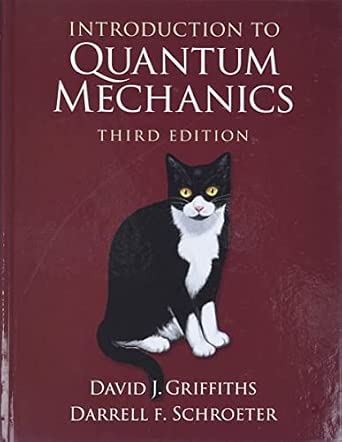
Introduction to Quantum Mechanics
This textbook is a solid choice for undergraduates, offering clear explanations of fundamental quantum concepts along with updated examples and problem sets. Unlike the more specialized texts like Foundations of Quantum Theory, which focus on theory and math, this book balances conceptual clarity with practical exercises. Its second edition enhances learning with modern examples, but the dense content can still challenge beginners who haven’t mastered classical physics or mathematics. It’s particularly suitable for students in their early quantum courses who need structured guidance. For those seeking a gentle yet comprehensive introduction, this book provides a dependable foundation, although it may be too dense for absolute novices.
Pros:- Clear explanations of core quantum concepts
- Updated examples and problem sets enhance understanding
- Well-regarded in academic settings
Cons:- Dense content can be difficult for absolute beginners
- Assumes prior knowledge of classical physics and math
Best for: Undergrad students in physics or related fields seeking a thorough, well-structured textbook.
Not ideal for: Complete beginners without prior knowledge of classical physics or mathematics, as the material is intensive.
- Edition:2nd
- Publisher:Cambridge University Press
Bottom line: This book is well-suited for undergraduate students who need a comprehensive, structured introduction to quantum mechanics.
Principles of Quantum Mechanics, 2nd Edition
This textbook stands out for its thorough coverage of quantum mechanics fundamentals, making it ideal for graduate students and researchers needing a comprehensive resource. Compared to The Handy Quantum Physics Answer Book, which simplifies concepts for general audiences, this edition dives deeply into theory, often requiring prior knowledge. The revised second edition offers updated content that reflects recent advances, but its advanced level can be overwhelming for newcomers. The hardcover design adds durability but comes with a higher price point. It’s best suited for serious learners seeking detailed explanations and mathematical rigor.
Pros:- Comprehensive coverage of quantum mechanics fundamentals
- Updated second edition with revised content
- Clear explanations of complex theoretical concepts
Cons:- Advanced level may be challenging for beginners
- Hardcover edition could be expensive
Best for: Graduate students, researchers, and professionals seeking a detailed, technical reference
Not ideal for: Beginners or casual readers who prefer simplified explanations or visual aids
- Edition:2nd Edition
- ASIN:0306447908
Bottom line: This book makes the most sense for serious students and professionals needing an authoritative, detailed guide.
The Handy Quantum Physics Answer Book
This guide offers clear, concise explanations of quantum physics concepts, making it ideal for curious readers or students who prefer quick answers. Unlike the more technical Principles of Quantum Mechanics, it simplifies complex ideas without sacrificing accuracy, focusing on common questions and straightforward responses. While it’s part of the well-regarded Handy Answer Book series, its lack of detailed diagrams or page specifications limits its use as a primary study tool. It’s perfect for those seeking quick reference or introductory knowledge.
Pros:- Part of a trusted answer book series
- Provides accessible explanations for complex concepts
- Compact and easy to use for quick reference
Cons:- No specific page count or dimensions provided
- Limited depth for advanced or detailed study
Best for: Students, enthusiasts, or educators needing a quick, accessible overview
Not ideal for: Advanced students or researchers requiring in-depth theoretical detail
- ASIN:1578598052
Bottom line: This book suits readers who want straightforward, quick answers rather than in-depth theory.
Quantum Physics for Beginners: A Simplified Guide to Quantum Mechanics for Non-Scientists
This book makes complex quantum principles approachable for non-scientists, similar to Quantum Physics for Beginners: Wave Theory to Quantum Computing Explained, but with a clearer focus on foundational concepts without assuming prior knowledge. While it simplifies key theories and experiments, it may lack the depth needed for users pursuing more advanced understanding. The absence of visual aids or diagrams could hinder comprehension for visual learners. This pick is ideal for those new to science or looking for a gentle introduction.
Pros:- Simplifies complex quantum mechanics concepts
- Covers key principles, theories, and experiments
- Accessible language for non-scientists
Cons:- May lack depth for advanced learners
- No visual aids or diagrams mentioned
Best for: Complete beginners or laypersons interested in understanding quantum physics basics
Not ideal for: Readers with some background in physics looking for detailed or technical content
- ASIN:B0DMDSJ9NJ
Bottom line: This book is designed for absolute beginners seeking a straightforward, gentle introduction to quantum physics.
Reality Is Not What It Seems: The Journey to Quantum Gravity
Carlo Rovelli’s work offers a compelling narrative that challenges traditional views of reality, making it ideal for those curious about cutting-edge physics like quantum gravity. Compared with more technical texts such as Principles of Quantum Mechanics, this book emphasizes storytelling and conceptual clarity, making complex ideas accessible. However, it assumes a basic scientific literacy and can be dense in parts, requiring readers to engage actively. Its focus on modern theories provides a fresh perspective, but it may not satisfy readers seeking in-depth mathematical details. This book appeals most to general readers with some scientific background who want to explore the philosophical implications of quantum physics.
Pros:- Written by renowned physicist Carlo Rovelli
- Simplifies complex quantum gravity concepts
- Offers thought-provoking perspectives on reality
Cons:- Requires basic scientific literacy
- Conceptually dense in certain sections
Best for: Science enthusiasts and educated general readers interested in modern physics and conceptual insights
Not ideal for: Beginners or those seeking technical, mathematical explanations
- ASIN:0735213933
- Author:Carlo Rovelli
Bottom line: Ideal for readers who want a thought-provoking, narrative-driven exploration of modern physics concepts beyond basic quantum mechanics.
Quantum Physics for Beginners: Wave Theory to Quantum Computing Explained
This guide covers fundamental quantum physics topics, from wave theory to quantum computing, making it comparable to Quantum Physics for Beginners: A Simplified Guide. It emphasizes clear, straightforward explanations suited for newcomers who want to understand both basic principles and modern applications. Unlike Rovelli’s more philosophical approach, this book focuses on mechanics and theories with less emphasis on conceptual depth, and it doesn’t include practical exercises. It’s suitable for those who want a broad overview but may leave advanced learners wanting more technical detail. This pick is perfect for beginners curious about the practical side of quantum physics and computing.
Pros:- Simplifies complex quantum physics concepts
- Covers foundational topics and modern applications
- Easy-to-understand explanations for newcomers
Cons:- May lack depth for advanced physics students
- No practical examples or exercises included
Best for: Aspiring quantum programmers and beginners curious about the technology behind quantum computing
Not ideal for: Experienced physicists or students seeking rigorous mathematical treatment
- ASIN:B08YQJD281
Bottom line: This book makes a strong choice for beginners interested in both theory and emerging quantum technologies without complexity overload.
Foundations of Quantum Mechanics: An Exploration of the Physical Meaning of Quantum Theory (Undergraduate Lecture Notes in Physics)
This book stands out for its focus on the physical interpretation of quantum theory, making it an ideal choice for undergraduates seeking to grasp the conceptual underpinnings rather than just mathematical formalisms. Compared with QED: The Strange Theory of Light and Matter, which simplifies complex ideas for a broader audience, this text dives deeper into the philosophical questions, though it sacrifices some technical depth needed for graduate study. Its emphasis on physical meaning makes it less suitable for those looking for detailed calculations or advanced applications. The limited practical examples and advanced math may frustrate students needing hands-on problem-solving, but it excels in clarifying core principles.
Pros:- Focuses on physical meaning rather than abstract mathematics
- Part of a reputable series tailored for undergraduates
- Stimulates foundational understanding of quantum concepts
Cons:- Lacks advanced technical detail for graduate-level work
- Limited practical application examples included
Best for: Undergraduate students new to quantum physics who want a clear conceptual foundation.
Not ideal for: Graduate students or researchers needing rigorous mathematical techniques and detailed problem sets.
- Series:Undergraduate Lecture Notes in Physics
Bottom line: This book is best suited for undergraduates seeking a conceptual grasp of quantum foundations, not for advanced practitioners.
Schaum’s Outline of Quantum Mechanics, Second Edition
This outline makes a strong case for students who prefer structured summaries and problem-solving, offering hundreds of solved exercises that reinforce core concepts. Unlike the more interpretative Foundations of Quantum Mechanics, which emphasizes understanding, Schaum’s provides systematic coverage of essential topics, making it ideal for review. The concise format is perfect for quick refreshers before exams, but it may fall short for those seeking deep theoretical insights or innovative research-level material. The mathematical rigor can be challenging for beginners, but it’s invaluable for mastering problem-solving skills.
Pros:- Hundreds of solved problems for practical mastery
- Structured outline format for quick review
- Covers essential quantum mechanics topics comprehensively
Cons:- Limited depth on advanced or conceptual topics
- Mathematical rigor may challenge beginners
Best for: Students preparing for exams needing a clear, structured review of quantum mechanics fundamentals.
Not ideal for: Readers looking for an in-depth theoretical discussion or advanced research topics.
- Edition:Second Edition
Bottom line: This guide is perfect for students seeking practical problem-solving practice and exam-ready summaries.
Quantum Mechanics and Path Integrals: Emended Edition
This edition appeals to readers who want a rigorous, mathematically detailed approach to quantum mechanics, especially through the lens of path integrals, positioning it alongside Principles of Quantum Mechanics for depth. Compared to more accessible texts like QED, which simplifies interactions into diagrams and explanations, this book dives into complex formulations suitable for those with solid physics backgrounds. Its highly technical content makes it unsuitable for beginners or casual readers, but it’s invaluable for researchers or graduate students focusing on theoretical aspects. The absence of practical examples limits its use for applied learning.
Pros:- Updated, authoritative treatment of path integrals
- Deep exploration of quantum mechanics foundations
- Published by a reputable physics publisher
Cons:- Highly technical and mathematically dense
- No introductory or practical applications included
Best for: Graduate students or researchers specializing in quantum field theory or theoretical physics.
Not ideal for: Beginners or readers seeking an accessible introduction to quantum concepts.
- Publisher:Dover Books on Physics
Bottom line: This book is ideal for advanced learners and researchers needing a detailed, technical treatment of path integrals in quantum mechanics.
Quantum Theory
While limited information is available, this title appears to serve as a comprehensive overview of quantum theory, likely targeting readers with some background seeking a broad, cohesive understanding. It’s comparable to other general texts but may lack the focused depth of specialized books like Quantum Mechanics and Path Integrals. Its broad scope makes it suitable for serious students or educators, but less so for casual readers or beginners without prior knowledge. The absence of detailed specs or pros suggests it’s best used as a reference or supplementary resource rather than a primary text.
Pros:- Provides a broad, cohesive overview of quantum theory
- Suitable for readers with some background in physics
- Potentially useful as a reference or supplementary resource
Cons:- Lacks detailed technical depth or practical examples
- Limited information available on specific features
Best for: Advanced students or educators needing a broad, conceptual overview of quantum theory.
Not ideal for: Beginners or readers seeking detailed problem-solving content or practical applications.
Bottom line: Best suited for those with foundational knowledge seeking a comprehensive conceptual overview of quantum theory.
QED: The Strange Theory of Light and Matter (Princeton Science Library)
This book earns its place by translating complex quantum electrodynamics into simple language, diagrams, and thought experiments, making it highly accessible for non-specialists. Compared with the more technical Quantum Mechanics and Path Integrals, which requires advanced physics knowledge, Feynman’s work simplifies core ideas without sacrificing accuracy. It’s perfect for readers who want to understand the basics of light-matter interactions without deep mathematical formalism. However, those seeking detailed calculations or research-level insights might find it too introductory, and some may struggle with the conceptual leaps without prior physics familiarity.
Pros:- Written by Nobel laureate Richard Feynman
- Simplifies complex quantum concepts effectively
- Includes iconic diagrams and intuitive explanations
Cons:- Requires some basic physics knowledge for full understanding
- Mathematical content can be challenging for lay readers
Best for: Science enthusiasts and general readers interested in the fundamental concepts of QED.
Not ideal for: Graduate students or researchers needing rigorous mathematical treatments or detailed research data.
Bottom line: This book is ideal for curious readers seeking an accessible, conceptual introduction to quantum electrodynamics.

How We Picked
Our evaluation centered on a combination of clarity, depth, and usability. We prioritized books that balance technical accuracy with approachable language, ensuring they serve a range of learners from beginners to experts. The criteria included the quality of explanations, the presence of illustrative diagrams, and the comprehensiveness of coverage on core quantum topics. We also considered reviews and reputation within the academic community. The ranking reflects how well each book helps readers grasp complex concepts without unnecessary confusion, along with overall value for different price points.
Factors to Consider When Choosing Quantum Physics Reference Books
Choosing the right quantum physics reference book depends on your background, goals, and preferred learning style. Consider these factors to find a resource that will truly enhance your understanding and match your level of expertise.
Your Current Knowledge Level
Assess whether you’re a complete beginner or have a background in physics. Beginners should look for books that simplify concepts and avoid heavy math, while advanced learners might prefer comprehensive texts that delve into formal theories. Picking a book mismatched to your level can lead to frustration or insufficient learning.
Depth of Content
Determine if you want a broad overview or an in-depth exploration. Some books focus on foundational principles, suitable for introductory purposes, while others cover advanced topics like quantum field theory or applications in quantum computing. Your goal will guide this choice—whether for casual learning or serious study.
Mathematical Rigor
Decide how comfortable you are with math. Some books avoid equations entirely, emphasizing conceptual understanding, ideal for non-technical readers. Conversely, others incorporate detailed derivations and problem-solving, necessary for those aiming for mastery or academic work. Be mindful that more rigorous texts often have a steeper learning curve.
Illustrations and Visual Aids
Visual explanations can significantly aid comprehension, especially for complex topics. Books rich in diagrams, illustrations, and analogies tend to be more accessible. However, they might lack the depth of more technical texts. Consider how much visual learning supports your understanding.
Price and Edition
Price varies widely, with newer editions often including updated content and clearer explanations. Balance your budget with the level of detail you need. Sometimes paying more for a well-reviewed, recent publication provides better long-term value, especially if it aligns with your academic or professional goals.
Frequently Asked Questions
Is a beginner-level book sufficient for understanding quantum mechanics?
Beginner-level books can provide a solid introduction to quantum concepts without overwhelming mathematical detail. They are ideal if you’re new to the subject or want a conceptual overview. However, for more advanced applications or research, you’ll eventually need to transition to more technical texts that include formal mathematics and detailed derivations.
Should I choose a book with more diagrams or one with detailed equations?
This depends on your learning style and goals. Visual learners often benefit from books with diagrams and analogies, which clarify abstract ideas. Conversely, if you aim to develop a deep technical understanding or prepare for academic work, books with detailed equations and derivations are essential. Many successful resources combine both approaches for balanced learning.
Are recent editions of quantum physics books more valuable than older ones?
Newer editions often include updated research, clearer explanations, and corrected errors, making them generally more reliable. However, older editions might still be useful if they are well-written and align with your current knowledge level. Always check reviews and content updates to determine if an edition’s improvements justify the price difference.
Can I rely on a single book to master quantum physics?
While a single comprehensive book can provide a strong foundation, quantum physics is a vast subject that often requires multiple resources. Combining textbooks, lecture notes, and online materials can offer broader perspectives and clarify complex topics. Be prepared to explore several sources as your understanding deepens.
How important are problem sets and exercises in a reference book?
Exercises are vital for reinforcing learning and developing problem-solving skills. Books that include practice problems help solidify understanding and prepare you for research or exams. If your goal is practical mastery, prioritize resources that offer exercises with solutions or detailed explanations to guide your learning process.
Conclusion
For those seeking an all-around solid choice, The Principles of Quantum Mechanics stands out as the best overall, suitable for serious students and professionals. Beginners or non-technical learners will find Quantum Physics for Beginners: A Math-Free Guide most accessible. If budget is a concern, Schaum’s Outline of Quantum Mechanics offers excellent value with clear explanations and practice problems. For advanced readers or researchers, Quantum Mechanics: The Theoretical Minimum and QED: The Strange Theory of Light and Matter provide deep dives into specific topics. Tailor your pick to your current knowledge, goals, and preferred learning style to get the most from your quantum physics studies.