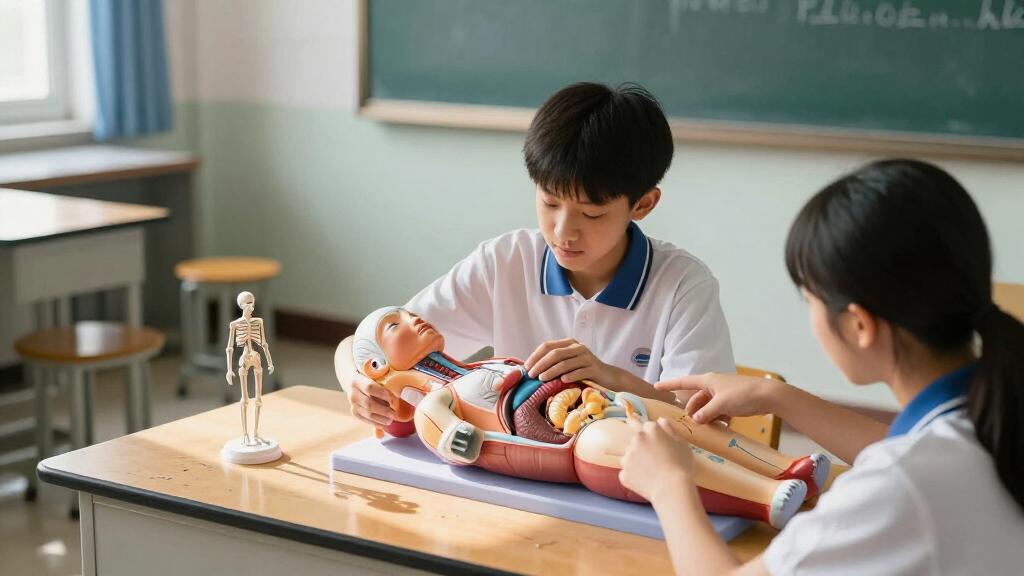

Human anatomy body models range from simple torso kits for young learners to larger, focused models for studying muscles and bones. My best overall pick is the EVOTECH SCIENTIFIC 17-Inch Human Torso Anatomy Model, which pairs a useful display size with 16 removable parts. The National Geographic 32-Piece Set stands out for kid-oriented, hands-on exploration, while the SFXYJ 33-Inch Muscle Model is a better fit for buyers focused on muscular anatomy. The main tradeoffs are detail versus ease of use, a single model versus a multi-model bundle, and compact storage versus a larger teaching display. Read on for the full breakdown and guidance on matching a model to the learner and lesson.

Get school and study supplies delivered free — and shop member deals
- Fast, free delivery on millions of items
- Access to Prime Big Deal Days deals on October 6–7
- Prime Video, Amazon Music and more included
Key Takeaways
- The 17-inch EVOTECH torso leads the general-purpose picks: its 16 removable parts offer more hands-on study than the smaller 11-inch torso options without shifting the focus to a specialized system.
- Kids’ sets prioritize interaction over anatomical depth: National Geographic’s 32-piece set and Be Amazing!’s 60-piece model provide more pieces to handle, but piece count alone does not indicate how clearly a specific organ or system is taught.
- Bundles broaden the subject, not necessarily the detail: sets combining a body, skeleton, heart, or skull can support comparisons across systems, while a dedicated torso may be easier to use for organ lessons.
- Scale changes the teaching experience: compact 10.5- and 11-inch torsos are easier to store and handle; the 17-inch torso gives parts more room to inspect, and the 33-inch muscle model suits display-led study.
- Specialized models solve narrower learning needs: the SFXYJ muscle model, GobiDex glow-in-the-dark kit, and skeleton-focused bundles are more targeted than an all-purpose torso, so choose them when that focus matches the lesson.
| Science Can Interactive Human Body Model for Kids |  | Best for Interactive Learning | Brand: Science Can | Model number: 160022 | Age range: 6–12 years | VIEW LATEST PRICE | See Our Full Breakdown |
| EVOTECH SCIENTIFIC 17-Inch Human Torso Anatomy Model, 16 Removable Parts |  | Best for a Larger Torso Display | Brand: EVOTECH SCIENTIFIC | Height: 17 inches | Removable parts: 16 | VIEW LATEST PRICE | See Our Full Breakdown |
| Human Body, Skeleton and Heart Models – Anatomy Model Bundle Set of 3 |  | Best Three-Model Study Set | Brand: EVOTECH SCIENTIFIC | Model number: 3 pack | Age range: 14+ years | VIEW LATEST PRICE | See Our Full Breakdown |
| EVOTECH SCIENTIFIC 15-Piece Human Torso Anatomy Model, 11-Inch |  | Best Compact Torso for Older Students | Brand: EVOTECH SCIENTIFIC | Height: 11 inches | Removable pieces: 15 | VIEW LATEST PRICE | See Our Full Breakdown |
| Human Anatomical Body Skeleton, Heart, Skull with Brain Models and Cubes Set |  | Best Expanded Anatomy Collection | Skeleton height: 17.7 inches | Torso height: 11 inches | Heart height: 8 inches including base | VIEW LATEST PRICE | See Our Full Breakdown |
| Breesky 10.5-Inch Human Torso Anatomy Model with 15 Removable Parts |  | Best Compact Torso Model | Height: 10.5 inches | Dimensions: 5.4 x 3.4 x 10.6 inches | Weight: 1.23 pounds | VIEW LATEST PRICE | See Our Full Breakdown |
| National Geographic Human Body Anatomy Model for Kids, 32-Piece Set |  | Best for Younger Beginners | Age range: 8 years and up | Number of pieces: 32 | Model height: 9 inches | VIEW LATEST PRICE | See Our Full Breakdown |
| 11-inch Human Torso Anatomy Model, 15 Removable Organs with Manual |  | Best for Guided Torso Study | Dimensions: 11.06 x 5.67 x 3.5 inches | Weight: 1.26 pounds | Removable organs: 15 | VIEW LATEST PRICE | See Our Full Breakdown |
| Learning Resources Anatomy Models Bundle Set |  | Best Multi-Model Learning Set | Models included: Heart, brain, body, and skeleton | Number of models: 4 | Material: Durable plastic | VIEW LATEST PRICE | See Our Full Breakdown |
| GobiDex Human Body Skeleton Model Kit – Glow-in-the-Dark Science Kit for Kids |  | Best Glow-in-the-Dark Skeleton Kit | Age range: 8–16 years | Number of pieces: 40 | Dimensions: 12.6 x 5.71 x 3.15 inches | VIEW LATEST PRICE | See Our Full Breakdown |
| Be Amazing! Toys Interactive Human Body Anatomy Model, 60 Pieces, Ages 8+ |  | Best for Younger Learners | Brand: Be Amazing! Toys | Model: Science to the Max Interactive Human Body | Height: 14 inches | VIEW LATEST PRICE | See Our Full Breakdown |
| SFXYJ Human Anatomy Muscle Model, 27-Piece, Half-Size, 33-Inch |  | Best for Labeled Classroom Study | Brand: SFXYJ | Model: Human muscle and organ anatomy model | Parts: 27 | VIEW LATEST PRICE | See Our Full Breakdown |
| EVOTECH SCIENTIFIC Human Anatomy Model Set: Body, Skeleton, Heart, and Half-Size Skull with Brain |  | Best Multi-Model Study Set | Brand: EVOTECH SCIENTIFIC | Included models: Human body, skeleton, heart, and half-size skull with brain | Skeleton height: About 17.7 inches | VIEW LATEST PRICE | See Our Full Breakdown |
| Human Body Model for Anatomy Study, 15-Part 11″ |  | Best Compact Desk Model | Piece count: 15 | Height: 11 inches | Included components: Torso, 2-part brain, heart, esophagus, aorta, 4-part lungs, and skull | VIEW LATEST PRICE | See Our Full Breakdown |
| Human Body Deluxe Musculature Model – 16 Pieces Removable 17‑Inch Human Torso |  | Best for Detailed Torso Display | Material: PVC | Base material: Oak wood | Dimensions: 18.1 L x 8.3 W inches | VIEW LATEST PRICE | See Our Full Breakdown |
| human anatomy body model | Material |
|---|---|
| Science Can Interactive Human | Plastic |
| EVOTECH SCIENTIFIC 17-Inch Hum | Non-toxic PVC |
| Human Body | — |
| EVOTECH SCIENTIFIC 15-Piece Hu | Non-toxic PVC |
| Human Anatomical Body Skeleton | — |
| Breesky 10.5-Inch Human Torso | — |
| National Geographic Human Body | Polypropylene |
| 11-inch Human Torso Anatomy Mo | PVC |
| Learning Resources Anatomy Mod | Durable plastic |
| GobiDex Human Body Skeleton Mo | Plastic |
| Be Amazing! Toys Interactive H | — |
| SFXYJ Human Anatomy Muscle Mod | Polyvinyl chloride (PVC) |
| EVOTECH SCIENTIFIC Human Anato | Plastic |
| Human Body Model for Anatomy S | — |
| Human Body Deluxe Musculature | PVC |
More Details on Our Top Picks
Science Can Interactive Human Body Model for Kids
For children who learn by doing, this model pairs 15+ removable parts with explanation and quiz modes, so anatomy practice includes both handling the pieces and checking what they remember. The 26-page illustrated book and four double-sided knowledge cards add guided activities that a basic torso, such as the EVOTECH SCIENTIFIC 15-Piece Human Torso Anatomy Model, does not list. Its 11-inch size also suits a child’s desk or small study area better than the larger EVOTECH 17-inch torso. The tradeoff is that it is designed for ages 6–12 rather than older students seeking a more detailed study display. It also needs three AA batteries, which are not included, so the interactive features require a separate purchase before use.
Pros:- Explanation and quiz modes provide guided practice
- More than 15 removable parts encourage hands-on exploration
- Includes an illustrated book and four double-sided knowledge cards
- Sized and intended for children ages 6–12
Cons:- Requires three AA batteries, which are not included
- Its child-focused activities may offer less value to older anatomy students
Best for: Children ages 6–12 who benefit from quiz-based instruction and hands-on anatomy activities at home
Not ideal for: Older students seeking a larger, display-oriented torso or families who want a model that works without batteries
- Brand:Science Can
- Model number:160022
- Age range:6–12 years
- Model height:11 inches
- Removable parts:15+
- Learning materials:26-page illustrated book and 4 double-sided knowledge cards
- Power:3 AA batteries, not included
- Material:Plastic
Our verdict“Choose this for a child who will benefit from interactive quizzes and included learning materials, but pick a non-electronic torso if you want battery-free study.”
EVOTECH SCIENTIFIC 17-Inch Human Torso Anatomy Model, 16 Removable Parts
Compared with the 11-inch EVOTECH SCIENTIFIC torso in this roundup, this 17-inch model gives organs more room to view and handle, making it a stronger fit for demonstrations or a study display. Its 16 removable parts include male and female reproductive parts, giving learners a broader torso lesson than a model focused only on the major organs. Hand-painted details, a colorful brochure, and an oak-wood base round out the setup without requiring batteries. The added scale and 5.02-pound weight make it less convenient to move than the smaller 11-inch alternative, though its size remains portable for classroom use. Small pieces also call for adult supervision around young children, so I would favor the Science Can model for younger learners who need age-targeted activities.
Pros:- 17-inch height makes torso details easier to see than on the 11-inch EVOTECH model
- Includes 16 removable parts, including male and female reproductive parts
- Hand-painted details and oak-wood base support display and study use
- Includes a colorful educational brochure and requires no batteries
Cons:- Small organ pieces may pose a choking hazard to young children
- At 5.02 pounds, it is heavier to carry than the smaller 11-inch torso
- The listed package dimensions take more storage space than a compact model
Best for: Teachers and older students who want a more visible, removable-part torso for classroom demonstrations or a study display
Not ideal for: Families with young children who may handle small organ pieces, or buyers prioritizing the lightest, most compact torso
- Brand:EVOTECH SCIENTIFIC
- Height:17 inches
- Removable parts:16
- Material:Non-toxic PVC
- Base:Oak wood
- Item weight:5.02 pounds
- Package dimensions:18.11 x 8.66 x 5.94 inches
- Included:Educational brochure
Our verdict“Pick this when a larger, display-ready torso and reproductive anatomy matter more than compact storage or use by young children.”
Human Body, Skeleton and Heart Models – Anatomy Model Bundle Set of 3
This bundle is the clearest step up from a single torso when a learner needs to compare whole-body structure, the skeleton, and the heart. It includes three separate models with hand-painted details, sturdy bases, brochures, charts, and a carrying case. That range supports more varied demonstrations than the EVOTECH SCIENTIFIC 15-Piece Human Torso Anatomy Model, which concentrates its study around one torso. The components are also sized for desks and classroom use rather than full-scale anatomical display: the body is 17.7 inches, the torso 11 inches, and the heart 8 inches including its base. The age guidance is 14+, so this is not the best match for younger children seeking simpler interaction like the Science Can model. Its three-model scope also leaves out the broader extras in the five-piece kit.
Pros:- Combines body, skeleton, and heart models for varied anatomy lessons
- Hand-painted details support visual study
- Includes carrying case, educational brochures, and charts
- Separate bases support desk or classroom display
Cons:- Age guidance starts at 14 years, limiting its fit for younger learners
- Only three models are included, so its subject range is narrower than the five-piece kit
- The bases add weight and can make carrying the set less convenient
Best for: Students aged 14 and up, tutors, and classrooms that want separate body, skeleton, and heart models for comparison
Not ideal for: Younger children who need age-targeted interactive instruction, or buyers wanting a wider model range than three subjects
- Brand:EVOTECH SCIENTIFIC
- Model number:3 pack
- Age range:14+ years
- Number of models:3
- Model measurements:Body: 17.7 inches; torso: 11 inches; heart: 8 inches including base
- Item weight:2.32 kg
- Included:Carrying case, educational brochures, and charts
- Base materials:Crystal, oak wood, and plastic
Our verdict“Choose this bundle for focused study of the body, skeleton, and heart without needing the broader contents of a larger anatomy kit.”
EVOTECH SCIENTIFIC 15-Piece Human Torso Anatomy Model, 11-Inch
This is a straightforward choice for older learners who want a compact, hands-on torso rather than electronic lessons or a multi-model set. Its 15 removable pieces cover major structures, from the brain and lungs to the intestines, while the oak-wood base keeps the model ready for a desk or classroom demonstration. Compared with the EVOTECH SCIENTIFIC 17-inch torso, this version takes up less space and is easier to fit into a small study area, but it gives up the larger viewing scale and the listed reproductive parts. The included brochure provides a starting point, though it is less of a guided learning package than the Science Can model’s book, cards, and quiz modes. With an age recommendation of 14 years and up, it is not aimed at young children, and its small removable pieces need careful handling.
Pros:- 15 removable pieces support hands-on study of major organs and structures
- 11-inch height fits smaller desks and storage spaces
- Oak-wood base and hand-painted finish suit display use
- Includes an educational brochure and needs no power
Cons:- Recommended for ages 14 and up rather than young learners
- Smaller scale gives less viewing space than the 17-inch EVOTECH torso
- Small removable pieces may pose a choking hazard to young children
Best for: Teen students, tutors, and classrooms needing a compact, battery-free torso with removable major organs
Not ideal for: Young children needing guided interactive instruction, or buyers who want the larger display area and reproductive parts of the 17-inch EVOTECH torso
- Brand:EVOTECH SCIENTIFIC
- Height:11 inches
- Removable pieces:15
- Material:Non-toxic PVC
- Base:Oak wood
- Recommended age:14 years and up
- Included components:Trunk, brain, heart, esophagus and aorta, lungs, skull cap, stomach, diaphragm, liver, pancreas and spleen, intestines, and educational brochure
- Power:None required
Our verdict“Choose this compact torso for older students who want removable major organs and a stable display base without a larger model’s footprint.”
Human Anatomical Body Skeleton, Heart, Skull with Brain Models and Cubes Set
For buyers who want to move beyond torso-only study, this set combines a skeleton, torso, heart, skull with brain, and eight anatomical cubes. That broader mix covers more visual topics than the three-model EVOTECH SCIENTIFIC bundle, adding a separate skull-and-brain model and cube set to the body, skeleton, and heart. Hand-painted models, brochures, manuals, and a carrying case make it better suited to organized self-study or demonstrations than a single compact torso such as the 11-inch EVOTECH model. The main limitation is scale: the body and torso are half-size, and the skull with brain is also listed as half-life-size, so these are not full-scale teaching models. The variety also means more pieces and materials to store than a focused three-model set.
Pros:- Includes skeleton, torso, heart, skull with brain, and eight anatomical cubes
- Hand-painted details support visual comparison across models
- Carrying case, brochures, and manuals support storage and guided study
- Multiple base materials provide support for display
Cons:- Models are half-size rather than full-scale
- The larger assortment requires more storage than a single torso or three-model set
- Multiple pieces and different base materials make the kit less streamlined to set up
Best for: Older students, educators, and anatomy enthusiasts who want several model types and guided materials in one portable set
Not ideal for: Buyers who need full-scale anatomy models, a simple single-torso teaching aid, or minimal storage needs
- Skeleton height:17.7 inches
- Torso height:11 inches
- Heart height:8 inches including base
- Skull with brain height:3.5 inches, half-life-size
- Anatomical cube size:2.76 inches
- Included models:Skeleton, torso, heart, and skull with brain
- Included accessories:Eight anatomical cubes, carrying case, educational brochures, and manuals
- Base materials:Crystal, oak wood, and plastic
Our verdict“Choose this set when breadth across body systems matters more than full-scale size or the simplicity of a single torso.”
Breesky 10.5-Inch Human Torso Anatomy Model with 15 Removable Parts
The Breesky makes sense for buyers who want a small, focused torso model rather than a kit that spreads across multiple body systems. Its 15 removable parts cover major organs, including the heart, lungs, liver, and intestines, giving students a tactile way to study where organs sit in relation to one another. Compared with the 11-inch MEIDUSHA torso, it is slightly shorter and similarly centered on torso anatomy, so it suits a desk or compact lesson setup. The stable base helps keep it upright during demonstrations, and its wipe-clean surface is practical for shared use. The tradeoff is scale: small organs and limited viewing area make it less suitable for group instruction or learners who need prominent anatomical detail. Keep it away from young children who may mouth the detachable pieces.
Pros:- Fifteen removable parts support hands-on study of major organs
- Stable base keeps the torso upright during demonstrations
- Compact size is easy to store and move between study areas
- Wipe-clean surface suits shared learning spaces
Cons:- Small scale can make organ placement and details hard to see from a distance
- Detachable pieces pose a choking risk for young children
Best for: Homeschool families and individual learners who need a portable, wipe-clean torso model for close-up study at a desk.
Not ideal for: Teachers presenting to a large group or families with young children who could swallow the small removable parts.
- Height:10.5 inches
- Dimensions:5.4 x 3.4 x 10.6 inches
- Weight:1.23 pounds
- Removable parts:15
- Included organs:Brain, heart, esophagus and aorta, lungs, stomach, diaphragm, liver, pancreas, spleen, small intestine, and large intestine
- Manufacturer:Breesky
- Model number:XX-3
Our verdict“Choose the Breesky for compact, individual torso study; choose a larger model if visibility for a group matters more.”
National Geographic Human Body Anatomy Model for Kids, 32-Piece Set
This kit is aimed at children who learn better by handling parts than by reading an anatomy chart. The 9-inch body model combines nine squishy organs with glow-in-the-dark bones and arm muscles, while the chart and guide give a child a starting point for naming what they assemble. Compared with the Breesky 10.5-inch torso, this set trades a more conventional torso display for kid-focused variety and playful materials; compared with the GobiDex skeleton kit, it puts more emphasis on organs than on a standalone glowing skeleton. Forceps and a display stand add useful structure to the activity. The compact size and small components, however, limit visibility and call for adult supervision. It is best treated as an introductory learning kit, not a detailed classroom reference.
Pros:- Combines removable squishy organs, arm muscles, and glow-in-the-dark bones
- Includes forceps, a display stand, an identification chart, and a learning guide
- Age-focused design gives beginners several ways to explore body parts
- Lightweight, compact model is easy to handle and store
Cons:- At 9 inches tall, the model may be difficult to see during group demonstrations
- Small removable pieces require supervision around younger children
Best for: Children ages 8 and up who are beginning to learn organ names and body basics through guided, hands-on play.
Not ideal for: Older students seeking fine anatomical detail or buyers who need a large model that can be seen across a classroom.
- Age range:8 years and up
- Number of pieces:32
- Model height:9 inches
- Removable components:9 squishy organs, 18 glow-in-the-dark bones, and arm muscles
- Included accessories:Forceps, display stand, identification chart, and learning guide
- Material:Polypropylene
- Dimensions:4.33 x 2.24 x 9.25 inches
- Weight:6.56 ounces
Our verdict“Pick this set for an 8-and-up beginner who will benefit from guided, playful exploration rather than detailed anatomy study.”
11-inch Human Torso Anatomy Model, 15 Removable Organs with Manual
The MEIDUSHA torso suits learners who want a conventional organ-placement model with instructions for putting it together. Its 15 detachable organs and realistic color coding help make the relationship between major organs easier to follow, while the included manual can reduce guesswork during assembly. Compared with the Breesky 10.5-inch model, it offers a slightly taller torso and specifically emphasizes an installation manual; the two otherwise serve similar compact, torso-only learning needs. The PVC construction and painted finish are presented as durable, but the product data does not give a full organ list or a height measurement, so buyers have less detail for comparing its anatomy coverage. It remains a torso-only model, not a full-body system, and its small removable organs are a poor match for unsupervised young children.
Pros:- Fifteen detachable organs support hands-on placement and identification
- Realistic colors and organ positioning help communicate torso layout
- Included installation manual supports assembly
- PVC construction is described as durable with fade-resistant paint
Cons:- Torso-only design leaves bones, limbs, and broader body systems outside the lesson
- Small organ pieces create a choking hazard and need supervision
- Product information does not list the included organs individually
Best for: Students, homeschool instructors, and anatomy hobbyists who want a compact torso model with an assembly manual and color-coded organs.
Not ideal for: Buyers needing a full-body overview, clearly documented organ coverage, or a model safe for unsupervised young children.
- Dimensions:11.06 x 5.67 x 3.5 inches
- Weight:1.26 pounds
- Removable organs:15
- Material:PVC
- Finish:Realistic colors; paint described as fade-resistant
- Included documentation:Installation manual
- Manufacturer:MEIDUSHA
- Model number:YZP-03
Our verdict“Choose the MEIDUSHA for manual-supported torso lessons, but favor a broader kit if you need documented full-body coverage.”
Learning Resources Anatomy Models Bundle Set
This bundle stands apart from the torso-only picks by giving learners four different views of anatomy: heart, brain, full body, and skeleton models. That range makes it easier to shift from a broad body overview to focused study of two major organs, while movable and hinged sections invite assembly rather than passive display. Compared with the Breesky torso, it offers wider subject coverage but less emphasis on a single removable-organ torso lesson. Sturdy display stands also make the pieces easier to present between activities. The tradeoff is that four models take more setup and storage space, and the set requires assembly before use. Its product details do not specify dimensions or a piece count, so buyers seeking a particular scale or a precise parts inventory should verify those details before choosing it.
Pros:- Four models cover the heart, brain, full body, and skeleton
- Assemble-and-disassemble construction supports active study
- Movable joints and hinged sections add opportunities to explore structure
- Display stands support presentation and storage between lessons
Cons:- Requires assembly before use
- Multiple models need more storage and setup than a single torso
- Product data does not specify model dimensions or the number of pieces
Best for: Homeschool educators and classroom teachers who want several anatomy models for rotating lessons on the body, skeleton, heart, and brain.
Not ideal for: Buyers with limited storage or anyone seeking one detailed torso model with a clearly specified organ inventory.
- Models included:Heart, brain, body, and skeleton
- Number of models:4
- Material:Durable plastic
- Age range:8 years and up
- Display stands:Included
- Model features:Movable joints and hinged sections
- Assembly:Models require assembly
Our verdict“Pick this bundle for varied lessons across several anatomy models, not for a compact, detailed torso-focused display.”
GobiDex Human Body Skeleton Model Kit – Glow-in-the-Dark Science Kit for Kids
The GobiDex is the strongest fit here for children drawn to bones and assembly, rather than buyers whose main goal is organ placement. Its 12.6-inch self-standing skeleton and glow-in-the-dark feature give it a display role that differs from the organ-centered Breesky and MEIDUSHA torso models. A 40-piece kit and illustrated manual make construction part of the lesson, with parts designed to be assembled and taken apart again. The description also mentions muscles and organs, but the headline format and product specs center on a skeleton, so I would not choose it as a substitute for a torso model with a documented removable-organ set. It is aimed at ages 8–16, and the activity may be less suitable for younger children or learners who prefer a straightforward, ready-to-display reference.
Pros:- Glow-in-the-dark skeleton gives the model a distinctive display and learning feature
- Forty pieces support hands-on assembly and repeated disassembly
- Illustrated science manual accompanies the building activity
- Self-standing design makes the assembled model suitable for display
Cons:- Skeleton-centered design is less suited to detailed organ-placement study
- Assembly may not appeal to learners seeking a ready-to-use model
- Primarily aimed at ages 8 and up, limiting its fit for younger children
Best for: Children ages 8–16 who enjoy building a skeleton and want a reusable, glow-in-the-dark science activity for home or classroom use.
Not ideal for: Students focused on detailed organ location or buyers who want a ready-assembled torso reference rather than a build-it-yourself skeleton kit.
- Age range:8–16 years
- Number of pieces:40
- Dimensions:12.6 x 5.71 x 3.15 inches
- Material:Plastic
- Included guide:Illustrated science manual
- Model features:Self-standing skeleton with glow-in-the-dark bones
- Manufacturer:GobiDex
- Manufacturer part number:GO-HB-01
Our verdict“Choose the GobiDex for a reusable, buildable glowing skeleton; choose a removable-organ torso for lessons centered on internal organs.”
Be Amazing! Toys Interactive Human Body Anatomy Model, 60 Pieces, Ages 8+
For children ready to move beyond a diagram, this 14-inch poseable model makes assembly part of the lesson. Its 60 pieces include a skeleton, muscles, and removable squishy organs, while illustrated activity cards give kids a guided way to explore body parts. Compared with the larger, base-mounted SFXYJ Human Anatomy Muscle Model, this one is more approachable for younger learners and easier to reposition during play or study, but it offers less scale and fewer labeled structures for detailed classroom reference. The stand supports different poses, adding a visual element without taking up the footprint of a half-size teaching model. Its age range is 8–14, though the many components call for some patience during assembly. The listed package has no manufacturer warranty, a drawback for a kit with numerous small parts.
Pros:- 60 pieces provide hands-on assembly and exploration
- Poseable design and transparent stand support different display positions
- Removable squishy organs make internal structures tangible
- Illustrated activity cards guide age-appropriate learning
Cons:- Small components may require careful sorting and adult help during assembly
- No manufacturer warranty is listed
- Its 14-inch scale provides less anatomical detail than larger classroom models
Best for: Families and elementary educators seeking an interactive anatomy activity for children ages 8–14 who learn through assembling and handling body parts.
Not ideal for: Older students or instructors who need a large, heavily labeled reference model; the SFXYJ model offers more scale and over 200 numbered indicators.
- Brand:Be Amazing! Toys
- Model:Science to the Max Interactive Human Body
- Height:14 inches
- Piece count:60
- Age range:8–14 years
- Included components:Articulated skeleton, muscles, removable squishy organs, transparent stand, and activity card instruction manual
- UPC:813268016047
Our verdict“Choose this for a child who will learn more by assembling and posing a model than by studying a large, labeled display.”
SFXYJ Human Anatomy Muscle Model, 27-Piece, Half-Size, 33-Inch
The SFXYJ model is the lineup’s strongest choice when scale and identification matter more than easy storage. At about 33 inches tall, it presents removable organs and detailed muscles at a size that is easier to point out during a lesson than the compact 11-inch Human Body Model for Anatomy Study. Its more than 200 numbered indicators and color brochure give students and teachers a path from visible structure to terminology. The tradeoff is practical: this base-mounted PVC model weighs 9.9 pounds and has a footprint of about 32.67 by 12.2 inches, so it needs a dedicated place between lessons. Compared with the 17-inch Human Body Deluxe Musculature Model, it gives a larger teaching presence, but it is less convenient to move or store. Buyers should choose it for group instruction, not desk-side portability.
Pros:- Half-size, approximately 33-inch model is easy to see during group instruction
- More than 200 numbered indicators support structure identification
- Removable organs and detailed muscles encourage hands-on study
- Color educational brochure accompanies the model
Cons:- Large footprint requires dedicated display or storage space
- At 9.9 pounds, it is less convenient to move than smaller torso models
Best for: Anatomy teachers, tutors, and medical communicators who need a large, numbered model for demonstrating muscles and organs to a group.
Not ideal for: Students with limited desk or storage space, or anyone who needs a lightweight model to carry between rooms.
- Brand:SFXYJ
- Model:Human muscle and organ anatomy model
- Parts:27
- Size:Half-size; approximately 33 inches tall
- Dimensions:32.67 in L x 12.2 in W
- Weight:9.9 lb
- Material:Polyvinyl chloride (PVC)
- Indicators:More than 200 numbered indicators
- Included and mounting:Color educational brochure; base-mounted
Our verdict“Pick this for classroom demonstrations where a large, numbered anatomy reference is more useful than compact storage.”
EVOTECH SCIENTIFIC Human Anatomy Model Set: Body, Skeleton, Heart, and Half-Size Skull with Brain
Rather than relying on one torso to explain every structure, this EVOTECH SCIENTIFIC set spreads the lesson across four separate models: a body, skeleton, heart, and skull with brain. That format suits older students who want to compare body systems and examine the heart or skull apart from the torso. The included carrying case, chart, and guides add structure for independent study, while the hand-painted models provide clear visual cues. Compared with the Human Body Deluxe Musculature Model, this set offers more types of anatomy models but less torso scale and fewer removable parts within a single display. The 3.5-inch skull is particularly small, and the 11-inch torso may feel limited beside the SFXYJ model’s 33-inch teaching format. Its recommended age of 14 and up also makes it a less suitable choice for younger children.
Pros:- Four distinct models cover multiple anatomy topics
- Carrying case supports storage and transport
- Brochure, chart, and individual guides support structured study
- Hand-painted models include bases
Cons:- The 3.5-inch skull is small for close inspection
- The 11-inch torso is less visible in group teaching than the SFXYJ half-size model
- Recommended for ages 14 and up, limiting use with younger learners
Best for: High-school and early college learners who want separate models for studying the skeleton, heart, skull, and overall body, with guides for self-directed review.
Not ideal for: Younger children or instructors who need a large, detailed torso for whole-class demonstrations; the skull and torso are relatively small.
- Brand:EVOTECH SCIENTIFIC
- Included models:Human body, skeleton, heart, and half-size skull with brain
- Skeleton height:About 17.7 inches
- Torso height:11 inches
- Heart height:About 8 inches including base
- Skull size:About 3.5 inches
- Material:Plastic
- Age recommendation:14 years and up
- Included accessories:Carrying case, anatomy brochure, skeleton chart, heart manual, and skull manual
Our verdict“Choose this set for older learners who value variety across anatomy topics more than a large, highly detailed torso.”
Human Body Model for Anatomy Study, 15-Part 11″
This 11-inch torso is the most space-conscious pick here for studying major organs and core body systems. Its 15 detachable pieces include the brain, heart, esophagus, aorta, lungs, and skull, giving learners a hands-on way to trace key structures without giving a desk over to a large display. Compared with the 14-inch Be Amazing! Toys model, this one is focused on a torso and its internal anatomy rather than poseable assembly and child-oriented activity cards. It also takes up far less room than the 33-inch SFXYJ model, but that compact scale means it cannot match the larger model’s visibility or extensive numbered indicators. The included manual and stable base make it suitable for home study or a classroom desk. Its main limitation is scope: buyers seeking detailed muscle anatomy or finer structures should look to a more specialized model.
Pros:- 11-inch size fits desks and compact study areas
- 15 detachable pieces allow hands-on exploration
- Includes major structures such as the brain, heart, lungs, esophagus, and aorta
- Manual and stable display base are included
Cons:- Focuses on major organs rather than fine anatomical details
- Smaller scale is less effective for group demonstrations than the SFXYJ model
Best for: Students, families, and teachers with limited workspace who want a compact torso for exploring major organs and body systems.
Not ideal for: Advanced anatomy students or classroom presenters who need fine anatomical detail, extensive labeling, or a model visible from across a room.
- Piece count:15
- Height:11 inches
- Included components:Torso, 2-part brain, heart, esophagus, aorta, 4-part lungs, and skull
- Manual:Colorful educational manual included
- Display:Stable base included
- Model type:Detachable human torso anatomy model
Our verdict“Choose this compact torso for desk-based study of major organs, but look elsewhere for detailed muscle or large-group instruction.”
Human Body Deluxe Musculature Model – 16 Pieces Removable 17‑Inch Human Torso
With a 17-inch torso, 16 removable parts, and a sturdy oak base, this model is designed to keep a detailed anatomy reference visible in a classroom or study space. The hand-painted PVC pieces include the heart, skull, brain, and skeleton, supporting hands-on lessons without asking learners to assemble a 60-piece kit like the Be Amazing! Toys model. Compared with the compact 11-inch Human Body Model for Anatomy Study, it provides a larger presence and an oak display base, though the smaller model is easier to fit on a crowded desk. The free-standing design suits repeated demonstrations, and the stated non-toxic PVC is easy to clean. The tradeoffs are its 2.38 kg weight and 18.1-by-8.3-inch dimensions, which make it less portable than a small torso. Its red color scheme may also be less useful for buyers seeking varied color coding.
Pros:- 17-inch torso offers a larger display than compact 11-inch models
- 16 removable pieces support hands-on study of organs and structures
- Hand-painted PVC construction provides visual detail and easy cleaning
- Oak base provides a free-standing display
Cons:- Weight of 2.38 kg makes frequent moving less convenient
- 18.1-by-8.3-inch dimensions may crowd smaller workspaces
- Red color scheme offers less visual variety than multicolor models
Best for: Anatomy educators and serious home learners who want a substantial, hand-painted torso with removable parts for repeated demonstrations.
Not ideal for: Buyers with tight desk space or a need to carry a model frequently; its weight and oak base make it less portable than compact alternatives.
- Material:PVC
- Base material:Oak wood
- Dimensions:18.1 L x 8.3 W inches
- Weight:2.38 kg
- Pieces included:16
- Torso length:17 inches
- Color:Red
- Mounting type:Free standing
Our verdict“Choose this for a stable, detailed torso display with removable parts, provided you have room for its heavier oak base.”

How We Picked
I compared these 15 human anatomy body models by the learning job each is designed to support: identifying organs, exploring removable parts, studying the skeleton or muscles, or introducing anatomy to children. I weighed scale, part count, model focus, and stated age positioning as practical clues to how easy each option may be to handle, teach with, and store. A larger part count was not treated as an automatic advantage; the parts need to support the intended lesson rather than add complexity for its own sake.
The ranking favors models that appear to balance useful hands-on detail with broad appeal, followed by sets that make more sense for a specific age group, subject, or multi-model lesson. Compact torsos rank well for storage and basic organ study, while bundles and specialized models earn their place when their extra focus matters more than versatility. Product names and supplied details do not establish material quality, scientific accuracy, or included teaching support beyond what is stated, so I avoid treating those as confirmed advantages.
| human anatomy body model | Material |
|---|---|
| Science Can Interactive Human | Plastic |
| EVOTECH SCIENTIFIC 17-Inch Hum | Non-toxic PVC |
| Human Body | — |
| EVOTECH SCIENTIFIC 15-Piece Hu | Non-toxic PVC |
| Human Anatomical Body Skeleton | — |
| Breesky 10.5-Inch Human Torso | — |
| National Geographic Human Body | Polypropylene |
| 11-inch Human Torso Anatomy Mo | PVC |
| Learning Resources Anatomy Mod | Durable plastic |
| GobiDex Human Body Skeleton Mo | Plastic |
| Be Amazing! Toys Interactive H | — |
| SFXYJ Human Anatomy Muscle Mod | Polyvinyl chloride (PVC) |
| EVOTECH SCIENTIFIC Human Anato | Plastic |
| Human Body Model for Anatomy S | — |
| Human Body Deluxe Musculature | PVC |
Factors to Consider When Choosing Human Anatomy Body Models
Before choosing a model, match its form to the way it will be used. A classroom demonstration, a child’s first anatomy activity, and repeated study of one body system call for different levels of size, detail, and interaction. These factors can help you choose without relying on piece count or visual appeal alone.
Match the model to the learning task
Start by naming what the learner needs to understand: organ locations, how the skeleton is arranged, or how muscles cover the body. A torso with removable organs makes sense for basic internal anatomy, while a skeleton or muscle model gives a more direct view of a single system. Bundles can support comparisons, but they may divide attention if a learner is still mastering basic terms. A common mistake is buying a broad set when the lesson only needs one clear model. For general home learning, favor a format that can grow with the learner’s questions. For a focused class unit, a specialized model may teach more effectively than several loosely related pieces.
Treat piece count as a usability question
More pieces can create more opportunities to handle and identify parts, but they also add steps to assembly and put-away. For younger learners, a model with fewer, easy-to-recognize components may be less frustrating than a kit with many small elements. Check whether the product description clarifies what the pieces represent and how they fit together. Do not assume a high count means more anatomical depth; some pieces may support activity or display rather than detailed study. If the model will be used in a group, ask whether parts are large and distinct enough for learners to take turns handling them. Storage and the likelihood of missing pieces matter just as much as the number in the box.
Choose a scale that fits the room and the lesson
Small torsos are easier to put away and pass between learners, which can matter in a home or crowded classroom. A larger model can make parts easier to point out during a group explanation, but it needs more display and storage space. A half-size model may suit a dedicated anatomy corner better than a shared desk. Buyers sometimes focus on the model’s height while overlooking how much space is needed when parts are removed and laid out. Think about whether the learner will mostly inspect the model close up or view it from across a room. When in doubt, measure the intended shelf or work surface before choosing a larger display model.
Decide between a torso and a bundle
A single torso keeps the lesson centered on the relationship between organs and their positions in the body. A bundle that adds a skeleton, heart, or skull can make it easier to compare systems or revisit different topics without buying models separately. That broader coverage can come with more pieces to organize and less emphasis on any one subject. Before selecting a bundle, check that its included models address lessons the learner will actually study. A set is not automatically better value if most of its parts will sit unused. Choose one focused model for a specific unit; choose a bundle when the teaching plan calls for repeated comparisons across systems.
Use age guidance and handling needs together
Age guidance offers a starting point, but the learner’s patience, dexterity, and interest in assembly also matter. A child who enjoys taking objects apart may welcome removable anatomy pieces, while a learner who wants quick demonstrations may prefer a simpler setup. Confirm the product’s stated age range and review the size and complexity of loose parts, especially when younger children will handle the model. Avoid assuming that an interactive label means every component is easy to manage independently. If the model will be shared, consider how quickly it can be reset between users. A model that fits the learner’s handling skills is more likely to support repeat use.
Pay more for a clear need, not a bigger specification
A larger or more elaborate model is most useful when its added scale, anatomy focus, or range of models directly supports the lesson. For introductory study, a straightforward torso may teach the intended concepts without taking up extra space or adding assembly work. A dedicated muscle model can make sense for sustained study of musculature, while a broader kit suits learners moving between topics. Avoid using piece count or height as a stand-in for accuracy or instructional quality; those details do not confirm how well a model explains anatomy. Check what learning materials are explicitly included rather than assuming a manual accompanies every kit. Spend extra only when the specific added capability will be used.
Frequently Asked Questions
Should I choose a torso model or a bundle with a skeleton and heart?
Choose a torso when the immediate goal is locating internal organs and seeing how they fit within the body. A bundle is more useful when lessons will compare organs with the skeleton, heart, or skull, or when several learners have different anatomy interests. Bundles also require more room to store and more time to keep parts together. For a first model, decide whether variety will help the learner stay engaged or distract from one core lesson. The best format is the one that matches the teaching plan, not simply the one with the most separate models.
Is a model with more removable parts always better for learning?
No. Removable parts support hands-on exploration, but a larger set can be harder to assemble, identify, and store. Beginners may learn more from a few clearly differentiated organs than from many components introduced at once. For group lessons, extra parts can help multiple learners participate, provided they are easy to distinguish and replace. Check whether the product description explains the parts and whether a manual is included before treating the count as a teaching advantage. Choose complexity to fit the learner, not as a proxy for quality.
What size anatomy model works best for a child at home?
For home use, a compact torso can be easier to handle and store, especially when the model will be brought out for short learning sessions. A larger model may be easier to point to during a demonstration, but it needs a stable work surface and dedicated storage. The child’s ability to manage loose pieces matters as much as the model’s overall size. Check the stated age guidance and the dimensions before buying, then consider where the assembled model and removed parts will go. If storage is limited, a smaller model may get more use than a larger display piece.
When does a specialized muscle or skeleton model make more sense than a general torso?
A specialized model is a stronger choice when the learner is studying that system in depth or needs a clear visual reference for repeated lessons. The SFXYJ model, for example, is specifically identified as a muscle model, while skeleton-focused options make bones the central subject. A general torso is more flexible for introductory organ study but may not give the same system-specific focus. For occasional learning across several subjects, a bundle can bridge that gap. Choose a specialized model when its subject will be used often enough to justify giving up some breadth.
What should I check before buying an anatomy model for a classroom?
Check the model’s size, the number and handling of removable parts, and whether the product description includes instructions or a manual. A larger model can be easier to demonstrate to a group, while small parts may work better in individual or supervised activities. Think about how the model will be stored between lessons and whether the pieces can be kept together. If the class covers several systems, a bundle may support comparisons, though it can take longer to organize. Match the model to the lesson plan and verify any age guidance rather than relying on a product’s interactive label alone.
Conclusion
For most buyers seeking a flexible organ-study model, I recommend the EVOTECH SCIENTIFIC 17-Inch Human Torso as the best overall pick: its 16 removable parts and larger torso format make it a balanced starting point. The 11-inch 15-part torso options are my best-value direction for buyers who want compact, hands-on organ study without a larger display footprint. For a child beginning anatomy activities, the National Geographic 32-Piece Set is the strongest beginner-focused choice among these options, while the SFXYJ 33-Inch Muscle Model is the best premium-style fit for a dedicated musculature focus. Choose a multi-model bundle when lessons need to span organs, bones, and the heart; pick the glow-in-the-dark GobiDex kit for a kid-oriented science activity rather than a general reference model. The right choice depends on whether your priority is a broad introduction, easy storage, or focused study of one body system.
Halloween Picks
halloween
As an affiliate, we earn on qualifying purchases.