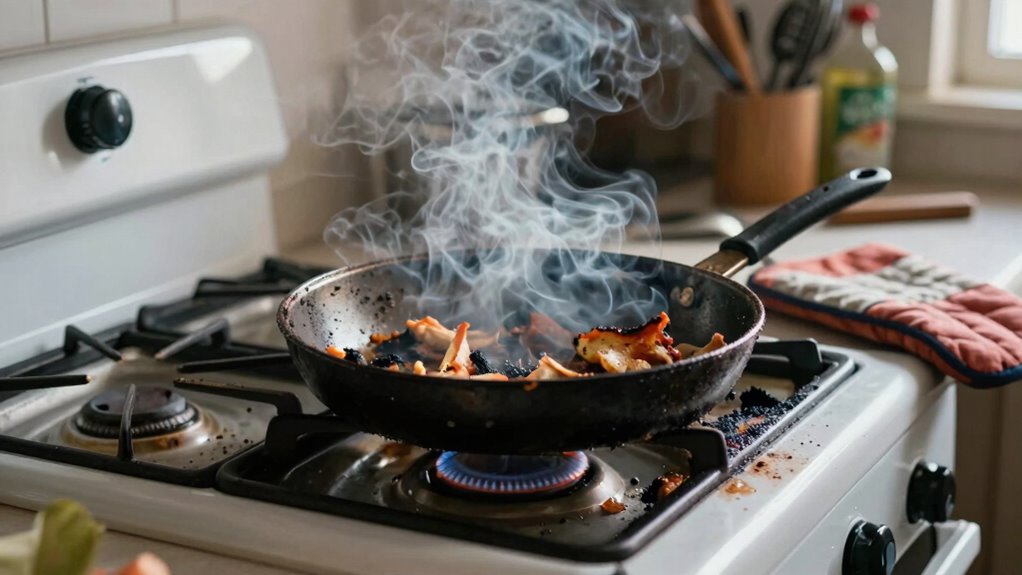
The kitchen fire habit you need to change fast is leaving the stove or oven unattended while cooking. This risky behavior can lead to grease fires, boiling over, or other hazards if something goes wrong. Staying vigilant and supervising your cooking is essential to prevent accidents. Keep flammable items away, stay focused, and turn off heat when you’re done or stepping away. If you want to know more tips to stay safe, keep going.

Get school and study supplies delivered free — and shop member deals
- Fast, free delivery on millions of items
- Access to Prime Big Deal Days deals on October 6–7
- Prime Video, Amazon Music and more included
Key Takeaways
- Never leave cooking unattended, especially when using high heat or frying, to prevent accidental fires.
- Keep flammable items away from the stove and avoid cluttering the cooking area.
- Regularly clean grease buildup to reduce fire risk from flammable residues.
- Always turn off heat immediately if you need to step away from the stove.
- Install and maintain smoke alarms and keep a fire extinguisher nearby for quick response.
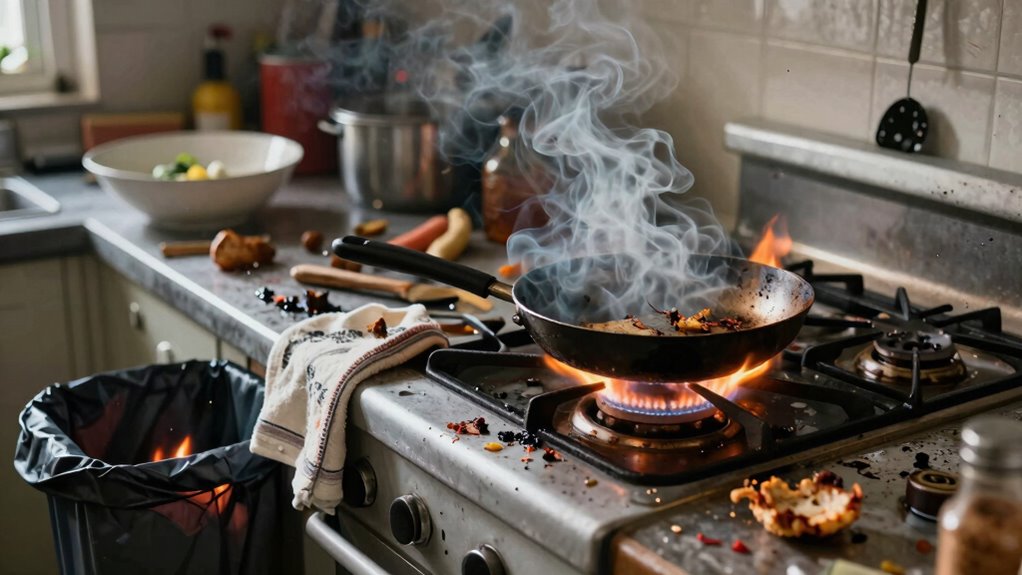
Cooking is one of the most common causes of household fires, yet many people develop a dangerous habit that puts everyone at risk. That habit is leaving cooking unattended, which directly impacts your ability to practice effective fire prevention and maintain good cooking safety. When you step away from the stove, even for a moment, you’re risking a fire that can escalate quickly. Grease can ignite if left on high heat, and a simmering pot can boil over, spreading flames or smoke that endangers your home. Many underestimate how fast a small mistake can turn into a dangerous situation, especially if you’re distracted or multitasking.
To improve your cooking safety, it’s essential to stay vigilant while you’re in the kitchen. Keep a close eye on what you’re cooking, and never leave the stove or oven unattended when there’s food actively cooking. If you need to leave for any reason, turn off the heat or ask someone to watch over your meal. This simple step is one of the most effective fire prevention measures you can take. It’s easy to get caught up in other tasks or distracted by your phone, but your awareness is key to avoiding kitchen fires. Remember, controlling your environment and paying attention while cooking greatly reduces the risk of accidents and injuries.
Another important aspect of cooking safety involves managing flammable items. Keep paper towels, dishcloths, oven mitts, and plastic utensils away from direct heat sources. Clutter around your stove or oven can easily catch fire if you’re not careful. Regularly cleaning grease buildup from stovetops and hood filters also plays an indispensable role in fire prevention, as accumulated grease is highly flammable. Staying organized and maintaining a clean cooking area ensures you’re minimizing hazards and making it easier to spot potential problems before they worsen. Proper kitchen organization is essential for reducing clutter and preventing accidents, especially in busy kitchens.
Additionally, investing in safety equipment, like a fire extinguisher nearby, can make a difference if something does go wrong. Knowing how to use it properly is part of good cooking safety. Remember, a small, manageable fire is easier to put out quickly when you’re prepared. Also, consider installing smoke alarms and testing them regularly to guarantee they’re working properly. These alarms act as your first line of defense, alerting you early so you can act swiftly.
Incorporating fire safety measures into your routine can dramatically reduce the risk of kitchen fires and ensure you respond effectively in an emergency. Ultimately, the key to effective fire prevention in your kitchen is staying alert and practicing good cooking safety habits. Leaving your stove unattended, even briefly, is a habit you need to change immediately. By paying attention, keeping your space safe, and being prepared, you protect yourself, your loved ones, and your home from preventable fires.
As an affiliate, we earn on qualifying purchases.
Frequently Asked Questions
What Are Common Signs of an Impending Kitchen Fire?
You should watch for signs like excessive kitchen smoke or a burning smell, which indicate trouble. If fire alarms start going off unexpectedly, don’t ignore them. Grease buildup on stovetops or oven surfaces can ignite suddenly, so stay alert. If you notice any of these signs, turn off the heat immediately, stay calm, and use a fire extinguisher if necessary. Quick action can prevent a full-blown kitchen fire.
How Can I Prevent Grease Fires Effectively?
Grease fires can ignite like a spark waiting for a match. To prevent them, keep grease buildup under control by regularly cleaning stovetops and pans. Never leave flammable materials—like paper towels or dishcloths—near heat sources. Use a metal lid or baking soda to smother a fire if it starts, and keep a fire extinguisher nearby. Staying vigilant and proactive keeps your kitchen safe and fire-free.
What Fire Extinguisher Type Is Best for Kitchen Fires?
You should choose a Class K fire extinguisher for kitchen fires, as it’s designed specifically for grease and oil fires. Regular fire extinguisher maintenance guarantees it’s always ready to use, and proper extinguisher placement—near the cooking area—allows quick access during emergencies. Keep the extinguisher upright, check pressure gauges regularly, and replace or service it as recommended to stay prepared and prevent kitchen fires from escalating.
Are There Specific Cooking Habits That Increase Fire Risk?
You increase fire risk when you get distracted while cooking or neglect appliance malfunctions. Cooking distractions, like using your phone or multitasking, divert your attention from the stove, leading to accidents. Appliance malfunctions, such as faulty burners or electrical issues, can ignite fires unexpectedly. Stay focused during cooking, never leave food unattended, and regularly check your appliances to prevent these hazards and reduce fire risks in your kitchen.
How Often Should Kitchen Fire Safety Equipment Be Inspected?
You should inspect your kitchen fire safety equipment at least once every month. Make certain your fire extinguishers are charged and accessible, and check your smoke alarms and kitchen ventilation for proper function. Regular fire safety drills help you stay prepared, so practice escape routes and extinguisher use. Staying vigilant with these checks and drills reduces fire risks and ensures you’re ready to respond quickly in emergencies.
As an affiliate, we earn on qualifying purchases.
Conclusion
So, next time you’re cooking, remember: a moment’s distraction can turn a small flame into a fiery nightmare. Don’t let complacency be your kitchen’s undoing—because fire waits for no one. Stay alert, stay safe, and treat your cooking like a cherished secret worth protecting. After all, isn’t it better to be a cautious chef than a regretful one? Keep that fire in your heart, not on your stove.
As an affiliate, we earn on qualifying purchases.
As an affiliate, we earn on qualifying purchases.
Fall Picks
fall essentials
As an affiliate, we earn on qualifying purchases.