Among these anatomy skeleton models, I would put the Axis Scientific Life Size Skeleton Model first for buyers who want a full-scale study aid, while the Axis Scientific Mini suits limited spaces and the disarticulated 67-inch model offers a different approach for learning individual bones. The main tradeoff is between life-size detail and footprint, compactness and handling, and added teaching features such as nervous-system or muscle displays. Smaller articulated models are easier to store and reposition, but they cannot match a full-size model’s visual scale. Read on for the full breakdown of all 15 picks and guidance on choosing the right anatomy skeleton model for your needs.

Get school and study supplies delivered free — and shop member deals
- Fast, free delivery on millions of items
- Access to Prime Big Deal Days deals on October 6–7
- Prime Video, Amazon Music and more included
Key Takeaways
- Full-size models dominate for scale-based teaching: several 70.8-inch options include stands, while some add charts, posters, or nervous-system details.
- Axis Scientific offers two distinct study formats: its mini model prioritizes compact display, while its life-size model is better suited to full-scale demonstration.
- Compact models vary mainly in handling and display: the roughly 17-inch options are articulated and easier to store, but their small scale limits group instruction.
- Added anatomy features change the teaching focus: muscle, ligament, nervous-system, heart, and brain components can broaden lessons but are not substitutes for a clearly readable bone model.
- The disarticulated model serves a different learning task: it supports study of separated bones, unlike the assembled figures built around whole-skeleton viewing.



| anatomy skeleton model | Material | Height | Weight | Stand |
|---|---|---|---|---|
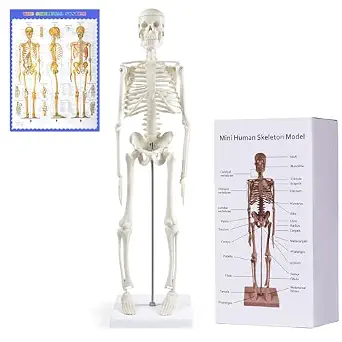
| Axis Scientific Mini Human Ske | Metal | 31 inches | 5 pounds | Metal stand |
| NLShan Human Skeleton Model fo | Non-toxic PVC | 17.7 inches | 1.08 pounds | Display stand |
| 70.8-inch Human Skeleton Model | PVC | 70.8 inches | 23.3 pounds | Metal stand with wheels |
| 17.72 Inch Mini Skeleton Anato | Hard PVC | 17.72 inches | 1.08 pounds | — |
| Human Skeleton Model for Anato | Cast replica of real human specimens | 70.8 inches | 21.6 pounds | Rolling stand with five wheels |
| Axis Scientific Life Size Skel | Medical-grade PVC | 5 feet 6 inches | 24.6 pounds | Pelvic-mounted rolling stand |
| Breesky Human Skeleton Model f | Plastic (implied) | 17.7 inches | 1.1 pounds | — |
| Breesky Scientific Human Skele | Metal (as listed) | 33.4 inches | — | Metal stand |
| 70.8-inch Human Anatomy Skelet | PVC | 70.8 inches | 20 pounds | Metal stand with wheels |
| Breesky Human Skeleton Model f | Polyvinyl chloride (PVC) | 70.8 inches | 22 pounds | Rolling stand |
| GobiDex Human Body Skeleton Mo | Plastic | — | — | — |
| 17.7-inch Human Skeleton Model | PVC | 17.7 inches | — | — |
| Disarticulated Human Skeleton | PVC plastic | 67 inches | 17.8 lbs | — |
| Human Skeleton Model for Anato | PVC | 70.8 inches | 22.4 pounds | Rolling stand included |
| Human Body | Plastic | — | — | — |
More Details on Our Top Picks
Axis Scientific Mini Human Skeleton Model with Metal Stand
At 31 inches, this Axis Scientific model gives learners more room to inspect bone landmarks than the 17.7-inch NLShan model, while staying practical for a desk or classroom table. Its articulated joints, removable limbs, and lift-off skull cap support demonstrations that a fixed display model cannot, and the included color manual adds labeled landmarks for guided study. The metal stand is a useful advantage when the skeleton is posed or left on display. The tradeoff is scale: it cannot reproduce the presence or viewing distance of the full-size 70.8-inch models, such as the nervous-system model in this lineup. At five pounds, it is also heavier than the smaller PVC options, and the description cautions against rough handling.
Pros:- Articulated joints allow movement demonstrations
- Removable limbs and skull cap expose areas for closer study
- Color manual includes labeled anatomical landmarks
- Metal stand supports stable tabletop display
Cons:- Tabletop scale is less suitable for full-body classroom demonstrations
- Five-pound weight makes it less convenient to carry than smaller models
- Can be fragile if handled roughly
Best for: Teachers, anatomy students, and home learners who want a manipulable tabletop skeleton with a reference manual.
Not ideal for: Medical programs needing life-size demonstrations or buyers seeking a lightweight model for frequent carrying.
- Height:31 inches
- Weight:5 pounds
- Material:Metal
- Joints:Fully articulated
- Removable parts:Limbs and skull cap
- Included learning aid:Full-color manual with labeled anatomical landmarks
- Stand:Metal stand
- Warranty:3 years
Our verdict“Choose this Axis model for hands-on tabletop anatomy lessons; choose a 70.8-inch model when full-scale viewing matters more.”
NLShan Human Skeleton Model for Anatomy: 17.7-inch Articulated Scientific Model with Movable Limbs and Display Stand
The NLShan is the most compact study-focused pick here, measuring 17.7 inches and weighing just over a pound. Movable arms and legs, a removable skull, and a display stand give it more instructional flexibility than a static miniature, without taking the tabletop space required by the 31-inch Axis Scientific model. Its non-toxic PVC construction suits shared learning settings, while the included study guide gives beginners a starting point. The compromise is anatomical visibility: small structures are harder to inspect at this scale, so it is less suited to detailed medical training than either full-size model in the lineup. Assembly may also take patience. Compared with the similarly sized 17.72-inch mini model, the NLShan offers a stated study guide and removable skull, making it the more teaching-oriented compact option.
Pros:- Compact size fits desks and small teaching spaces
- Movable arms and legs support basic joint demonstrations
- Removable skull helps introduce head anatomy
- Includes a study guide and display stand
Cons:- Small scale limits inspection of fine anatomical details
- Assembly may be challenging for some buyers
- Less suitable for detailed medical training than full-size models
Best for: Students, parents, and teachers with limited desk or shelf space who want a movable model for introductory anatomy.
Not ideal for: Medical instructors or advanced learners who need life-size structures or fine-detail demonstrations.
- Height:17.7 inches
- Dimensions:11.4 x 6.06 x 0.2 inches
- Weight:1.08 pounds
- Material:Non-toxic PVC
- Movable parts:Arms and legs
- Removable part:Skull
- Stand:Display stand
- Included learning aid:Study guide
Our verdict“Pick the NLShan for introductory, space-conscious study, but choose the Axis Scientific 31-inch model for more visible landmarks.”
70.8-inch Human Skeleton Model for Anatomy with Nervous System & Charts, Stand
This life-size model stands apart from the basic skeletons in the roundup by adding nervous-system and carotid-artery detail, giving instructors more to point out than bones and joints alone. Its 70.8-inch height makes classroom demonstrations easier to follow than the 31-inch Axis Scientific model, and the rolling metal stand helps move it between teaching areas. A removable skull cap, movable jaw, detachable teeth, and hinged limbs add useful access for demonstrations; charts and a dust-proof cover round out the teaching setup. Those extras come with a substantial footprint and a 23.3-pound weight, so this is less convenient to store or relocate than the smaller models. Buyers who only need a general bone reference may find the added systems and accessories unnecessary.
Pros:- Life-size format is easy to reference during group instruction
- Nervous-system and carotid-artery structures extend lessons beyond the bones
- Rolling metal stand supports movement between rooms
- Charts and dust-proof cover are included
Cons:- At 23.3 pounds, it is heavy to move frequently
- Requires more floor and storage space than tabletop models
- Extra system detail may be unnecessary for basic bone study
Best for: Anatomy teachers and training rooms that need a full-size skeleton with added nervous-system and carotid-artery teaching detail.
Not ideal for: Home learners with limited storage or buyers who need a lightweight, general-purpose skeleton model.
- Height:70.8 inches
- Weight:23.3 pounds
- Material:PVC
- Stand:Metal stand with wheels
- Skull features:Removable skull cap, movable jaw, and detachable teeth
- Limbs:Hinged limbs
- Included learning aids:Educational charts
- Protection:Dust-proof cover
Our verdict“Choose this model when nervous-system instruction is part of the lesson; for basic life-size bone study, the 206-bone model with posters may be a simpler fit.”
17.72 Inch Mini Skeleton Anatomy Model with Movable Arms and Legs
This 17.72-inch mini skeleton is aimed at buyers who want a model they can pose for demonstrations, drawing practice, or themed display rather than a full anatomy teaching station. Its movable arms and legs and stable posing make it more useful as an art reference than a fixed miniature, while hard PVC keeps the form suitable for repeated tabletop display. Compared with the similarly sized NLShan, however, the supplied details do not mention a removable skull or study guide, so it offers less support for guided anatomy lessons. Its stated dimensions also make clear that it belongs on a desk, not at the front of a room. The basic joint damping may limit complex poses, and the small scale restricts close examination of anatomical features.
Pros:- Movable arms and legs support varied display and drawing poses
- Compact footprint suits desks and shelves
- Hard PVC construction is suited to display use
- Can serve educational, art, and decorative purposes
Cons:- Small scale limits detailed anatomy study
- Basic joint damping may restrict complex poses
- No study guide or removable skull is listed in the product details
Best for: Art students, hobbyists, and teachers seeking a poseable small skeleton for sketching, simple demonstrations, or decoration.
Not ideal for: Learners who need labeled references, removable parts, or large anatomical structures for detailed instruction.
- Height:17.72 inches
- Dimensions:4.72 x 4.72 x 17.72 inches
- Weight:1.08 pounds
- Material:Hard PVC
- Movable parts:Arms and legs
- Proposed uses:Education, display, and Halloween decoration
Our verdict“Choose this mini model for posing and art reference; the NLShan is the better match when a study guide and removable skull matter.”
Human Skeleton Model for Anatomy – Life Size, 70.8 inches with Rolling Stand and Posters
For buyers who want a life-size bone reference without the nervous-system emphasis of the B0DNMGPGQK model, this 70.8-inch option centers its teaching value on 206 articulated bones, a detachable skull, and included anatomy posters. The full-body scale makes it easier to demonstrate overall proportions than either mini model, while the five-wheel rolling stand helps reposition it around a classroom or study space. Three posters offer visual material to pair with the physical model, though they do not replace close-up instruction or a detailed manual. The product data describes the material as a cast replica of real human specimens, a detail some buyers may find concerning. At 21.6 pounds, it is also a sizeable object to move despite the rolling base.
Pros:- Life-size format supports proportion and whole-body demonstrations
- 206 articulated bones and detachable skull encourage interactive study
- Five-wheel rolling stand helps reposition the model
- Three anatomy posters provide companion visual references
Cons:- At 21.6 pounds, it remains heavy to move despite the rolling stand
- Life-size construction needs substantial display and storage space
- The stated cast-replica material may not suit buyers with ethical concerns
Best for: Schools, anatomy classrooms, and serious home learners seeking a life-size articulated bone model with companion posters.
Not ideal for: Buyers with limited floor space, those who need a light portable model, or anyone uncomfortable with the stated specimen-replica material description.
- Height:70.8 inches
- Number of bones:206
- Weight:21.6 pounds
- Material:Cast replica of real human specimens
- Skull:Detachable
- Stand:Rolling stand with five wheels
- Included learning aids:3 posters with human structure details
Our verdict“Choose this model for full-size bone study with posters; select the nervous-system model if added nerve and artery detail is the higher priority.”
Axis Scientific Life Size Skeleton Model for Anatomy Study
The Axis Scientific Life Size Skeleton makes sense for learners who want a full-height model plus structured activities, rather than just a display piece. Its 206 bones and articulated joints support movement demonstrations, while three study guides and numbered stickers give students ways to practice identifying structures. Compared with the smaller Breesky 33.4-inch Skeleton, this model offers more lifelike scale for classroom demonstrations; unlike the 70.8-inch models with broader system details, its listed teaching aids focus on the skeleton itself. The pelvic-mounted rolling stand helps with repositioning, but at 24.6 pounds, it is not a lightweight choice for frequent room-to-room transport. Its PVC build and three-year warranty suit regular educational use, though the full-size footprint and higher-cost positioning may be more than casual learners need.
Pros:- Full-size, 206-bone layout supports realistic scale demonstrations
- Three study guides and numbered stickers add structured self-testing
- Articulated joints allow movement-based anatomy lessons
- Pelvic-mounted rolling stand makes repositioning easier
Cons:- At 24.6 pounds, it is cumbersome to carry or move up stairs
- Full-size construction needs substantial storage and display space
- Its study materials focus on the skeleton rather than the extra body systems shown on some larger models
Best for: Anatomy teachers and serious students who want a full-size articulated skeleton with guided labeling exercises
Not ideal for: Learners with limited floor space or tight budgets, or anyone who needs a lightweight model for frequent transport
- Height:5 feet 6 inches
- Number of bones:206
- Material:Medical-grade PVC
- Stand:Pelvic-mounted rolling stand
- Included study materials:3 study guides with labeled structures and stickers
- Weight:24.6 pounds
- Warranty:3 years
Our verdict“Choose this Axis model for full-size skeletal lessons with built-in labeling practice, but skip it if space or portability matters most.”
Breesky Human Skeleton Model for Anatomy: 17” Skeleton with Movable Arms and Legs
At 17.7 inches tall, this Breesky is a desk-scale introduction to skeletal anatomy, not a substitute for a classroom-size teaching model. Movable arms and legs let beginners demonstrate basic positioning, and the removable skull cap offers a simple look inside the cranium. Compared with the Axis Scientific Life Size Skeleton, it takes up far less space and weighs only 1.1 pounds, making it easier for a student to keep nearby or carry between study spots. That compactness also limits detail: the listing describes basic spine, rib, and skull anatomy, without the labeling guides or extensive bone features of the Axis. Its small base suits shelves and desks, but the model’s limited skull movement and entry-level detail make it a poor fit for advanced coursework or professional demonstrations.
Pros:- Compact 17.7-inch size fits desks and small teaching spaces
- Light 1.1-pound build is easy to carry
- Movable arms and legs help illustrate basic positioning
- Removable skull cap provides a simple view of the cranium
Cons:- Basic anatomical detail limits its usefulness for advanced study
- Skull movement is limited beyond removing the cap
- Does not include the study guides or labeling aids supplied with the Axis Scientific model
Best for: Younger learners, introductory anatomy students, and teachers who need a portable desk model for basic demonstrations
Not ideal for: Medical students or instructors who need detailed bone landmarks, extensive articulation, or a life-size classroom visual
- Height:17.7 inches
- Base dimensions:4.75 x 4.75 inches
- Weight:1.1 pounds
- Movable parts:Arms and legs
- Skull feature:Removable skull cap
- Material:Plastic (implied)
Our verdict“Pick this Breesky for portable, entry-level anatomy practice, not detailed medical instruction.”
Breesky Scientific Human Skeleton Model for Anatomy, 33.4” Skeleton with Metal Stand, Removable Arms & Legs, Educational and Halloween Decor
The 33.4-inch Breesky sits between desk models and full-height teaching skeletons, giving buyers a more visible demonstration piece without committing to a 70.8-inch model. Its articulated structure and removable arms and legs support hands-on demonstrations and easier storage, while the metal stand keeps it upright for display. Compared with the 17.7-inch Breesky, it offers more presence in a classroom or clinic; compared with the 70.8-inch Breesky with Nervous System, it is less imposing but also lacks the listed posters and life-size scale. The product is described as cast from a real specimen, but the provided specifications give limited detail on materials and durability. That makes it a flexible display-and-study option, though buyers needing precise, advanced anatomical reference may prefer a more fully documented model.
Pros:- Mid-size form is more visible than a desk model without requiring a full-height footprint
- Fully articulated construction supports movement demonstrations
- Removable arms and legs aid assembly, storage, and focused study
- Metal stand provides a display base
Cons:- At half life size, it does not provide the scale of full-height models
- Material and durability details are limited in the supplied specifications
- Articulated joints may be vulnerable to rough handling
Best for: Teachers, clinic owners, and households seeking a mid-size articulated skeleton for demonstrations and display
Not ideal for: Medical programs that need a life-size reference or buyers who require clearly documented construction and detailed bone specifications
- Height:33.4 inches
- Material:Metal (as listed)
- Articulation:Fully articulated
- Removable parts:Arms and legs
- Stand:Metal stand
- Included materials:Manual
- Listed uses:Educational use and Halloween decor
Our verdict“Choose this Breesky when you want a stand-mounted, mid-size skeleton for display and basic demonstrations rather than full-scale instruction.”
70.8-inch Human Anatomy Skeleton Model with Muscles, Ligaments, and Educational Charts
This 70.8-inch model is the strongest fit here for teaching anatomy beyond the bones alone: its muscles, ligaments, and nervous system add body-system context that the Axis Scientific Life Size Skeleton does not list. The life-size format helps instructors point out relationships across the body, while removable features, color illustrations, and a wheeled metal stand support both study and display. Its 20-pound weight is lighter than the Axis model’s listed 24.6 pounds, although it still takes effort to move and needs room for setup. The added systems create a richer visual reference, but they may also make the model more complex to assemble than a simpler skeleton such as the 17.7-inch Breesky. Buyers should also note that the supplied data does not specify the exact removable muscle or ligament components.
Pros:- Muscles, ligaments, and nervous system broaden lessons beyond bone identification
- Life-size height supports classroom demonstrations
- Wheeled metal stand assists repositioning
- PVC construction is described as durable and easy to clean
Cons:- Assembly may take time because the model includes multiple anatomical features
- At 20 pounds and 70.8 inches tall, it remains bulky to move and store
- Supplied details do not specify which muscle and ligament parts are removable
Best for: Anatomy instructors and advanced learners who want a life-size visual linking the skeleton with muscles, ligaments, and the nervous system
Not ideal for: Beginners seeking a simple, quick-assembly skeleton or buyers with limited display space
- Height:70.8 inches
- Material:PVC
- Weight:20 pounds
- Stand:Metal stand with wheels
- Additional anatomy:Muscles, ligaments, and nervous system
- Included features:Removable skull cap, movable jaw, and detachable teeth
- Learning materials:Assembly instructions and color illustrations
Our verdict“Choose this model for life-size lessons across several body systems, but opt for a simpler skeleton if assembly and storage need to stay easy.”
Breesky Human Skeleton Model for Anatomy – Life Size Medical Skeleton with Nervous System, 70.8 inches, with Rolling Stand and 3 Posters
The 70.8-inch Breesky pairs a full-size, 206-bone skeleton with articulated and removable joints, then adds a rolling stand and three posters for reference. Those posters give it a different teaching emphasis from the Axis Scientific Life Size Skeleton, which includes study guides and labeling stickers: Breesky supplies wall-style visual aids, while Axis is better equipped for hands-on labeling practice. Its PVC construction is designed for easy cleaning, and the stand helps reposition the model indoors. At 22 pounds, it is substantial enough to require deliberate handling, and assembly may take time. The listing names a nervous system in the title, but the supplied included-items data specifies posters and a rolling stand rather than detailing nervous-system components, so buyers seeking that feature should verify its scope.
Pros:- Life-size 206-bone structure supports realistic anatomy demonstrations
- Removable and articulated parts aid focused study
- Rolling stand makes indoor repositioning easier
- Three posters add visual reference materials
Cons:- At 22 pounds, moving it still takes effort despite the rolling stand
- Assembly may be time-consuming
- The supplied feature details do not describe the nervous-system components named in the title
Best for: Medical students, instructors, and clinics wanting a life-size articulated skeleton with posters for visual reference
Not ideal for: Buyers who need a lightweight portable model, outdoor use, or clearly specified nervous-system components
- Height:70.8 inches
- Number of bones:206
- Material:Polyvinyl chloride (PVC)
- Weight:22 pounds
- Stand:Rolling stand
- Included materials:3 posters
- Articulation:Removable and articulated bones and joints
Our verdict“Choose this Breesky for a full-size articulated teaching model with posters, but confirm the nervous-system details if that feature is a deciding factor.”
GobiDex Human Body Skeleton Model Kit, Glow in The Dark Science Kit for Kids
Glow-in-the-dark bones and a 40-piece kit make this the most play-oriented choice in this group. At 12.6 inches, it fits a child’s desk more easily than the 17.7-inch Human Skeleton Model for Anatomy with Movable Limbs, while the colorful manual gives younger learners a guided way to assemble and explore the model. Its 8-and-up age range also makes it a more suitable pick for children than the adult-oriented display models. The tradeoff is anatomical depth: this kit covers basic features rather than offering the study detail or full-size proportions of the 67-inch Disarticulated Human Skeleton Model. The glow effect adds engagement, but it may fade with extended exposure to light. I’d choose it for hands-on introductory learning, not advanced anatomy reference.
Pros:- Glow-in-the-dark bones add a memorable visual element to basic anatomy lessons.
- Forty pieces provide an active assembly activity rather than a static display.
- Designed for repeated assembly and disassembly.
- Colorful manual supports guided learning for children.
Cons:- Basic anatomical features offer less study detail than the adult and full-size models.
- Glow effect may weaken over time with exposure to light.
- Small size limits its usefulness as a room-scale or group demonstration model.
Best for: Parents and educators seeking a compact, hands-on anatomy activity for children ages 8 to 16.
Not ideal for: Medical students or older learners who need realistic proportions, extensive anatomical detail, or a full-size reference.
- Brand:GobiDex
- Age range:8–16 years
- Number of pieces:40
- Dimensions:12.6 × 5.71 × 3.15 inches
- Material:Plastic
- Special feature:Glow-in-the-dark bones
- Included learning aid:Colorful manual
Our verdict“Choose this kit for a child’s first interactive anatomy model; pick a larger articulated model for more detailed study.”
17.7-inch Human Skeleton Model for Anatomy with Movable Limbs
This model’s appeal is its movable arms and legs and removable skull with internal structure in a display-friendly 17.7-inch format. Those features make it more useful for demonstrating basic skeletal relationships than the GobiDex children’s kit, which emphasizes assembly and glow effects over anatomical examination. Its PVC construction and choice of crystal, oak wooden, or plastic base also make it suited to a desk or teaching shelf. The main limitation is pose stability: the limbs move, but the model cannot maintain a fixed posture, so it is less reliable for demonstrations that depend on a held position. Compared with the full-size, rolling-stand model, it takes up far less space but offers less scale and mobility for classroom presentations.
Pros:- Movable arms and legs allow basic exploration of skeletal movement.
- Removable skull exposes internal structure for closer study.
- Compact height fits desks and shelves more readily than life-size models.
- Multiple base options support different display settings.
Cons:- Cannot reliably hold a fixed posture for demonstrations.
- Listed as unsuitable for children under 18.
- Its compact scale provides less visual impact and full-body context than life-size models.
Best for: Adult learners, tutors, and instructors who want a compact desk model with movable limbs and an inspectable skull.
Not ideal for: Children under 18 or teachers who need a stable, fixed-pose model for repeated group demonstrations.
- Height:17.7 inches
- Dimensions:4.6 × 4.6 × 17.2 inches
- Material:PVC
- Base options:Crystal, oak wooden, or plastic
- Age range:Adult
- Items included:1 model
- Model number:md-005
- Articulation:Movable arms and legs; removable skull
Our verdict“Pick this compact model for adult desk study and skull inspection, but choose a full-size stand model for classroom visibility.”
Disarticulated Human Skeleton Model for Anatomy 67 inch High, Full Size
Where articulated models prioritize movement, this 67-inch disarticulated skeleton puts emphasis on seeing and identifying the bones themselves. Its complete set, including articulated hands and feet, is paired with an identification poster, giving learners a reference while they study individual structures. That makes it a stronger fit for bone-by-bone review than the 17.7-inch Human Skeleton Model with Movable Limbs, but it cannot demonstrate joint movement by assembling into flexible poses. The full-size proportions also serve art reference and display better than the GobiDex kit, though they require more room. Assembly has a practical catch: the ribs and thoracic cartilage require specific tools. I’d favor this model for anatomy study or drawing reference where bone identification matters more than quick setup or movable-joint demonstrations.
Pros:- Full-size height gives a more lifelike reference for study and art.
- Disarticulated bones support individual bone identification.
- Poster helps learners identify anatomical structures.
- PVC construction is described as durable and easy to clean.
Cons:- Cannot be assembled to demonstrate joint movement.
- Ribs and thoracic cartilage require specific tools for assembly.
- Full-size form needs considerably more storage and display space than compact models.
Best for: Anatomy learners, art students, and educators who need a full-size bone-identification reference and have room for setup.
Not ideal for: Buyers seeking a ready-to-use articulated model, a compact display, or assembly without specialized tools.
- Height:67 inches
- Weight:17.8 lbs
- Material:PVC plastic
- Bone configuration:Disarticulated and articulated bones
- Included structures:Skull, spine, pelvis, hands, and feet
- Learning aid:Bone-identification poster
- Intended uses:Medical study, art reference, and Halloween decoration
- Use setting:Indoor and outdoor display
Our verdict“Choose this full-size model for bone identification and art reference, not for demonstrations centered on joint motion.”
Human Skeleton Model for Anatomy – Life Size Medical Skeleton with Nervous System, 70.8 inches, Rolling Stand, 3 Posters
For a teaching space that needs a visible, movable reference, the combination of 70.8-inch life-size scale, 206 articulated bones, detachable parts, and a rolling stand gives this model a broader role than the compact desk options. The included three posters add reference material without requiring a separate chart purchase. Compared with the 67-inch disarticulated model, this one is better suited to showing the assembled skeleton and moving it between teaching areas; the tradeoff is that it weighs 22.4 pounds and is less convenient to shift frequently. Its PVC construction is practical for an educational display, but the description does not position it for clinical practice. I’d rank it ahead of static or compact models for classroom visibility and demonstration, while buyers short on storage or lifting capacity should look at smaller alternatives.
Pros:- Life-size scale makes the skeleton easier to see during group instruction.
- Articulated and detachable parts support hands-on anatomy demonstrations.
- Rolling stand allows movement around a classroom or study area.
- Three educational posters provide accompanying visual references.
Cons:- At 22.4 pounds, moving it often may take effort.
- Life-size height and rolling stand require substantial storage space.
- PVC educational construction is not intended for medical practice.
Best for: Teachers and training rooms that need a life-size articulated skeleton, teaching posters, and a stand that can roll between areas.
Not ideal for: Home learners with limited floor space or anyone who needs a lightweight model for frequent carrying.
- Height:70.8 inches
- Number of bones:206
- Material:PVC
- Stand:Rolling stand included
- Posters:3 educational posters
- Weight:22.4 pounds
- Features:Articulated bones and detachable parts
Our verdict“Choose this for a teaching room that needs a mobile, life-size demonstration skeleton and has room to store it.”
Human Body, Skeleton, Heart, Half Size Skull with Brain Models
This four-piece set earns its place by putting a skeleton, torso, heart, and half-size skull with brain in one study bundle. For learners who need to connect the skeleton to other body systems, that breadth offers more varied reference than the 17.7-inch Human Skeleton Model with Movable Limbs, which focuses on the bones and skull. The skeleton stands 17.7 inches, while the torso, heart, and skull provide separate subjects to examine; manuals and a carrying case also support organized study and transport. The compromise is that none of the listed pieces is life-size, so it cannot match the classroom presence of the 70.8-inch rolling-stand model. Detailed, hand-painted parts may also be more delicate than a simpler single skeleton. This is the better fit for a student who values range over scale.
Pros:- Four models broaden study beyond the skeleton to the torso, heart, and brain.
- Manuals and educational guides support independent review.
- Hand-painted details give the pieces clear visual distinctions.
- Carrying case makes the set easier to store and transport.
Cons:- The skeleton and other pieces are smaller than life-size classroom models.
- Detailed models may be fragile and need careful handling.
- Multiple components take more storage space than a single compact skeleton.
Best for: Medical students and teachers aged 14 or older who want several body-system models in a portable study set.
Not ideal for: Buyers who need a full-size skeleton, a single highly focused bone reference, or models suited to rough handling.
- Set contents:Four-piece anatomy model bundle
- Material:Plastic
- Skeleton height:17.7 inches
- Torso size:11 inches
- Heart size:8 inches
- Skull with brain size:3.5 inches
- Recommended age:14 years and up
- Included accessories:Manuals and carrying case
- Base options:Crystal, oak wooden, or plastic
Our verdict“Choose this bundle when cross-system anatomy study matters more than life-size scale or a single-purpose skeleton.”
How We Picked
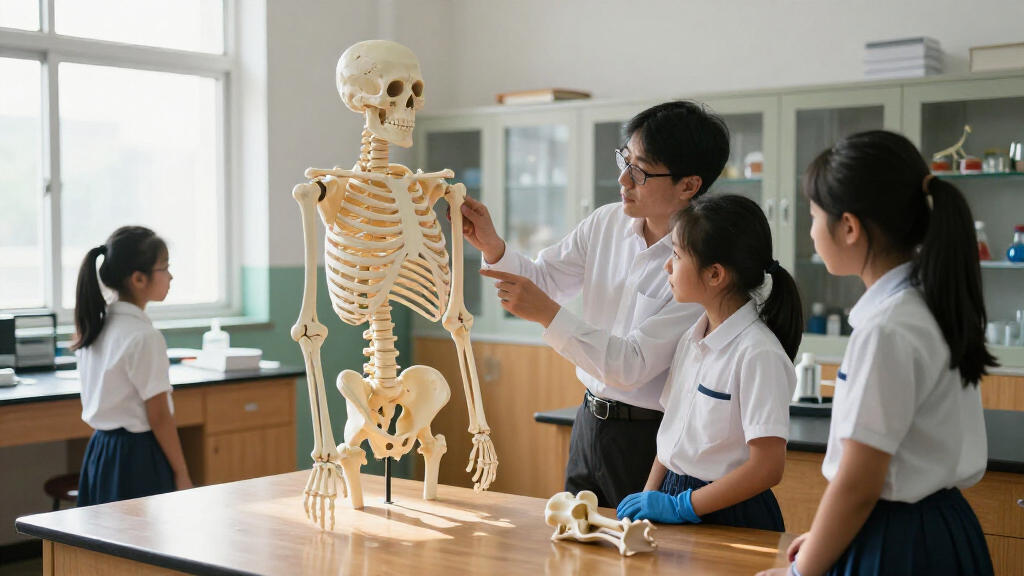
I compared these models around the decisions anatomy learners and teachers actually face: scale and anatomical scope, ease of viewing and handling, stand or mobility features, and how well each format suits its likely setting. I also considered whether added charts, posters, movable limbs, or related body-part models contribute useful teaching options or simply add complexity. Because product names do not establish details such as material, joint durability, or included assembly tools, I avoid treating those points as verified advantages.
The ranking favors useful anatomy presentation and versatility first, then weighs footprint, portability, and specialized features against their narrower use. Full-size options lead for classroom visibility, but they do not automatically outrank compact models for home study. Distinct picks such as the disarticulated skeleton and the glow-in-the-dark kit are included for specific needs, not because they replace a conventional study model. When several listings describe similar 70.8-inch formats, I distinguish them by their stated extras and intended use rather than implying unconfirmed differences in construction.
Factors to Consider When Choosing Anatomy Skeleton Models
Before choosing a model, match its format to the way you plan to teach or study. Scale, anatomy coverage, and available space shape the experience more than a long list of included extras. These factors can help prevent buying a model that looks suitable in a listing but proves awkward for your room, lesson, or learning style.
Choose a scale that fits the room and lesson
A full-size skeleton is easier for a group to see and makes whole-body proportions more apparent, but it claims floor space and needs a suitable storage spot. A compact model can sit on a desk and move between rooms, though fine features may be hard to demonstrate from a distance. Think about the viewing distance, not just the model’s height: a classroom may benefit from life size even if a smaller figure is easier to store. A half-size option can be a useful middle ground when the table is shared or storage is tight. Avoid choosing solely by height; check whether the stand and any extended limbs add to the space needed.
Decide whether you need an assembled or disarticulated skeleton
An assembled skeleton makes it easier to teach bone relationships, posture, and the overall structure of the body. A disarticulated model instead emphasizes individual bones and their shapes, which can suit hands-on identification work. These formats serve different lessons, so one should not be treated as a more detailed version of the other. Before choosing separated bones, consider where pieces will be stored and how they will be kept organized between sessions. For a first classroom model or general home study, an assembled figure is usually the more straightforward starting point. Choose disarticulation when handling and identifying separate bones is part of the learning goal.
Check what added anatomy features actually teach
Nervous-system markings, muscle or ligament displays, posters, and related organ models can widen the range of lessons a set supports. They can also make a skeleton harder to read if the extra information competes with the bones being taught. Decide whether you need a focused skeletal reference or a broader introductory display before paying attention to accessory counts. Posters may help when wall space and lesson setup allow them, but they are less useful if the model will be used at a desk or moved often. For detailed bone identification, prioritize visible skeletal structure over a larger collection of add-ons. For cross-topic teaching, extras are more valuable when they match a planned unit.
Think about articulation and how the model will be handled
Movable limbs make it easier to demonstrate basic positioning and joint relationships, particularly with a small model that can be held close. Movement alone does not indicate how sturdy a joint will be, so check product details for how parts connect and whether components are removable. Removable limbs can aid transport and focused demonstrations but create loose pieces that need care. If the model will be handled by many students, simplicity and easy access to replacement or assembly information may matter more than posing flexibility. For a display that stays in one place, articulation may be a lower priority. Match the mechanism to the amount of handling the model is likely to receive.
Treat the stand and mobility as part of the footprint
A stand helps keep a life-size model upright and visible, but it also affects where the skeleton can be placed and how easily it can be moved. Rolling stands can help in teaching spaces where the model needs to travel between lessons, while a compact display stand suits shelf or desktop use. Check whether the product description specifies wheels, a stable base, or a display support rather than assuming all stands work the same way. Think about thresholds, floor surfaces, and where the model will be parked when not in use. In a small home, the stand may be a bigger space constraint than the skeleton itself. Choose mobility only when you have a real need to reposition the model.
Match the model to the learner’s age and purpose
A student who needs to memorize bone names may benefit most from a clear, conventional skeleton, while younger learners may respond better to a compact kit with a more playful presentation. A themed or glow-in-the-dark feature can encourage engagement, but it does not by itself make a model suitable for formal anatomy study. For classroom use, prioritize visibility and a format that supports repeated explanation. For independent learning, consider whether the model can be set up and explored without taking over a room. If several age groups will share it, favor an easy-to-understand layout over specialized detail. Choose based on the lesson or learning habit you want to support, rather than assuming one model works equally well for every age.
Frequently Asked Questions
Should I choose a full-size skeleton or a compact model for home study?
Choose full size if you have a dedicated area and need to see proportions clearly or teach from a distance. A compact model is easier to store, carry, and position beside a book or screen. The tradeoff is that smaller bones and landmarks can be harder to inspect, especially during detailed identification work. Measure the space needed for the model and its stand, not only its listed height. If you are uncertain, choose based on the most common use: close-up individual study favors compactness, while demonstration favors scale.
Is a model with a nervous system or muscle features better for learning bones?
Not automatically. Added features can help connect the skeleton to other body systems, but they may distract from bone names, shapes, and relationships if skeletal study is your main goal. A clearly presented conventional model can be the better starting point for introductory osteology. Choose a model with nervous-system, muscle, or ligament features when those topics are part of your lessons and the extra information is legible. For a broad classroom display, extras can add teaching flexibility; for focused bone practice, clarity should lead.
When does a disarticulated skeleton make more sense than an assembled model?
A disarticulated model makes sense when the learner needs to handle and identify individual bones rather than mainly view the skeleton as a whole. It can support exercises in bone shape, grouping, and identification that an assembled figure does not provide in the same way. The tradeoff is the need to track and store separate pieces, which can make setup and classroom management more involved. An assembled model is usually easier for posture and whole-body demonstrations. If both kinds of learning matter, decide which activity will happen most often before choosing the format.
Do included posters and charts make a skeleton model a better teaching choice?
They can add value when the charts cover topics you plan to teach and there is room to display or consult them. Their presence alone does not tell you whether the diagrams are readable, accurate for your course level, or useful alongside the model. A poster set may be less helpful for a portable setup or a crowded study area. Check the stated contents and dimensions where available, and compare them with your lesson plan. If the skeleton itself is your main reference, prioritize its scale and anatomy presentation over accessory quantity.
What should I check before choosing a skeleton for frequent classroom handling?
Look for clear information about articulation, removable parts, stand design, and assembly, since these affect how the model will hold up to repeated use. A rolling stand may help move a life-size model between lessons, but it does not answer questions about joint durability or stability. Consider how many students will handle it and whether loose components can be stored safely. Product names and feature lists may not describe construction quality in enough detail, so consult the listing’s specifications before deciding. When frequent handling is expected, a simpler model with fewer pieces may be easier to manage than one with many detachable extras.
Conclusion
For most buyers seeking a full-scale teaching reference, I would start with the Axis Scientific Life Size Skeleton Model as the best overall pick. The Axis Scientific Mini is my best choice for compact display and home study, while the roughly 17-inch articulated models make sensible beginner options when space and easy handling matter more than classroom visibility. Buyers who want broader teaching material can compare the full-size listings with nervous-system, muscle, or chart features; those extras suit specific lessons rather than every learner. For a specialized study of individual bones, choose the 67-inch disarticulated model; for younger learners or a playful science activity, the GobiDex glow-in-the-dark kit has a distinct role. My best-value direction is a compact articulated model when portability is the priority, since the roundup provides no verified price data to establish a value winner by cost. Match the format to the lesson and available space before choosing among the similar full-size listings.
Halloween Picks
halloween
As an affiliate, we earn on qualifying purchases.