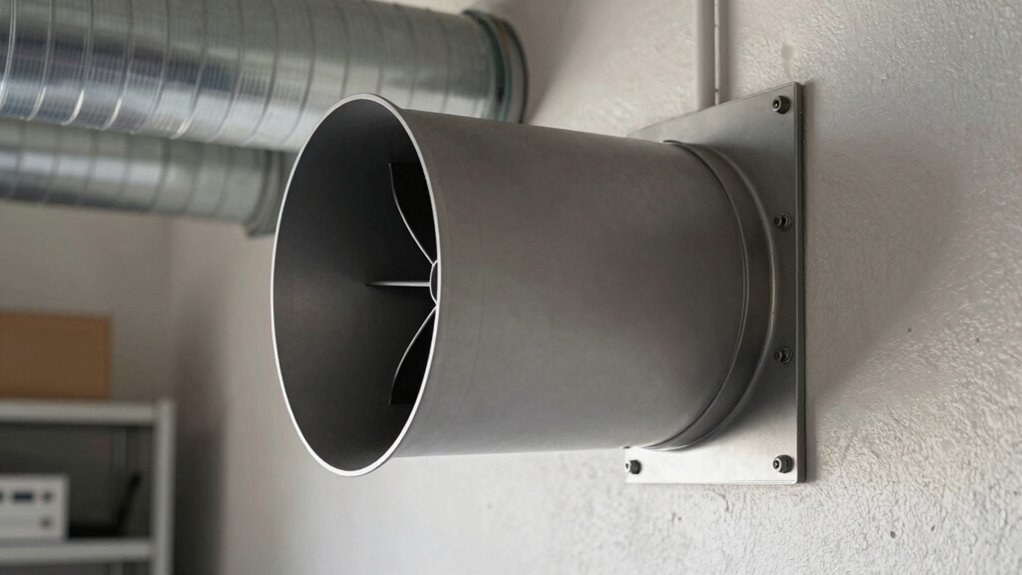

Inline duct fans help by improving airflow and ventilation for grow rooms, bathrooms, or commercial spaces, ensuring ideal environmental conditions. However, they can add noise if poorly installed, mounted loosely, or matched to an undersized duct system, causing vibrations and turbulence. Proper mounting, using rubber gaps, and choosing quieter models minimize noise. If you want to learn how to balance good airflow with quiet operation, keep exploring these tips.
Key Takeaways
- Inline duct fans improve ventilation and airflow in spaces needing proper environmental control.
- They can add noise if improperly installed, with vibrations and turbulence increasing sound levels.
- Choosing fans with sound-insulated housings and using vibration dampers reduces noise.
- Proper installation—secure mounting, straight ducts, and sealed joints—minimizes noise and vibration.
- Regular maintenance and correct sizing prevent motor strain and airflow turbulence that cause unwanted noise.
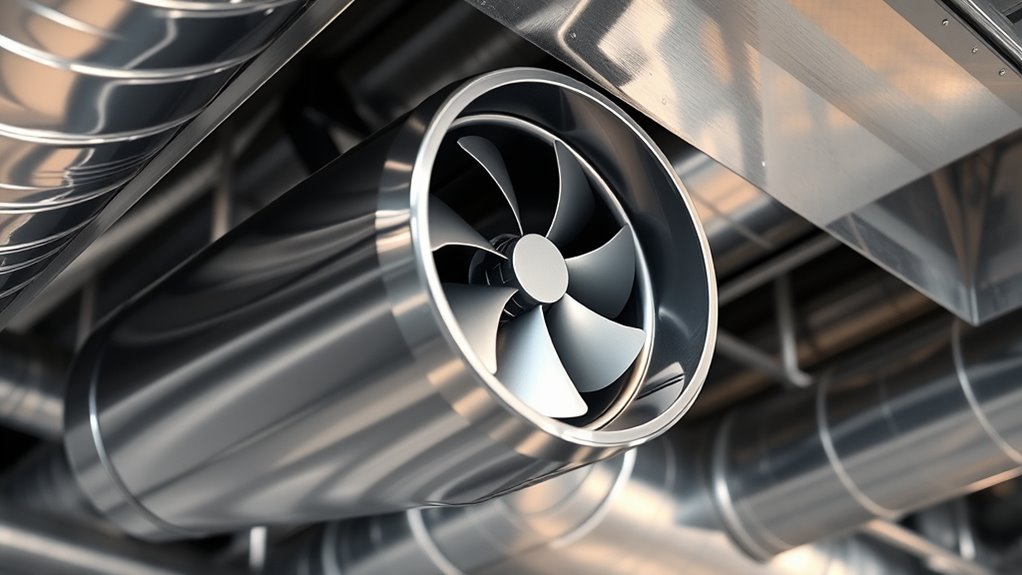
If you’re looking to improve ventilation in your space, inline duct fans are an efficient solution. They help move air effectively through duct systems, making them ideal for grow rooms, bathrooms, or commercial spaces where airflow is vital. However, one common concern with these fans is noise. While some models operate quietly, others can generate noticeable sound, especially if not installed correctly. To minimize noise and maximize performance, understanding noise reduction techniques and following proper installation tips are essential.
Noise reduction starts with choosing the right fan. Look for models specifically designed for quieter operation, often featuring sound-insulated housings or rubber mounts that absorb vibrations. These design elements can substantially reduce the noise transmitted through the ductwork and into your space. When installing, pay attention to how the fan is mounted. Using vibration isolators or rubber grommets helps prevent vibrations from transferring to the duct and the surrounding structure, which can amplify noise. Additionally, positioning the fan away from occupied areas or installing it inside soundproof enclosures can make a noticeable difference in noise levels.
Choose fans with sound-insulated housings or rubber mounts to significantly reduce noise transmission.
Proper installation is key to keeping noise at bay. Always ensure that the fan is securely mounted, as loose fittings amplify vibrations and sound. Use flexible duct connectors instead of rigid ones—they help absorb vibrations and prevent them from traveling along the ductwork. Also, avoid sharp bends or kinks in the duct, as these can cause turbulence and increase noise. Instead, keep ducts as straight and smooth as possible, and seal all joints tightly to prevent air leaks that can contribute to whistling or humming sounds. When wiring the fan, follow the manufacturer’s instructions carefully; improper wiring can lead to motor strain and additional noise. Choosing appropriately sized ducts for your fan helps reduce air resistance, which can otherwise increase noise and strain on the motor.
Regular maintenance, like cleaning the blades and checking for debris or dust buildup, also helps keep the fan running smoothly and quietly.
Frequently Asked Questions
How Do I Choose the Right Size Inline Duct Fan?
To select the right size inline duct fan, you need to take into account your airflow requirements and sizing considerations. Measure your duct diameter and calculate the necessary CFMs (cubic feet per minute) to guarantee adequate ventilation. Opt for a fan that matches or slightly exceeds your airflow needs to prevent noise and inefficiency. Proper sizing ensures you get the right balance between performance and noise control, making your system effective and quiet.
Can Inline Duct Fans Be Used Outdoors Safely?
Imagine a gust of wind carrying a leaf, just like an inline duct fan moving air outdoors. Yes, you can use inline duct fans outdoors, but you must guarantee proper outdoor installation with weatherproofing requirements. Use weather-resistant materials, seal all connections, and protect the fan from moisture and debris. This way, your fan operates efficiently and safely, even in unpredictable weather conditions.
What Maintenance Is Required for Inline Duct Fans?
You should regularly inspect your inline duct fan for dust buildup and clean the fan blades to guarantee efficient operation. Keep the motor well-lubricated according to the manufacturer’s instructions, usually with oil or grease, to prevent overheating and noise. Check for loose wiring or parts, and replace worn-out components promptly. Routine maintenance like this helps extend your fan’s lifespan and keeps it running smoothly and quietly.
Are There Energy-Efficient Options for Inline Duct Fans?
You’ll find energy-efficient inline duct fans by looking for models with high IE ratings and energy-saving tips. These fans often use eco-friendly materials, reducing environmental impact. Coincidentally, choosing energy-efficient fans not only lowers your energy bills but also supports sustainability. Look for variable speed controls and quiet operation features, helping to conserve power without sacrificing performance. Making informed choices ensures you get an eco-friendly, cost-effective ventilation solution for your space.
How Do Noise Levels Vary Between Different Models?
You’ll notice noise levels vary markedly between models based on their specifications. Some fans feature noise comparison data showing quieter operation, especially at lower speeds, while others produce more sound due to motor design or blade construction. When choosing, check the model specifications for decibel ratings and noise reduction features. This helps you find a quieter inline duct fan suited to your space, ensuring efficient airflow without undue noise disruption.
Conclusion
In the end, inline duct fans are like the steady heartbeat of your ventilation system—powerful when needed, but sometimes prone to whispers of noise. When used wisely, they breathe life into your space without disturbing the peace. But beware, if pushed too hard, they can turn into unwelcome sirens amid your quiet sanctuary. Think of them as the silent conductors—when in harmony, they keep everything flowing smoothly; when out of tune, they disrupt the symphony.