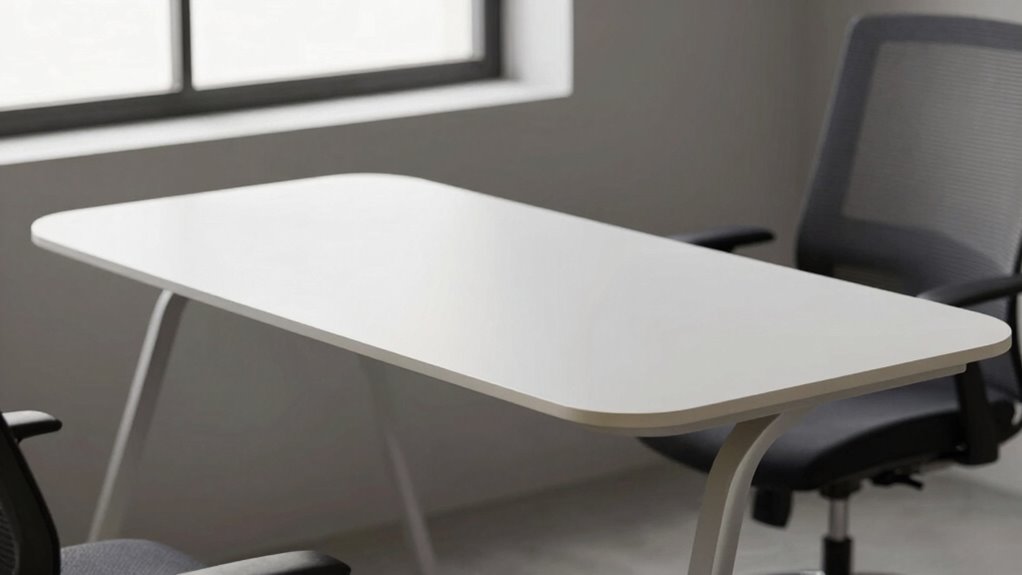

The shape of your desk influences how close or far you can reach, which affects your posture during work. A poorly designed desk may force you to stretch or hunch, leading to discomfort and strain over time. Ergonomic desks promote proper alignment by supporting your monitor at eye level and keeping your arms at a comfortable angle. If you want to learn more about how desk shape impacts your health and comfort, keep exploring these important factors.

Prime made for students and young adults
- Fast, free delivery for dorm and study essentials
- Prime Video and Amazon Music included
- Member-only deals
Key Takeaways
- Desk shape influences the distance and angle of reaching for objects, affecting body posture during work.
- Poorly designed desks cause awkward reaching, leading to slouching and increased strain on neck and shoulders.
- Ergonomic desk shapes promote natural arm and hand movements, maintaining proper reach zones and reducing strain.
- Adjustable desks allow customization, helping maintain optimal reach and posture throughout different tasks.
- Proper desk shape supports neutral body positioning, minimizing compensatory movements that negatively impact posture.
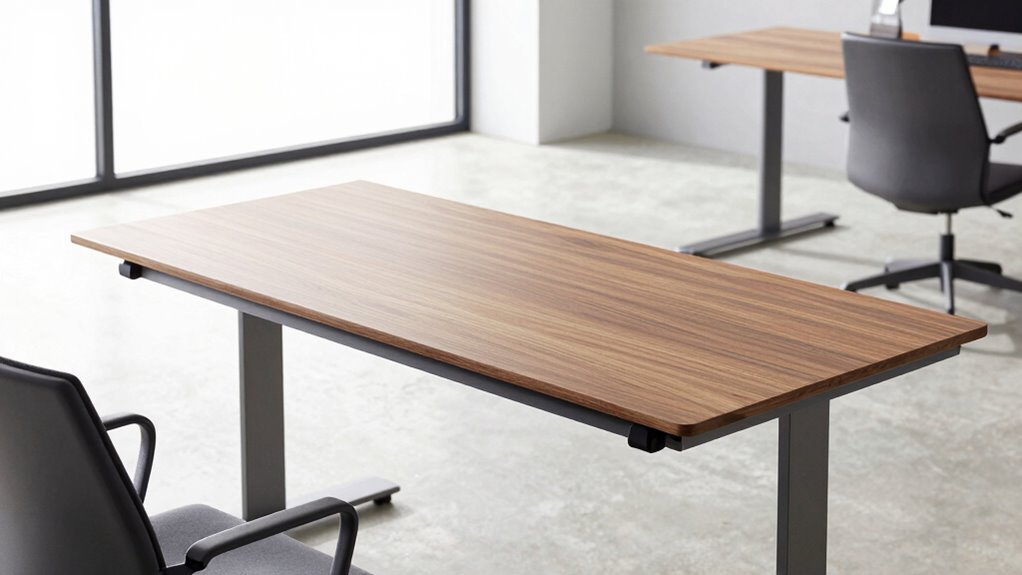
The shape of your desk can profoundly influence your posture throughout the day. When your workspace isn’t designed with your comfort and health in mind, it’s easy to develop strain, discomfort, and even long-term musculoskeletal issues. One way to guarantee your posture stays aligned and comfortable is by choosing a desk with an ergonomic design. Such desks often feature adjustable height options, enabling you to customize your workspace to fit your body perfectly. This flexibility is essential because it allows you to switch positions easily, reducing the risk of stiffness or repetitive strain injuries. When your desk height matches your body’s natural position, your shoulders relax, your wrists stay neutral, and your back remains supported, all of which promote better posture.
If your desk isn’t adjustable, you might find yourself constantly compensating by slouching or reaching awkwardly for your keyboard or mouse. Over time, these habits lead to poor posture, which can cause chronic pain and discomfort. An ergonomic design, especially with adjustable height, addresses this issue by giving you control over your workspace. You can raise or lower the desk to guarantee your elbows are bent at roughly 90 degrees and your feet rest flat on the floor. This setup minimizes unnecessary strain on your neck, shoulders, and lower back. The ability to change your desk height also encourages movement, preventing prolonged static positions that contribute to fatigue and discomfort. Incorporating ergonomic principles into your workspace design can further enhance these benefits and promote sustained comfort.
The shape of your desk influences how you position your body while working, directly impacting your posture. Desks with an ergonomic design often feature a spacious surface that accommodates your monitor at eye level, reducing the tendency to crane your neck. An adjustable height desk enables you to position your monitor to suit your height, helping you maintain a natural, upright head position. This reduces eye strain and neck tension, which are common problems caused by poorly designed desks. Furthermore, a well-designed shape ensures that your arms are supported comfortably, preventing hunching or leaning forward, which can lead to rounded shoulders and back pain over time. Additionally, the desk shape and size play a crucial role in supporting proper ergonomics and ensuring your workspace aligns with your work habits. Incorporating an ergonomic desk shape can also enhance your overall comfort and reduce the temptation to adopt poor postures during long work sessions. Properly designed desks can also contribute to preventing repetitive strain injuries, making them an essential element of a healthy workspace.
Ultimately, the shape and design of your desk are not just about aesthetics—they’re about creating a healthy, sustainable workspace. An adjustable height, ergonomic desk promotes proper alignment, encourages movement, and adapts to your needs. When you choose a desk that fits your body and work habits, you’re investing in your long-term health and comfort. It’s a simple change that can greatly improve your posture and reduce the risk of discomfort, making your workday more productive and pain-free.
ergonomic adjustable standing desk
As an affiliate, we earn on qualifying purchases.
As an affiliate, we earn on qualifying purchases.
Frequently Asked Questions
How Often Should I Change My Desk Shape for Optimal Posture?
You should change your desk shape every 30 to 60 minutes to promote ideal posture. Alternating between sitting and standing helps reduce strain and fatigue. Use ergonomic accessories like adjustable desks or sit-stand converters to make these shifts easier. Regularly adjusting your workspace encourages movement, minimizes discomfort, and supports better reach and posture throughout your day. Keep listening to your body and switch positions as needed for comfort and health.
Are Adjustable Desks Better Than Fixed Shapes for Posture?
Adjustable desks are better than fixed shapes for posture because they offer enhanced ergonomic design and workspace flexibility. With an adjustable desk, you can easily switch between sitting and standing positions, reducing strain and promoting better alignment. This adaptability allows you to customize your workspace to fit your body’s needs, helping prevent discomfort and encouraging movement throughout the day, which ultimately supports healthier posture and increased productivity.
What Materials Are Best for Desks to Support Good Posture?
Choosing the right desk surface is like selecting a sturdy, supportive foundation for a house—you need ergonomic materials that promote good posture. Opt for desks made from durable, eco-friendly materials like bamboo, laminated wood, or high-quality plastic, which provide a smooth surface and stability. These materials reduce strain on your joints and help maintain proper alignment, ensuring your workspace supports your health and comfort all day long.
Can Desk Shape Changes Prevent Long-Term Musculoskeletal Issues?
Yes, changing desk shape can help prevent long-term musculoskeletal issues. An ergonomic design encourages proper posture, reducing strain on your neck, back, and shoulders. By regularly adjusting your desk shape, you promote posture correction and avoid repetitive stress injuries. This flexibility allows you to find a comfortable position, supporting better alignment over time, and ultimately helps you maintain good musculoskeletal health during prolonged periods of work or activity.
How Do I Know Which Desk Shape Suits My Body Type?
You can determine which desk shape suits your body type by considering ergonomic accessories and adjusting desk height. Try different configurations to see which allows your elbows to stay close to a 90-degree angle and your feet flat on the floor. Pay attention to your posture and comfort. An adjustable desk helps customize the shape, and ergonomic accessories like footrests or monitor stands support tailored support for your body.
desk with ergonomic shape for posture
As an affiliate, we earn on qualifying purchases.
As an affiliate, we earn on qualifying purchases.
Conclusion
As you shift your desk shape, you might notice subtle changes in your posture and comfort, almost like the environment responds to your needs. It’s no coincidence—your workspace adapts as you do, guiding you toward better habits without you even realizing. Small adjustments can create big impacts, reminding you that your surroundings and well-being are intertwined. So, as you explore different desk shapes, trust that the right change might just be waiting to shape a healthier, more balanced you.
As an affiliate, we earn on qualifying purchases.
ergonomic office desk for neck and back support
As an affiliate, we earn on qualifying purchases.
As an affiliate, we earn on qualifying purchases.
Fall Picks
fall essentials
As an affiliate, we earn on qualifying purchases.