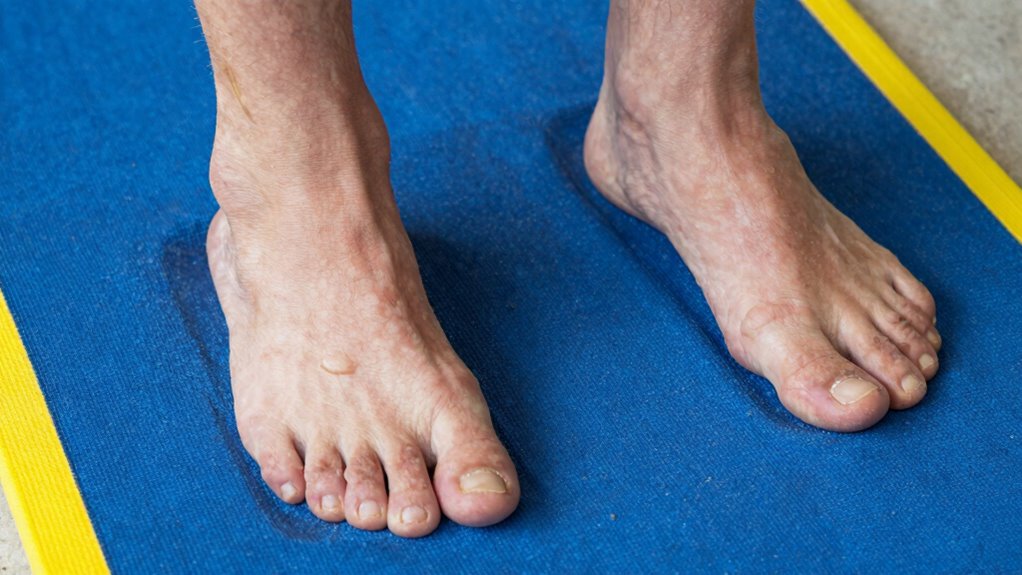

Anti-fatigue mats work best when your feet are properly positioned because correct stance guarantees even weight distribution and ideal support, reducing strain on muscles and joints. When your feet are shoulder-width apart and aligned, the mat’s ergonomic features—like textured surfaces and cushioning—can fully support your posture. Poor foot placement can negate the mat’s benefits by creating uneven pressure. Keep these tips in mind to maximize comfort, and you’ll discover more ways to improve your standing experience.
Key Takeaways
- Proper foot placement ensures ergonomic features of the mat function effectively, reducing strain and fatigue.
- Correct stance distributes weight evenly, maximizing the cushioning and support provided by the mat.
- Misaligned feet can negate the benefits of the mat’s textured surface and beveled edges.
- Good foot positioning enhances shock absorption, protecting legs and back during prolonged standing.
- Proper stance allows the mat’s durable materials to maintain support and ergonomic benefits over time.
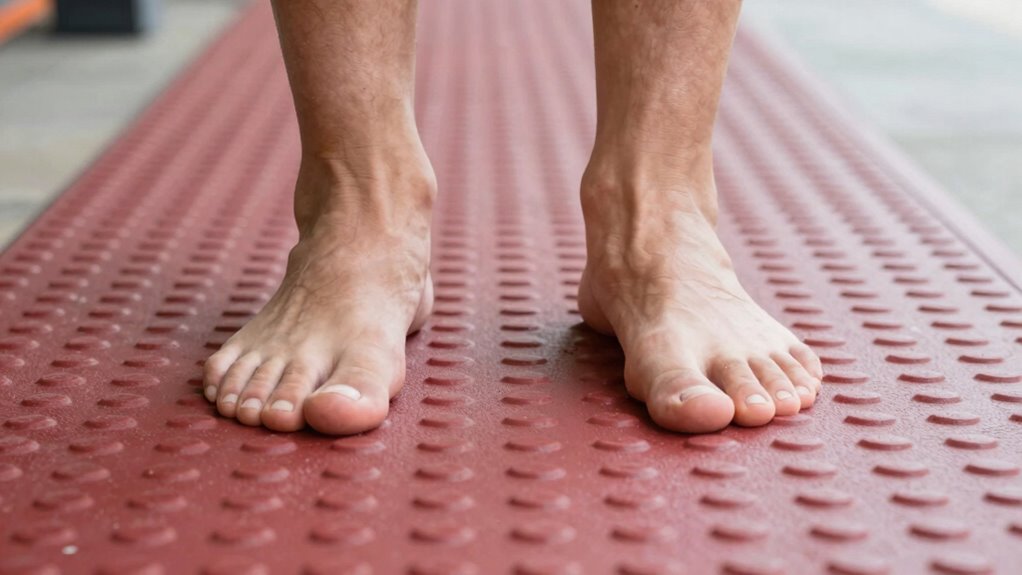
If you spend long hours standing, anti-fatigue mats can make a significant difference in your comfort and productivity. But to truly benefit from them, you need to pay attention to your foot position. A well-designed mat alone won’t solve discomfort unless you also adopt proper standing habits. The key lies in understanding that anti-fatigue mats are most effective when paired with good foot positioning, which helps you distribute your weight evenly and reduce strain on your muscles and joints.
The ergonomic design of these mats plays a crucial role in supporting your stance. They are crafted with features like beveled edges, textured surfaces, and appropriate cushioning to promote better posture and reduce fatigue. When you stand with your feet correctly aligned—feet shoulder-width apart, weight centered—you allow the mat’s ergonomic features to do their job. Proper foot placement ensures your weight is spread out evenly across the mat, preventing pressure points that can cause discomfort or circulation issues. In contrast, standing with feet too close together or unevenly distributed can compromise the mat’s benefits, leading to increased fatigue regardless of the mat’s quality.
Material durability is another essential aspect. High-quality anti-fatigue mats are made from tough, long-lasting materials such as rubber or high-density foam. These materials withstand constant pressure and resist wear over time, maintaining their supportive properties. When you stand with good foot position, the durable material absorbs shock and reduces the impact on your legs and back, which is vital during prolonged periods of standing. Additionally, choosing a durable material can help ensure the mat maintains its ergonomic benefits over time. This is especially important because the material durability influences how well the mat retains its supportive and ergonomic features throughout its lifespan. If the mat’s material isn’t durable, it may lose its cushioning and ergonomic features quickly, rendering it less effective—even if you stand correctly. This highlights how material quality directly impacts the longevity and effectiveness of anti-fatigue mats. Investing in a mat with excellent material durability ensures that its supportive benefits remain intact, encouraging proper posture and reducing fatigue over the long term.
Ultimately, anti-fatigue mats are tools designed to improve your standing comfort, but their effectiveness hinges on your foot position. Adopting ergonomic stance—correct foot placement and posture—maximizes the supportive features built into the mat. When combined with a durable material that holds its shape and support, you’re more likely to experience less fatigue, fewer aches, and increased productivity. Remember, even the best mat won’t work miracles if your stance is poor. To get the most out of your anti-fatigue mat, focus on maintaining good foot positioning, and choose one with a well-thought-out ergonomic design and high material durability. Incorporating biodiversity principles into your workspace or environment can also promote overall well-being and sustainability.
anti-fatigue mat with textured surface
As an affiliate, we earn on qualifying purchases.
As an affiliate, we earn on qualifying purchases.
Frequently Asked Questions
Do Anti-Fatigue Mats Work on All Floor Types?
Anti-fatigue mats work best on certain floor types, depending on floor compatibility and material durability. They perform well on concrete, wood, and tile floors, but may slip or wear out quickly on uneven or slick surfaces. To guarantee effectiveness, choose mats made from durable materials suited for your floor. Proper installation and regular maintenance also help maximize their benefits, regardless of your floor type.
How Long Does It Take to Notice Benefits?
Ever wonder how soon you’ll notice benefits from anti-fatigue mats? Typically, you’ll start feeling improved foot comfort and posture within just a few days of consistent use. The key is to stand correctly and maintain good foot positioning. As your muscles adapt, you’ll experience less fatigue and discomfort. Staying mindful of your stance accelerates these benefits, making every shift in your posture a step toward greater comfort and well-being.
Can Anti-Fatigue Mats Prevent Foot Pain?
Anti-fatigue mats can help prevent foot pain when you stand on them with good foot positioning, thanks to their ergonomic design. They reduce foot discomfort by cushioning your feet and promoting better posture. However, if you don’t stand properly, the mats won’t fully protect you from pain. To get the most benefit, guarantee your foot placement aligns with ergonomic principles, maximizing comfort and minimizing strain during prolonged standing.
Are Anti-Fatigue Mats Suitable for Outdoor Use?
Yes, anti-fatigue mats can be suitable for outdoor use if they’re designed for outdoor durability and weather resistance. You should look for mats made from materials like rubber or vinyl that withstand moisture, UV rays, and temperature fluctuations. These features guarantee your mat remains effective and durable over time. Proper outdoor anti-fatigue mats help reduce fatigue and prevent slips, making outdoor work safer and more comfortable for you.
What Is the Ideal Thickness for Anti-Fatigue Mats?
The ideal thickness for anti-fatigue mats is about ¾ inch to 1 inch, acting like a cushion for your feet. An ergonomic design combined with durable materials guarantees comfort and longevity. Thinner mats might not provide enough support, while thicker ones could be unstable. You want a mat that cradles your feet without compromising stability, making every step feel like walking on a soft cloud.
ergonomic anti-fatigue standing mat
As an affiliate, we earn on qualifying purchases.
As an affiliate, we earn on qualifying purchases.
Conclusion
To sum it up, anti-fatigue mats are a game-changer, but only if your foot position is spot-on. Think of them as a magic wand—without the right stance, they can’t do their wonders. When your feet are properly aligned, these mats can turn your workday from a tiring slog into a walk in the park. So, make sure your footing is solid, or you might just be wasting a mountain of potential energy on a hill of discomfort.
As an affiliate, we earn on qualifying purchases.
anti-fatigue mat for standing desk
As an affiliate, we earn on qualifying purchases.
As an affiliate, we earn on qualifying purchases.