
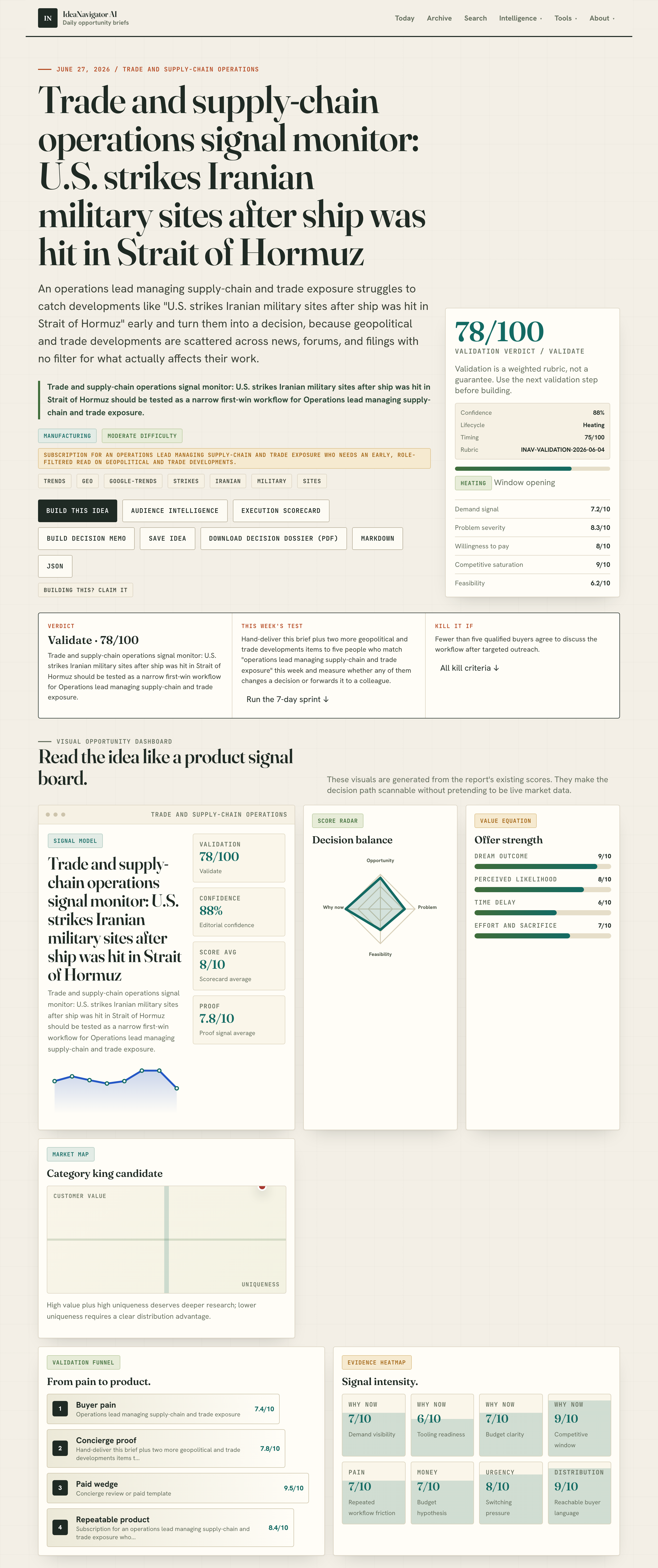
📊 Full opportunity report: Trade and supply-chain operations signal monitor: U.S. strikes Iranian military sites after ship was hit in Strait of Hormuz on IdeaNavigator AI — validation score, market gap, and execution plan.

Get school and study supplies delivered free — and shop member deals
- Fast, free delivery on millions of items
- Access to Prime Big Deal Days deals on October 6–7
- Prime Video, Amazon Music and more included
TL;DR
The United States has launched military strikes against Iranian military sites after a ship was hit in the Strait of Hormuz. This escalation impacts global trade routes and supply chains, with ongoing uncertainty about wider conflict.
The United States has carried out military strikes on Iranian military sites following an attack on a commercial vessel in the Strait of Hormuz. This escalation in military activity is significant for global trade routes and geopolitical stability, directly impacting supply chains and international relations.
According to U.S. officials, the strikes targeted Iranian military infrastructure believed to be responsible for the recent attack on a merchant ship in the Strait of Hormuz. The incident involved an unidentified assault that damaged the vessel, prompting the U.S. to respond with targeted military action. The operation was confirmed by U.S. Defense Department spokespersons and took place earlier today.
Iranian authorities have not yet officially responded to the strikes. The Iranian government has previously denied involvement in attacks on commercial shipping in the region, but tensions have escalated amid ongoing disputes over maritime security and regional influence. The strikes are part of a broader pattern of U.S. military actions aimed at deterring further attacks on maritime traffic in the strategically vital Strait of Hormuz.
Trade and supply chain operators are closely monitoring the situation due to the importance of the Strait of Hormuz as a major global shipping corridor. The incident has already affected oil prices and shipping schedules, with market analysts warning of potential disruptions if tensions escalate further.
Implications for Global Trade and Regional Stability
This development underscores the fragility of maritime security in the Persian Gulf and its impact on global supply chains. The Strait of Hormuz is a critical chokepoint for oil and goods, and military escalation risks widespread disruptions. For trade operators, increased geopolitical risk could lead to higher costs, insurance premiums, and delays, emphasizing the need for role-specific monitoring and contingency planning.
maritime supply chain monitoring tools
As an affiliate, we earn on qualifying purchases.
As an affiliate, we earn on qualifying purchases.
Recent Escalations in U.S.-Iran Tensions
Over the past year, tensions between the U.S. and Iran have risen amid disputes over nuclear programs, maritime security, and regional influence. The Strait of Hormuz has been a flashpoint, with previous incidents involving attacks on vessels and Iranian military activity. The current strikes follow a series of escalations, including Iran’s recent missile tests and U.S. sanctions enforcement.
Historically, the U.S. has responded to maritime attacks with targeted military actions, aiming to deter further aggression. The recent incident marks a significant escalation, with the U.S. explicitly linking the attack on the ship to Iranian military responsibility, though Iran denies involvement.
“The strikes targeted Iranian military infrastructure responsible for recent hostile actions in the Strait of Hormuz.”
— U.S. Defense Department spokesperson
As an affiliate, we earn on qualifying purchases.
Unclear Scope and Potential Escalation Risks
It remains unclear whether the strikes will deter further attacks or escalate the conflict in the region. Iran’s response could range from diplomatic protests to retaliatory military actions, but specifics are still emerging. The broader impact on regional stability and global trade is also uncertain, with analysts watching for further developments.
oil spill and maritime security sensors
As an affiliate, we earn on qualifying purchases.
As an affiliate, we earn on qualifying purchases.
Monitoring Developments and Preparing for Possible Escalation
Next steps include observing Iran’s official response and assessing the potential for further military or diplomatic actions. Global markets will continue to monitor oil prices and shipping routes for signs of disruption. Governments and trade operators are advised to maintain contingency plans and role-specific situational awareness.
global trade route monitoring software
As an affiliate, we earn on qualifying purchases.
As an affiliate, we earn on qualifying purchases.
Key Questions
What prompted the U.S. to strike Iranian military sites?
The strikes followed an attack on a merchant vessel in the Strait of Hormuz, which U.S. officials attribute to Iran’s military forces, aiming to deter further attacks on shipping in the region.
Could this lead to a wider conflict in the region?
While escalation is possible, it is currently unclear whether Iran will retaliate militarily or pursue diplomatic channels. The situation remains fluid and closely monitored by international actors.
How might this affect global trade and oil prices?
The incident has already caused fluctuations in oil prices and shipping schedules, with potential for further disruptions if tensions escalate or conflict widens.
What should supply chain operators do now?
Operators should monitor geopolitical developments closely, prepare contingency plans for possible disruptions, and stay updated on regional security advisories.
Is there any international response or diplomatic effort underway?
At this stage, no official international diplomatic responses have been announced, but regional and global powers are likely to engage in consultations as the situation develops.
Source: IdeaNavigator AI
Fall Picks
fall essentials
As an affiliate, we earn on qualifying purchases.





![The Legend Of Von Neumann (1973) [Pdf]](https://micronomicon.com/wp-content/uploads/2026/10/the-legend-of-von-neumann-1973-pdf-featured-260x140.jpg)