📊 Full opportunity report: Cybersecurity operations signal monitor: A backdoor in a LinkedIn job offer on IdeaNavigator AI — validation score, market gap, and execution plan.
TL;DR
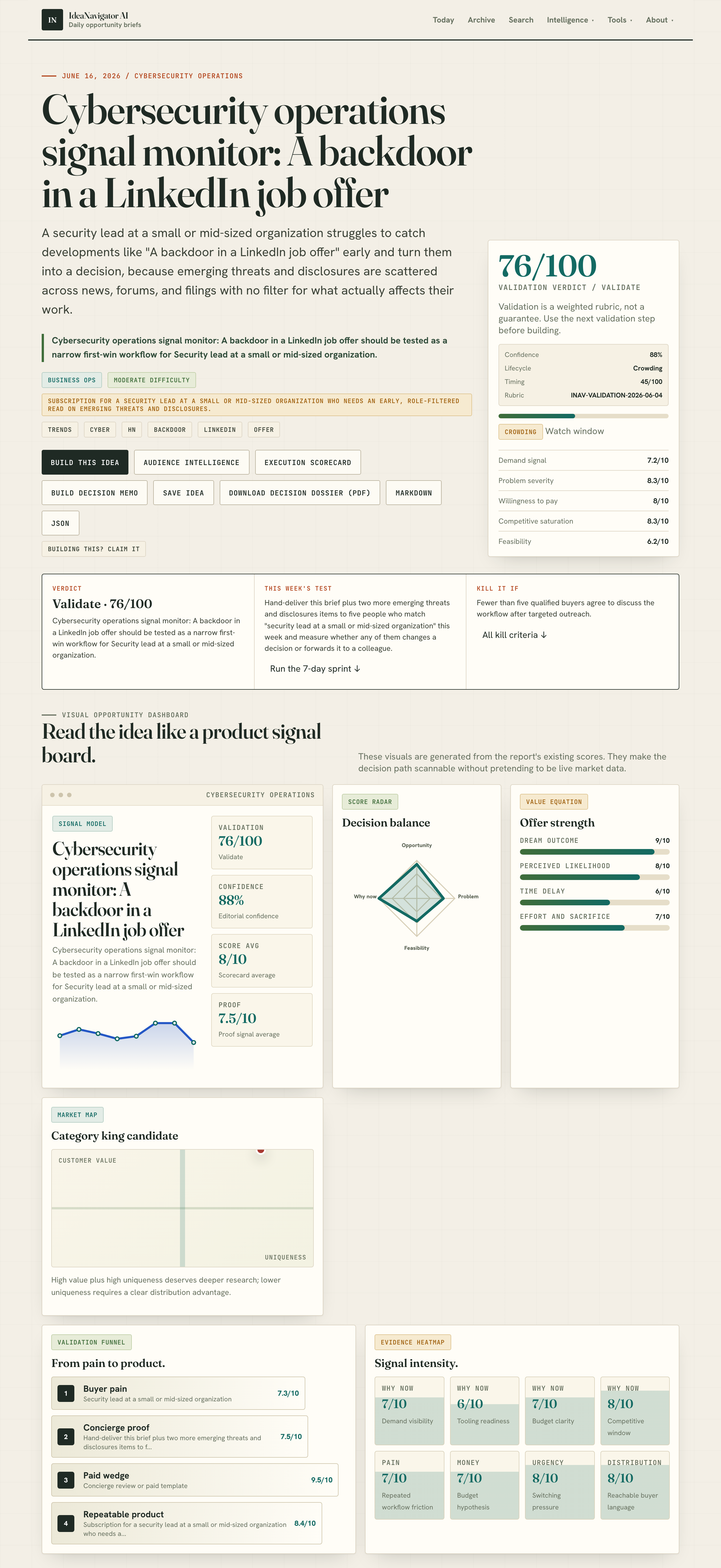
Cybersecurity analysts detected a malicious backdoor embedded in a LinkedIn job listing. This development highlights ongoing threats targeting recruitment platforms, with potential for unauthorized access. The incident underscores the need for vigilance in vetting online job offers.
Cybersecurity analysts have confirmed the presence of a backdoor embedded within a LinkedIn job offer, marking a significant threat vector for targeted cyber espionage. The discovery was made by security researchers monitoring emerging threats on professional networking platforms, and it underscores the evolving tactics used by malicious actors to compromise organizations.
The backdoor was identified in a LinkedIn job listing posted by an unknown entity. According to cybersecurity experts, the malicious code could allow attackers to gain unauthorized access to the systems of the organization that hires through this listing, potentially leading to data theft or further network infiltration.
Security researchers have not yet disclosed the full technical details of the backdoor, but preliminary analysis suggests it was embedded in the job description or application process, designed to evade detection by standard security tools. The incident was flagged after suspicious activity was observed in linked systems following the posting.
LinkedIn has been notified of the issue, and the platform has temporarily removed the suspect listing while investigations continue. No organizations have publicly reported breaches linked directly to this backdoor at this time, but the threat remains active and under scrutiny.
Implications for Recruitment and Cybersecurity
This incident highlights the increasing use of social engineering and platform-based vulnerabilities in cyberattacks. For organizations, especially small and mid-sized firms that rely heavily on online recruitment, the risk of malicious job postings is rising. The backdoor could serve as a gateway for attackers to infiltrate corporate networks, steal sensitive data, or deploy malware.
For cybersecurity defenders, this underscores the importance of scrutinizing online job offers and implementing targeted monitoring of recruitment channels. Early detection can prevent wider breaches and reduce operational impact. The incident also emphasizes the need for continuous vigilance as threat actors adapt their tactics to exploit trusted platforms.
As an affiliate, we earn on qualifying purchases.
Rise of Platform-Based Cyber Threats
Over recent years, cybercriminals have increasingly targeted social media and professional networking sites to distribute malware and establish footholds within victim organizations. LinkedIn, as a primary platform for recruitment and professional engagement, has become a focal point for such threats.
This specific incident follows a pattern of malicious actors embedding backdoors or malware in seemingly legitimate job postings, exploiting the trust users place in these platforms. Past incidents have involved fake job offers used to deliver malware payloads or phishing campaigns.
While this is not the first time a backdoor has been found in online job listings, the sophistication and potential impact of this recent discovery mark a notable escalation in platform-targeted cyber threats.
“The backdoor was embedded in the job description, designed to trigger when an applicant submitted their information, potentially giving attackers access to internal systems.”
— an anonymous cybersecurity researcher
network intrusion detection system
As an affiliate, we earn on qualifying purchases.
As an affiliate, we earn on qualifying purchases.
Extent of the Threat and Affected Organizations
It is not yet clear how many organizations have been targeted or compromised through this backdoor. The full technical details of the malicious code, including its payload and potential for lateral movement, are still under investigation. Additionally, the scope of the campaign—whether it is isolated or part of a broader operation—is unknown at this stage.
As an affiliate, we earn on qualifying purchases.
Ongoing Investigation and Platform Response
Security researchers and LinkedIn are continuing to analyze the backdoor, seeking to understand its mechanics and scope. LinkedIn has indicated it is working to remove malicious listings and enhance platform security measures. Organizations are advised to review their recruitment processes, monitor for suspicious activity, and update security protocols accordingly.
Further disclosures or technical reports are expected as investigations progress, and security advisories may be issued to alert users to similar threats.
As an affiliate, we earn on qualifying purchases.
Key Questions
How can organizations protect themselves from such threats?
Organizations should implement strict vetting of online job offers, use security tools to monitor for suspicious activity, and train staff to recognize potential social engineering attacks.
What signs indicate a malicious job posting?
Unusual request for sensitive information, suspicious links, or inconsistent company details are common indicators. Always verify job offers through official channels.
Has any data been compromised so far?
There are no confirmed reports of data breaches resulting from this specific backdoor at this time, but investigations are ongoing.
What should users do if they encounter a suspicious job listing?
Report the listing to platform administrators, avoid sharing personal or sensitive information, and alert your organization’s security team if involved in recruitment processes.
Source: IdeaNavigator AI