
Many often overlook the environmental factors that set the stage for severe weather, like atmospheric instability, moisture levels, and wind shear. Regional climate, topography, and ocean temperatures play essential roles in storm development and intensity. Seasonal shifts and the jet stream’s position can steer or escalate storms unexpectedly. Recognizing these behind-the-scenes influences helps you prepare better; stay tuned to learn how these hidden factors impact severe weather alerts and your safety.
Key Takeaways
- Many overlook the influence of regional topography and urban heat islands on storm development, affecting alert accuracy.
- Atmospheric instability and wind shear interactions are often forgotten but crucial for predicting severe weather alerts.
- Seasonal and diurnal variations significantly impact storm timing but are frequently underemphasized in alert settings.
- The role of ocean temperatures and jet stream patterns in steering storms is often overlooked in early warning systems.
- Proper understanding of local climate, terrain, and daily weather cycles enhances the effectiveness of severe weather alerts.
severe weather alert radio
As an affiliate, we earn on qualifying purchases.
As an affiliate, we earn on qualifying purchases.
How Atmosphere Sets the Stage for Severe Weather
Have you ever wondered what conditions turn a calm day into a severe weather event? It all begins with atmospheric layering, where different air temperatures and humidities create the perfect environment for cloud formation. Warm, moist air rises and encounters cooler layers, causing it to cool and condense into clouds. These clouds can grow taller and more intense as more moisture feeds into them. When the atmosphere becomes unstable, this process accelerates, leading to the development of cumulonimbus clouds—the giants responsible for thunderstorms, hail, and even tornadoes. The way these layers interact determines whether a day remains peaceful or turns severe. Understanding the layering of the atmosphere helps meteorologists predict the likelihood of severe weather events, providing crucial information for safety and preparedness.
storm safety kit
As an affiliate, we earn on qualifying purchases.
As an affiliate, we earn on qualifying purchases.
How Regional Climate Shapes Storm Risks
Your region’s temperature patterns influence how often and intense storms become. Local humidity levels also play a vital role in storm formation and strength. Additionally, the terrain shapes how storms develop and move across the landscape. Understanding regional climate factors can help in better predicting and preparing for severe weather events.
Regional Temperature Patterns
Regional temperature patterns play a essential role in shaping storm risks by influencing the development and intensity of severe weather systems. Urban heat islands, where cities trap heat, can create localized temperature differences that fuel thunderstorms and increase storm severity. Conversely, mountain breezes—cool air descending slopes—affect regional temperature gradients, impacting storm formation and movement. These temperature variations can enhance instability in the atmosphere, making storms more likely to develop or intensify. Warmer regions tend to produce more energetic storms, especially during warm seasons, while cooler areas may experience fewer but still potentially severe weather events. Understanding regional climate patterns helps you anticipate storm behavior and understand why certain areas face higher risks based on regional temperature trends.
Local Humidity Levels
High humidity levels profoundly influence storm development by increasing the amount of moisture available in the atmosphere. When humidity is high, storms can intensify quickly, especially in areas with urban heat, which raises local temperatures and boosts evaporation. Soil moisture also plays a key role; moist soil adds to atmospheric humidity, fueling storm formation. Regions with ample soil moisture and urban heat tend to have higher storm risks. The table below highlights how these factors interact:
| Factor | Impact on Storm Risk |
|---|---|
| Urban heat | Elevates temperature, increases evaporation |
| Soil moisture | Adds atmospheric humidity, fuels storms |
| Regional climate | Shapes overall humidity levels |
| Local conditions | Determine storm severity and frequency |
Understanding these elements helps anticipate severe weather more accurately. Additionally, awareness of precious metal investments can provide alternative financial security during unpredictable weather events.
Geography and Topography
The geography and topography of an area play a crucial role in shaping its storm risks by influencing local climate patterns. Urban heat islands, caused by dense infrastructure and concrete, raise temperatures and can intensify storms. Elevated temperatures create instability in the atmosphere, increasing the likelihood of severe weather. Topography also affects wind patterns; mountain ranges can redirect or funnel winds, amplifying storm strength or steering storms toward populated areas. Valleys may trap heat and moisture, fostering conditions for thunderstorms. Coastal regions with flat terrain tend to experience different wind behaviors than hilly or mountainous areas. Understanding how urban heat and wind patterns interact with the landscape helps you anticipate storm risks more accurately, making you better prepared for severe weather events driven by regional climate influences. Additionally, the use of energy-efficient cloud servers can aid in monitoring and modeling these complex climate interactions more effectively.
weather radio with NOAA alerts
As an affiliate, we earn on qualifying purchases.
As an affiliate, we earn on qualifying purchases.
How Seasonal Changes Influence Storm Development
As seasons change, temperature fluctuations can trigger the formation of storms, making certain times of year more active. Humidity levels also play a key role, providing the moisture needed for storm development. Additionally, longer daylight hours influence when storms are most likely to occur, affecting their timing and intensity. Return policies may also impact how quickly individuals can adapt to storm-related damages or disruptions.
Temperature Fluctuations and Storms
Seasonal changes cause significant temperature fluctuations that can trigger storm development. As temperatures shift, warm air rises, creating instability that fuels storms. This process often involves increased cloud cover, which traps heat and amplifies temperature differences. Wind shear, the variation in wind speed and direction with altitude, interacts with temperature fluctuations to organize storm structures and intensify severity. When the surface heats up during seasonal transitions, the resulting temperature contrast with cooler upper layers energizes storm systems. These fluctuations can lead to rapid storm formation, especially when combined with specific atmospheric conditions. Understanding how temperature shifts influence cloud cover and wind shear helps you anticipate when storms are more likely to develop. Additionally, atmospheric instability plays a crucial role in the rapid development of severe weather events.
Humidity’s Role in Development
Humidity plays an essential role in storm development, especially during seasonal shifts when moisture levels fluctuate considerably. Higher humidity increases cloud cover, providing the necessary moisture for clouds to grow and thunderstorms to form. When the air is humid, it fuels convection, making storms more intense. Wind shear, or changes in wind speed and direction with altitude, interacts with humidity to influence storm structure. Strong wind shear can tilt storm clouds, helping them sustain themselves longer, while inadequate shear can cause storms to weaken quickly. During seasons with rising humidity, expect more frequent and severe storms. Additionally, humidity levels can impact precipitation patterns, affecting how storms develop and dissipate. Conversely, lower humidity limits cloud formation, reducing storm potential. Understanding these factors helps you recognize when conditions are primed for severe weather development.
Daylight and Storm Timing
Have you ever noticed how storms tend to develop at certain times of the day or year? Seasonal changes influence storm timing through lighting effects and temperature variations. During late afternoon, the sun’s angle creates more intense heating, fueling storm development. As daylight decreases in fall and winter, storms often become less frequent or shift timing. Understanding this pattern helps you improve storm preparedness, especially when thunderstorms align with peak sunlight hours.
| Time of Day | Lighting Effects | Storm Likelihood | Seasonal Impact |
|---|---|---|---|
| Morning | Low light | Less likely | Less active |
| Afternoon | Bright, intense | Most common | Peak season |
| Evening | Dimming sky | Diminishing risk | Reduced activity |
| Night | Darkness | Rare | Minimal storms |
storm preparedness supplies
As an affiliate, we earn on qualifying purchases.
As an affiliate, we earn on qualifying purchases.
How the Jet Stream Steers Weather Systems

The jet stream, a fast-moving ribbon of air high in the atmosphere, acts as a powerful steering wheel for weather systems across the globe. Its dynamics influence how weather patterns move and develop, guiding storms and high-pressure systems along its path. When the jet stream shifts north or south, it changes the direction of weather pattern steering, bringing different conditions to regions below. Strong jet streams create sharp boundaries between warm and cold air, intensifying storms and severe weather. Conversely, a weak or meandering jet stream can cause prolonged weather patterns, leading to persistent rain or droughts. Variations in the jet stream are often driven by temperature differences, which affect its speed and path. Understanding jet stream dynamics helps you predict how weather systems will evolve and where severe weather might strike, making it a vital piece of weather forecasting.
How Ocean Temperatures Drive Storm Formation
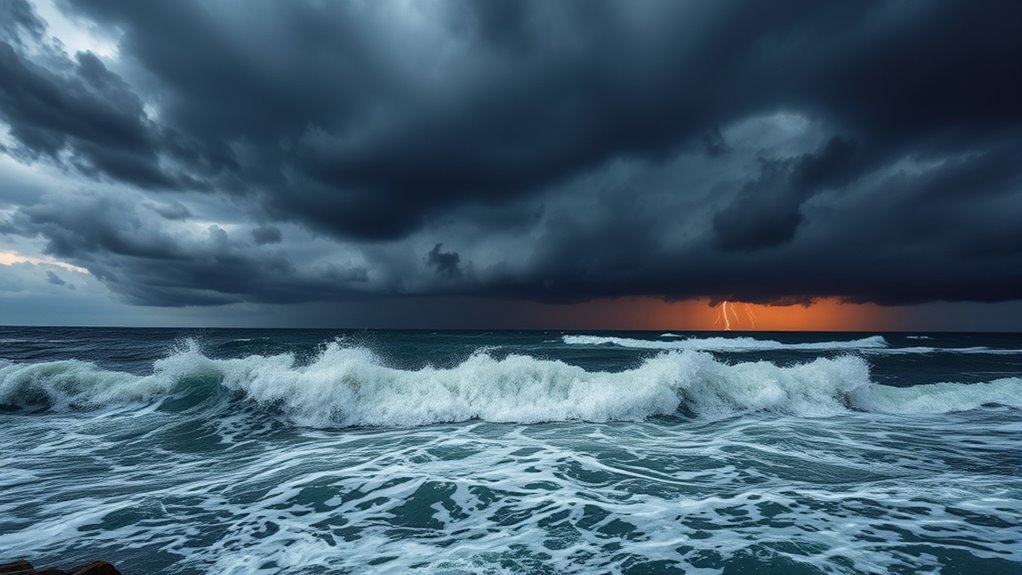
Ocean temperatures play a vital role in storm formation because warm waters provide the energy needed for developing powerful weather systems. When the sea surface heats up, it fuels the convection processes that generate storms like hurricanes and typhoons. Ocean currents redistribute heat across the globe, influencing where and when storms form. Warmer sea surface temperatures lead to more intense storms by increasing humidity and energy availability. You can observe this effect in tropical regions, where warm waters energize storms that can grow rapidly. Additionally, building codes and zoning laws can influence how communities prepare for and respond to such storms. Cooler areas tend to suppress storm formation due to less heat energy. Understanding how ocean temperatures drive storms helps you anticipate severe weather events more accurately.
How Topography Affects Severe Weather Patterns
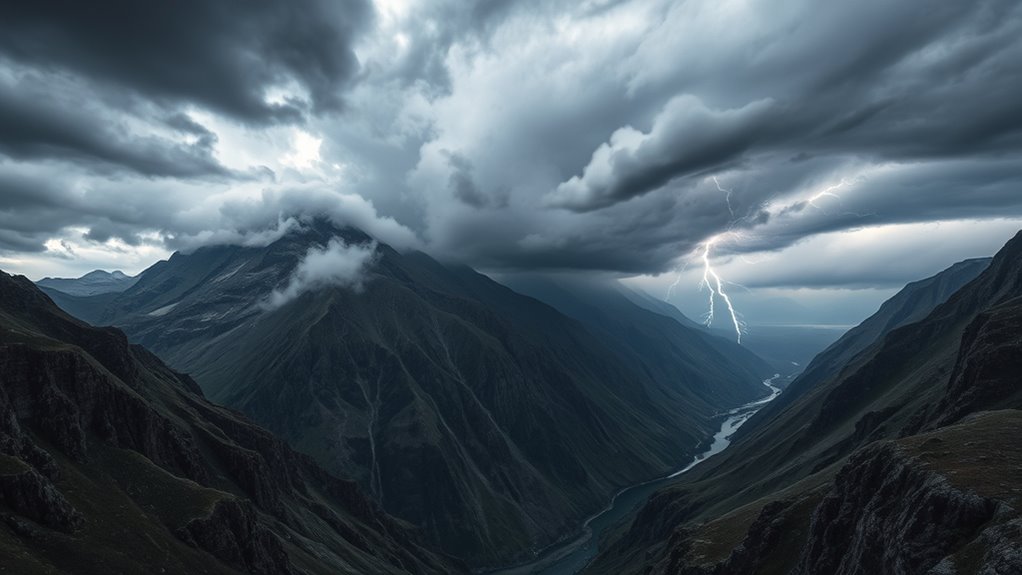
Topography considerably influences how severe weather patterns develop and move across regions. When you’re in areas with urban heat, the heat island effect raises temperatures, which can enhance cloud formation and intensify storms. Elevated temperatures cause warm air to rise quickly, creating the perfect conditions for storm development. Mountain ranges can force moist air upward, leading to increased cloud formation and precipitation on windward slopes. Conversely, valleys may trap heat and moisture, fostering localized severe weather. The landscape’s shape determines airflow, storm paths, and intensity. You’ll notice that regions with varied topography often experience more unpredictable and severe weather patterns, as the terrain interacts dynamically with atmospheric conditions, shaping how storms form, grow, and move across the landscape.
How Instability and Moisture Trigger Storms
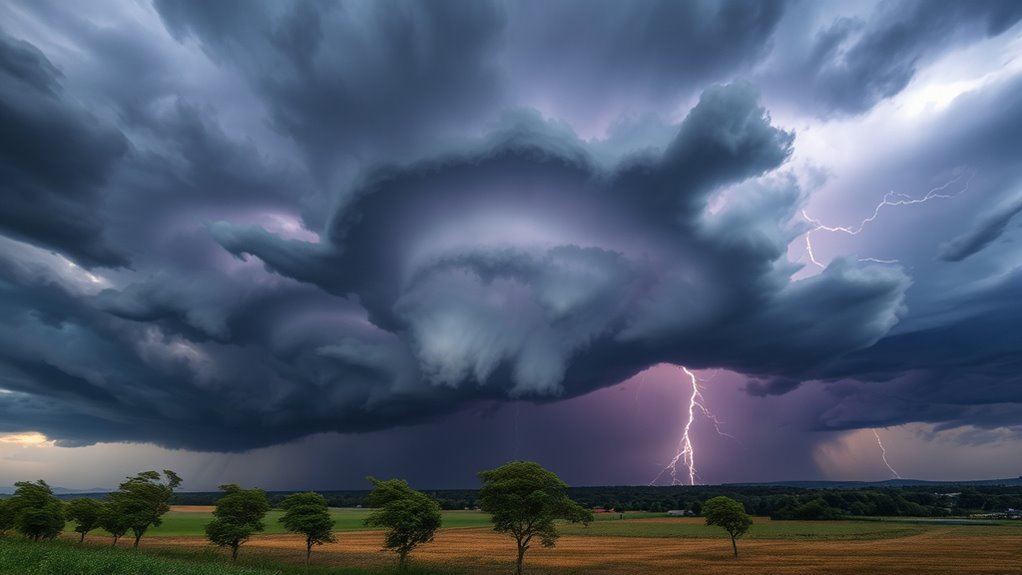
Severe storms often form when atmospheric conditions become unstable and moist air rises, creating the perfect environment for cloud development and precipitation. When there’s abundant cloud cover, warm, moist air lifts into cooler layers, fueling storm growth. Wind shear, the change in wind speed or direction with height, helps organize storms, making them more intense. You’ll notice that:
- Increased moisture adds to cloud density and potential rainfall.
- Instability causes air parcels to rise rapidly, strengthening storm updrafts.
- Wind shear helps separate storm components, increasing the likelihood of severe weather.
These factors work together to trigger storm development, with moisture providing the fuel and instability causing vertical motion. Recognizing this interplay can help you understand how storms become severe and why they can escalate quickly.
How Land Use Changes Impact Weather Patterns
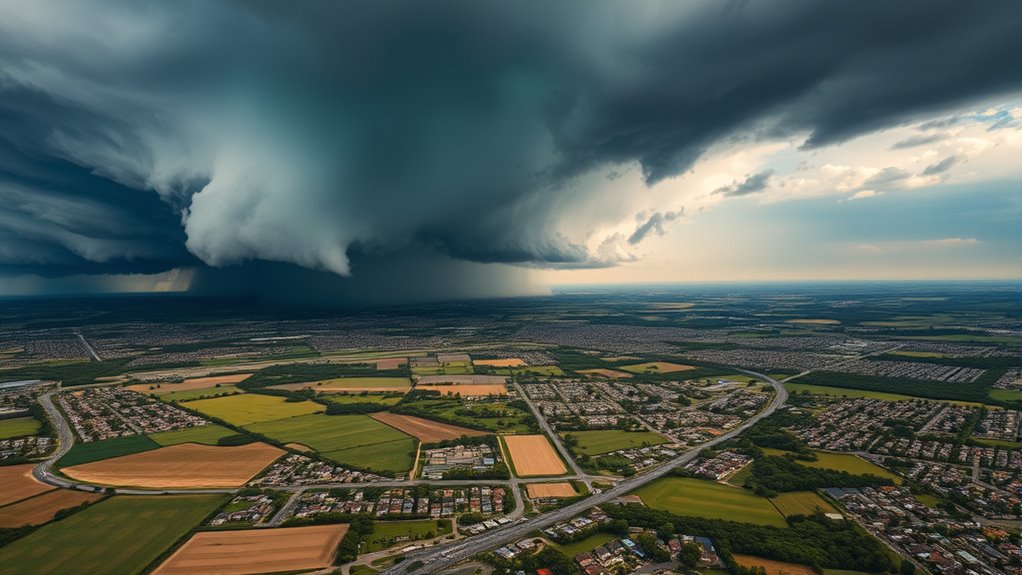
Land use changes, such as urban development and deforestation, profoundly influence local weather patterns. When urban sprawl expands, it alters the natural landscape, increasing heat absorption and creating urban heat islands. Land modification affects airflow and moisture, leading to shifts in local rainfall and storm intensity. These changes can intensify severe weather events or create new patterns altogether. For example:
| Land Use Change | Effect on Weather | Resulting Impact |
|---|---|---|
| Urban sprawl | Increased heat retention | Higher temperatures, more heat waves |
| Deforestation | Reduced moisture release | Drier conditions, altered rainfall |
| Land modification | Disrupted airflow patterns | Unpredictable storm development |
Understanding land use’s role helps you recognize how human activity shapes weather, often amplifying severe weather risks.
How to Monitor the Environment for Better Storm Preparedness
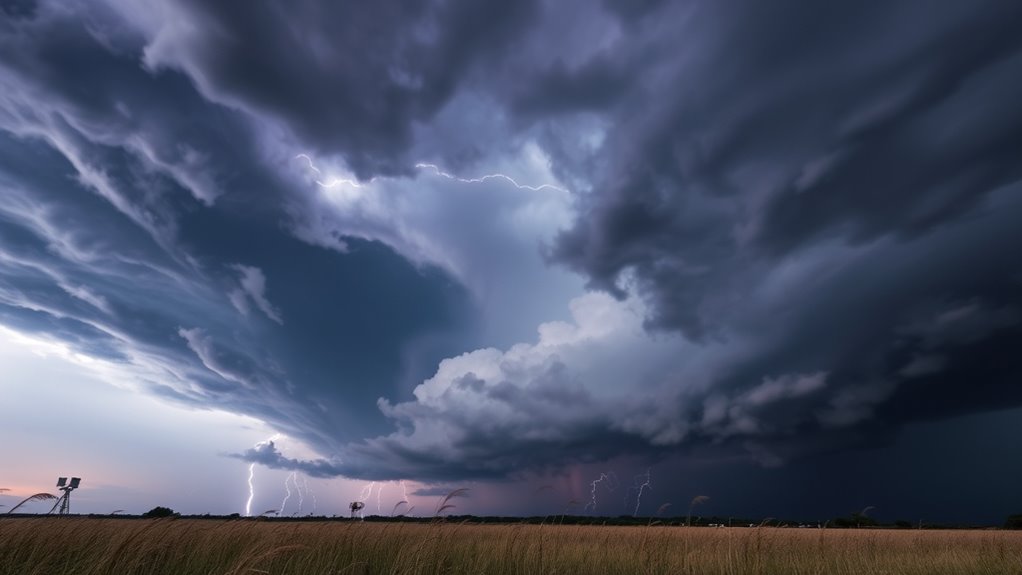
Monitoring the environment effectively is essential for improving storm preparedness, as it allows you to detect early signs of severe weather. Stay alert to changing conditions by using reliable tools and sources. Weather apps are a great way to receive real-time updates, alerts, and storm warnings directly on your device. You should also:
- Regularly check local weather alerts and updates from official sources
- Observe the sky for unusual cloud formations or sudden changes in wind
- Keep a weather radio handy for continuous updates, especially during severe weather seasons
Frequently Asked Questions
How Do Urban Areas Influence Local Severe Weather Patterns?
Urban areas influence local severe weather patterns through urban heat and concrete effects. You might notice that cities experience more intense thunderstorms and heatwaves because concrete absorbs and retains heat, raising local temperatures. This added heat can fuel severe weather events, making storms stronger and more frequent. As you observe urban environments, understand that the concrete effects contribute to these changes, amplifying the severity of weather patterns in cities compared to rural areas.
What Role Do Human Activities Play in Changing Storm Frequency?
Human activities, like industrial pollution and deforestation, markedly increase storm frequency. Industrial pollution releases greenhouse gases that warm the atmosphere, fueling more frequent and intense storms. Deforestation disrupts natural water cycles and reduces forest cover that stabilizes weather patterns. By cutting down trees and emitting pollutants, you contribute to changing storm patterns, making severe weather events more common and unpredictable. Addressing these activities can help reduce storm frequency over time.
How Accurate Are Current Weather Prediction Models for Severe Storms?
You’ll be pleased to know that current weather prediction models for severe storms have about 70-80% accuracy. Storm prediction has improved thanks to advanced technology and data analysis, but models still face challenges in predicting exact timing and intensity. While you can rely on these models for early alerts, it’s wise to stay updated through local alerts, as model accuracy isn’t perfect and storms can still surprise you.
Can Climate Change Increase the Intensity of Severe Weather Events?
Yes, climate change can increase the intensity of severe weather events. You see, climate feedbacks, like melting ice and increased water vapor, amplify the greenhouse effects, leading to more energy in the atmosphere. This extra energy fuels stronger storms, heavier rainfall, and more intense heatwaves. So, as greenhouse effects grow stronger, you can expect weather events to become more severe and unpredictable, impacting your safety and daily life more than ever before.
What Technologies Are Most Effective for Early Severe Weather Detection?
You can’t predict severe weather without powerful tools like satellite imaging and radar technology working overtime. These technologies are like supercomputers, giving you real-time images and data that can spot storms long before they become dangerous. Satellite imaging captures massive storm systems from space, while radar technology tracks their movement and intensity. Together, they’re your best defense, alerting you early and saving lives from nature’s fiercest surprises.
Conclusion
Think of weather as a grand symphony, with each factor playing its part. When the atmosphere, ocean temperatures, and land interact perfectly, a storm can erupt unexpectedly. Just like a conductor anticipates every note, staying informed about these elements helps you prepare. Remember, understanding the environment is your best tool—so stay alert and tuned in. After all, knowing the storm’s orchestra makes all the difference between being caught in the rain or staying dry.