
Soil compaction happens when heavy machinery, foot traffic, or poor moisture management compresses the soil, reducing air, water movement, and root growth. This leads to weaker plants, lower yields, and environmental issues like erosion and runoff. To prevent this, you can manage traffic, incorporate organic matter, and monitor soil health with new tech like sensors and drones. Keep exploring to discover how you can protect and restore your soil effectively.
Key Takeaways
- Soil compaction reduces pore space, limiting air, water, and nutrient movement essential for healthy plant roots.
- Excessive pressure from heavy machinery and foot traffic compacts soil, harming its structure and fertility.
- Compacted soil decreases water infiltration, increasing runoff, erosion, and environmental pollution risks.
- Roots struggle to penetrate dense soil, leading to poor plant growth and lower crop yields.
- Monitoring technologies like soil sensors and drone mapping aid in detecting and managing compaction issues effectively.

Insoma WiFi Hose Timer - Brass Inlet & Outlet, Voice/App Control Sprinkler Timers with Rain Delay/Manual/Auto Mode, Smart Water Timer for Garden/Lawn/Yard Work with Alexa & Google Home, Energy Saving
【Upgraded Brass Swivel Inlet & Outlet】New upgraded water timer, pure brass water inlet and outlet, brass threads are...
As an affiliate, we earn on qualifying purchases.
What Is Soil Compaction and Why Does It Matter?
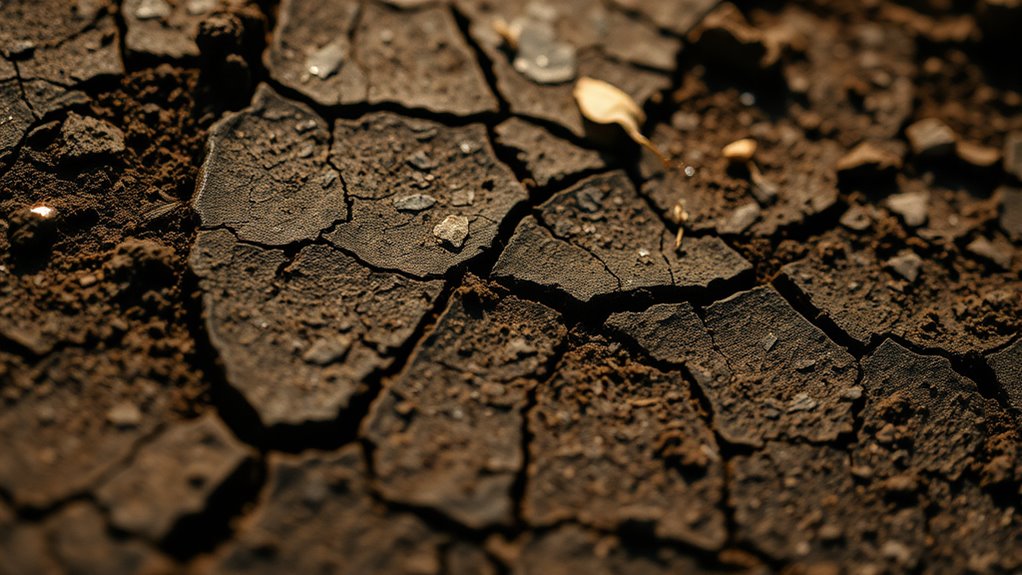
Have you ever wondered what happens when soil becomes tightly packed? When soil compacts, it reduces soil aeration, making it harder for air to reach plant roots. This lack of oxygen hampers root growth and slows down the activity of beneficial microorganisms. As a result, nutrient availability drops because essential nutrients can’t move freely through the soil or reach plant roots efficiently. Soil compaction also limits water infiltration, causing water runoff and erosion. This creates a challenging environment for plants to thrive, affecting crop yields and overall plant health. Understanding what soil compaction is helps you realize why maintaining proper soil structure is essential for healthy, productive land. Without proper soil aeration, plants can’t access nutrients effectively, threatening their growth and vitality.
Orbit 24632 B-hyve XD 2-Port Smart Hose Watering Timer
EFFORTLESS AUTO WATERING - Orbit B-hyve XD Smart Hose Timer controls watering based on precise local weather data,...
As an affiliate, we earn on qualifying purchases.
What Causes Soil to Become Compacted?
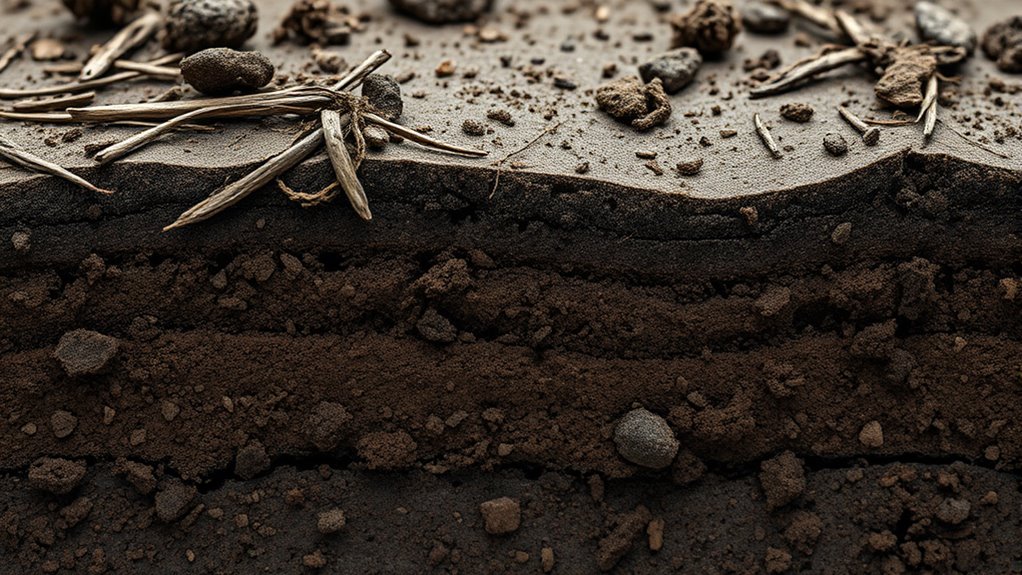
Soil becomes compacted when external forces press down on it, squeezing out air pockets and reducing pore spaces. This pressure often results from heavy machinery, foot traffic, or frequent farming activities. When soil compacts, it hampers soil aeration, making it difficult for roots to access oxygen. Poor soil aeration limits healthy root development and can lead to waterlogging or drought stress. Additionally, improper moisture management worsens compaction; too much moisture makes soil softer and easier to compress, while too little increases soil hardness. Consistent trampling, especially in wet conditions, accelerates compaction. Understanding these causes helps you manage soil properly, avoiding excessive compaction by controlling traffic, ensuring proper drainage, and maintaining optimal moisture levels. These steps protect soil structure, keeping it healthy for plant growth. Recognizing the impact of free floating on soil health highlights the importance of minimizing unnecessary disturbances to preserve pore space and soil vitality.

meross WiFi Water Timer for Garden Hose, Smart Hose Timer with Brass Inlet & Outet, WiFi Sprinkler Valve Work with Apple Homekit, Alexa & Google Assistant, Smart Rain Skip for Lawn, Garden & Yard
Note: If you already own a Meross Hub MSH400/MSH450, you can directly purchase the version"without wifi Hub", The...
As an affiliate, we earn on qualifying purchases.
How Does Soil Compaction Affect Plant Growth?
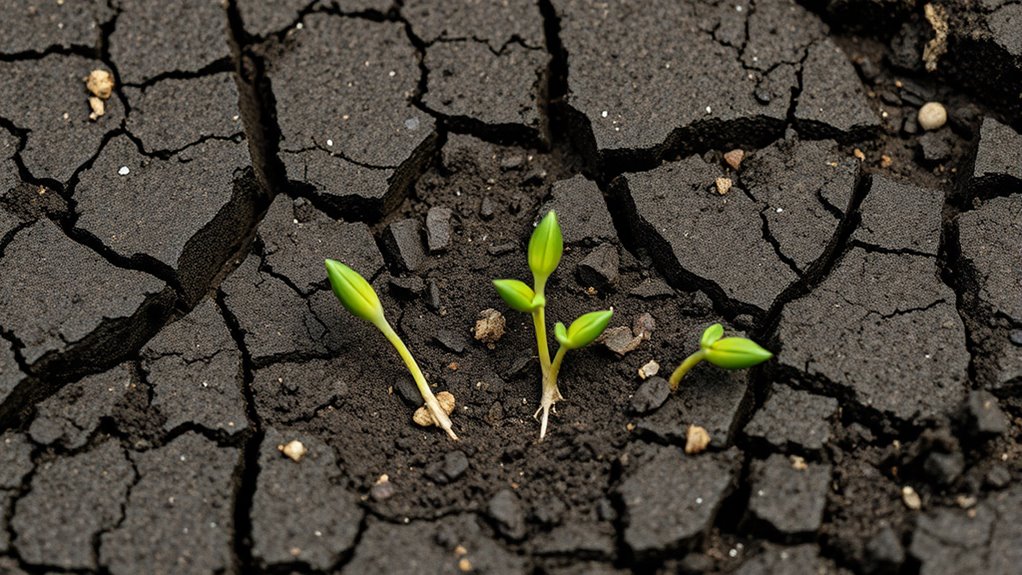
When soil becomes compacted, plant growth suffers because roots struggle to penetrate the dense, less porous environment. Reduced soil aeration limits the exchange of gases, making it harder for roots to breathe and grow effectively. This lack of oxygen hampers root development and weakens the plant’s overall stability. Additionally, soil compaction decreases pore space, which restricts water movement and causes poor drainage. Nutrient uptake also declines because nutrients become less accessible when roots cannot spread properly. As a result, plants may exhibit stunted growth, yellowing leaves, or reduced yields. Without proper soil aeration and nutrient absorption, your plants can’t reach their full potential, making soil compaction a significant barrier to healthy plant development. Proper soil management can help prevent or alleviate soil compaction, promoting healthier growth.
WiFi Water Timer 2 Zone for Garden Hose, Smart Sprinkler Timer with 984ft RF Range, Smart Lawn Watering System Irrigation Controller, APP/Voice Control, Rain Delay, Automatic/Manual Irrigation
[Smart App & Voice Control WiFi Sprinkler Timer] Control this WiFi water timer remotely via Smart Life/Tuya app...
As an affiliate, we earn on qualifying purchases.
What Are the Environmental Impacts of Soil Compaction?
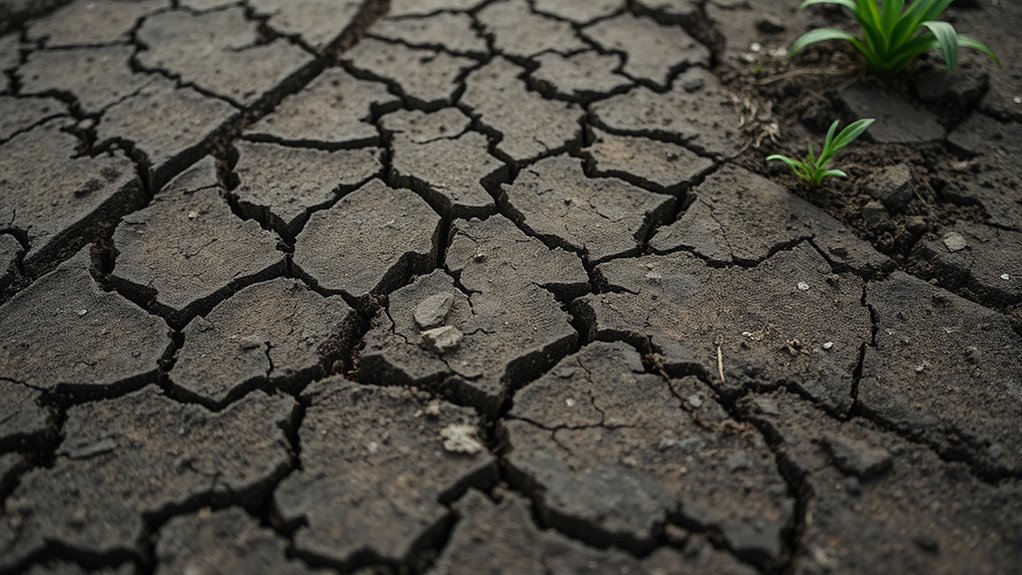
Soil compaction not only hampers plant health but also causes significant environmental issues. When soil becomes tightly packed, its structure breaks down, reducing water infiltration and increasing runoff. This runoff can carry sediments and pollutants into nearby water bodies, leading to water pollution. Additionally, compacted soil is more prone to soil erosion because it lacks the porosity needed to hold water and anchor particles. As erosion accelerates, nutrients and topsoil are lost, diminishing land productivity and harming ecosystems. The increased runoff also raises the risk of flooding and contaminates water supplies. Overall, soil compaction disrupts natural processes, jeopardizes water quality, and accelerates land degradation, making it a critical environmental concern that requires attention. Understanding soil health is essential for developing sustainable land management practices that mitigate these impacts.
How Can You Detect Soil Compaction in Your Land?
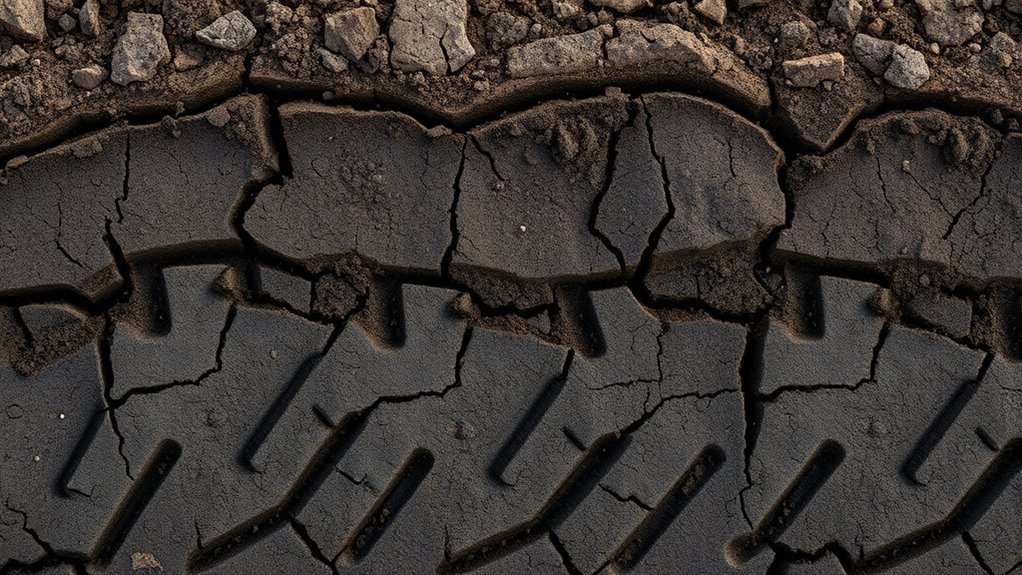
Detecting soil compaction early can save your land from long-term damage, and there are several straightforward methods to do so. One quick way is to measure soil density with a penetrometer, which assesses how easily a rod penetrates the soil—more resistance indicates higher compaction. You can also dig small test holes to observe how compacted the soil feels; if it’s hard and difficult to loosen, compaction is likely. Monitoring moisture content is essential, too, since wet soil tends to be more compacted. Using a soil probe or a simple jar test can help you evaluate moisture levels. Additionally, understanding the contrast ratio of your soil’s surface can help determine the level of compaction, as higher ratios often correlate with denser, more compacted soil. By combining these methods, you can accurately identify compaction issues early and take informed steps to address them before they cause significant problems.
What Are the Best Ways to Prevent and Reduce Soil Compaction?
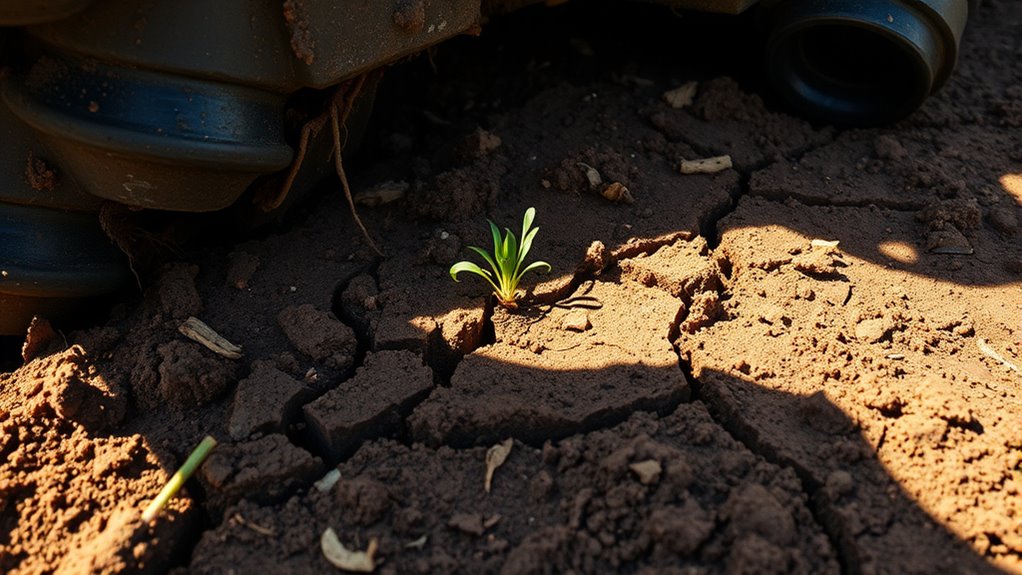
To prevent and reduce soil compaction, you should limit the use of heavy machinery on sensitive areas. Incorporating organic matter can improve soil structure and resilience, making it less prone to compaction. Additionally, practicing proper traffic management helps distribute weight evenly and minimizes soil disturbance. Regular assessment of soil health can also identify vulnerable spots and guide targeted interventions.
Limit Heavy Machinery Use
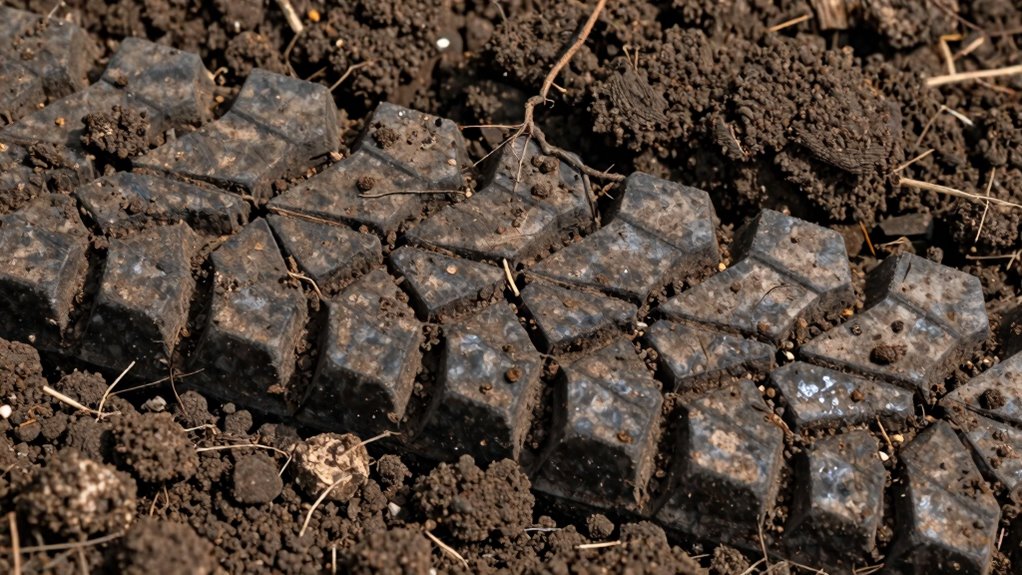
Limiting the use of heavy machinery is one of the most effective ways to prevent soil compaction. Heavy equipment, like tractors, leaves deep tracks that compress the soil, reducing pore space and impeding water and air movement. To minimize this, plan machinery routes carefully to avoid repeatedly passing over the same area. Additionally, incorporating soil aeration techniques helps alleviate compaction caused by tractor tracks. Regular aeration loosens compacted layers, restoring soil structure and improving root growth. When possible, use lighter machinery or manual labor for tasks that don’t require heavy equipment. Employing self-watering planters and other innovative gardening tools can also help reduce the need for heavy machinery in landscape maintenance. By reducing machinery traffic and promoting soil aeration, you can maintain healthier soil structure, enhance plant growth, and prevent long-term compaction issues beneath your feet.
Incorporate Organic Matter
Incorporating organic matter into your soil substantially helps prevent and reduce compaction by improving its structure and porosity. Organic amendments like compost, manure, or cover crops add essential nutrients and create a more crumbly, aerated soil. These organic materials encourage microbial activity, which breaks down organic matter, releasing nutrients, and enhancing soil stability. As microbes thrive, they produce byproducts that loosen the soil particles, preventing them from becoming dense and compacted. Regularly adding organic matter helps maintain a healthy soil ecosystem, promoting better water infiltration and root growth. microbial activity plays a crucial role in breaking down organic material and improving soil structure. This natural process reduces the need for mechanical intervention and helps keep your soil loose, fertile, and resilient against compaction. Incorporating organic amendments is a simple, effective way to support long-term soil health.
Practice Proper Traffic Management
Effective traffic management is essential for preventing and reducing soil compaction, especially in areas with frequent vehicle or foot traffic. You should implement clear traffic control measures to direct vehicles and pedestrians away from vulnerable soil, minimizing unnecessary pressure. Staging equipment properly guarantees that heavy machinery only operates on designated paths, reducing widespread compaction. Use barriers or signage to restrict access to sensitive zones, and schedule traffic to avoid peak times. Regularly monitor traffic flow and adjust management strategies accordingly. By controlling where and when traffic occurs, you protect soil structure and promote healthy soil conditions. Proper traffic control and thoughtful equipment staging are your best tools for maintaining soil integrity, ensuring the ground remains resilient and productive over time. Incorporating soil monitoring techniques can help identify areas most at risk and inform targeted management efforts.
Which New Technologies Help Manage Soil Health?
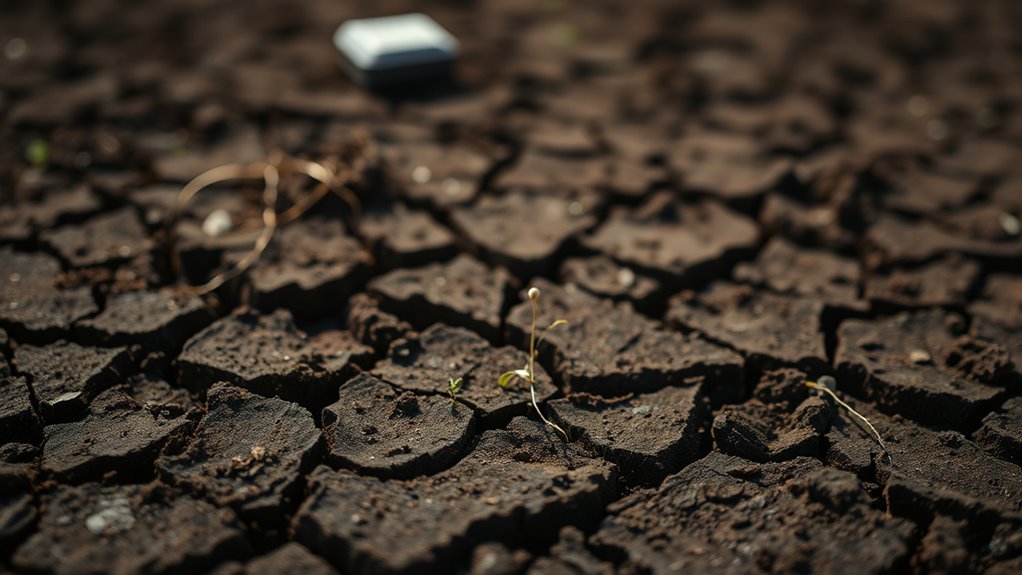
Have you ever wondered how new technologies are transforming soil health management? Modern tools like soil sensors and drone mapping are making a difference. Soil sensors provide real-time data on moisture, nutrients, and compaction levels, helping you make informed decisions. Drone mapping offers aerial views of your fields, identifying problem areas quickly and accurately. These technologies enable proactive management, reducing soil degradation and improving crop yields. Additionally, outdoor wisdom emphasizes the importance of integrating traditional knowledge with modern tech for optimal results.
Frequently Asked Questions
Can Soil Compaction Be Reversed Naturally Over Time?
Yes, soil compaction can be reversed naturally over time. You can improve it by promoting soil aeration, which allows air, water, and nutrients to penetrate better. Adding organic matter helps loosen compacted soil and boosts microbial activity, aiding natural recovery. Regularly avoiding heavy machinery and minimizing foot traffic also helps the soil regain its structure. With patience and proper care, your soil can become healthier and less compacted naturally.
How Does Soil Compaction Impact Groundwater Recharge?
Like a closed gate, soil compaction blocks groundwater flow, reducing infiltration rates. When soil is compacted, water struggles to seep through, leading to slower recharge of aquifers. This disruption hampers the natural cycle, risking drought and contamination. You can see how tightly packed soil acts as a barrier, preventing crucial water from reaching underground stores. To maintain healthy groundwater levels, loosening soil and reducing compaction is essential.
Are Certain Soil Types More Prone to Compaction?
Yes, certain soil types are more prone to compaction. For example, soils with fine textures like clay tend to compact more easily because their small particles pack tightly, reducing porosity. Conversely, soils rich in organic matter or with sandy textures resist compaction better, allowing air and water to flow freely. Understanding your soil texture and organic matter content helps you predict and manage compaction risks effectively.
What Role Do Heavy Machinery and Construction Play?
You might think construction equipment and land development only shape landscapes, but they actually play a huge role in soil compaction. Heavy machinery like bulldozers and excavators exert immense pressure, squeezing soil particles tightly together. This compaction reduces porosity, hampers water infiltration, and damages plant roots. When you see construction sites, remember that these machines are directly responsible for altering soil structure, making land less healthy and harder to restore.
How Can Farmers Tell if Soil Is Too Compacted for Planting?
You can tell if soil is too compacted for planting by checking soil density and root penetration. If the soil feels hard and dense, it’s likely compacted. You might notice roots struggling to grow deeply or spreading out sideways instead of downward. Using a penetrometer or digging small holes to observe the soil structure can help. When roots can’t penetrate easily, it’s a clear sign that soil compaction hampers plant growth.
Conclusion
By understanding soil compaction, you hold the key to nurturing a vibrant, breathing earth beneath your feet. Think of your soil as a delicate dance floor—when it’s too packed, the rhythm stalls, and plants struggle to thrive. But with mindful care and new technologies, you can loosen the soil’s grip, inviting life and energy back into your land. Take action now, and transform your soil into a rich, fertile canvas ready for growth and abundance.