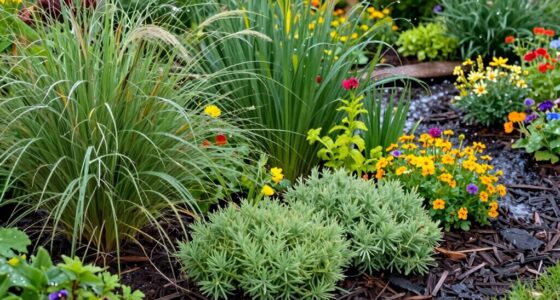
Many believe native plants require little care, but that’s a myth. While they’re generally easier than non-natives, they still need targeted watering, pruning, and monitoring to stay healthy. Selecting suitable species, preparing the soil, and adjusting care for seasonal changes help your garden thrive. Native plants aren’t completely fuss-free, but understanding their true needs makes maintaining them easier. Keep exploring to discover how to give your native garden the right attention it deserves.
Key Takeaways
- Native plants still require watering, pruning, and monitoring to thrive, especially during droughts or climate changes.
- Proper soil preparation and matching plant choices to site conditions reduce maintenance needs and improve health.
- Myth: Native plants need no care; in reality, occasional maintenance supports resilience and prevents invasive species.
- Seasonal care like mulching and pruning is essential for native plants’ long-term vitality and pest resistance.
- Efficient, minimal interventions—such as targeted watering and regular inspections—make native gardening manageable.
Top picks for "native plant maintenance"
Open Amazon search results for this keyword.
As an affiliate, we earn on qualifying purchases.
Why Native Plants Aren’t Completely Low-Maintenance
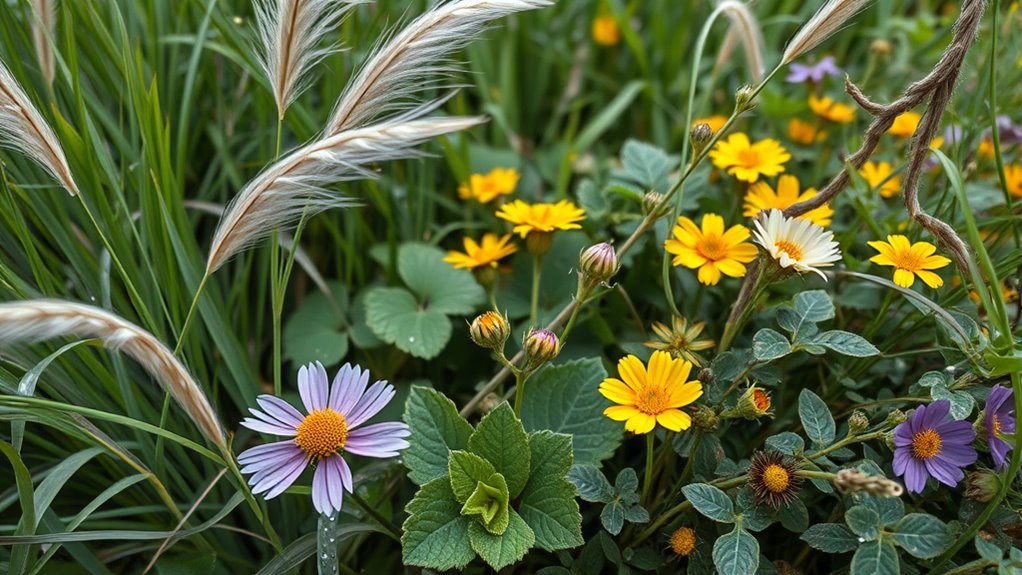
Although native plants are generally easier to care for than non-native species, they still require some maintenance to thrive. Native invasives can sometimes outcompete your desired plants, so you’ll need to monitor and manage these to maintain a healthy landscape. Additionally, native plants may need occasional pruning or removal of dead material to promote growth. While plant propagation is often straightforward with native species, it still demands your attention to ensure successful establishment. You might need to divide or collect seeds to expand your native garden, but improper techniques or neglect can hinder their growth. Remember, even low-maintenance plants benefit from some care to prevent invasives and support healthy propagation, keeping your native garden flourishing. Incorporating sound therapy techniques can also help manage environmental stressors that might affect plant health.
What Native Plants Really Need to Thrive
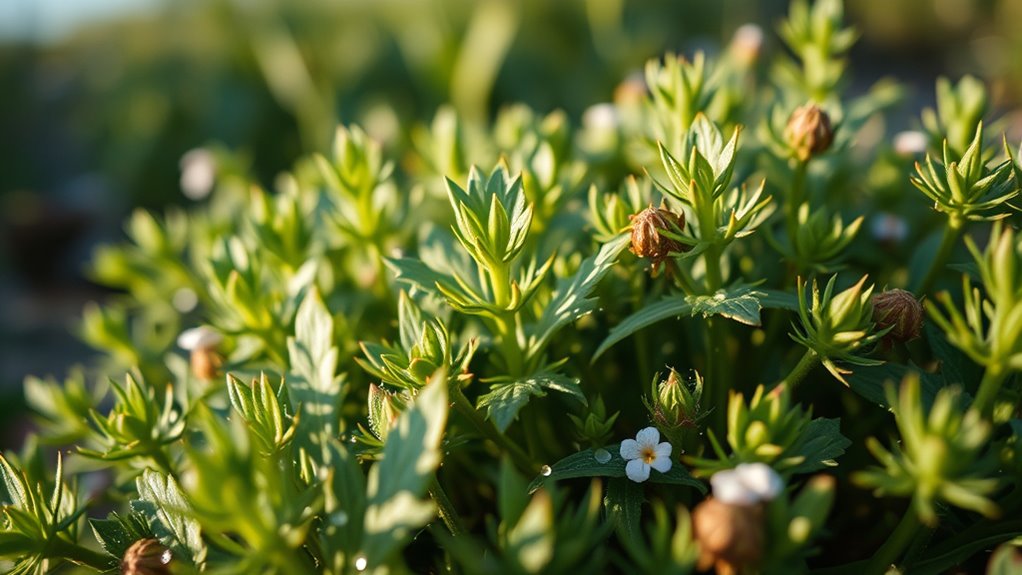
Your native plants need the right amount of water to stay healthy, and that can vary depending on the species. They also require soil that matches their natural environment to thrive. Paying attention to these needs helps guarantee your plants grow strong and vibrant. Additionally, understanding the specific requirements of each native species can prevent overwatering or underwatering, ensuring long-term success.
Watering Needs Vary
Native plants have diverse watering needs, and understanding these differences is key to helping them thrive. Some plants prefer occasional deep watering, while others need consistent moisture. To meet these needs effectively, consider these strategies:
- Use drip irrigation systems for targeted watering, reducing waste and ensuring plants get exactly what they need.
- Collect rainwater through rain collection systems, providing a natural, sustainable water source that mimics natural rainfall patterns.
- Adjust watering frequency based on the plant’s specific requirements and seasonal changes, avoiding overwatering or underwatering.
- Implementing energy-efficient irrigation solutions can further conserve resources while maintaining optimal watering practices.
Soil Compatibility Matters
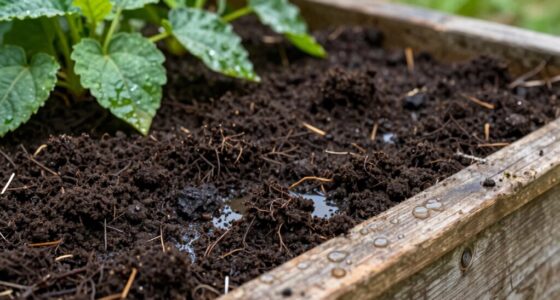
Matching native plants to the right soil conditions is vital for their long-term health and growth. To do this effectively, you should start with soil testing to understand the existing soil composition. Testing reveals important details like nutrient levels and soil type, helping you determine if amendments are necessary. Equally important is checking the pH balance, as native plants thrive within specific pH ranges. If your soil is too acidic or alkaline, it can hinder plant roots and limit nutrient uptake. Adjusting soil pH or improving soil quality ensures your native plants have the ideal environment to flourish. Additionally, incorporating soil sensors can help monitor soil conditions in real-time, allowing for more precise care. By paying close attention to soil compatibility, you’ll set the foundation for a sustainable, low-maintenance garden that truly supports native species.
Busting Myths About Native Garden Care
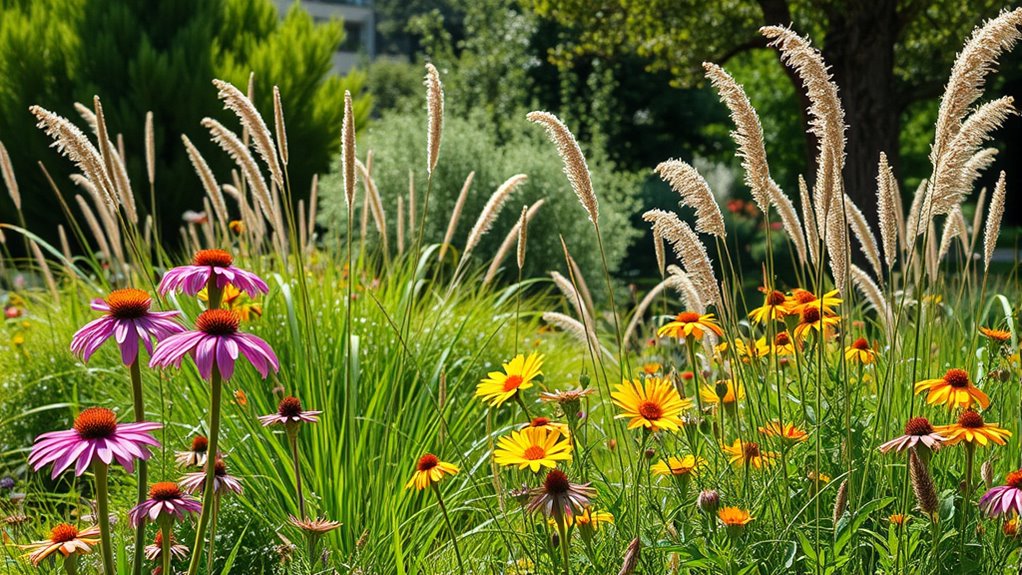
Many common beliefs about native garden care are simply myths that can hinder your efforts to create a thriving landscape. These native plant myths often lead to garden care misconceptions, making you overlook essential needs or overestimate plant resilience. To clear things up:
- Native plants require no water — false; they often need supplemental watering during droughts.
- Native plants are low-maintenance — not always; some still demand pruning or pest control.
- Native plants will thrive without soil prep — inaccurate; proper soil conditions boost success.
- Native plants are always resilient — while adaptable, they still benefit from thoughtful garden care practices.
Understanding these misconceptions helps you avoid unnecessary effort or disappointment. Native plants are adaptable, but they still need thoughtful care. Bust these garden care misconceptions to cultivate a healthy, vibrant native garden that truly thrives with your attention.
How to Plan a Native Garden That Works
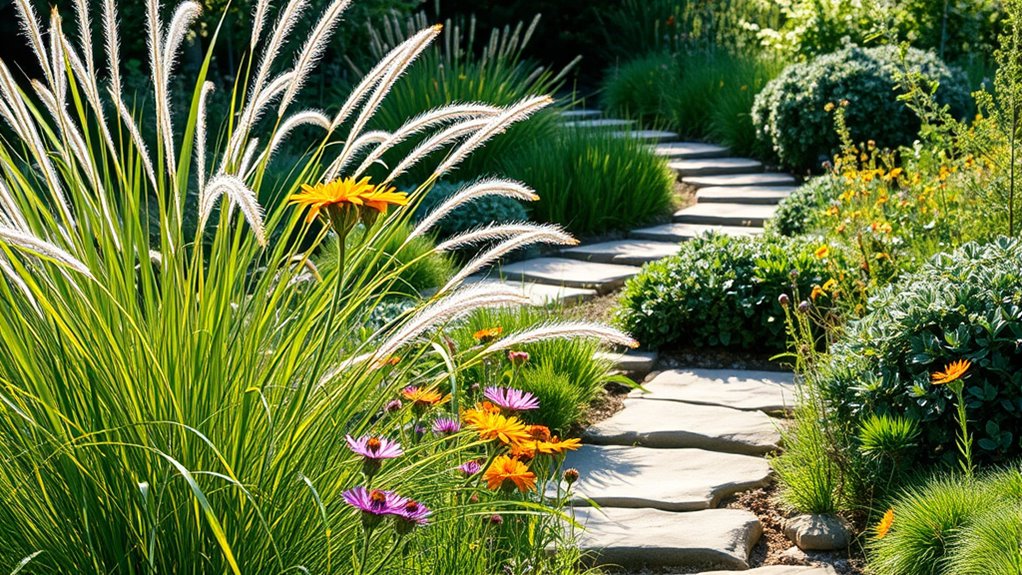
Planning a successful native garden starts with understanding your site’s unique conditions and selecting plants that will thrive there. Begin by evaluating sunlight, soil type, moisture levels, and drainage. This will guide your native plant selection, ensuring you choose species adapted to your environment. Next, design your garden layout to group plants with similar needs together, which simplifies maintenance and promotes healthy growth. Incorporate diverse layers—groundcover, shrubs, and flowering perennials—to create visual interest and support local ecosystems. Consider natural features like existing trees and slopes to enhance your design. Be aware that modern gardening techniques can also help optimize native plant growth and sustainability. By carefully planning your native plant selection and garden layout, you set the foundation for a resilient, low-maintenance garden that flourishes with minimal intervention.
Seasonal Tasks to Keep Native Plants Healthy
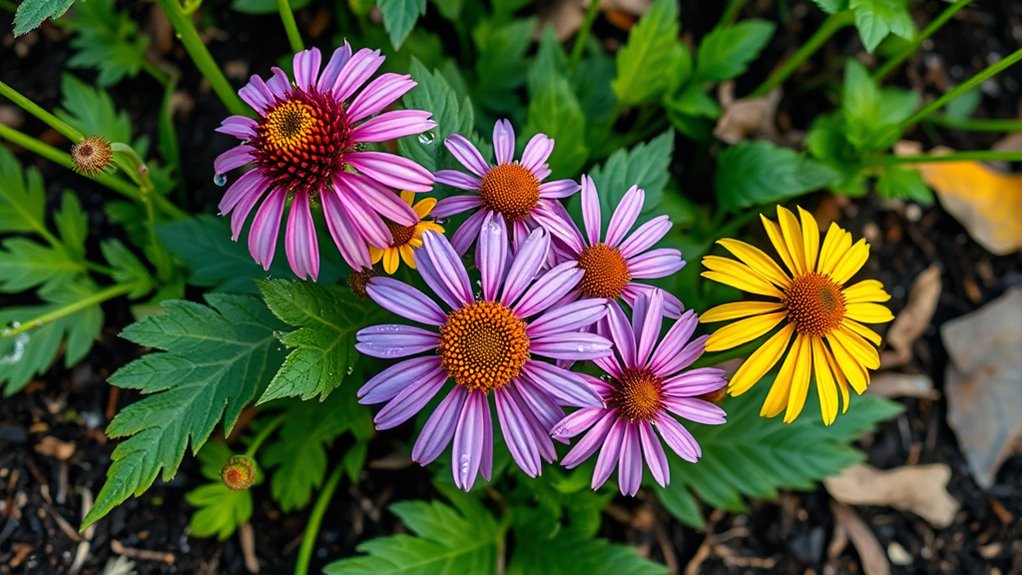
To keep your native plants thriving, you’ll need to adapt watering based on the season’s needs. Regular pruning and mulching also help maintain plant health and protect roots. Staying attentive to these seasonal tasks ensures your garden stays vibrant year-round. Additionally, understanding the specific native plant requirements can help prevent common issues and promote long-term health.
Seasonal Watering Needs
As the seasons change, adjusting your watering routine guarantees native plants stay healthy and thrive. Understanding rainfall patterns helps you determine the right watering frequency. During wetter months, you may need to water less often, relying mostly on natural rainfall. In drier periods, increased watering supports plant health. To manage seasonal needs effectively:
- Monitor rainfall and adjust your watering schedule accordingly.
- Water deeply but infrequently to encourage deep root growth.
- Reduce watering during rainy seasons, but increase it during droughts or dry spells.
- Choosing appropriate watering solutions can optimize water use and promote plant resilience.
Pruning and Mulching Cycles
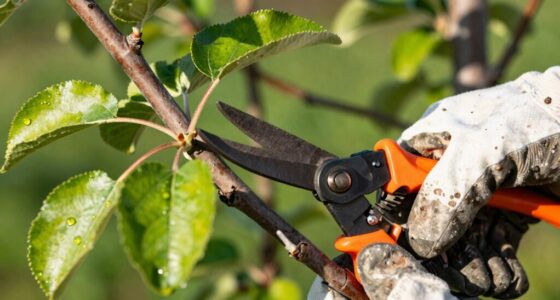
Wondering when to prune and mulch your native plants? Knowing the right pruning cycles helps maintain their health and shape. Typically, prune after flowering or during dormancy, depending on the species. This prevents damage and encourages new growth. Mulching schedules are equally important; apply a 2-3 inch layer of organic mulch in early spring or late fall. Mulching conserves moisture, suppresses weeds, and improves soil quality. Avoid over-mulching, which can lead to rot, and never mulch directly against plant stems. Regularly check your plants and adjust pruning and mulching routines based on their growth patterns and seasonal changes. Sticking to consistent pruning cycles and mulching schedules ensures your native plants stay healthy, resilient, and low-maintenance. Proper mulching techniques also contribute to the overall health of your garden.
Adjusting Your Native Garden for Climate Changes
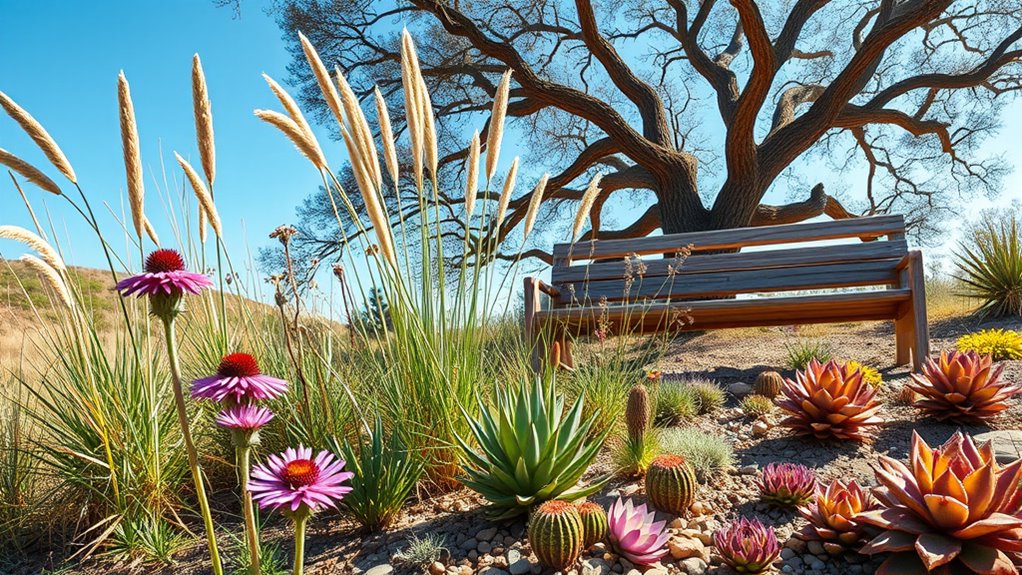
Because climate patterns are shifting, it’s vital to adapt your native garden to these changes. Native plant adaptation plays a fundamental role in maintaining your garden’s climate resilience. To do this effectively, consider these steps:
Adapting your native garden to shifting climate patterns ensures resilience and supports local ecosystems.
- Select drought-tolerant species that can handle increased heat and dry spells.
- Incorporate seasonal plantings to ensure year-round coverage and support for local wildlife.
- Adjust watering routines to prevent overwatering during hotter months and conserve water when needed.
Easy Tips to Minimize Maintenance and Protect Plants
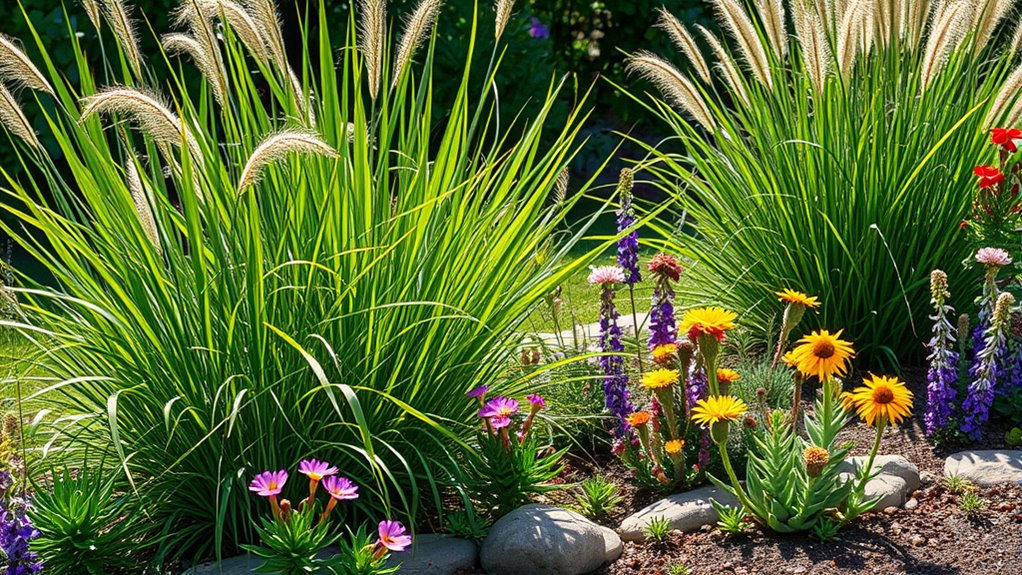
To keep your native garden thriving with minimal effort, focus on simple practices that protect plants and reduce garden maintenance. First, avoid falling for native plant myths that suggest no care is needed; even native plants benefit from occasional watering during droughts or extreme weather. Mulching helps conserve moisture and suppress weeds, reducing the time spent on garden chores. Planting in their preferred conditions minimizes stress and lowers the risk of pests and diseases, which can otherwise increase maintenance. Regularly inspect plants for signs of damage or disease, and prune only when necessary to promote healthy growth. Using reliable sources for guidance ensures proper care and understanding of the plants’ lifecycle and performance metrics. By implementing these straightforward tips, you’ll protect your native plants efficiently, debunking the myth that native gardening requires no effort and making garden maintenance more manageable.
Frequently Asked Questions
Can Native Plants Survive Extreme Weather Conditions?
Native plants can often survive extreme weather conditions because they’ve developed adaptation strategies and possess resilience factors suited to their environment. You’ll find they handle droughts, cold snaps, or heavy rains better than non-native species. Their natural resilience helps them recover quickly, reducing your maintenance efforts. By choosing native plants, you benefit from their inherent ability to withstand local climate extremes, making your garden more sustainable and resilient over time.
How Often Should I Water Native Plants?
You should water your native plants when the soil feels dry, generally once a week, but adjust based on rainfall and temperature. Its drought tolerance means they don’t need frequent watering once established. During extreme heat or drought, increase watering slightly, but avoid overwatering. Remember, native plants thrive with minimal intervention, so monitor soil moisture and let their natural resilience guide your watering frequency for healthy growth.
Do Native Plants Attract Pests or Require Pest Control?
Think of native plants as friendly neighbors—mostly welcoming, but sometimes they attract pests like unwanted visitors. You might notice some pest attraction, but with effective pest management strategies, you can keep these pests in check. Native plants generally require less pest control than exotic species, making them easier to care for. Stay vigilant, use natural deterrents, and you’ll enjoy a thriving garden without letting pests take over.
Are Native Plants Suitable for Container Gardening?
Yes, native plants are suitable for container gardening. You should focus on plant selection that suits your container’s size and environment, ensuring good drainage and appropriate soil. Native plants often require less maintenance and are well adapted to your local climate, making them a smart choice for container compatibility. With proper selection, you can enjoy vibrant, low-maintenance containers that thrive with minimal effort.
What Are Common Mistakes to Avoid in Native Garden Maintenance?
You should avoid over-pruning native plants, as it can harm their natural growth and resilience. Be careful with native plant pruning, making clean cuts and timing it appropriately, usually after flowering. Mulching native gardens helps retain moisture and suppress weeds, but don’t pile mulch against plant stems. Also, steer clear of excessive fertilizing; native plants often thrive with minimal intervention, so trust their natural adaptations.
Conclusion
Think of your native garden as a living mosaic, each piece needing attention to shine. While it’s not a set-it-and-forget-it masterpiece, understanding its true needs helps you craft a vibrant, sustainable landscape. With a little effort and care, you’ll turn your garden into a thriving ecosystem, like a well-tuned orchestra. Embrace the journey, and watch your native plants flourish, transforming your yard into a resilient, beautiful haven that harmonizes with nature.