Standard planting calendars often fail because they don’t consider your local climate or microclimate factors like nearby water or urban heat. These elements cause frost dates to vary widely, meaning generic guides can lead you to plant too early or too late. Soil temperature and regional weather patterns also influence frost timing. To improve your gardening success, understanding your area’s specific frost dates is essential—if you want to learn more, keep exploring how to pinpoint these dates accurately.
Key Takeaways
- Standard calendars ignore regional microclimates, leading to inaccurate planting dates and increased frost risk.
- Microclimate factors like water bodies and urban heat islands significantly alter local frost timing.
- Soil temperature often lags behind air temperature, making fixed dates unreliable for planting decisions.
- Relying solely on historical frost dates doesn’t account for climate variability and seasonal fluctuations.
- Accurate, localized frost data and soil temperature monitoring are essential for timely, safe planting.

Urban Worm Soil Thermometer – 5-in Stainless Steel Stem – Perfect for Gardening & Worm Bin
Easy-to-read green, yellow, and red tick marks for easy monitoring
As an affiliate, we earn on qualifying purchases.
As an affiliate, we earn on qualifying purchases.
Why Standard Planting Calendars Miss the Mark
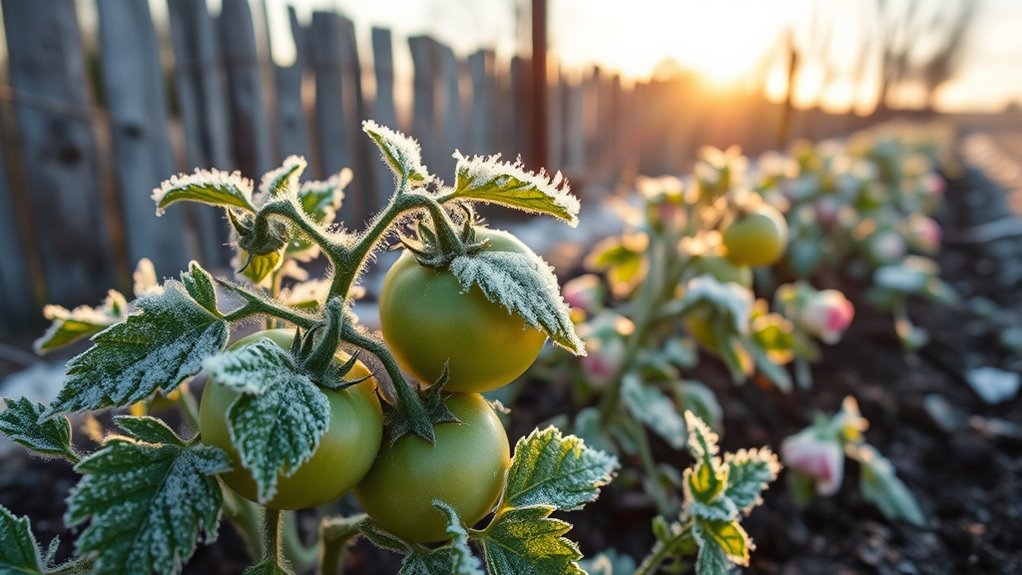
Standard planting calendars often fall short because they rely on generic dates that don’t account for local climate variations. Your yard’s unique microclimate can substantially influence planting times. Microclimate variations—like nearby bodies of water, urban heat islands, or sheltered spots—can cause soil temperature to fluctuate unexpectedly. If the soil warms earlier in one area, plants can be sown sooner; if it stays cooler longer, planting should be delayed. Relying solely on standard dates ignores these local differences and can lead to frost damage or poor growth. To succeed, you need to monitor your soil temperature and observe microclimate cues. soil temperature is a critical factor that can vary significantly within your garden. This personalized approach helps you align planting with your specific environment, ensuring healthier plants and a more productive garden.

Songhe Capacitive Soil Moisture Sensor Module Corrosion Resistant Moisture Detection Garden Watering for Arduino DIY 3.3~5.5V 5pcs
Chip is TL555
As an affiliate, we earn on qualifying purchases.
As an affiliate, we earn on qualifying purchases.
Discover How Frost Dates Vary by Region
Your region’s climate plays a big role in when frost dates occur, so they can vary widely across different areas. Local frost-free periods determine the best planting times for your garden, making regional differences essential to take into account. Understanding these variations helps you plan more accurately and protect your plants from unexpected cold snaps. Additionally, climate zones provide valuable guidance for selecting the right plants and timing, ensuring successful gardening throughout the year.
Regional Climate Differences
Understanding how frost dates vary by region is essential for successful gardening and farming. Regional climate differences profoundly influence when frost occurs, as microclimate variations can cause local delays or advances in frost dates. For example, areas near large bodies of water tend to have later springs and earlier falls due to moderated temperatures, while inland regions often experience more extreme fluctuations. Soil temperature also plays a vital role; warmer soils can warm up faster in some areas, reducing the risk of frost damage. Recognizing these regional climate differences helps you plan more accurately, ensuring you plant at the right time for your specific area. Adjusting your planting schedule based on microclimate variations and soil temperature can lead to healthier plants and better yields. Monitoring local weather patterns and microclimate conditions can further refine your planting calendar for optimal results.
Local Frost-Free Period
Knowing the typical frost dates for your area helps you determine the length of your frost-free period, which is the window when it’s safe to plant without risking frost damage. Your local frost-free window can vary due to microclimate variations such as elevation, proximity to water, or urban heat islands. To maximize your planting success, consider these factors: 1. Microclimate influences can extend or shorten your frost-free period. 2. The frost-free window may differ even within small geographic areas. 3. Adjust your planting schedule based on local conditions to avoid unexpected frost damage. Additionally, understanding microclimate effects can help you better predict local frost patterns and improve your planting timing.

Big Button 12-Digit Electronic Desktop Calculator with Musical Function Time Date Display LCD Tilted Screen for Office Business Store
[Musical Function]: It is not only a calculator, but also a musical instrument, which can be used to…
As an affiliate, we earn on qualifying purchases.
As an affiliate, we earn on qualifying purchases.
Learn How Frost Dates Impact When You Plant

Frost dates play a essential role in determining the best time to start planting your garden. They influence when soil temperatures rise enough for seedlings to thrive and help you avoid frost damage. Your microclimate factors, such as nearby structures or water bodies, can shift these dates. Soil temperature is a key indicator; it often lags behind air temperature. Use this table to understand how these elements interact:
| Microclimate Factors | Effect on Frost Dates |
|---|---|
| Nearby water bodies | Delays soil warming, extends planting time |
| Urban heat islands | Accelerates soil warming, early planting possible |
| Sheltered locations | May warm faster, earlier planting possible |
| Wind exposure | Can lower soil temperature, delay planting |
Being aware of soil temperature trends can help you optimize planting schedules and ensure healthy crop development.

AlpineReach Plant Covers Frost & Sun Protection 10 x 30 ft – Thick 1.2 oz/yd² Freeze Blanket to Low 28 °F Temperatures Floating Row, Garden Fabric Material, Protect in Winter Cold, Gardening Down
ALL-SEASON PLANT PROTECTION – Safeguard your plants through the harsh winters with our breathable Plant Frost Cover, designed…
As an affiliate, we earn on qualifying purchases.
As an affiliate, we earn on qualifying purchases.
Find the Best Tools to Identify Your Local Frost Dates
Your local climate can vary, making it essential to use reliable tools to pinpoint your frost dates accurately. These tools often incorporate historical data to improve their predictions. By choosing the right resources, you can better plan your planting schedule and protect your garden. Additionally, understanding home energy concepts can help you optimize your setup to extend the growing season indoors or with protected environments.
Local Climate Variations
Understanding your local climate variations is essential for accurately determining frost dates, as weather patterns can differ markedly from one region to another. Microclimate effects, such as sheltered spots or shaded areas, can cause frost dates to vary even within the same neighborhood. Urban heat islands, caused by extensive concrete and asphalt, tend to elevate temperatures, delaying frost. To better grasp these variations, consider:
- Monitoring local weather records for specific microclimates
- Observing how shaded or exposed areas behave differently
- Using tools like heat maps to identify urban heat islands in your area
- Recognizing the impact of local climate variations on your planting schedule
Recognizing these factors helps you adjust your planting schedule more precisely. By understanding local climate nuances, you prevent premature planting or frost damage, ensuring your garden’s success.
Reliable Frost Date Tools
Using reliable frost date tools can substantially improve your gardening planning by providing accurate, localized information. These tools help you determine the safest planting times, minimizing frost risk. Look for online resources or apps that incorporate your ZIP code or GPS data for precise results. Knowing your frost dates allows you to plan greenhouse practices or use a frost blanket effectively to protect delicate plants. Some tools even suggest prime planting windows based on historical trends. Here’s a quick comparison:
| Tool Type | Features |
|---|---|
| Online Calculators | Customizable, real-time updates |
| Local Weather Apps | Alerts for upcoming frost events |
| Extension Services | Regional advice, detailed data |
Choosing the right frost date tools can help you plan your planting schedule more effectively and ensure your plants are safeguarded from unexpected cold snaps.
Using Historical Data
Historical data offers a reliable way to determine your local frost dates by analyzing past weather patterns and temperature trends. By examining historical trends, you can identify consistent frost occurrences and plan accordingly. Climate modeling tools incorporate this data to project future frost dates, improving accuracy over simple averages. To make the most of this approach, consider these key steps:
- Gather local weather records spanning at least 10–20 years for thorough insights.
- Use climate modeling tools that factor in seasonal variability and climate change impacts.
- Cross-reference multiple data sources to validate frost date predictions and account for anomalies. Additionally, understanding climate variability can help you better interpret fluctuations in frost timing. Using these methods, you’ll gain a clearer picture of your area’s frost timeline, helping you optimize planting schedules and protect your crops from unexpected frosts.
Adjust Your Garden Plan Using Frost Data
To make certain your garden thrives, it’s crucial to adjust your planting schedule based on frost data. Microclimate variations, such as sheltered spots or open areas, can influence frost timing, so monitor local conditions closely. Soil temperature also matters; even if the air frost date has passed, cold soil can delay planting. Use a soil thermometer to check if temperatures have warmed enough for seedlings. Adjust your plan by planting tender crops later or choosing frost-resistant varieties early. Keep an eye on upcoming frost forecasts and be ready to protect vulnerable plants if unexpected cold snaps occur. Tailoring your garden plan with precise frost data helps prevent damage and guarantees healthier growth throughout the season. Additionally, understanding the frost date in your area can improve your planting success by aligning your efforts with natural weather patterns.
Understand the Risks of Ignoring Frost Timing
Ignoring frost timing can profoundly jeopardize your garden’s success. When you overlook frost risk, you risk losing plants to unexpected cold snaps. Proper planting timing is essential; planting too early exposes seedlings to frost damage, while waiting too long shortens your growing season. Consider these points:
- Rushing planting increases frost risk, leading to stunted growth or death.
- Premature planting can cause fruit and flower damage, reducing yields.
- Ignoring local frost dates results in wasted effort and resources.
Get Tips for Extending Your Growing Season Safely
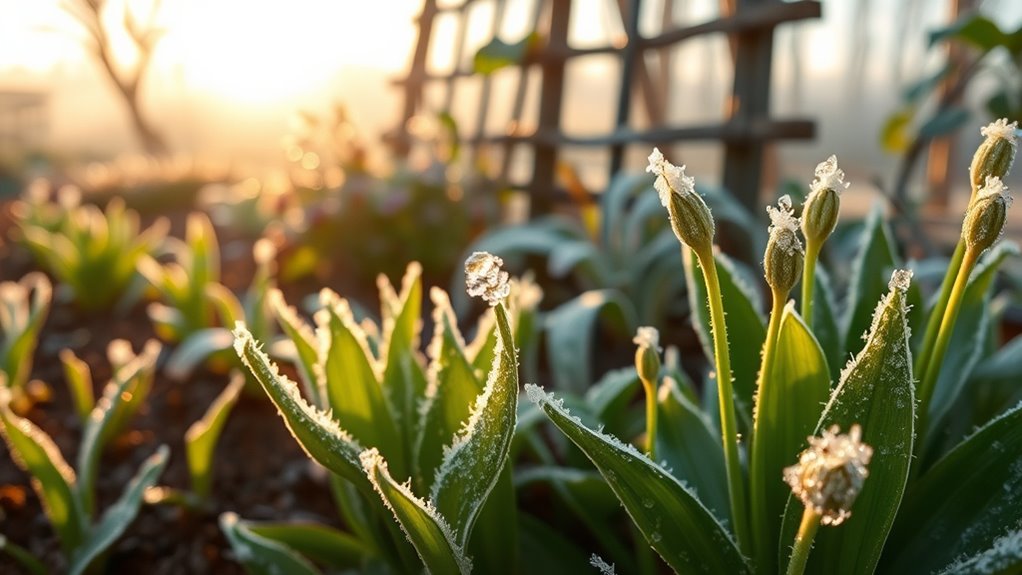
Extending your growing season safely requires strategic planning and the right techniques to protect your plants from unexpected frosts. To achieve effective season extension, consider methods like row covers, cloches, or hoop houses, which provide frost protection and create a warmer microclimate. Timing is key—monitor local frost dates and be ready to implement protective measures early.
| Technique | Benefits |
|---|---|
| Row Covers | Easy to install, portable |
| Hoop Houses | Longer season, better insulation |
| Cold Frames | Protects plants overnight |
Using these methods, you can prolong your harvest while safeguarding plants from damaging frosts. Proper frost protection ensures your plants thrive, even when the weather turns unpredictable.
Frequently Asked Questions
How Accurate Are Online Frost Date Tools for My Specific Garden?
Online frost date tools can give you a general idea, but their accuracy varies because they often don’t account for your garden’s microclimates. You should use frost prediction tools alongside local observations and historical data. Trust your own experience, especially if your garden has unique features like nearby water or wind exposure, which can shift frost dates. Combining tools with local knowledge guarantees better planting timing.
Can Climate Change Alter Traditional Frost Date Patterns?
Climate change profoundly impacts frost date patterns, with studies showing that frost dates have shifted by up to two weeks earlier or later in some regions. This climate variability causes frost trend shifts, making traditional planting calendars less reliable. You need to stay alert to these changes, monitor local weather, and adjust your planting schedule accordingly to protect your garden from unexpected frosts and maximize your growing season.
What Are Signs That Frost Is Imminent in My Area?
When a frost warning is issued, it’s a sign that a temperature drop is imminent in your area. Keep an eye on local weather forecasts, especially overnight lows dropping below freezing, as they indicate frost is near. You might notice clear skies, calm winds, and a sudden chill in the air. These signs suggest you should protect sensitive plants or bring them indoors to prevent damage from the approaching frost.
How Do Microclimates Affect Local Frost Dates?
Think of microclimates as secret gardens within your yard, where frost pocket zones can keep temperatures lower or higher than surrounding areas. Microclimate effects mean your local frost dates might shift, making some spots colder and more prone to frost damage. By observing these zones, you can better plan planting times, protecting sensitive plants and extending your growing season. Adjust your strategies to account for these microclimate nuances for a thriving garden.
Are There Specific Plants More Sensitive to Unexpected Frosts?
Yes, some frost-sensitive crops like tomatoes, peppers, and basil are more vulnerable to unexpected frosts. You should plant hardy plant varieties like kale, broccoli, or carrots that tolerate colder temperatures better. Keep an eye on local weather updates and use protective measures such as row covers or cloches to shield your frost-sensitive crops. This way, you protect your garden even when frost dates shift unexpectedly.
Conclusion
Understanding your local frost dates is like having a weathered map guiding your planting journey. By tuning into these vital dates, you avoid the icy surprise that can freeze your hopes in their tracks. Adjusting your garden plans with frost data ensures your crops flourish instead of wither. Think of frost dates as the heartbeat of your planting season—listen carefully, and your garden will bloom vibrant and strong, no matter what the forecast says.