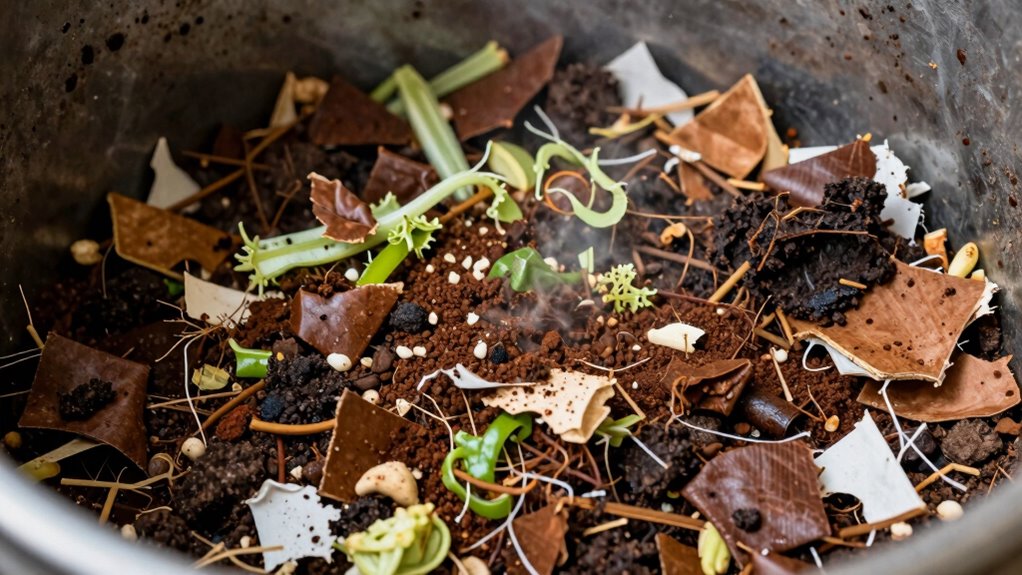

Your compost might smell bad because the green-to-brown ratio is off, upsetting microbial balance. If there’s too much green (kitchen scraps or fresh grass), it can cause odors and slow decomposition, while excess brown (leaves or paper) helps absorb moisture and keep things odor-free. To fix this, balance your materials, turn the pile regularly, and maintain the right moisture levels. Keep going, and you’ll discover how to keep your compost fresh and odor-free.
Key Takeaways
- An unpleasant odor often indicates too much green (nitrogen-rich) material, causing an imbalance in the compost pile.
- Excess moisture and lack of aeration can lead to anaerobic conditions, resulting in foul smells.
- A common cause is an improper green-to-brown ratio, typically too many greens or insufficient browns.
- Incorporating more dry, carbon-rich brown materials like leaves or cardboard can restore the balance.
- Regular turning and monitoring moisture help maintain proper microbial activity and eliminate odors.
Top picks for "compost smell ratio"
Open Amazon search results for this keyword.
As an affiliate, we earn on qualifying purchases.
Understanding the Green-to-Brown Ratio
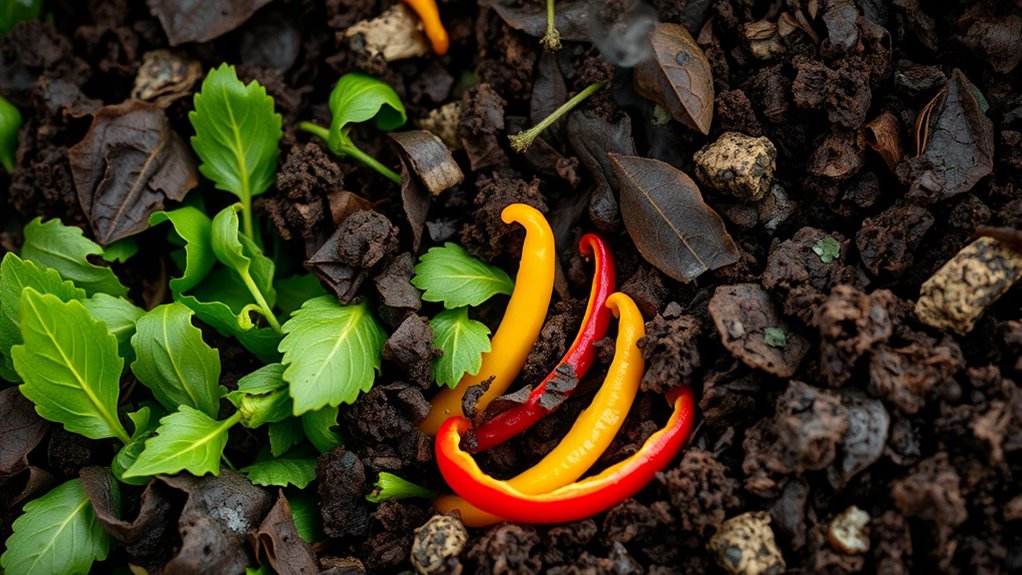
Achieving the right balance between green and brown materials is essential for effective composting. This balance directly impacts the carbon nitrogen ratio, which is critical for microbial activity. Green materials, rich in nitrogen, include kitchen scraps and fresh grass clippings, while brown materials, high in carbon, are leaves, straw, or paper. Aim for a carbon nitrogen ratio of about 25-30:1 to promote healthy decomposition. Proper material layering helps maintain the correct balance and prevents odors. Additionally, maintaining proper moisture balance is crucial—your compost should be damp but not soaked. Too much green material can lead to excess moisture and a foul smell, while too much brown material can slow down composting. Using air circulation techniques can help keep the compost aerated and reduce odor issues. Regular turning and monitoring can help maintain the proper composting conditions for quicker decomposition. Incorporating natural aeration methods can further enhance oxygen flow and optimize compost breakdown, especially when combined with proper airflow management.
Recognizing Signs of Imbalance
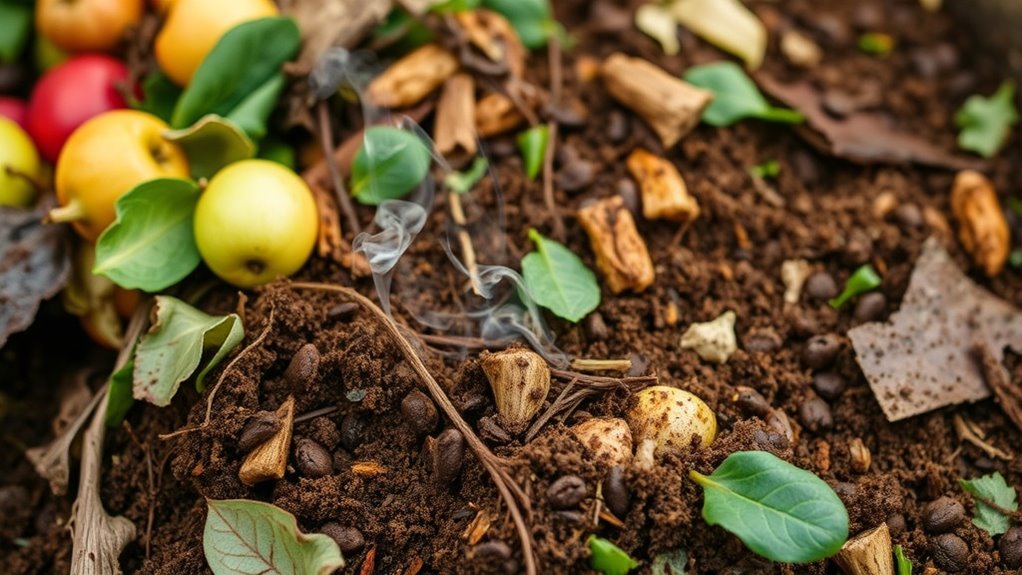
When your compost starts to emit unpleasant odors or shows signs of slow decomposition, it’s a good indicator that something’s off with the balance. You may notice a sour smell or a slimy texture, signaling that the compost microbes aren’t functioning properly. This imbalance can hinder odor management and slow down the process. Proper microbial activity is essential for maintaining an odor-free compost, and disruptions can lead to issues like persistent bad odors despite aeration. Maintaining compost balance through proper layering and moisture control can help prevent these problems. Look for these signs:
Unpleasant odors and slow decomposition signal an imbalance in your compost microbes.
- Persistent bad odor despite aeration
- Excess moisture or soggy piles
- Slimy or rotting appearance
- Lack of heat or slow decomposition progress
Being aware of composting techniques helps you adjust conditions to support healthy microbial populations. Understanding how compost microbes respond to different conditions allows you to fine-tune your process and prevent problems before they escalate. Recognizing these signs early helps you address the imbalance before it worsens. Additionally, monitoring oxygen levels can ensure that microbes have enough air to function properly, which is crucial for odor control. By understanding how compost microbes respond to different conditions, you can maintain a healthy environment that minimizes odors and keeps your compost breaking down efficiently.
How to Adjust Your Compost Ingredients

To restore balance to your compost, start by adjusting the ingredients based on what’s causing the imbalance. If your compost smells bad, adding more brown materials like dried leaves or cardboard can help absorb excess moisture and reduce odors. Incorporate worm composting techniques to boost microbial activity, which naturally controls odors. When adding kitchen scraps, mix them thoroughly with dry, carbon-rich materials to prevent anaerobic conditions that lead to foul smells. If your compost is too wet or smelly, reduce green waste and turn the pile frequently to promote aeration. Remember, maintaining proper ratios of greens to browns is key for odor control. Monitoring compost conditions helps ensure your pile stays balanced and odor-free. Ensuring proper carbon-to-nitrogen ratios creates a balanced environment, encouraging decomposition while preventing unpleasant odors. Additionally, understanding the role of microbes in composting helps optimize the process and maintain a healthy, odor-free pile. Paying attention to compost temperature can also indicate whether your pile is composting efficiently or needs adjustments.
Tips for Maintaining Proper Compost Conditions
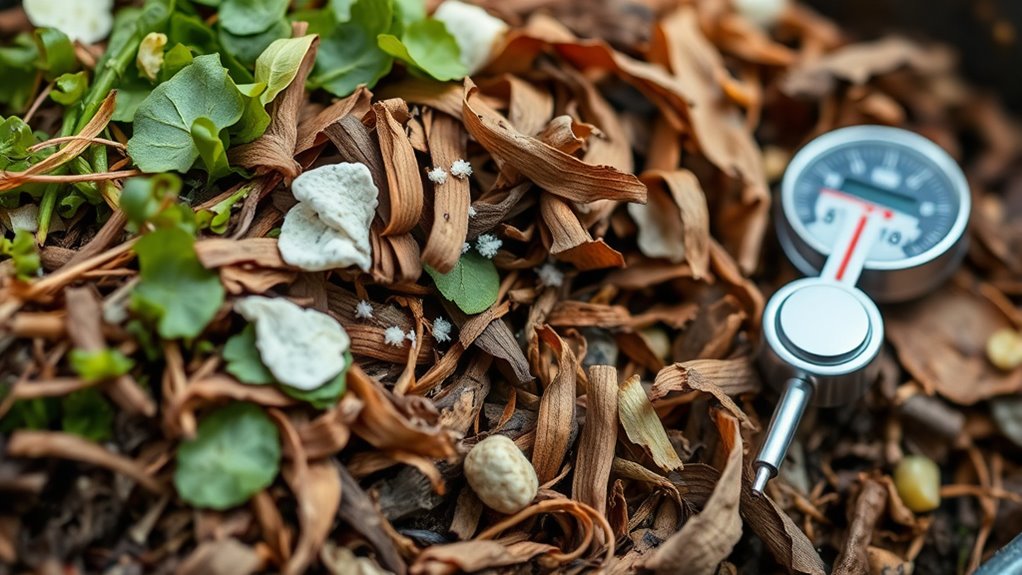
Keeping your compost in ideal condition requires ongoing attention and regular adjustments. Monitoring compost temperature helps you gauge decomposition speed—aim for around 135-160°F to prevent odors. Maintaining proper moisture levels ensures microbes stay active; it should feel like a damp sponge, not soaking wet. To keep conditions optimal, consider these tips:
- Turn your compost regularly to promote aeration and even temperature distribution.
- Check moisture levels frequently and add water or dry materials as needed.
- Use a compost thermometer to monitor temperature shifts.
- Balance green and brown materials to sustain proper compost conditions.
- Incorporating aerobic microbes can further enhance compost quality and odor control. Regularly adjusting your carbon-to-nitrogen ratio helps maintain microbial balance and prevents foul odors. Additionally, ensuring adequate oxygen flow by ventilating your compost can significantly reduce unpleasant smells.
- Using cover materials can help retain moisture and prevent odors from escaping.
- Maintaining proper compost aeration is essential for preventing anaerobic conditions that cause foul odors.
When to Seek Additional Help or Tools

While regular maintenance can often keep your compost smelling fresh, there are times when you should recognize that additional help or specialized tools are necessary. If pests persist despite your efforts, investing in pest prevention tools like compost bins with secure lids or pest barriers can make a difference. Also, monitoring compost temperature is vital; if it stays too high or low, it signals your compost isn’t breaking down properly, risking odors or attracting pests. When simple adjustments don’t resolve these issues, consider using compost thermometers or turning tools to regulate temperature and aeration. If problems continue, consulting composting experts or using advanced composting equipment can help you restore balance and prevent future issues. Recognizing these signs ensures your compost remains healthy and odor-free. Additionally, understanding the importance of proper composting techniques can further reduce the chances of odors and pests. Incorporating aeration practices and adjusting your carbon-to-nitrogen ratio can also promote better compost health and odor control, especially when you understand the ideal compost temperature for efficient decomposition. Regularly checking that your compost has appropriate body composition helps maintain proper microbial activity and prevents foul smells. Moreover, being aware of microbial activity levels can help you optimize the composting process and prevent unpleasant odors.
Frequently Asked Questions
Can Compost Odors Indicate the Presence of Pests or Rodents?
Yes, compost odors can indicate pest attraction or rodent signs. If your compost smells strong or foul, pests like flies and rodents may be drawn to it, seeking food or shelter. You might notice gnaw marks, droppings, or burrows nearby as signs of rodent activity. To prevent pest issues, guarantee your compost has the right balance of greens and browns, and avoid leaving food scraps exposed.
How Long Should It Take for Compost to Stop Smelling?
Most composts stop smelling within 2 to 6 weeks if you improve aeration and moisture control. Did you know that proper aeration increases oxygen levels, speeding up decomposition by 50%? To reduce odors, turn your compost regularly and keep it moist—not too wet. These steps help balance bacteria activity, eliminate foul smells, and make your compost smell fresh faster. Stay consistent, and you’ll see results sooner.
Are Certain Compost Ingredients More Likely to Cause Bad Odors?
Certain compost ingredients are more likely to cause bad odors, especially those that are high in nitrogen, like kitchen scraps and grass clippings. These odor sources can produce ammonia and other unpleasant smells if not balanced with carbon-rich ingredients like leaves or paper. To prevent bad odors, make sure you mix compost ingredients properly, maintaining the right green-to-brown ratio, and avoid overloading your compost pile with high-moisture or nitrogen-heavy materials.
Does Compost Smell Worse in Hot or Cold Weather?
Hot weather makes your compost smell worse because higher temperatures speed up decomposition, releasing more odors. During seasonal composting, you might notice a foul smell more often in summer than winter, when cold temperatures slow microbial activity. Temperature effects are vital—keeping compost cool in summer by turning it regularly or adding browns helps reduce odors. Cooler weather naturally suppresses smell, making your composting experience more pleasant year-round.
What Are Natural Odor-Neutralizing Methods for Compost?
You can naturally neutralize compost odors by balancing microbial activity through proper carbon to nitrogen ratios. Add high-carbon materials like shredded paper or dry leaves to absorb excess moisture and reduce smells. Turning your compost regularly promotes even microbial activity, which minimizes odor. Also, mixing in brown materials helps maintain the right balance, preventing unpleasant odors. These simple steps keep your compost smelling fresh while encouraging healthy decomposition.
Conclusion
Getting your compost right isn’t just about avoiding odors—it’s about creating a healthy, thriving ecosystem. When you pay attention to the green-to-brown balance, you’ll see fewer smells and better results. So, are you ready to fine-tune your compost and turn waste into rich soil? Remember, small adjustments can make a big difference. Keep learning, stay patient, and enjoy the rewarding process of composting. Your garden will thank you!