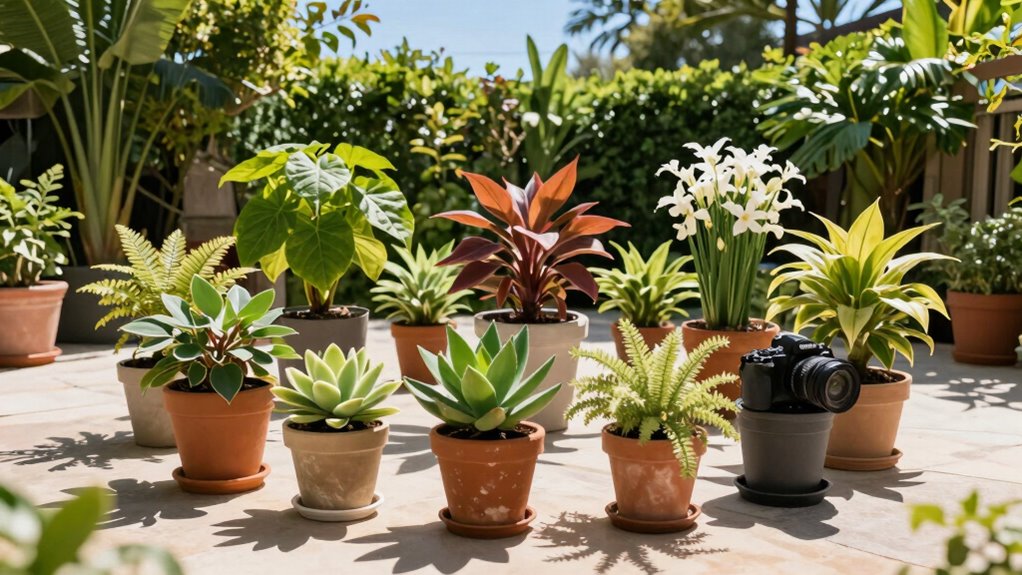

A 10-minute sun mapping test helps you spot the best places in your garden for different plants based on sunlight exposure. To do this, clear clutter, note sunlight patterns, and observe how shadows shift during a consistent time each day. This quick walk reveals sun and shade zones, helping you place sun-loving plants in full sun and shade-tolerant ones in shadowed areas. Keep exploring to learn how to make the most of your sun map for healthier plants.

Prime made for students and young adults
- Fast, free delivery for dorm and study essentials
- Prime Video and Amazon Music included
- Member-only deals
Key Takeaways
- Conduct a consistent 10-minute walk-through to observe sunlight and shade patterns in your garden at the same time each day.
- Identify areas with full sun, partial shade, and full shade by noting shadow lengths and sun exposure duration.
- Record shadow movements, obstructions, and peak sunlight hours to understand how sunlight shifts seasonally.
- Use the sun map to match plants’ light requirements with appropriate zones, ensuring optimal growth.
- Proper sun mapping prevents stress, enhances flowering, and optimizes garden layout for healthy, thriving plants.
As an affiliate, we earn on qualifying purchases.
What Is Sun Mapping and Why Does It Matter?

Sun mapping is the process of analyzing and recording how sunlight moves across a specific area throughout the day and across different seasons. By understanding sunlight patterns, you can identify which parts of your yard receive full sun, partial shade, or full shade at various times. This knowledge is essential for plant health because different plants have specific light requirements. When you know the sunlight patterns, you can place your plants in spots that suit their needs, helping them thrive. Sun mapping also helps you avoid placing sun-loving plants where they won’t get enough light, or shade-tolerant plants where they’ll be overexposed. Proper tool selection makes the process easier and more accurate, ensuring your garden’s success. Ultimately, it’s a simple way to optimize your garden’s success by giving your plants the right amount of sunlight.
As an affiliate, we earn on qualifying purchases.
How to Prepare for Your Sun Mapping Test

Are you ready to start your sun mapping test? Before you begin, take a moment to assess your space and plan for effective plant care. Clear the area of clutter to get an accurate view of sunlight patterns. Identify the windows and note how much direct sunlight each spot receives throughout the day. This is especially important if you’re into indoor gardening, as different plants have varying light needs. Gather a few simple tools like a notepad, a pen, and a timer or clock. Check the weather forecast if you’re testing outdoors, so you know what to expect. Preparing your space and materials guarantees you can quickly record sunlight exposure during your 10-minute walk, making the process smooth and effective. Additionally, understanding the Role of Color Accuracy can help you better interpret the quality of natural light in your space.
As an affiliate, we earn on qualifying purchases.
How to Conduct Your 10-Minute Sun Mapping Walkthrough
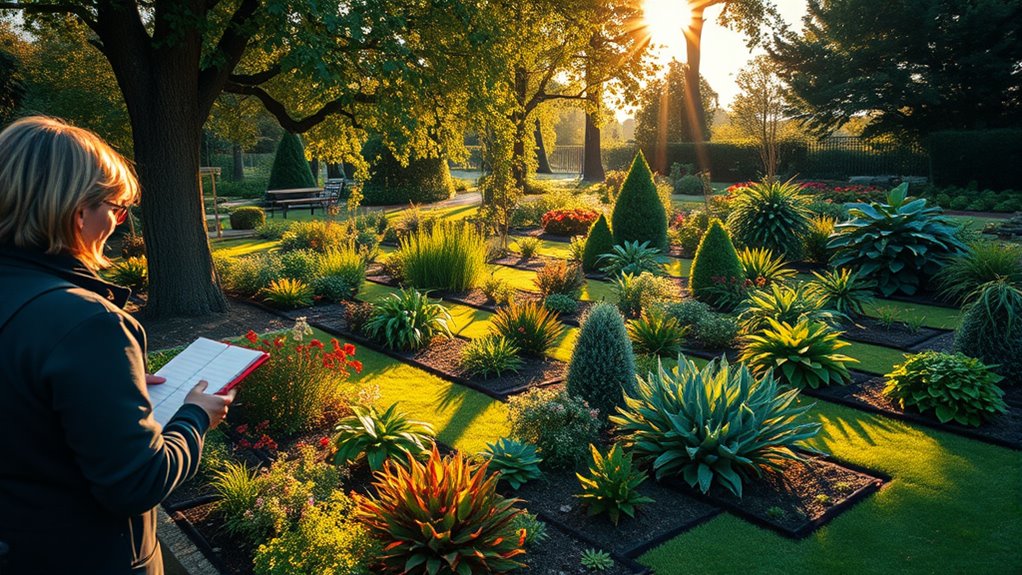
Begin your walk by systematically moving through each area of your space, paying close attention to how sunlight shifts over the 10-minute period. This helps you observe real-time sunlight patterns and assess how they impact plant health. As you walk, note the duration and intensity of sunlight in different spots. Keep an eye out for areas that receive consistent, direct sunlight versus those with dappled or limited light. Use a timer to ensure accuracy and record your observations. Focus on these key points:
- Changes in sunlight exposure over the 10 minutes
- Spots with persistent direct sunlight
- Areas with shadows or limited light
- Potential obstructions affecting sunlight patterns
- Recognizing energy-efficient sunlight patterns can help optimize plant placement and promote healthier growth.
This walkthrough provides a clear picture of your space’s sun dynamics, guiding you in selecting the best plant placements.
As an affiliate, we earn on qualifying purchases.
How Sunlight Moves Through Your Space Over the Day

Have you ever wondered how sunlight shifts throughout your space during the day? Sunlight patterns change as the sun moves across the sky, casting different angles of light into your room. In the morning, light may hit one area directly, while in the afternoon, it shifts to another spot. This movement affects how much direct sun your plants receive and reveals indoor shade zones—areas that stay relatively dim despite the sunlight outside. Observing these patterns helps you understand where your space gets the most sun and where shadows linger. Recognizing indoor shade zones can help you optimize your plant placement for better growth. Knowing how sunlight moves throughout your space ensures you place your plants where they’ll thrive, avoiding spots that only get brief or indirect light. This awareness is key to successful plant placement over the course of the day.
How to Read Your Sun Map and Find the Bright Spots

To effectively find the bright spots in your space, start by examining your sun map during different times of the day. Observe how the shadows shift and identify areas with consistent sun exposure patterns. Focus on plant shadow analysis to spot where sunlight is strongest and most direct. Bright spots are usually marked by minimal shadow length and frequent sun contact. Pay attention to how shadows lengthen or shorten, indicating peak sunlight hours. Use your sun map to cross-reference these patterns with your space’s layout. This helps you spot ideal locations for sun-loving plants. Remember, understanding sun exposure patterns is key to choosing the right spot for each plant’s needs. Be precise and attentive to detail for the best results.
Where to Place Your Plants for Optimal Light
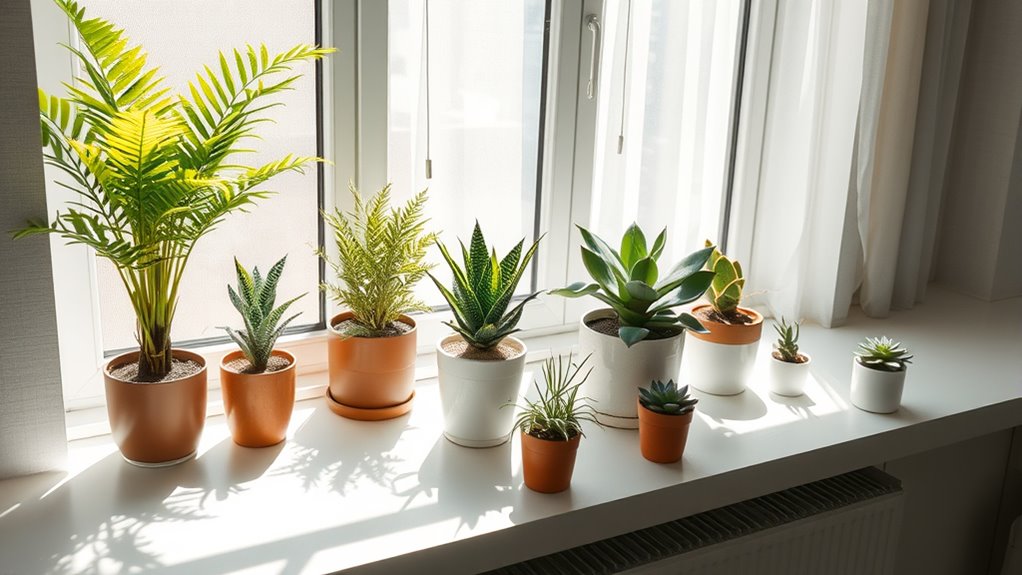
Once you’ve identified the bright spots on your sun map, placing your plants in the right locations guarantees they get the ideal light they need to thrive. Indoor and outdoor settings differ in light availability and seasonal variation, so consider each environment carefully. Indoors, position plants near south-facing windows for consistent sunlight, but adjust during winter when light levels drop. Outdoors, place plants where they’ll receive direct sun during peak hours, accounting for seasonal changes in sun angle. Use the table below to decide optimal placement:
| Indoor Placement | Outdoor Placement |
|---|---|
| Near south-facing windows | Sunny garden beds |
| Bright, unobstructed windows | Open, exposed areas |
| East-facing windows for mornings | Areas with morning sun |
| Avoid shaded corners | Under open sky |
| Use grow lights if needed | Sun during peak hours |
Additionally, understanding how sunlight patterns shift throughout the year can help you plan plant placement more effectively.
Tips for Accurate Sun Mapping in Different Seasons

Understanding how sunlight shifts with the seasons is crucial for accurate sun mapping. To guarantee your plants get consistent light year-round, make seasonal adjustments based on sun angles. Observe how the sun’s path changes and modify plant placements accordingly. Consider your window orientation: south-facing windows receive the most consistent sunlight, while east- or west-facing windows vary more seasonally. Incorporating lighting considerations can help optimize plant growth throughout the year. Here are some tips:
- Track sun movement during different seasons to identify ideal spots
- Adjust plant positions as the sun’s angle shifts in winter and summer
- Use shading devices or reflectors to compensate for seasonal changes
- Regularly revisit your sun map to refine plant placement
Common Challenges and How to Fix Them
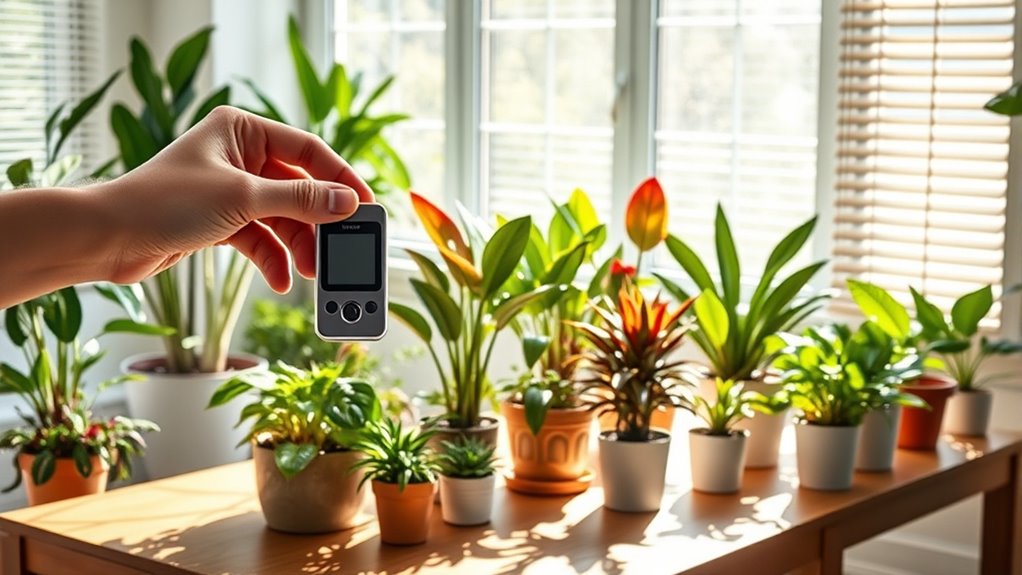
Many gardeners face challenges when trying to achieve ideal sun exposure for their plants, especially as seasons change or if their space has inconsistent light. One common issue is watering problems—too much or too little water can stress plants, making them more vulnerable to pests and diseases. To fix this, monitor soil moisture regularly and adjust your watering schedule accordingly. Pest problems often stem from neglected sun mapping, as shaded areas can harbor pests or reduce plant health. Keep an eye out for pest activity and trim any overgrown or shaded areas to improve airflow. Consistently observing your garden’s light patterns helps you identify problem zones early, so you can make adjustments that prevent watering issues and pest problems, ensuring healthier, thriving plants. Additionally, understanding plant placement strategies can help optimize growth conditions and reduce these common issues.
Frequently Asked Questions
Can Artificial Light Affect the Sun Mapping Results?
Artificial light can definitely affect your sun mapping results. When you use artificial light during the test, it may create misleading shadows or brightness levels, making it hard to accurately determine your plants’ ideal placement. To get reliable results, guarantee you perform sun mapping in natural sunlight without artificial lighting, so you can accurately observe how sunlight moves across your space and choose the best spot for each plant.
How Often Should I Redo the Sun Mapping Test?
Think of sun mapping as your plant’s weather forecast—you’ll want to update it regularly. You should redo the test seasonally to account for changes in sunlight, especially with seasonal adjustments. This guarantees your plants stay happy and healthy. Check your sun map at least every few months, or whenever you notice significant shifts in sunlight patterns or new plant placement needs. Staying proactive keeps your garden thriving year-round.
What Tools Are Essential for Accurate Sun Mapping?
You need a few key tools for accurate sun mapping, especially for understanding sunlight patterns and shading analysis. Start with a compass or smartphone app to determine true north, and use a solar pathfinder or a simple sun calculator app to track sunlight angles throughout the day. A notepad or digital device helps record observations, ensuring you capture shading and sunlight variations, which are essential for maximum plant placement.
How Do I Adjust for Seasonal Changes in Sunlight?
Did you know that seasonal sunlight can shift by up to 23.5 degrees? To adjust for seasonal sunlight, observe how sunlight moves across your space throughout the year. Move your plants accordingly, placing sun-loving ones in sunnier spots during winter and providing shade in summer. Regularly track these changes, and you’ll guarantee your plants receive ideal light year-round, promoting healthy growth and vibrant foliage.
Can Sun Mapping Help Indoor Plants Thrive Better?
Yes, sun mapping can help your indoor plants thrive better. By observing indoor sunlight patterns, you can identify the best plant placement, ensuring they get the right amount of light. Use sun mapping to track how sunlight moves throughout the day and across seasons, so you can position your plants in spots that match their light needs. This simple step boosts their health and growth indoors.
Conclusion
Think of sun mapping as your plant’s personal guide, much like a lighthouse guiding ships safely ashore. By understanding how sunlight moves through your space, you guarantee your plants thrive instead of just survive. With a little patience and these simple steps, you’ll master the art of plant placement, turning your home into a lush sanctuary. Just remember, even the sunniest days have their shadows—so embrace the process and let your green thumb shine.
Fall Picks
fall essentials
As an affiliate, we earn on qualifying purchases.