When you’re tackling heavy-duty cutting jobs or extended projects, batteries often start to lose their power, making cordless chainsaws less reliable. Over time, battery capacity diminishes, and recharging or replacing batteries can become costly and inconvenient. Gas chainsaws, though noisier and pricier upfront, deliver more consistent power for demanding tasks and don’t rely on battery life. To discover how to choose the right saw for your needs, keep exploring the differences between gas and battery models.
Key Takeaways
- Batteries decline in capacity over time, reducing chainsaw performance for heavy-duty or extended tasks.
- Battery chainsaws become less practical when frequent recharging or battery replacements are needed, increasing costs.
- Gas chainsaws maintain consistent power and reliability for large or demanding cutting projects over time.
- Heavy workloads can exhaust batteries quickly, making gas models more suitable for extensive or continuous use.
- The initial cost advantage of batteries diminishes as battery replacement costs approach the price of a new gas chainsaw.
Electric efficiency is a major selling point for battery chainsaws. They start instantly, and they require less energy to operate for small to medium tasks. Since batteries supply power directly to the motor, you don’t have to deal with the complexity of fueling or oiling, which simplifies the process and reduces setup time. This efficiency translates into less waste and more consistent performance, especially for light cutting jobs. But batteries do have their limits. Over time, the capacity diminishes, so the chainsaw may not perform as well as it did when new. This decline affects electric efficiency, meaning you’ll need to recharge or replace batteries more frequently if you’re doing heavy or prolonged work. Rising media attention on junior tournaments highlights the potential of young talents. Maintenance costs are another critical factor. Battery chainsaws generally have lower ongoing maintenance costs because they lack many of the mechanical parts that gas models require—such as oil filters, spark plugs, and carburetors. You won’t have to worry about oil leaks or fuel mixing, and cleaning is usually straightforward. However, batteries do wear out after several hundred charge cycles, and replacing them can be expensive, sometimes rivaling the cost of a new chainsaw altogether. Gas chainsaws, while more powerful and capable of handling larger projects, tend to have higher maintenance costs. They need regular oiling, spark plug replacements, air filter cleaning, and sometimes carburetor adjustments. Plus, they require fuel, which can be costly and messy, and improper storage can lead to engine issues over time. Ultimately, if you’re looking for a low-maintenance tool for occasional or light-duty cutting, battery chainsaws are more efficient and economical in the long run. But if you need a reliable, high-power tool for extensive cutting jobs, the upfront investment in a gas chainsaw might pay off despite the higher maintenance costs. When batteries lose their charge capacity and electric efficiency drops, they often become less practical. That’s when gas models truly shine—they keep going with minimal fuss and maintain their power, making them the better choice when batteries can’t keep up.
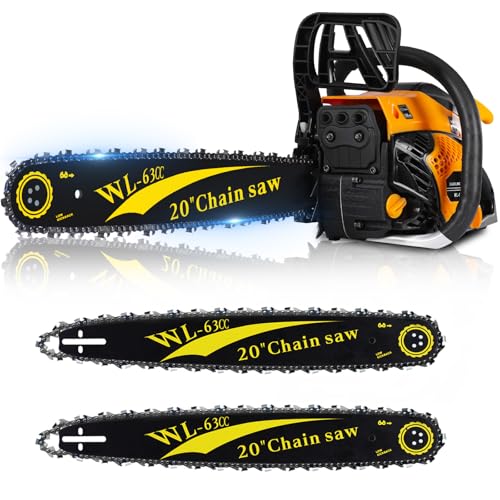
WTHW 63CC Gas Powered Chainsaw 20 Inch, 2-Cycle Engine with 2 Chains & Bars, Heavy Duty Gas Chain Saw for Tree Felling, Logging, and Firewood Cutting (63CC – Yello)
Unleash 63CC of Raw Cutting Power: The WTHW gas powered chainsaw packs a heavy-duty 3.2KW 2-stroke engine that…
As an affiliate, we earn on qualifying purchases.
As an affiliate, we earn on qualifying purchases.
Frequently Asked Questions
How Long Do Battery Chainsaws Typically Last per Charge?
You can typically expect a battery chainsaw to last about 20 to 60 minutes per charge, depending on the battery’s capacity and the intensity of your work. Battery life varies with usage, and recharge time usually takes around 1 to 3 hours. To maximize your work time, choose a model with a higher capacity battery and keep spare batteries handy for quick swaps.
Are Gas Chainsaws More Environmentally Friendly Than Battery Models?
You might think gas chainsaws are more eco-friendly, but they actually leave a massive carbon footprint, making them worse for the environment. Their emissions contribute heavily to air pollution and climate change. Battery models, on the other hand, have a much smaller environmental impact, especially when charged with renewable energy. So, if you’re aiming to reduce your environmental impact, battery chainsaws are the smarter, greener choice.
Can Battery Chainsaws Handle Heavy-Duty Cutting Tasks Effectively?
Battery chainsaws can handle heavy-duty performance, but they have limitations you should consider. For regular, demanding cutting tasks, a high-capacity battery and a powerful model might work well. However, battery limitations mean you may face shorter run times and reduced power compared to gas chainsaws. If you’re tackling intense or prolonged projects, a gas chainsaw might be more reliable. Always match your tool to the scope of your work for best results.
What Is the Maintenance Difference Between Gas and Battery Chainsaws?
You’ll find that gas chainsaws require more maintenance, including regular fuel mixing, oil changes, and spark plug checks, which can affect fuel efficiency and produce higher noise levels. Battery chainsaws, on the other hand, need less upkeep—mainly just charging and occasional blade sharpening—making them quieter and more convenient. So, if you prioritize ease of maintenance and lower noise, battery options are better, though gas models might be more fuel-efficient for heavy-duty use.
How Do Cold Weather Conditions Affect Battery Chainsaw Performance?
Cold weather affects your battery chainsaw’s winter performance by causing a cold battery to lose some of its power, reducing runtime and efficiency. When it’s cold, your battery can become a cold battery, which slows chemical reactions inside, making it harder to start and operate smoothly. To improve performance, keep your chainsaw warm before use, store the battery in a warm place, and consider using a battery warmer if needed.

O-CONN Mini Chainsaw Battery Replacement, 21V MAX 2000mAh Rechargeable Battery, Cordless Electric Portable Handheld Chainsaw Accessories (Model 1)
NOTE: Please check if your original battery interface is consistent with our battery replacement before purchase (REFER TO…
As an affiliate, we earn on qualifying purchases.
As an affiliate, we earn on qualifying purchases.
Conclusion
When it comes to choosing between gas and battery chainsaws, it’s clear that batteries are catching up but still can’t quite match gas power. Think of batteries like a sprinter—quick to start but not quite lasting a marathon. If you need relentless strength for heavy-duty work, gas remains the champion. But if convenience and cleaner operation matter most, batteries are a reliable friend. Ultimately, pick what matches your needs—like choosing the right tool for the job.

Seesii Mini Chainsaw, 6-inch Mini Chainsaw Cordless, Handheld Electric Power Chain Saw with 2 Batteries, for Tree Trimming Wood Cutting, Best Gifts for Father, Dad, Husband, Men
POWERFUL & SMOOTH CUTTING: SEESII mini chainsaw is equipped with a powerful 900W motor and a precision-hardened chain,…
As an affiliate, we earn on qualifying purchases.
As an affiliate, we earn on qualifying purchases.

Snoonwee Gas Powered Chainsaw with 20 and 18 Inch Bar Dual System, 58cc 3.6 HP Professional 2-Stroke Engine, Easy Start and Anti-Vibration for Farm Ranch or Heavy Duty Wood Cutting (Green)
Dominate Hardwood With 3.6 Hp Pro Power: Our 58cc 2-stroke engine features NiCom plated cylinders for professional durability….
As an affiliate, we earn on qualifying purchases.
As an affiliate, we earn on qualifying purchases.