To prevent outdoor water damage, you should regularly inspect and clean your drain lines, especially gutters and downspouts, to guarantee they’re free of debris like leaves and twigs. Securing connections and repairing damaged pipes promptly also helps maintain proper water flow away from your home. By staying proactive with these habits, you protect your foundation and avoid costly repairs. Keep these tips in mind to learn even more ways to safeguard your property.

Prime made for students and young adults
- Fast, free delivery for dorm and study essentials
- Prime Video and Amazon Music included
- Member-only deals
Key Takeaways
- Regularly inspect and clean exterior drain lines to prevent debris buildup and blockages.
- Ensure all pipe connections are secure to avoid leaks and water pooling.
- Use splash blocks or extension pipes to direct water away from the foundation.
- Regrade landscaping to maintain proper slope and drainage away from the house.
- Promptly repair damaged or cracked drain pipes to ensure continuous water flow.
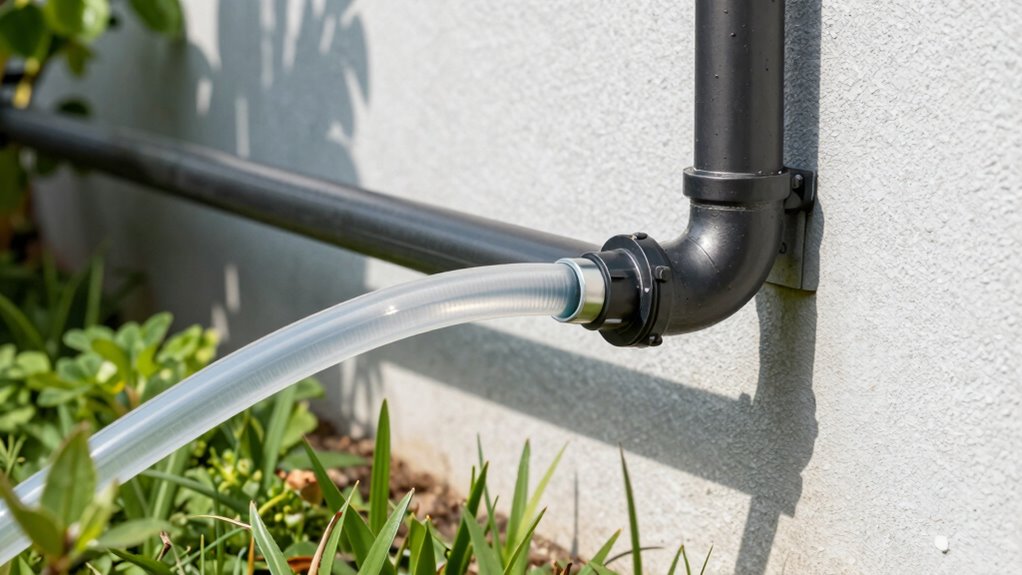
Developing a drain line habit is vital for maintaining a smoothly functioning plumbing system. When you stay on top of your drain line care, you prevent water from overflowing, leaking, or causing damage to your property. One of the most important aspects of this habit is regularly inspecting and cleaning your rain gutter. Gutters direct rainwater away from your home’s foundation, preventing pooling that can lead to basement flooding or soil erosion. When gutters become clogged with leaves, twigs, or debris, water can overflow and cascade down the sides of your house, potentially seeping into the foundation or basement walls. Clearing out your rain gutter at least twice a year, especially during fall and spring, guarantees water flows freely and reduces the risk of outdoor water damage.
Regular gutter cleaning prevents overflow and water damage to your home’s foundation.
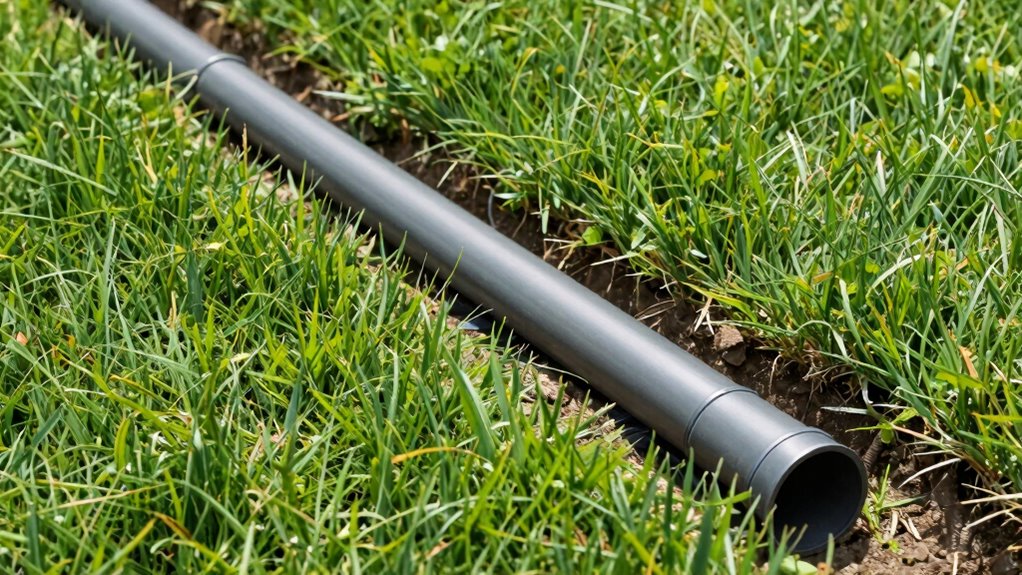
Pipe maintenance is another crucial element. Your outdoor drainage system includes pipes that carry rainwater from gutters to designated drainage areas. Over time, these pipes can accumulate debris or become blocked, especially after storms or heavy rainfall. By routinely inspecting and cleaning your exterior pipes, you can avoid backups that lead to water pooling around your home’s foundation. Make certain all connections are secure and free of cracks or leaks. If you notice any signs of damage, repairing or replacing pipes promptly keeps the entire drainage system working effectively. When you combine regular pipe maintenance with gutter cleaning, you create a reliable barrier against water intrusion and foundation issues. Additionally, understanding the importance of biodiversity can motivate more sustainable landscaping choices that help manage water flow naturally and reduce runoff. Incorporating proper landscaping techniques can further enhance your water management efforts by promoting healthy soil absorption and reducing surface runoff.
Furthermore, it’s vital to make certain that the ground around your home slopes away from the foundation. Proper grading directs water runoff away from your house, reducing the chances of water seeping into basements or crawl spaces. During your routine inspections, check the landscape to confirm it maintains this slope. If you notice areas where water tends to pool, consider regrading or adding drainage solutions like splash blocks or extension pipes to divert water further away. Regularly checking your landscape’s drainage effectiveness can prevent potential water damage and maintain the integrity of your home’s foundation. Incorporating proper grading techniques into your maintenance routine enhances water management and helps prevent costly repairs.
Adopting these habits isn’t just about preventing visible issues; it’s about protecting your entire property from the unseen damage caused by water infiltration. When you stay vigilant with rain gutter maintenance and pipe inspections, you prevent leaks, water damage, and costly repairs. Remember, the key is consistency. Regularly clearing gutters, inspecting pipes, and monitoring your landscape helps you catch potential problems early, saving you money and stress in the long run. With a proactive approach, you can enjoy a well-maintained outdoor space and safeguard your home from water-related damage.
As an affiliate, we earn on qualifying purchases.
Frequently Asked Questions
How Often Should I Inspect My Drain Line for Blockages?
You should inspect your drain line for blockages at least twice a year, ideally in spring and fall. Establish a regular inspection schedule to catch any buildup early. Check for debris, clogs, or slow drainage, and clear any obstructions promptly. Maintaining this drainage frequency helps prevent outdoor water damage and keeps your drainage system functioning smoothly, saving you time and costly repairs in the long run.
Can Improper Drain Line Habits Cause Basement Flooding?
Yes, improper drain line habits can cause basement flooding. If you neglect waterproofing techniques or overlook maintaining your drainage systems, water can seep through cracks or overwhelmed pipes. Regularly inspecting and cleaning your drainage systems guarantees they function properly, preventing water buildup. Proper drainage habits, combined with effective waterproofing, protect your basement from flooding by directing water away from your home and avoiding costly water damage.
What Tools Are Best for Cleaning Outdoor Drain Lines?
Did you know that clogged outdoor drain lines are responsible for over 60% of basement water issues? For effective drain cleaning, you should use a sturdy drain auger or a pressure washer, which are excellent tools for removing debris. Tool selection is essential; a auger helps dislodge stubborn blockages, while a pressure washer clears out dirt and buildup, ensuring your drain line stays clear and prevents outdoor water damage.
How Does Weather Affect Drain Line Maintenance?
Weather patterns and seasonal changes directly impact your drain line maintenance. Cold temperatures can cause freezing and cracking, so you should insulate lines before winter. Heavy rains or storms might lead to clogs or backups, requiring prompt inspection and cleaning. Hot, dry weather can cause debris buildup from dust or leaves. Staying aware of seasonal shifts helps you schedule regular maintenance, preventing outdoor water damage and ensuring your drain lines stay clear and functional year-round.
Are There Eco-Friendly Drain Line Maintenance Options?
Yes, you can choose eco-friendly drain line maintenance options. For example, implementing rainwater harvesting systems helps reduce reliance on municipal water and minimizes runoff issues. Using biodegradable drain cleaners and regular inspections with eco-conscious products also protect your environment. These eco-friendly solutions not only keep your drain lines clear but also promote sustainable water use, helping you contribute positively to the environment while maintaining your drainage system effectively.
As an affiliate, we earn on qualifying purchases.
Conclusion
By adopting this simple drain line habit, you’re not just preventing outdoor water damage—you’re safeguarding your home’s future. Think of your drain line as the lifeline of your outdoor space; neglect it, and chaos follows. So, make it a routine to inspect and clear your drain lines regularly. Because a well-maintained drain isn’t just a pipe—it’s the silent hero standing guard, ensuring your outdoor haven remains beautiful and damage-free.
As an affiliate, we earn on qualifying purchases.
As an affiliate, we earn on qualifying purchases.
Fall Picks
fall essentials
As an affiliate, we earn on qualifying purchases.