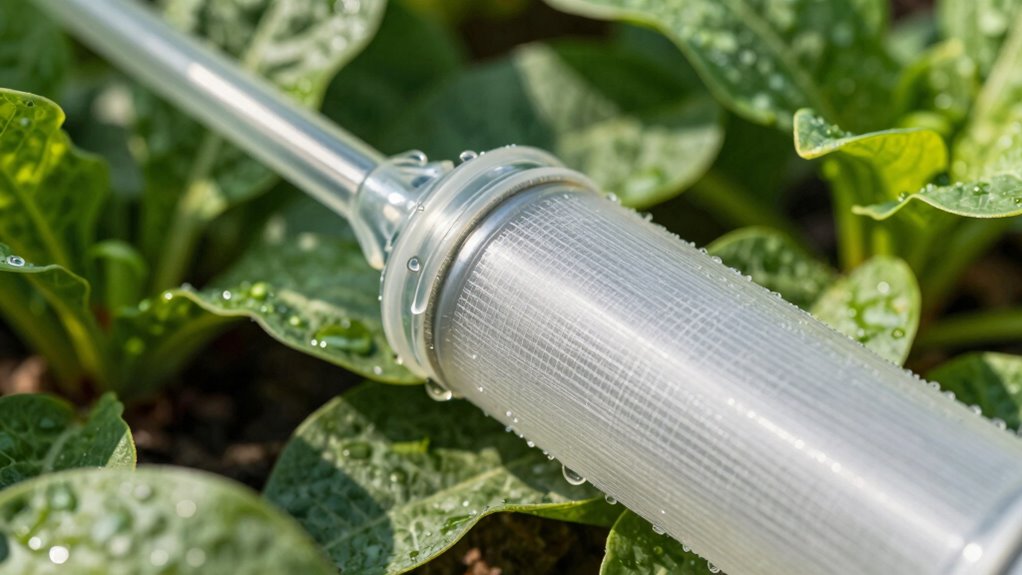

You need filtration in your drip irrigation system to prevent clogs caused by debris, dirt, and organic matter. Proper filters protect your system components from wear and tear, guaranteeing consistent water flow and reliable operation. Without filtration, tiny emitters can clog easily, leading to uneven watering and potential system failure. Regularly maintaining and upgrading filters keeps everything running smoothly. By understanding why filtration matters, you can guarantee your garden stays healthy and your system stays dependable.
Key Takeaways
- Filtration prevents clogging of tiny emitters caused by debris, ensuring consistent water flow.
- It protects system components from wear and damage caused by dirt and organic matter.
- Proper filtration maintains water quality, supporting healthy soil and plant growth.
- It reduces maintenance needs by preventing sediment buildup and system blockages.
- Filtration enhances overall system efficiency, conserving water and extending the irrigation system’s lifespan.
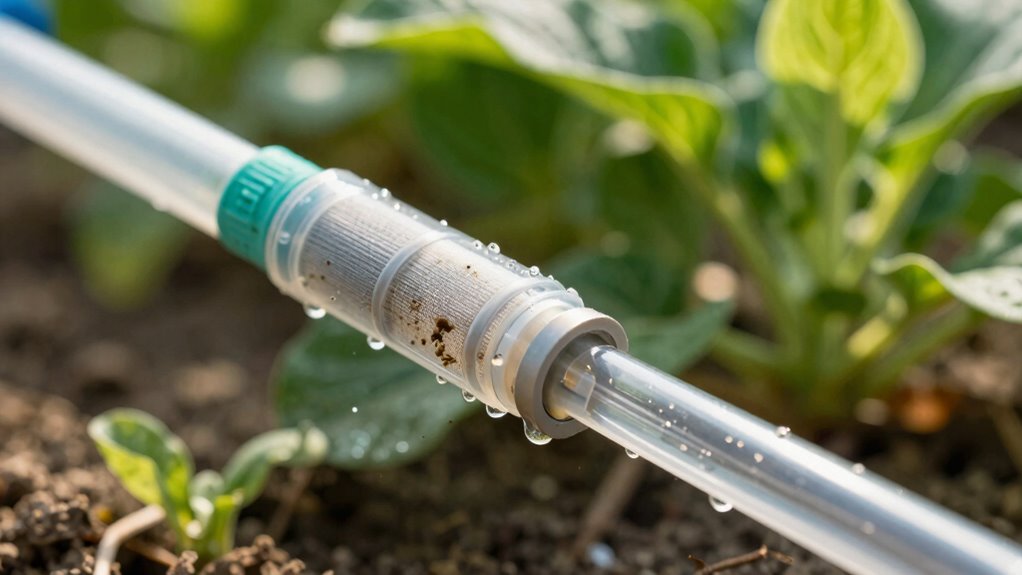
Drip irrigation has become a popular method for efficiently watering plants, but its success largely depends on proper filtration. Without it, your system can quickly become clogged, reducing water flow and risking uneven watering. Filtration plays a critical role in maintaining the reliability of your drip system, making sure that water reaches your plants consistently and effectively. When water contains debris, dirt, or organic matter, these particles can block tiny emitters, forcing you to spend time troubleshooting or replacing parts. This not only wastes water but also threatens your overall water conservation efforts. By filtering out impurities, you protect your system from unnecessary wear and tear, helping it last longer and perform better over time. Proper filtration also helps prevent the buildup of sediments that can alter water chemistry, which is essential for maintaining healthy plant roots. Filtration systems help ensure that your water remains free of contaminants, maintaining optimal conditions for plant growth. Regular maintenance of filtration devices is crucial to prevent clogging and ensure consistent water quality.
Proper filtration ensures reliable drip watering, prevents clogging, and extends your system’s lifespan.
Healthy soil is indispensable for thriving plants, and consistent watering is key to maintaining that health. When your drip system is clogged or irregular, some plants may receive too little water, while others get too much. This imbalance can weaken roots, diminish soil health, and make plants more susceptible to pests and diseases. Proper filtration ensures that water flows smoothly and evenly, supporting soil vitality and promoting strong, resilient plants. It also helps prevent the buildup of sediments and organic matter that can alter soil composition over time, keeping your soil healthier and more balanced. Additionally, using appropriate filters can help reduce the risk of introducing harmful bacteria or pathogens into your garden, further supporting plant health. Implementing effective filtration methods can also help maintain consistent water quality, which is vital for optimal plant growth. A well-maintained filtration system can also extend the lifespan of your entire irrigation setup by reducing the risk of damage caused by debris.
Water conservation is another essential reason to prioritize filtration in your drip irrigation setup. Clogged emitters force you to run your system longer or increase pressure to compensate for reduced flow, which wastes water. Over time, unfiltered water can cause leaks or system failures, leading to even more water loss. By installing reliable filters, you minimize these issues, allowing your system to operate at peak efficiency. This means you use less water overall, saving resources and reducing your utility bills. Additionally, cleaner water reduces the need for frequent maintenance and repairs, further conserving your time and money. Regularly checking and replacing filters is a simple yet effective way to ensure your system remains reliable and efficient. Properly functioning filters also help prevent the buildup of minerals and other deposits that can damage system components over time.
In short, filtration is not just an optional accessory but an indispensable component of a reliable drip irrigation system. It safeguards your system’s functionality, promotes healthy soil, and enhances water conservation efforts. When you invest in good filters and maintain them regularly, you make sure that your plants receive consistent, clean water—helping your garden thrive while conserving precious water resources. Proper filtration keeps your drip system running smoothly, saving you time, money, and effort, and ultimately supporting a more sustainable gardening approach.

Rain Bird RBY075S Drip Irrigation in-Line Y Filter, 3/4" x 3/4" Male Thread
- Clog Prevention: Prevents downstream clogging
- Stainless Steel Filter: Includes 200 mesh stainless-steel filter
- Standard Connection: 3/4" male pipe thread inlet/outlet
As an affiliate, we earn on qualifying purchases.
As an affiliate, we earn on qualifying purchases.
Frequently Asked Questions
How Often Should Drip Irrigation Filters Be Cleaned?
You should clean your drip irrigation filters every 2 to 4 weeks, especially if you notice reduced water flow. Regular cleaning prevents clogging caused by debris and mineral buildup, which can be affected by soil pH and water temperature. Keep an eye on these factors, as high soil pH or increased water temperature may accelerate mineral deposits, requiring more frequent filter maintenance to guarantee your system stays reliable.
Can Filters Prevent Clogging From Algae and Organic Matter?
Did you know that algae and organic matter can clog drip emitters in just a few days? Yes, filters are essential for algae prevention and organic matter filtration, effectively reducing clogging risks. They trap tiny particles and algae spores, keeping water clean and flow consistent. By using filters, you’ll extend your system’s lifespan and save on maintenance costs. Regular cleaning enhances their effectiveness, ensuring your drip irrigation stays reliable and efficient.
Are There Different Filter Types for Various Soil Conditions?
Yes, there are different filter types designed for various soil conditions. For example, sandy soils require finer filters to prevent clogging from small particles, while clay soils need more durable filters that can withstand mineral buildup. You should choose filters based on soil compatibility and filter durability, ensuring they effectively remove debris without clogging or wearing out quickly. This helps keep your drip irrigation system reliable, even in challenging soil environments.
What Is the Cost Difference Between Filtered and Unfiltered Systems?
It’s like comparing a shiny new sports car to an old, clunky ride; the cost difference between filtered and unfiltered systems can range from a few hundred to over a thousand dollars, depending on size and complexity. A thorough cost analysis reveals that investing in filtration boosts system efficiency, reducing maintenance costs and preventing clogs. While initial expenses are higher, long-term savings make filtered systems a smarter choice overall.
How Does Filtration Impact Water Flow Rate in Drip Systems?
Filtration improves water flow rate in drip systems by maintaining steady water pressure and flow consistency. When filters remove debris and particles, they prevent clogs that can reduce water pressure and disrupt even distribution. This guarantees your plants receive a reliable supply of water without interruptions. Clean filters help maintain ideal flow, prolong system lifespan, and improve watering efficiency, making your drip irrigation more effective and dependable over time.

Raindrip R605DT "Y" Filter, 3/4-Inch MPT X 3/4-Inch MPT, for Drip Irrigation Systems, Connect to Pipe such as Sprinkler Riser, Removable Filter, Black
- Debris Prevention: Prevents clogging of emitters
- Easy Maintenance: Removable and cleanable filter
- Simple Installation: Thread onto 3/4-inch pipe or riser
As an affiliate, we earn on qualifying purchases.
As an affiliate, we earn on qualifying purchases.
Conclusion
Remember, just like the trusty steed needed a good brush to stay loyal, your drip irrigation system relies on filtration to perform reliably. Without it, clogging and damage can turn your garden into a barren wasteland, no matter how many medieval remedies you try. So, don’t be a knight without armor—invest in proper filtration. Keep your system in tip-top shape, and you’ll enjoy lush, thriving plants, even in the face of the harshest droughts.

Rusco 1-1/2-60-F Polyester Screened Spin-Down Filter System
- Durable Clear Cover: Made of high impact polymer resin
- PVC Top Material: Constructed with PVC for durability
- Centrifugal Filtration: Uses centrifugal technology to remove sediment
As an affiliate, we earn on qualifying purchases.
As an affiliate, we earn on qualifying purchases.

AQUA CREST Garden Hose Water Filter for Plants, NSF/ANSI Certified
- Promotes Healthy Plant Growth: Reduces chlorine, odors, heavy metals
- Compatible with Standard Hoses: Fits 3/4 inch garden hose threads
- Easy to Install and Use: Lightweight, flexible, prevents pipe damage
As an affiliate, we earn on qualifying purchases.
As an affiliate, we earn on qualifying purchases.