TL;DR

Prime made for students and young adults
- Fast, free delivery for dorm and study essentials
- Prime Video and Amazon Music included
- Member-only deals
NASA’s Launch Services Program has created a standardized finite-element modeling workflow to improve analysis of shock and vibration affecting rockets and spacecraft. The team used it while certifying a commercial provider’s rocket for a NASA mission, after the provider supplied vibration testing but not shock testing; NASA says the analysis added insights and saved months.
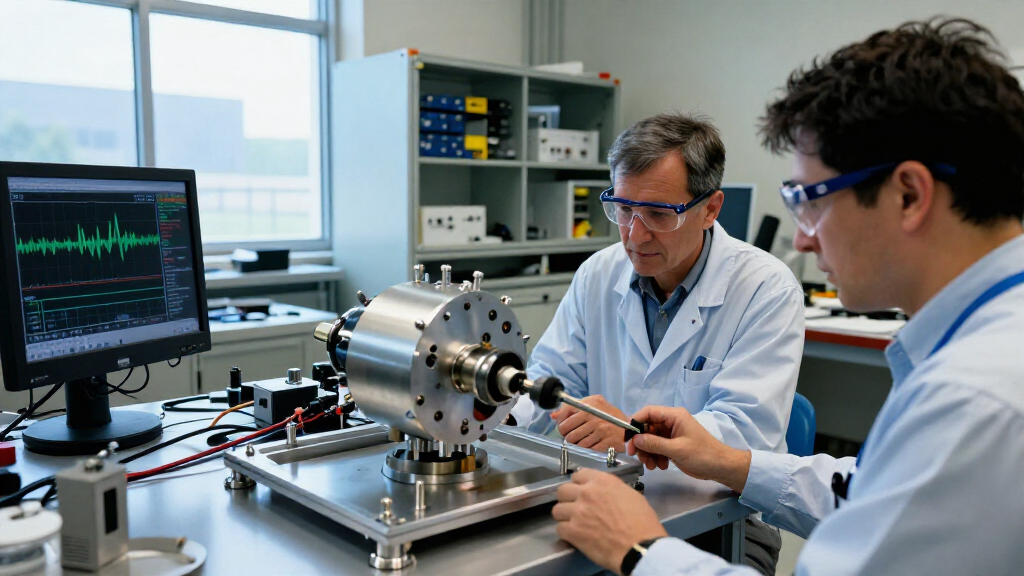
Engineers at NASA’s Kennedy Space Center have developed a standardized computer-modeling workflow to assess how rockets and spacecraft withstand launch vibration and shock, and recently applied it while certifying a commercial provider’s rocket for a NASA mission. The analysis was used after the company supplied vibration testing but not shock testing, allowing NASA’s Launch Services Program team to evaluate the missing area and examine potential structural risks before flight.
The workflow uses a commercial software tool for finite element modeling, a method that divides a complex structure into smaller components so a computer can estimate how it responds to forces. NASA’s Dynamic Environments Group developed a template to guide engineers through modeling vibration profiles and shock conditions, making comparisons and visualizing structural behavior without rebuilding the process manually each time.
NASA said the team used the tool to assess the commercial provider’s test results against flight environments and to investigate shock effects, including during transport. The agency did not identify the provider, rocket, or mission in the report. It also did not publish numerical test results or describe any specific defect found; NASA said the analysis provided additional insight and helped identify risks that had not previously been considered.
The workflow does not replace physical testing. The company had conducted vibration testing, while NASA determined that additional shock analysis was needed. NASA describes the modeling as a way to improve its assessment of how hardware may behave under launch conditions and to identify issues while they can still be addressed on the ground.
Earlier Checks Before Rocket Launch
Rockets and spacecraft experience intense vibration, shock and structural forces during launch and ascent. Those conditions can place stress on components and sensitive scientific instruments. An issue discovered after liftoff may be difficult or impossible to fix, so assessing hardware before launch is a central part of preparing a mission.
NASA says the standardized workflow has already saved the team months by allowing engineers to conduct analysis independently rather than request and wait for reports or data. That figure is NASA’s description of the time saved; the agency did not give a specific project timeline or a comparative measurement. More generally, a repeatable template may help engineers apply similar methods across assessments and share modeling knowledge, but NASA has not reported quantified changes in mission failure rates or overall program performance.
The immediate relevance is practical: the analysis gave NASA another way to examine shock conditions when the provider’s submitted tests did not include shock testing. That can help reviewers ask more targeted questions about flight readiness. The agency’s account does not establish that the rocket had a safety defect or that the tool alone certified the vehicle.
As an affiliate, we earn on qualifying purchases.
From Rules of Thumb to Models
NASA says engineers have historically estimated shock and vibration effects using rules of thumb or by scaling measurements from earlier missions. Those approaches relied on engineering judgment and approximations based on previous data. The agency describes them as useful, but says they could require substantial manual work and repeated learning of complex modeling procedures.
The new workflow applies a commercial tool that has existed for decades in a relatively new area for the group: dynamic environments analysis. NASA’s Launch Services Program, based at Kennedy, manages launches of spacecraft for missions including Earth observation, planetary exploration and space telescopes. The program’s engineers assess launch conditions so spacecraft and their components can be prepared for the forces they will encounter.
NASA’s report presents this use as a process improvement, not as a new physical test or a change to rocket design. The group’s template provides a more consistent path through modeling tasks and supports comparisons of possible structural responses. Engineers can also use later flight data to refine their assessments, according to the agency.
shock and vibration testing equipment
As an affiliate, we earn on qualifying purchases.
As an affiliate, we earn on qualifying purchases.
Testing Results and Mission Details
NASA’s report does not name the commercial provider, rocket or mission, and it does not say when the certification work took place. The agency also gives no specific shock measurements, modeling outputs, or account of which risks were identified. Its statement that the analysis produced new insights, including about transport shock, is not accompanied by detailed results that readers can independently assess.
It is also unclear whether NASA plans to use the workflow for every future certification or how broadly it will be adopted across the Launch Services Program. The agency reports that the method saved months, but does not provide a baseline or a breakdown of the time saved. The public information describes an engineering process and its reported benefits, not a finding that the rocket was unsafe or that all possible failure risks have been ruled out.
structural analysis modeling tools
As an affiliate, we earn on qualifying purchases.
As an affiliate, we earn on qualifying purchases.
Further Use Across Launch Reviews
NASA says engineers can use the workflow to share knowledge, improve their proficiency with modeling tools and refine assessments as additional flight data becomes available. The Launch Services Program will continue evaluating launch systems and spacecraft hardware for the physical forces expected during ascent, using analysis alongside applicable testing and certification work.
The agency has not announced a rollout schedule, named another vehicle that will use the template, or set a date for a further public update. The next useful details would be a description of subsequent applications, the kinds of data used to validate the models, and any measured changes in review time or risk detection. Until NASA provides those details, the reported months saved and added insights remain specific claims about the team’s recent work.
As an affiliate, we earn on qualifying purchases.
Key Questions
What did NASA change in its shock and vibration analysis?
NASA Kennedy’s Dynamic Environments Group created a standardized finite-element modeling workflow using a commercial software tool. A template guides engineers through analysis of vibration profiles and shock conditions.
Was the method used to assess a real rocket?
Yes. NASA says the team used the workflow while certifying a commercial launch provider’s rocket selected for a NASA mission. The agency did not identify the rocket, provider or mission.
Why was shock analysis needed?
The provider supplied vibration testing but not shock testing, according to NASA. The Dynamic Environments Group determined shock assessment was needed and used the workflow to examine the relevant conditions.
Does the modeling replace physical testing?
NASA describes the tool as a way to model and assess structural responses; it does not say the workflow replaces physical tests. In this case, the provider had already performed vibration testing, and NASA used analysis to address shock conditions.
What remains unknown about the results?
NASA has not released numerical findings, named any specific risk discovered, or provided details about the mission and rocket. It also has not quantified the reported months saved against a stated baseline.
Source: primary
Fall Picks
fall essentials
As an affiliate, we earn on qualifying purchases.