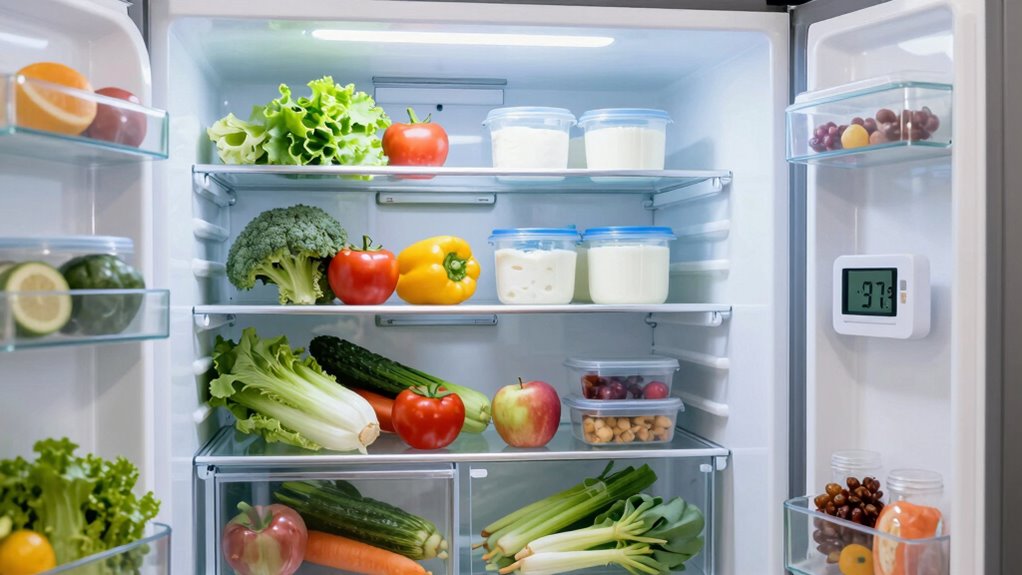

To prevent spoilage, keep your refrigerator at around 37°F (3°C). This temperature slows bacterial growth and keeps your food fresh longer. Avoid setting it too low, which can freeze produce, or too high, which promotes bacteria. Use a thermometer to check the temperature regularly and guarantee your door seals are tight. Proper temperature control extends your fridge’s lifespan and saves energy. If you want to learn more about ideal fridge settings, keep exploring these tips.

Prime made for students and young adults
- Fast, free delivery for dorm and study essentials
- Prime Video and Amazon Music included
- Member-only deals
Key Takeaways
- Keep your refrigerator temperature around 37°F (3°C) to prevent bacterial growth and spoilage.
- Use a thermometer to verify the internal temperature regularly, not just rely on controls.
- Avoid setting the temperature below 32°F (0°C) to prevent freezing fresh produce.
- Temperatures above 40°F (4°C) can promote bacteria growth and increase spoilage risk.
- Proper door sealing and avoiding overloading help maintain a consistent, safe temperature.
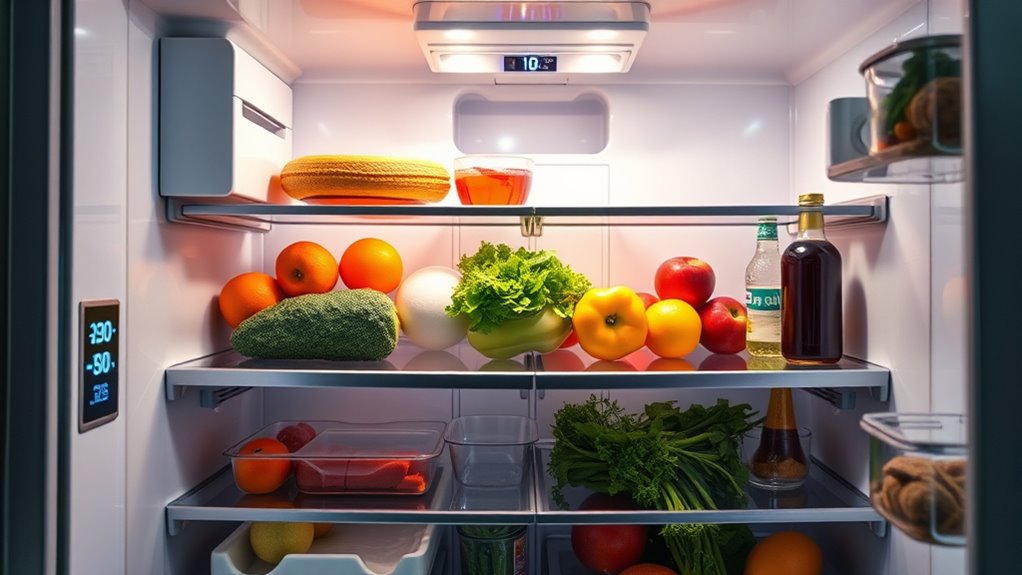
Have you ever wondered if your refrigerator is set to the right temperature? It’s a common question because getting the temperature just right can make all the difference in keeping your food fresh and safe. When your fridge is too warm, bacteria can grow quickly, increasing the risk of foodborne illnesses. Conversely, setting it too cold wastes energy and can cause foods to freeze prematurely, leading to spoilage. Maintaining the proper temperature isn’t just about food safety; it’s also about energy efficiency. An ideally set refrigerator uses less power, saving you money on energy bills while protecting your groceries.
The ideal temperature for your refrigerator is around 37°F (3°C). This temperature slows bacteria growth and keeps perishable items like dairy, meats, and leftovers fresh longer. Many modern fridges have digital displays or adjustable dials, but it’s a good idea to use a thermometer to verify the actual temperature inside. Don’t rely solely on the built-in settings because they can sometimes be inaccurate or affected by door openings and ambient room temperature. Regularly checking ensures your fridge stays within the safe zone.
Setting your fridge too cold, below 32°F (0°C), not only risks freezing fresh produce but also consumes more energy. Overcooling puts unnecessary strain on your appliance, making it work harder and increasing your electricity costs. On the other hand, if the temperature rises above 40°F (4°C), bacteria can multiply rapidly, risking food poisoning. To prevent this, keep the fridge door closed as much as possible and avoid overloading it, which can disrupt airflow and cause uneven cooling. Proper temperature management also extends the lifespan of your refrigerator, especially when it’s maintained within the recommended safe temperature range.
When your appliance runs efficiently at the correct temperature, it doesn’t have to work as hard to maintain that setting. This reduces wear and tear, ultimately saving you money on repairs or replacement. Additionally, good temperature control helps prevent food waste, as items stay fresh longer and spoilage is minimized. Using insulation, avoiding overpacking, and keeping the door seals clean further promote energy efficiency.
digital refrigerator thermometer
As an affiliate, we earn on qualifying purchases.
As an affiliate, we earn on qualifying purchases.
Frequently Asked Questions
How Often Should I Check My Refrigerator’s Temperature?
You should check your refrigerator’s temperature at least once a week to make certain it stays within the safe range. During each check, verify the thermostat calibration and inspect the door seal integrity to prevent temperature fluctuations. If you notice inconsistent temperatures or issues with the seal, adjust the thermostat or replace the seal promptly. Regular checks help keep your food fresh and prevent spoilage effectively.
What Should I Do if My Fridge’s Temperature Fluctuates?
If your fridge’s temperature fluctuates, don’t ignore it—about 60% of fridge failures are caused by power fluctuations. First, check if the temperature calibration is accurate; adjust if needed. Power fluctuations can cause inconsistent cooling, so consider using a surge protector. Regularly monitor the temperature, and if it continues to fluctuate, have a professional inspect your appliance to prevent spoilage and guarantee proper operation.
Are There Specific Spots in the Fridge That Are Warmer?
You should know that your fridge has cold spots and warm zones. Typically, the coldest spots are near the back or bottom, especially around the vents, while the warmer zones are often in the door shelves or top areas. To keep your food fresh, place perishable items in the cold spots and avoid storing them in warm zones. Regularly check the temperature and avoid overcrowding to maintain a consistent, safe environment.
How Does Ambient Room Temperature Affect Fridge Temperature?
Think of your fridge as a ship steering through changing weather. When room temperature rises, ambient effects cause the fridge to work harder, making it harder to maintain a steady interior temperature. Conversely, cooler rooms help keep your fridge more efficient. The room temperature impact means you should monitor and adjust your settings if your space gets warmer, ensuring your food stays fresh regardless of ambient effects.
Can a Fridge Be Too Cold and Cause Food Freezing?
Yes, your fridge can be too cold and cause food freezing if temperature regulation isn’t set correctly. When the temperature drops below 32°F (0°C), liquids turn to ice, affecting your food’s texture and quality. To prevent this, regularly check your fridge’s temperature setting, ideally between 37°F and 40°F. Proper temperature regulation guarantees your food stays fresh without freezing, keeping everything safe and tasty.
As an affiliate, we earn on qualifying purchases.
Conclusion
Keeping your fridge at the right temperature is like a silent guardian against spoilage. While it’s easy to overlook, that small number holds the power to preserve freshness and prevent waste. Think of it as a balancing act—too warm, and your food risks spoilage; too cold, and you waste energy. By maintaining the ideal temperature, you’re not just saving food, but also money and peace of mind. It’s simple, yet essential—your fridge’s best friend.
refrigerator temperature controller
As an affiliate, we earn on qualifying purchases.
As an affiliate, we earn on qualifying purchases.
fridge temperature monitoring device
As an affiliate, we earn on qualifying purchases.
As an affiliate, we earn on qualifying purchases.
Columbus Day / Indigenous Peoples' Day Picks
long weekend sales
As an affiliate, we earn on qualifying purchases.





![Terence Tao: Math 2.0 [Pdf]](https://micronomicon.com/wp-content/uploads/2026/10/terence-tao-math-2-0-pdf-featured-260x140.jpg)