The most important safety rule in pressure canning is ensuring your equipment is properly sterilized, inspected, and adjusted for altitude. You must sterilize jars and lids thoroughly to prevent contamination, inspect your canner regularly for faults, and adjust pressure levels based on your elevation to avoid underprocessing or overprocessing. Combining these practices guarantees safe, high-quality canned foods. Mastering these essentials is crucial—continue with the next steps to learn more about safe and successful pressure canning.

Prime made for students and young adults
- Fast, free delivery for dorm and study essentials
- Prime Video and Amazon Music included
- Member-only deals
Key Takeaways
- Proper altitude adjustments ensure the temperature reaches safe levels during processing.
- Sterilizing jars, lids, and utensils prevents contamination and spoilage.
- Regularly inspecting and calibrating the pressure canner guarantees accurate pressure control.
- Combining correct pressure settings with sterilization maximizes food safety.
- Following all safety procedures minimizes risks of foodborne illnesses and ensures successful canning.
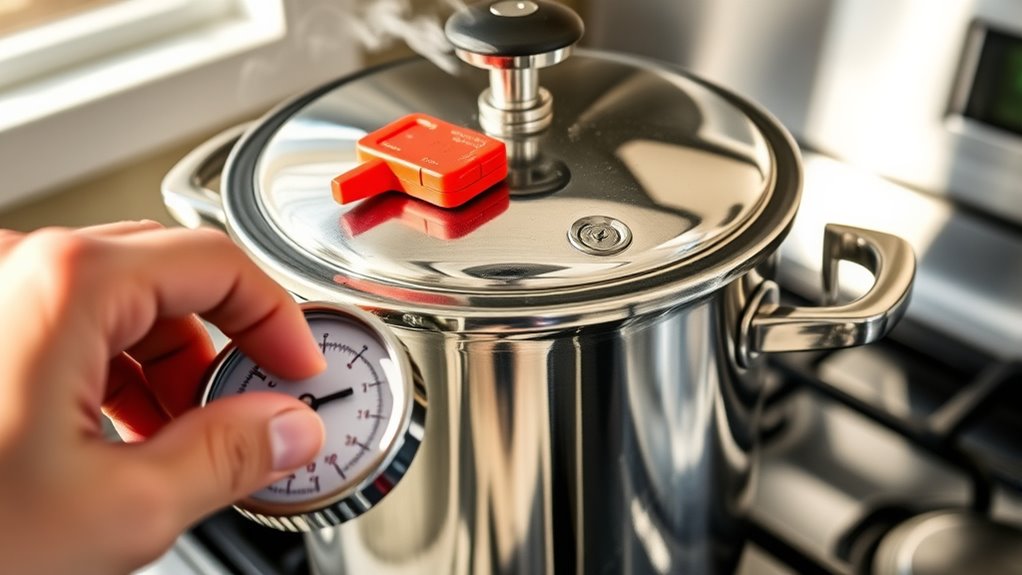
Pressure canning is an essential method for safely preserving low-acid foods like vegetables, meats, and soups. When you’re working with this method, understanding the importance of altitude adjustments is crucial. At higher elevations, water boils at lower temperatures, which can prevent your food from reaching the necessary temperature to eliminate harmful bacteria. To counter this, you need to adjust your pressure canner’s settings according to your altitude. Most pressure canners come with a chart or instructions that specify how much additional pressure to apply based on your elevation. Ignoring these adjustments can result in improperly processed food that may harbor bacteria or spores, risking foodborne illnesses.
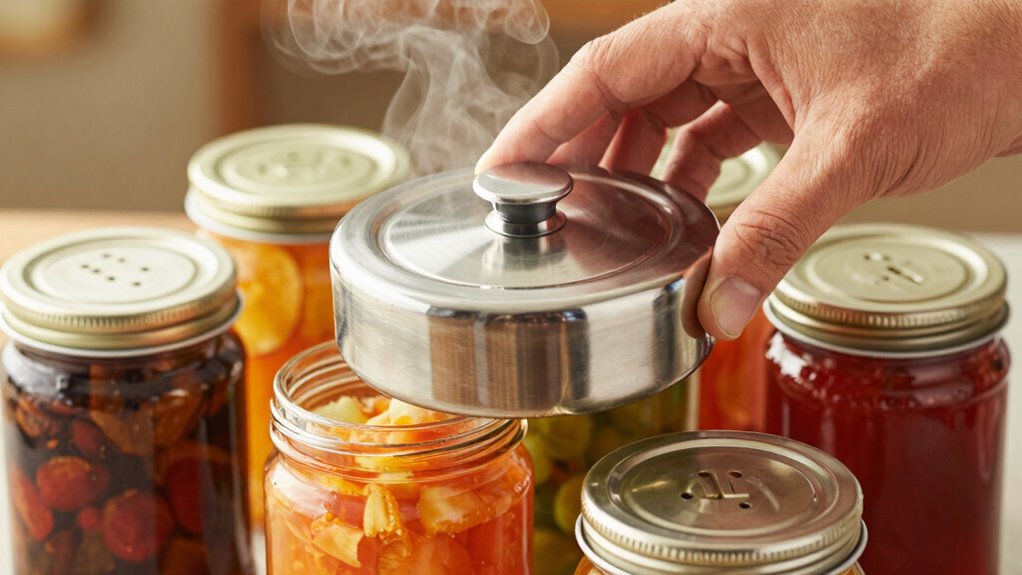
Equally vital is equipment sterilization. Before you start canning, ensure all your jars, lids, and utensils are thoroughly sterilized. Contaminants or residual bacteria on your equipment can ruin your efforts, leading to spoilage or food safety issues. To sterilize, wash your jars and lids in hot, soapy water, then boil them in water for at least 10 minutes, or run them through a hot dishwasher cycle. This process kills germs and creates a safe environment for your preserved foods. Never skip this step, even if your jars are brand new, because cleanliness directly impacts the safety and longevity of your canned goods.
Thorough sterilization of jars, lids, and utensils is essential for safe, long-lasting canned foods.
When preparing to process your jars, double-check your pressure canner’s seals and safety features. Proper equipment sterilization extends beyond just cleaning; it involves ensuring your canner’s valves, seals, and pressure gauges are functioning correctly. A faulty gauge can give false readings, leading you to process at incorrect pressures. Regularly inspect and calibrate your canner according to the manufacturer’s instructions to guarantee accurate pressure regulation. This attention to detail is the difference between safe, shelf-stable foods and potentially dangerous ones.
As you proceed, remember that altitude adjustments and equipment sterilization are interconnected parts of safe pressure canning. Properly adjusted pressure settings based on your elevation ensure your food reaches the right temperature, while sterilized equipment prevents contamination. Combining these practices helps you achieve consistent, safe results. Ultimately, these safety rules protect your health and ensure your canned foods remain delicious and safe to eat for months or even years. By paying close attention to altitude adjustments and sterilization, you’ll master the basics of pressure canning and confidently enjoy the fruits of your labor. Also, understanding the importance of proper sterilization techniques can greatly enhance your food safety practices.
pressure canner with altitude adjustment
As an affiliate, we earn on qualifying purchases.
As an affiliate, we earn on qualifying purchases.
Frequently Asked Questions
Can I Reuse Canning Jars and Lids Multiple Times?
You can reuse canning jars multiple times, but you should check for cracks or chips that could compromise safety. However, lids are generally single-use because their durability decreases after the first seal. Always replace lids with new ones to guarantee a proper seal and prevent spoilage. Jar reuse is safe if the jars remain in good condition, but lid replacement is essential for maintaining the integrity of your canned foods.
What’s the Ideal Pressure Setting for Low-Acid Foods?
You should set your pressure canner to 10 to 15 pounds of pressure, depending on your altitude, for low-acid foods. Adjust the pressure according to safety guidelines to guarantee proper sterilization and prevent spoilage. Always check your canner’s manual for specific recommendations. Proper pressure adjustment is vital for safe canning, especially with low-acid foods, to prevent bacteria growth and ensure your preserved foods stay safe to eat.
How Do I Adjust Processing Time for Altitude?
When you’re at higher altitudes, don’t forget to adjust your processing time to guarantee safety. The key is increasing your processing time, typically by adding a few extra minutes per 1,000 feet of altitude. This altitude adjustment helps the heat penetrate properly, killing bacteria effectively. So, always check altitude guidelines and tweak your processing time accordingly—failing to do so could compromise your canned goods’ safety and quality.
Is It Safe to Can Dairy or Meats Using Pressure Canning?
You should avoid canning dairy and meats using pressure canning unless you’re following tested recipes from reliable sources. Dairy preservation is tricky because dairy products can spoil if not processed properly, risking food safety. For meats, proper pressure and processing times are essential to ensure meat safety and prevent bacteria growth. Always adhere to tested guidelines to keep your canned goods safe and enjoy your preserved foods worry-free.
How Can I Tell if a Pressure Canner Is Working Properly?
Think of your pressure canner like a trusted vehicle; you need to verify it regularly. To tell if it’s working properly, perform safety inspections before each use and monitor the pressure gauge during processing. If the gauge fluctuates wildly or stays off, it’s time for canner troubleshooting or professional maintenance. Proper checks ensure safe canning and prevent accidents, giving you peace of mind with every jar.
sterilizing canning jars and lids
As an affiliate, we earn on qualifying purchases.
As an affiliate, we earn on qualifying purchases.
Conclusion
Remember, safety starts with standards. Stay strict with sterilization, timers, and temperatures to prevent pitfalls. Properly pressurize, process, and protect your pantry with precision and patience. Following these fundamental rules guarantees your food remains safe, satisfying, and superbly preserved. So, stay vigilant, follow the fundamentals, and savor the secure satisfaction of successful pressure canning. Your pantry’s protection depends on your attention—always prioritize safety to preserve peace of mind and perfect produce.
pressure canning safety equipment
As an affiliate, we earn on qualifying purchases.
As an affiliate, we earn on qualifying purchases.
pressure canning gauge calibration kit
As an affiliate, we earn on qualifying purchases.
As an affiliate, we earn on qualifying purchases.
Fall Picks
fall essentials
As an affiliate, we earn on qualifying purchases.