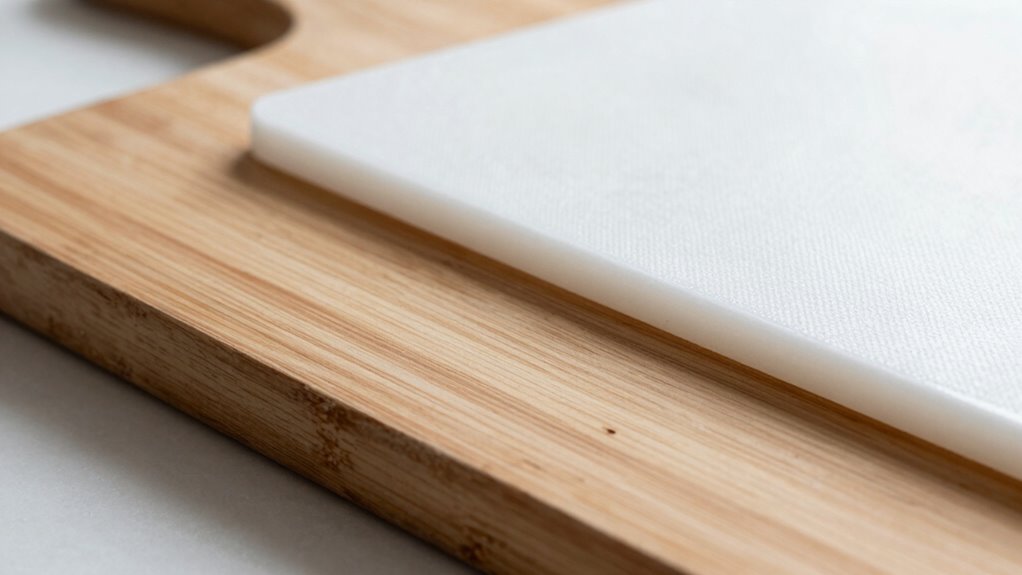
Many believe some cutting board materials are more hygienic, but proper cleaning and maintenance matter far more. Non-porous plastics are easy to sanitize, while wood has natural antimicrobial properties, yet both require regular hygiene practices. No material is completely bacteria-proof; what counts is how you care for your board. Whether you choose wood or plastic, consistent cleaning and replacing damaged boards keep your food safe. Want to understand how to optimize your choice? Keep exploring for essential tips.
Key Takeaways
- Proper cleaning and sanitizing are essential for all cutting board materials, regardless of their inherent properties.
- Both wood and plastic boards have natural or manufactured features that can resist bacterial growth when maintained correctly.
- The myth that certain materials are inherently more sanitary is false; hygiene depends on consistent care.
- Durability and ease of cleaning influence a cutting board’s ability to stay hygienic over time.
- Informed material choice combined with proper maintenance ensures food safety, not just the material’s composition.
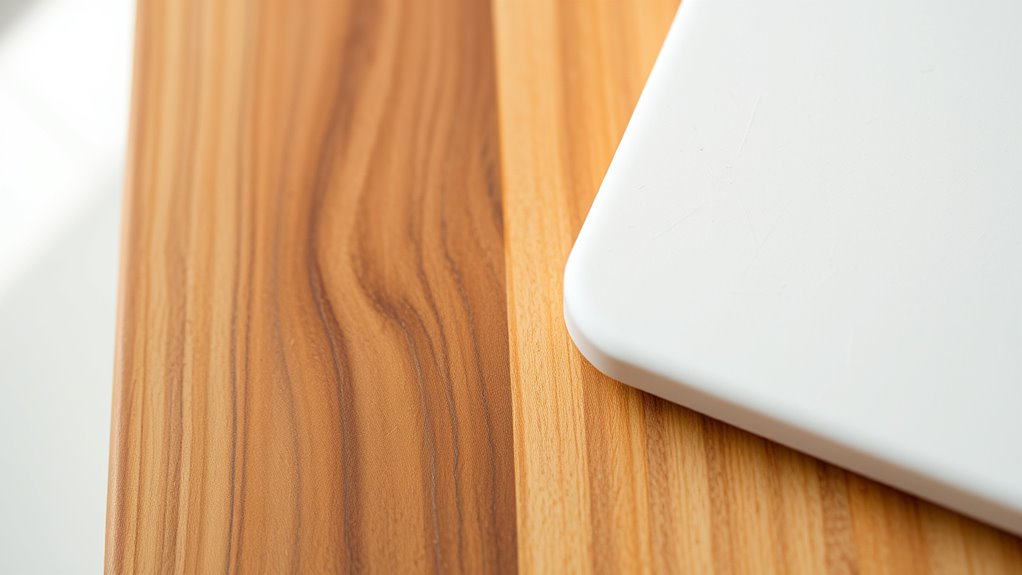
Ever wondered what makes a cutting board suitable for your kitchen? It’s not just about looks or price—it’s about the essential qualities that guarantee safety and efficiency during food prep. One key factor to consider is the hygienic properties of the material. You want a surface that resists bacteria and doesn’t harbor germs, especially if you switch between raw meats, vegetables, and other foods. The truth is, no material is completely immune to bacteria, but some do a better job at minimizing their presence. For instance, certain plastics are non-porous, meaning they don’t absorb liquids or bacteria, making them easier to clean thoroughly. Wood, on the other hand, has natural antimicrobial properties, which can inhibit bacterial growth on its surface. However, the hygiene myth that one material is inherently more sanitary than another is misleading. Proper cleaning, sanitizing, and maintenance play a critical role regardless of the material. Additionally, understanding the antimicrobial properties of different materials can help you make a more informed choice. Material durability is another crucial aspect. You need a cutting board that can withstand regular use without warping, cracking, or wearing down quickly. For example, hardwood cutting boards like maple or walnut are renowned for their durability—they resist scratches and cuts that can trap bacteria, but they require regular oiling to maintain their integrity. Polyethylene plastic boards are also durable and tend to be more resistant to staining and warping, making them a practical choice for many kitchens. They can typically be sanitized in a dishwasher, which adds to their longevity and ease of maintenance. Conversely, softer woods or thinner plastic boards may wear out sooner, developing deep cuts that trap bacteria and compromise hygiene. When choosing a material, think about how often you’ll use the board, the types of foods you’ll prepare, and how much maintenance you’re willing to do. A durable, well-maintained board will serve you longer and keep your food prep safer. Ultimately, understanding the balance between hygienic properties and material durability helps you pick the right cutting board. While some may believe certain materials are inherently safer or cleaner, the real key is consistent cleaning and proper care. Regularly sanitizing your cutting board, replacing it when it’s heavily scored or damaged, and using different boards for different food groups are the best practices to maintain a hygienic kitchen environment. Remember, no matter what material you choose, your diligence in cleaning and maintenance will always be the most effective defense against bacteria and contamination.
Top picks for "cutt board material"
Open Amazon search results for this keyword.
As an affiliate, we earn on qualifying purchases.
Frequently Asked Questions
Are Plastic Cutting Boards More Hygienic Than Wooden Ones?
Plastic cutting boards are often considered more hygienic than wooden ones because they’re easier to clean and sanitize, which is essential for dairy safety. You can run them through the dishwasher, ensuring bacteria are eliminated. Plus, plastic boards are compatible with knives without dulling edges, making food prep smoother. However, wooden boards can also be hygienic if properly maintained, so choose based on your cleaning routine and food types.
How Often Should I Replace My Cutting Board for Safety?
You should replace your cutting board whenever it shows deep cuts, excessive staining, or warping, as these can harbor bacteria and compromise food safety. Regularly inspect your board’s material durability, especially if it’s plastic or wood, and replace it to prevent bacterial buildup. For maximum safety, consider replacing plastic boards every year and wooden ones every few years, depending on their condition, to maintain hygiene and guarantee safe food preparation.
Can Bacteria Hide in the Cracks of My Cutting Board?
Bacteria hiding in board cracks can definitely happen. Those tiny crevices create cozy corners for bacteria to cling to, making it harder to clean thoroughly. Regularly inspect your cutting board for cracks, and if you spot any, replace it promptly. Scrubbing with soap and hot water helps, but cracks can harbor bacteria despite your efforts. Keep your kitchen safe by swapping out cracked boards and maintaining meticulous cleanliness.
Do Antimicrobial Cutting Boards Actually Kill Germs?
Antimicrobial cutting boards do help kill germs, thanks to antimicrobial coatings that provide an added layer of germ resistance. These coatings actively work to reduce bacteria on the surface, making your cutting board more hygienic. However, they aren’t foolproof. You still need to clean your board properly after each use to prevent bacteria buildup, as antimicrobial features are an extra safety measure rather than a complete solution to germs.
What Cleaning Methods Are Best to Sterilize Different Materials?
Think of your cutting board as a fortress needing defense. To keep it secure, use appropriate sanitization techniques and sterilization methods for each material. For wood, scrub with hot soapy water and occasionally use vinegar or hydrogen peroxide. Plastic boards can be sanitized with bleach solutions or dishwasher cycles. Glass surfaces respond well to boiling water or commercial disinfectants. Tailoring your cleaning approach guarantees germs don’t breach your kitchen’s defenses.
Conclusion
Remember, choosing the right cutting board isn’t like picking a favorite color—it’s about understanding what keeps your kitchen safe. Whether you go for wood, plastic, or bamboo, each has its pros and cons. Think of it as choosing the right tool for a job; with proper cleaning and care, your cutting board can be a trusty sidekick in your kitchen adventures. Stay informed, stay hygienic, and keep your food safe like a fortress!