
The timing of when you add salt can dramatically influence your dish’s flavor, texture, and moisture. Salting early allows flavors to develop deeply and creates tender, juicy results, while late salting keeps dishes sharper and fresher. Knowing when to add salt guarantees balanced seasoning and enhances overall quality. Small changes in salt timing can make a significant difference—if you want to master these techniques, there’s much more to explore below.
Key Takeaways
- Early salt addition promotes deeper flavor development and even seasoning throughout the dish.
- Late salting preserves fresh, sharp flavors and prevents moisture loss.
- The mineral content and crystal structure of salt influence how and when it affects taste and texture.
- Proper timing helps achieve optimal moisture retention, tenderness, and crust formation.
- Tasting and layering salt at different stages ensure balanced flavor and prevent over- or under-salting.
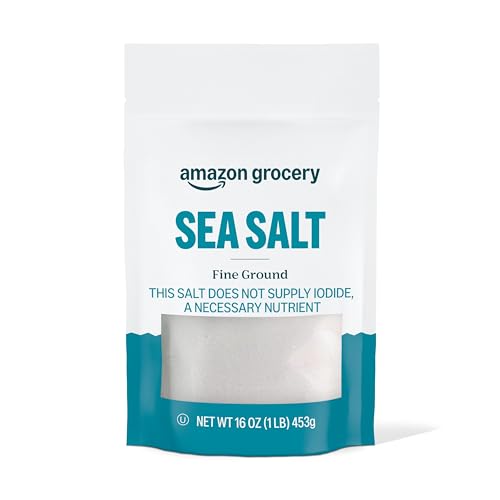
Amazon Grocery, Sea Salt, Fine Ground, 16 Oz
One 16 ounce resealable bag of Fine Ground Sea Salt
As an affiliate, we earn on qualifying purchases.
As an affiliate, we earn on qualifying purchases.
Understanding the Science Behind Salt and Cooking
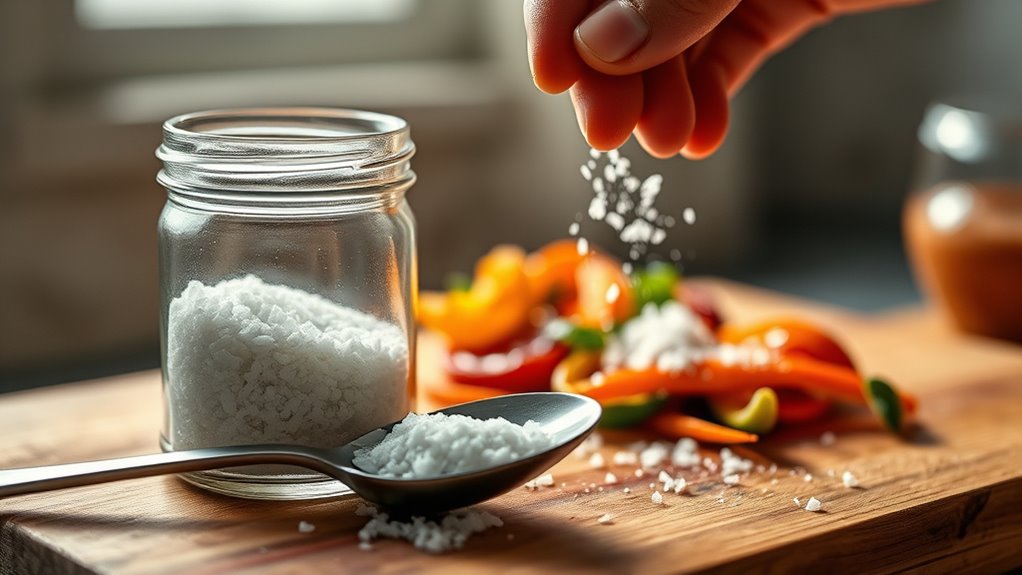
Salt plays a crucial role in cooking because it enhances flavors and influences the texture of food. When you add salt, you’re engaging with the science of salt crystal formation, which affects how salt dissolves and interacts with ingredients. The mineral content in salt, such as sodium, magnesium, and calcium, varies depending on its source, influencing its flavor and texture. For example, sea salt contains trace minerals that give it a more complex taste compared to refined table salt. These minerals also impact how quickly salt dissolves and how it distributes throughout your dish. Understanding the mineral content helps you choose the right salt for specific recipes, ensuring ideal flavor development. This scientific foundation explains why different salts behave uniquely during cooking, especially considering how color accuracy can influence the perception of food presentation. Additionally, the mineral composition of salt can subtly alter the overall flavor profile, making it an essential factor in culinary precision. Moreover, knowing the electric properties of salt can assist in understanding its interactions in various cooking and food processing methods. Recognizing how salt’s crystal structure influences its dissolving rate can further refine your seasoning techniques.

Finish Dishwasher Salt Helps Soften Water to Prevent Limescale and Watermarks, 2 KG
Finish Salt is specifically made for dishwashers to soften water and protect them from the negative effects of…
As an affiliate, we earn on qualifying purchases.
As an affiliate, we earn on qualifying purchases.
The Impact of Salt Timing on Flavor Development
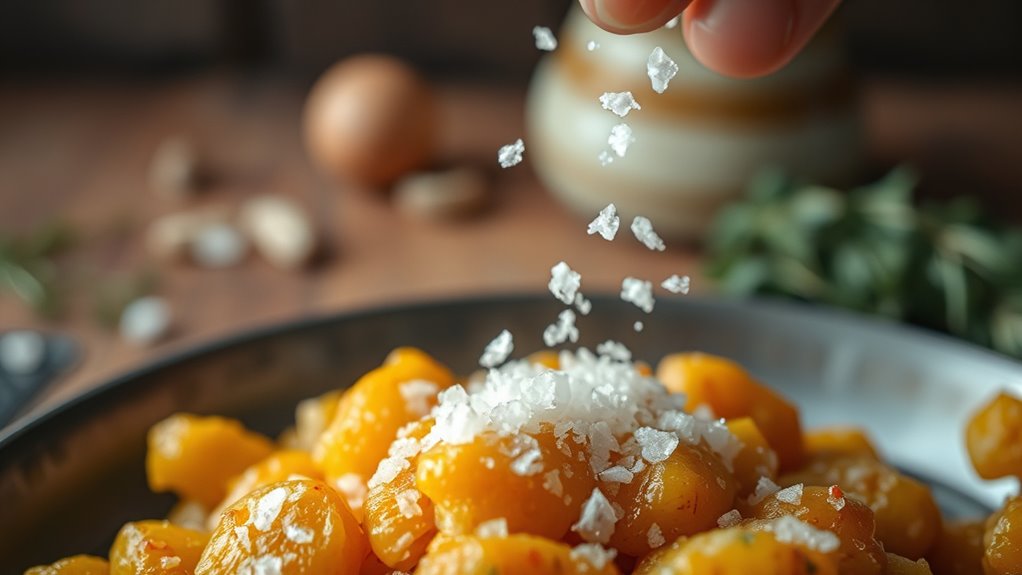
When you add salt at different stages of cooking, it can considerably influence the final flavor of your dish. Salt mineralogy plays a key role in how salt interacts with ingredients during cooking, affecting flavor layering. Early salting allows salt to penetrate deeply, enhancing overall seasoning and developing complex taste profiles. Adding salt later preserves sharper, more distinct flavors, emphasizing freshness and brightness. The mineral composition of salt—such as trace elements in sea salt—also impacts flavor nuances, subtly enriching the dish. Understanding mineralogy helps cooks select salts that enhance specific flavor characteristics. The chemical properties of different salts influence how they dissolve and release flavor compounds during cooking, affecting overall taste. Flavor perception can be significantly affected by the timing of salt addition, influencing how we perceive taste. Timing determines how flavors evolve, either building depth through gradual salt incorporation or accentuating specific notes by careful timing. Mastering when to salt enhances your ability to craft well-balanced, flavorful dishes with depth and precision. Additionally, considering the chemical interactions between salt and other ingredients can further optimize flavor development.

Celtic Sea Salt Light Grey Coarse – Unrefined Mineral Salt, 70+ Trace Minerals, Sustainably Harvested, GMP Certified – Cooking, Finishing, Hydration, Grinder Use – ½ Pound Resealable Bag
Bursting with Naturally-Occurring Minerals: Original whole crystal grey sea salt naturally rich in over 70 trace minerals and…
As an affiliate, we earn on qualifying purchases.
As an affiliate, we earn on qualifying purchases.
How Salt Affects Texture and Moisture in Various Dishes
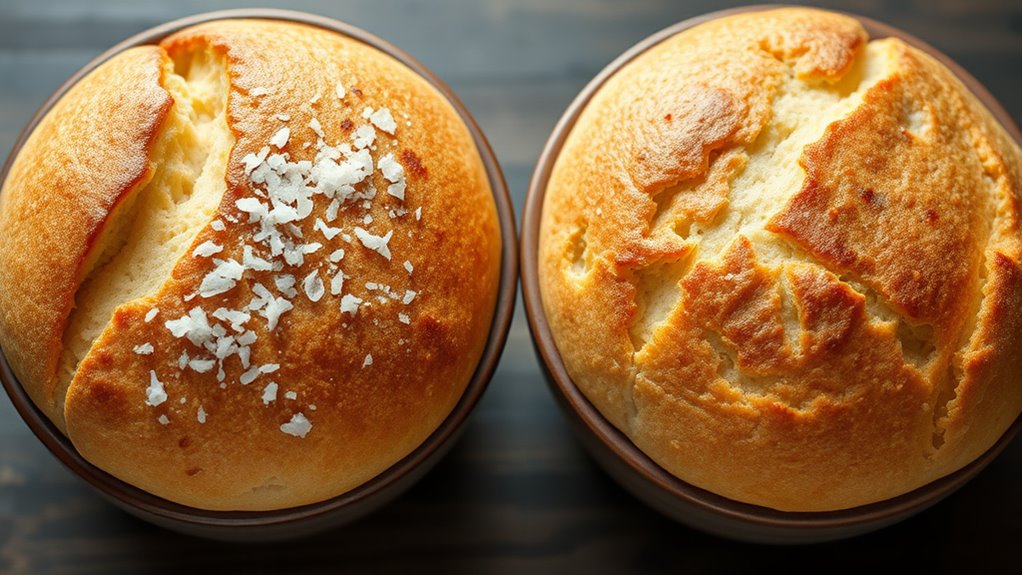
Salt plays a key role in shaping the texture of your dishes, making them feel more satisfying or tender. It also helps lock in moisture, preventing your food from drying out during cooking. Understanding when and how to add salt can considerably improve both the feel and juiciness of your meals. Proper water chemistry management is essential to ensure consistent results and food safety. Additionally, the timing of salt addition can influence the emulsion stability of sauces and dressings, leading to better texture and flavor integration. Mastering precise salt timing can greatly enhance your culinary outcomes by optimizing both moisture retention and texture harmony.
Enhancing Dish Texture
Adding salt at different stages of cooking can markedly improve the texture of your dishes. Salt influences how ingredients interact, especially through salt crystal formation, which can lead to a firmer or more tender result. The mineral content in salt also plays a role, impacting moisture retention and surface texture. For example, adding salt early in cooking can help proteins break down, creating a tender, cohesive texture. Later seasoning enhances surface crispness or moistness. Use the table below to understand how timing affects texture:
| Stage | Effect on Texture |
|---|---|
| Early in cooking | Tenderizes, enhances protein structure |
| During boiling | Improves moisture retention |
| At the end | Adds crispness, surface flavor |
Understanding salt crystal formation can help you better control these effects for more consistent results.
Preserving Moisture Content
In many dishes, maintaining moisture is key to achieving a desirable texture, and salt plays an essential role in this process. Using brine solutions helps lock in moisture during cooking, ensuring meats stay tender and juicy. When you soak poultry or pork in a saltwater brine, the salt begins to break down muscle proteins, allowing the meat to retain more water. Additionally, applying salty crusts creates a barrier that minimizes moisture loss during roasting or baking. The salty exterior forms a protective layer, keeping internal juices intact. This method not only preserves moisture but also enhances flavor. By timing your salt application correctly, whether through brining or crafting salty crusts, you can considerably improve the texture and succulence of your dishes.

TIMBER TASTE® Gourmet Salt Gift Set for Women – 5 Unique Salts from Around the World | Seasoning Gift Set for Her | Mineral Sampler | Cooking Ideas for Women | Artisan Variety Pack with Mineral Flakes
RARITIES FROM MILLIONS OF YEARS – This premium salt gift set features 5 rare gourmet salt varieties sourced…
As an affiliate, we earn on qualifying purchases.
As an affiliate, we earn on qualifying purchases.
The Benefits of Salting Early in the Cooking Process

Salting early in the cooking process boosts flavor development, making your dishes more vibrant. It also helps create a consistent texture and can even cut down on overall cooking time. Additionally, sound vibrations are believed to enhance cellular regeneration and overall health, which can complement your cooking routines by promoting better well-being. Incorporating techniques like timing and method can further enhance the effectiveness of salting early, ensuring optimal flavor and texture in your dishes.
Enhances Flavor Development
When you salt early in the cooking process, you give the seasoning time to penetrate the food, resulting in a more layered and complex flavor. Salt crystals dissolve slowly, allowing salt absorption to happen gradually. This process enhances natural flavors rather than masking them. To better understand, consider this table:
| Benefit | Explanation |
|---|---|
| Deeper flavor | Salt penetrates, enriching the interior taste |
| Balanced seasoning | Even distribution ensures flavor consistency |
| Reduced need for salt | Less added at the end, healthier results |
| Flavor complexity | Builds depth over time, avoiding flatness |
Additionally, understanding the chemical interactions between salt and food highlights why timing is so crucial for optimal flavor.
Improves Texture Consistency
Salting early helps lock in the food’s natural texture by promoting even moisture distribution during cooking. When you use brine solutions or apply seasoning techniques early, salt penetrates more thoroughly, resulting in a more consistent texture. This process prevents surface dryness and ensures the interior remains tender and moist. Proper salting breaks down muscle fibers and enhances water retention, giving you more control over the final result. By salting ahead of time, you reduce uneven cooking caused by inconsistent seasoning. This consistency is especially noticeable in meats and vegetables, where even seasoning improves overall mouthfeel. Incorporating salt early allows the seasoning to work synergistically with the food’s structure, creating a uniformly textured dish that feels just right with every bite. Additionally, understanding the science of osmosis can help you optimize your seasoning approach for better culinary results.
Reduces Cooking Time
Applying salt early in the cooking process can substantially cut down your overall cooking time. When you salt food early, salt crystals form on the surface, promoting salt crystallization that speeds up moisture loss. This process allows heat to penetrate more quickly, reducing the time needed to cook thoroughly. Additionally, salt enhances mineral absorption within the food, which can break down cell walls faster. As a result, ingredients soften sooner, saving you time in the kitchen. This method is especially effective with vegetables and meats, where early salting creates a more efficient cooking process. By understanding how salt influences crystallization and mineral uptake, you can cook more quickly without sacrificing flavor or texture.
When to Add Salt for Optimal Seasoning
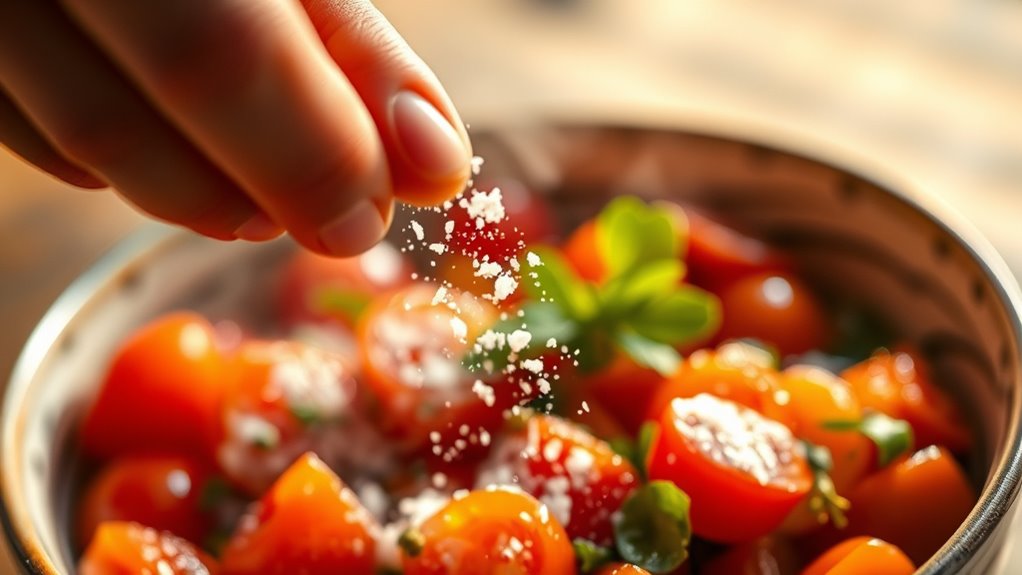
Adding salt at the right moment can make a noticeable difference in your dish’s flavor. Timing influences the seasoning balance and salt concentration, impacting overall taste. Salt too early can draw out moisture, making dishes bland, while adding it too late might result in uneven seasoning. The ideal approach is to add salt during cooking, tasting frequently to find that perfect balance. Being mindful of seasoning timing helps ensure your dishes are flavorful without over-salting. Additionally, understanding flavor development during different cooking stages can enhance the depth and complexity of your seasoning. Proper cooking techniques also play a role in how salt interacts with other ingredients, further influencing the final flavor. Recognizing ingredient interactions can help you better control seasoning outcomes and avoid common pitfalls. Developing a sense of taste control is essential for elevating your culinary skills.
Mistakes to Avoid When Salting Your Food
One common mistake is seasoning too early or too late, which can ruin the balance of your dish. Salty misconceptions often lead to over- or under-seasoning, making your food either too bland or overwhelmingly salty. Avoid these seasoning pitfalls to elevate your cooking:
- Relying solely on visual cues instead of tasting as you go
- Using excessive salt without considering other flavor layers
- Assuming all salts behave the same; different types have distinct intensities
- Ignoring the importance of seasoning at multiple stages
- Overcompensating after tasting a dish that’s under-seasoned
Practical Tips for Mastering Salt Timing in Your Kitchen
Mastering the timing of salt in your cooking can make a noticeable difference in flavor. To do this, incorporate salt early in seasoning and marinating processes; adding salt during these stages allows flavors to deepen and enhances overall taste. If you’re concerned about over-salting, try using salt substitutes like potassium chloride, which mimic salt’s flavor without the sodium. Taste as you go, adjusting salt amounts gradually to avoid oversalting. For meats and vegetables, season in layers—salt before cooking, then again during or after—to build complexity. Keep in mind that salting too late can result in bland dishes, so develop a habit of seasoning thoughtfully at different stages. With practice, you’ll master when and how much salt to add for suitable flavor. Proper seasoning techniques can also help optimize flavor without relying solely on salt.
Experimenting With Salt Timing to Elevate Your Cooking Skills
Experimenting with salt timing is a simple yet powerful way to elevate your cooking. By adjusting when and how you add salt, you can enhance seasoning techniques and create complex flavor layering. Try these strategies to refine your skills:
- Salt early during sautéing to build a foundation of depth
- Add salt at the end to sharpen and brighten flavors
- Use salt during marinating for more infused taste
- Incorporate salt in stages for nuanced seasoning
- Experiment with different salt types to influence flavor profiles
These approaches help you develop a more sophisticated palate and better control over your dishes. Remember, salt timing isn’t just about seasoning; it’s about crafting layers of flavor that make your cooking stand out. Small adjustments can lead to big improvements in taste and aroma.
Frequently Asked Questions
Can Salt Timing Influence the Nutritional Value of My Dishes?
Yes, salt timing can influence the nutritional value of your dishes. By adding salt at specific stages, you enhance flavor, making your food tastier without extra salt. It also aids in texture modification, helping ingredients better absorb flavors and retain moisture. This strategic timing can lead to healthier dishes, as you might use less salt overall while still achieving ideal taste and texture.
How Does Salt Timing Vary Across Different Cuisines?
Salt timing varies across cuisines like a colorful tapestry, woven with cultural preferences and regional practices. In Italian cooking, salt is added early to build flavor, while in Japanese cuisine, it’s often used later to enhance freshness. You’ll notice these differences reflect local traditions and taste preferences, shaping how dishes develop. Understanding these variations helps you adapt salt timing, ensuring your cooking resonates with authentic flavors from diverse culinary worlds.
Is There a Safety Concern With Adding Salt at Specific Stages?
Adding salt at specific stages generally isn’t a safety concern if you follow health precautions. Too much salt can increase health risks like high blood pressure, so you should monitor your intake. Use salt sparingly and consider alternative flavorings. Always taste your dish before adding more, and remember to adjust seasoning gradually. By following these safety precautions, you can enjoy the benefits of salt timing without risking your health.
How Do I Adjust Salt Timing When Using Different Types of Salt?
Think of salt timing as a secret ingredient in your culinary toolkit. When using different types of salt, you’ll want to adjust your timing to optimize flavor development. For flaky sea salt, add it later for texture; for finer salts, incorporate earlier to meld flavors. Experiment with your techniques, and you’ll discover how each salt type influences your dish, elevating it through precise salt timing.
Can Salt Timing Help Reduce Overall Sodium Intake?
Yes, salt timing can help you reduce overall sodium intake by allowing you to enjoy flavor enhancement without overusing salt. By timing your salt application strategically, you can enhance the taste of your dishes, making less salt feel more satisfying. This method encourages sodium reduction since you rely on timing to boost flavor, helping you maintain delicious meals while cutting back on excessive salt consumption.
Conclusion
Mastering salt timing is like tuning an instrument—you’ll create a symphony of flavors that dance on your palate. By paying attention to when you add salt, you control not just taste, but texture and moisture too. It’s a tiny choice that can turn a good dish into a memorable masterpiece. So, experiment, learn, and let your kitchen become your playground where every sprinkle makes a difference.