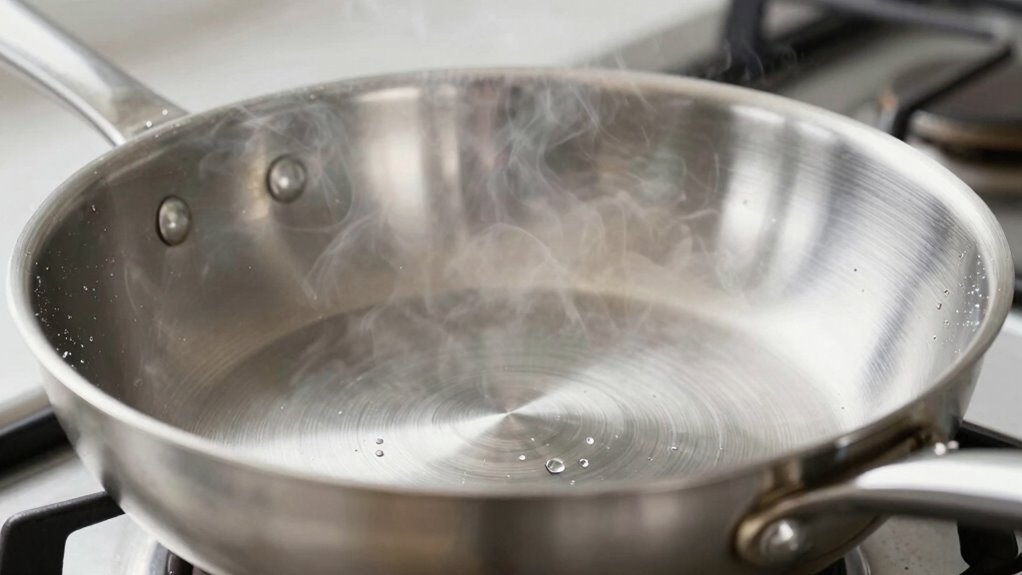
The tiny heat mistake that ruins your pan’s performance is often setting the heat too high or too low without adjusting as you cook. This can cause uneven heating, scorching, or undercooking, which damages the pan over time. Small mistakes like ignoring heat distribution or using incompatible cookware also lead to long-term issues. If you keep an eye on these details, you’ll learn how to avoid common heat mishaps and keep your pans in top shape.
Key Takeaways
- Using excessively high heat can cause warping or damage to the pan over time.
- Not adjusting heat when cookware shows signs of hotspots leads to uneven cooking.
- Ignoring the importance of even heat distribution results in scorching or undercooked food.
- Relying on a burner setting that’s too low or too high for the pan’s material affects performance.
- Failing to respond promptly to temperature fluctuations causes long-term wear and inconsistent results.
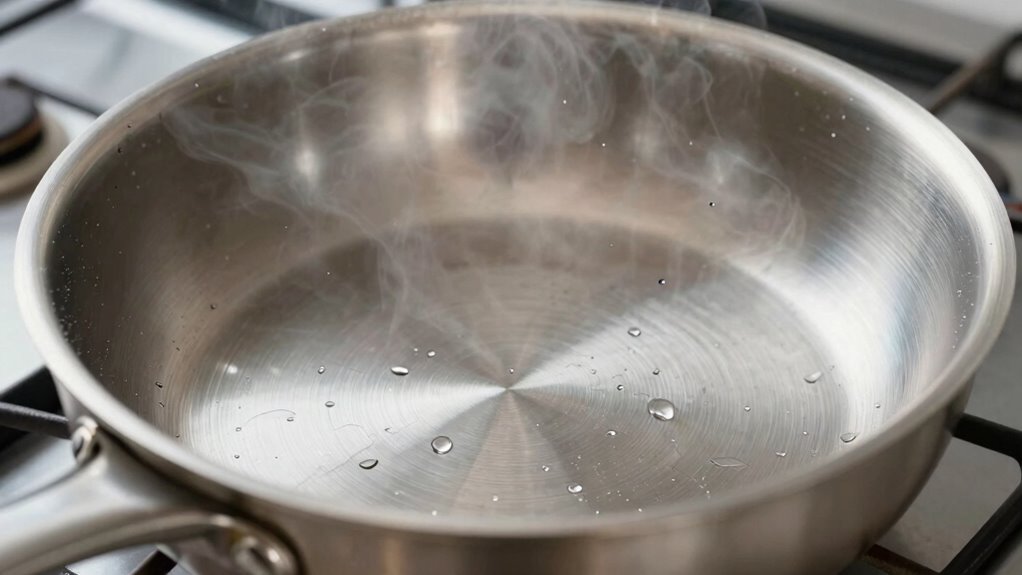
Sometimes, a small mistake in heat management can lead to surprisingly big problems. If you’re not paying close attention to how you control your stove’s heat, you might inadvertently sabotage your entire cooking process. One of the most common issues stems from neglecting proper cooking temperature and heat distribution. These factors might seem minor, but they can make or break your dish—and even damage your pan in the long run.
Small heat mistakes can ruin your dish and damage your cookware—pay attention to temperature and heat distribution.
When you set your burner too high or too low, you disrupt the delicate balance needed for even cooking. If the heat is too intense, your food can burn on the outside while remaining undercooked inside. Conversely, if it’s too low, your ingredients might never reach the proper temperature, resulting in uneven textures and flavors. The key is maintaining the right cooking temperature, but that’s only part of the equation. Heat distribution plays an equally crucial role. If your pan isn’t heating evenly, certain spots might get scorching hot while others stay cool. This imbalance causes hotspots that can ruin delicate sauces, scorch your vegetables, or cause your meat to cook unevenly.
You might not realize it, but your choice of cookware greatly influences heat distribution. Thick-bottomed pans generally conduct heat more evenly, reducing the risk of tiny heat mistakes. Thin or warped pans tend to create uneven heat zones, which makes it harder to control the cooking temperature precisely. When you’re cooking, you should always monitor how heat spreads across the surface—if you notice parts of your pan are much hotter than others, it’s time to adjust your heat source or switch to better cookware. Additionally, understanding heat distribution can help you select the right tools for more consistent results. Proper cookware material and construction can significantly minimize hotspots, leading to more reliable cooking outcomes. Being aware of how heat conduction works can help you choose cookware that promotes even heating and prevents common problems. Recognizing how cooking temperature interacts with your cookware allows for better control and prevents unnecessary mishaps. To further improve your control, learning about thermal conductivity can give you insights into how different materials impact heat spread.
Another common slip-up is not adjusting the heat promptly when you see uneven cooking. It’s tempting to leave the burner at the same setting, but that often leads to overcooking or burning. Instead, you need to respond quickly, lowering or raising the heat as needed to keep the cooking temperature steady. This attentiveness ensures that heat distribution remains consistent, and your pan performs at its best. Remember, even small adjustments can prevent tiny heat mistakes from spiraling into bigger problems.
In the end, paying attention to both your cooking temperature and heat distribution is the simplest way to preserve your pan’s performance. A tiny oversight—like ignoring uneven heat or setting the wrong temperature—can cause sticking, warping, or even permanent damage to your cookware. By mastering these subtle details, you’ll cook more efficiently, save time, and enjoy better results every time you step into the kitchen.

Cuisinart Chef’s Classic 11-Piece Stainless Steel Pots and Pans Set, Cookware Set Compatible with Induction, Electric, Gas Cooktops, Aluminum Core for Even Heat, Cool Grip Handles, Dishwasher Safe
- Complete Cookware Set: Includes various pots, pans, and steamer insert
- Premium Stainless Steel: Durable, heats quickly with even heat distribution
- Cool Grip Handles: Stay cool and provide a secure grip
As an affiliate, we earn on qualifying purchases.
As an affiliate, we earn on qualifying purchases.
Frequently Asked Questions
How Does Heat Affect Different Types of Cookware?
Heat impacts cookware differently based on heat distribution and materials. For example, stainless steel heats evenly but can be slow, while cast iron retains heat well, providing steady cooking. Non-stick pans heat quickly but unevenly, which can cause hot spots. You should choose cookware according to your cooking style and pay attention to how heat distributes across the material to prevent burning or uneven cooking.
Can Improper Heat Damage Non-Stick Coatings?
Imagine a delicate dance—too much heat can damage your non-stick coating, just like stepping on fragile glass. Improper heat risks breaking down coating durability, leading to peeling or flaking. Maintaining temperature safety is vital to preserve your pan’s performance. When you cook at medium or low heat, you protect the coating’s integrity, ensuring it lasts longer and works effectively, saving you money and frustration in the long run.
What Are Signs of Overheating a Pan?
You’ll notice signs of overheating your pan when the surface becomes discolored or develops a bluish, brown, or rainbow hue, especially with non-stick coatings. If your pan material shows warping or warps easily, it’s likely overheated. Uneven heat distribution can cause hot spots that burn food or cause sticking. Also, a burning smell or smoke indicates excessive heat. Pay attention to these signs to maintain your pan’s performance and lifespan.
How Do I Prevent Hot Spots During Cooking?
Imagine your pan as a dance floor, where even heat distribution keeps every step smooth. To prevent hot spots, start with proper pan seasoning, creating a natural non-stick surface that promotes even heat. Always preheat gradually, then adjust the heat as you cook. Use a thin layer of oil to help distribute heat uniformly. Stir and rotate your ingredients frequently to avoid uneven cooking, ensuring your meal turns out perfectly.
What’s the Ideal Heat Setting for Various Dishes?
You should set your stove to medium or medium-high for most dishes, adjusting as needed. Proper seasoning techniques and ensuring even heat distribution are key to preventing hot spots. For delicate dishes like sauces, use lower heat to avoid burning. When searing or stir-frying, crank it up a bit. Always monitor your food closely and adjust the heat to maintain consistent cooking, helping you achieve perfect results every time.
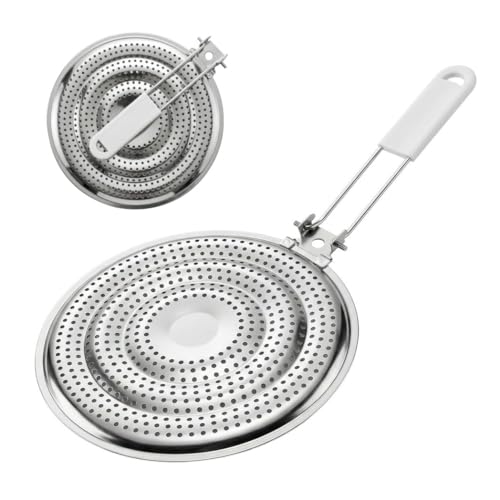
HIC Kitchen Heat Diffuser Reducer Flame Guard With Removable Handle, Stainless Steel, Distributes Heat Evenly And Reduces Scorching, For Gas Electric Glass Stovetops, 8.25-Inch
- Creates Flat Cooking Surface: Distributes heat evenly, reduces scorching
- Durable Construction: Made from stainless steel and plastic, scratch-resistant
- Versatile Compatibility: Suitable for gas, electric, and glass stovetops
As an affiliate, we earn on qualifying purchases.
As an affiliate, we earn on qualifying purchases.
Conclusion
So, next time you’re cooking, remember that tiny heat mistake can turn your perfect dish into a burnt disappointment. Don’t let a small oversight simmer into a bigger problem—treat your pan with care, and it’ll reward you with flawless results. Think of your heat control as the conductor of an orchestra, guiding each ingredient to harmony. Master this small detail, and you’ll turn every meal into a symphony of flavor, not a kitchen catastrophe.

CAROTE 16pcs Pots and Pans Set, Nonstick Cookware Sets
- Nonstick Coating: Titanium nonstick for easy release
- Durable Construction: Reinforced die-cast aluminum for longevity
- Even Heating: Rapid, uniform heat distribution
As an affiliate, we earn on qualifying purchases.
As an affiliate, we earn on qualifying purchases.

4L Glass Cooking Pot with Heart-shaped Lid, 4.2Qt/4000ml
- Unique Heart-Shaped Lid: Prevents hot hands and easy viewing
- Generous 4L Capacity: Ideal for various cooking needs
- Heat-Resistant Glass Material: Oven, microwave, and stove safe
As an affiliate, we earn on qualifying purchases.
As an affiliate, we earn on qualifying purchases.