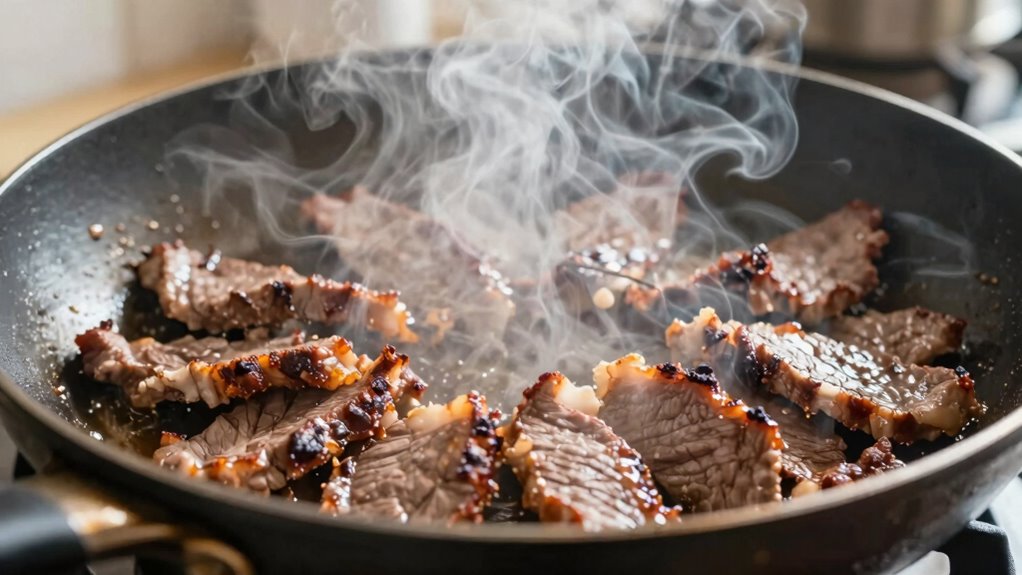

When you overcrowd your pan, the temperature drops quickly, causing your food to steam instead of sear. This prevents the browning and crispy texture you want, leading to soggy results. To avoid this, cook in smaller batches and keep the ingredients spread out. Managing heat and avoiding overcrowding helps maintain the right temperature so you get those perfect seared dishes. Keep going, and you’ll discover how to master this essential cooking tip.

Get school and study supplies delivered free — and shop member deals
- Fast, free delivery on millions of items
- Access to Prime Big Deal Days deals on October 6–7
- Prime Video, Amazon Music and more included
Key Takeaways
- Overcrowding causes the oil temperature to drop rapidly, leading to steaming rather than searing.
- Adding too many ingredients at once prevents proper browning and creates steam, resulting in soggy food.
- To maintain high heat, cook in smaller batches instead of filling the pan completely.
- Excess moisture from ingredients or improper drying promotes steaming instead of a crispy sear.
- Managing heat and cooking in stages helps keep the pan hot, avoiding steaming caused by overcrowding.
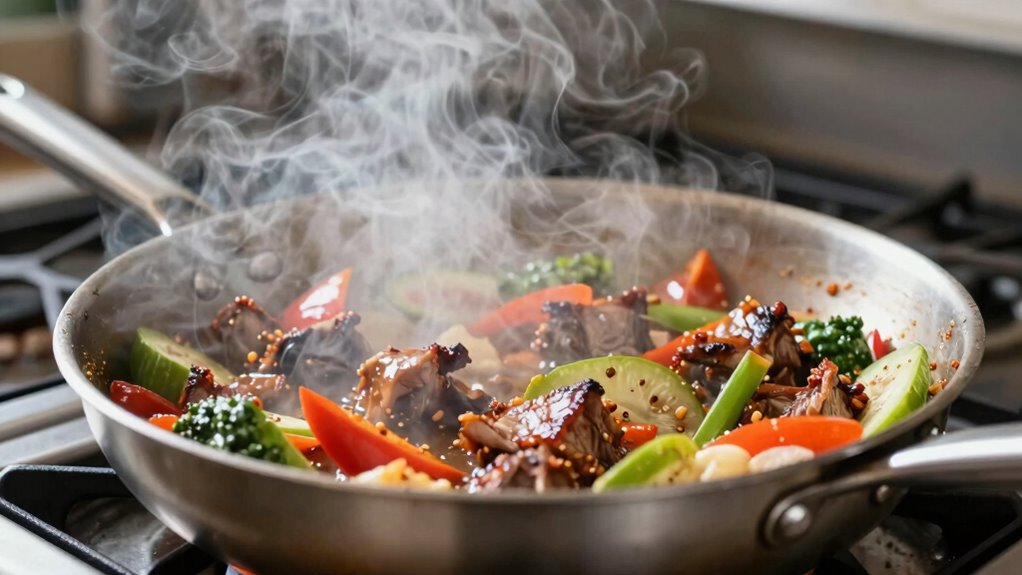
Many home cooks make the mistake of overcrowding their pans, thinking it will speed up the cooking process, but in reality, it often leads to uneven results. When you toss too many ingredients into a single pan, you lower the overall oil temperature instantly. This drop causes food to steam rather than sear, preventing that desirable caramelization or browning you’re aiming for. To avoid this, you need to pay close attention to your ingredient prep and the way you manage your heat.
Before you start cooking, verify your ingredients are properly prepped. Pat dry any moisture on vegetables or meats, as excess water turns to steam when it hits hot oil, sabotaging your searing process. When ingredients are dry, they’ll hit the hot pan with less moisture and help maintain a consistent oil temperature. Proper ingredient prep isn’t just about cleanliness; it’s about setting the stage for a perfect sear. Proper ingredient prep is a critical step that can significantly influence the overall texture and flavor of your dish.
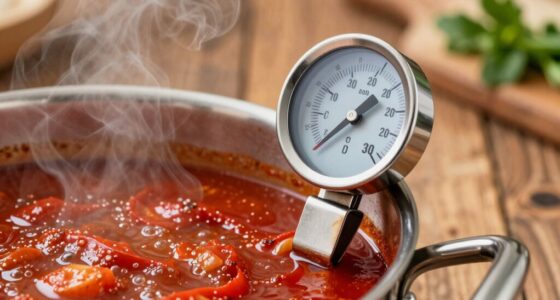
Once your ingredients are ready, focus on maintaining the right oil temperature. When you add food to the pan, it should sizzle immediately, indicating the oil is hot enough. If you crowd the pan, the temperature drops rapidly, and instead of searing, your food steams, losing that crispy exterior you want. To keep the oil hot, add ingredients in smaller batches. This ensures each piece makes contact with the hot surface, allowing for even browning and a better texture. Managing heat distribution effectively is essential for consistent results. Additionally, temperature control plays a vital role in preventing the pan from cooling down too much during cooking.
If you’re cooking multiple ingredients, do it in stages. Start with those that take longer to cook, like thicker cuts of meat or hearty vegetables, then remove them and cook delicate items afterward. This method prevents overcrowding and helps you control the oil temperature throughout the process. Remember, patience is key. Rushing by piling everything in at once might seem quicker, but it defeats the purpose, resulting in soggy, steamed food instead of beautifully seared dishes. Keeping a close eye on heat management is essential for achieving consistent results.
In addition, adjust your heat as needed. If you notice your pan cooling down too much after adding ingredients, turn up the heat slightly. Maintaining a consistent oil temperature is essential for achieving that perfect sear. It’s better to cook in batches than to overcrowd and end up steaming everything. Proper ingredient prep combined with attentive heat management makes all the difference in turning out flavorful, well-textured dishes. By avoiding the pan crowding mistake, you’ll find your cooking becomes more efficient, your food more delicious, and your results consistently better.
As an affiliate, we earn on qualifying purchases.
Frequently Asked Questions
How Can I Tell if My Pan Is Overcrowded?
You can tell if your pan is overcrowded by observing if the food is steaming or sticking rather than searing. Use a pan that’s large enough to hold your ingredients without overcrowding, allowing space for even heat distribution. When practicing your searing technique, make sure there’s enough room so the food can develop a caramelized crust. If ingredients are crowded, they’ll release moisture and steam instead of searing properly.
What Types of Pans Are Best for High-Heat Searing?
For high-heat searing, choose pans made of cast iron or stainless steel. These materials excel in heat distribution, guaranteeing your food sears evenly without sticking or steaming. Cast iron retains heat well, providing consistent searing temperatures, while stainless steel heats quickly and distributes heat evenly. Avoid non-stick pans for searing, as they don’t handle high heat well. Using the right pan material ensures a perfect sear every time.
Does Oil Temperature Affect Steaming Versus Searing?
Yes, oil temperature greatly affects whether you steam or sear. When you heat the oil to the right temperature, your cooking surface creates a high-heat environment ideal for searing. If the oil isn’t hot enough, it won’t form that crispy crust and may cause steaming instead. To achieve perfect searing, make sure your oil reaches the proper temperature before adding your food, preventing steaming and promoting a flavorful, caramelized exterior.
How Long Should I Preheat My Pan Before Cooking?
Think of your pan as a stage waiting for its star performance. Preheat it for about 2-3 minutes until the surface shimmers like a mirror, signaling the perfect pan temperature. This guarantees your pan’s ready for searing techniques, creating that glorious caramelization. Rushing this step risks steaming instead of searing, so patience grants you the crisp, flavorful crust you desire. Stay attentive—your culinary masterpiece depends on it.
Can I Fix a Pan That Has Been Overcrowded Previously?
Yes, you can fix a pan that’s been overcrowded. Start by cleaning the pan thoroughly to remove any stuck-on residue, which is essential for effective pan maintenance. Next, avoid overcrowding in future cooking sessions by cooking in smaller batches or using multiple pans. Overcrowding solutions include preheating the pan properly and leaving enough space for heat to circulate, ensuring your food sears instead of steams.
As an affiliate, we earn on qualifying purchases.
Conclusion
Just like Icarus who soared too close to the sun, crowding your pan can lead to fiery mishaps instead of perfect sears. When you overload, heat escapes, and your meat steams rather than sears—missing out on that irresistible crust. Remember, even the most seasoned chefs know that less is more. So, give your ingredients space to work their magic, and you’ll avoid the crowding mistake, landing you with beautifully caramelized, restaurant-quality results every time.
As an affiliate, we earn on qualifying purchases.
As an affiliate, we earn on qualifying purchases.
Fall Picks
fall essentials
As an affiliate, we earn on qualifying purchases.